MarketLens
Senator Curtis's UBS Bond Bet: A Calculated Vote of Confidence Amidst Credit Storms

Key Takeaways
- Senator John Curtis's recent purchase of UBS corporate bonds signals a notable vote of confidence in the global banking giant's stability, even as the broader private credit market faces its most significant test since 2008.
- While major credit rating agencies project broad stability for global banks in 2026, UBS's own internal models highlight a tail-risk scenario where private credit defaults could reach GFC-level territory.
- UBS's robust balance sheet, bolstered by the Credit Suisse acquisition and its leading position in wealth management, provides a strong institutional buffer against the emerging stresses in alternative credit markets.
Senator John Curtis (R-UT) made a significant move in early June, purchasing between $100,001 and $250,000 worth of UBS Group corporate bonds. This investment, executed on June 2, 2026, stands out not just for its size, but for its timing. It arrives at a juncture where the global banking sector is broadly deemed stable by major rating agencies, yet a critical segment—private credit—is showing distinct signs of stress. Curtis's decision to invest in the debt of a global systemically important bank like UBS suggests a calculated conviction in its fundamental resilience, even as the institution itself has modeled severe downside scenarios for private credit.
UBS Group AG, currently trading at $52.08 on the NYSE, sits near the top of its 52-week range of $35.39 to $52.27. With a market capitalization of $170.71 billion, the Swiss banking behemoth remains a cornerstone of the international financial system. The Senator's bond purchase, a more conservative play than an equity investment, implies a belief in UBS's ability to navigate the complex and potentially volatile landscape of 2026, particularly given its exposure to the very credit markets now under scrutiny. This move invites a deeper look into the perceived stability of global banking and the specific risks bubbling beneath the surface.
The Global Banking Consensus: Stability on Shaky Ground
The prevailing sentiment among leading credit rating firms for 2026 has been one of broad stability for the global banking sector. As Alexander Jones of International Banker noted in a January 7, 2026, report, "The consensus among analysts is that broad stability will characterise the global banking sector in 2026." This outlook is largely underpinned by a resilient, albeit slowing, US economy and gradual GDP increases in several major European countries. Moody’s 2026 outlook, for instance, highlighted "broad stability across the sector, with strong bank creditworthiness supported by resilient asset quality, solid funding profiles and sustained profitability." Similarly, S&P Global Ratings has forecast "broad rating stability for global banks in 2026, with 85 percent of its ratings currently assigned a 'stable' outlook," citing good capitalization, sound asset quality, and adequate funding.
However, this veneer of stability masks several evolving risks that could challenge even the most robust institutions. Geopolitical tensions, including ongoing conflicts and trade frictions, continue to disrupt supply chains and alter patterns of trade finance. Tariff shocks, particularly from the USA, create significant uncertainty for central banks and could lead banks to become wary of extending credit to industries reliant on global supply chains. Beyond these macro factors, the regulatory environment is also in flux. Fitch Ratings, in its "Global Banking Regulation Outlook 2026" report, projected an overall "looser" outlook for bank regulation in the US and UK, while emerging markets are expected to see "tighter standards." Key areas to watch include the implementation of Basel III endgame rules in the US, amendments to resolution regimes, and the increasing scrutiny of private credit markets.
The digital transformation, driven by artificial intelligence (AI) and blockchain technology, is reshaping business models, introducing new operational and cyber risks, even as it improves efficiency. Moody's observed that "Private credit is expanding its role as an alternative source of finance for corporates, increasing competitive pressure on banks in some segments." This expansion, coupled with the evolving regulatory landscape and geopolitical uncertainties, creates a complex environment where the "broad stability" could be tested by specific, concentrated pressures.
Private Credit's Looming Test: A UBS-Modeled Tail Risk
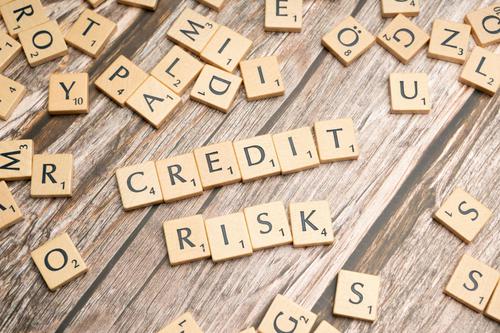
Beneath the surface of broad banking stability, the private credit market is facing what many consider its most challenging environment since the 2008 financial crisis. A January 7, 2026, report from WithIntelligence warned that "Private credit enters 2026 facing its most challenging environment since the 2008 financial crisis." This stress is not theoretical; cracks are already emerging. Late 2025 saw a series of high-profile leveraged loan defaults, and the rising use of payment-in-kind (PIK) toggles in direct lending points to mounting stress among borrowers. While headline default rates in private credit have historically remained below 2%, the "true" default rate, accounting for selective defaults and liability management exercises, approaches 5%.
The situation is exacerbated by deteriorating borrower fundamentals. The International Monetary Fund’s 2025 Financial Stability Report found that around 40% of private credit borrowers have negative free cash flow, a significant increase from 25% in 2021. Furthermore, PIK usage has risen notably, with public Business Development Companies (BDCs) now receiving an average of 8% of investment income via PIK, indicating that borrowers are increasingly struggling under higher interest burdens.
Perhaps most concerning is the "tail-risk scenario" modeled by UBS itself, as highlighted in Brian Peters' March 15, 2026, "Perspective on Risk" newsletter. This scenario posits what happens if "rapid AI disruption rips through the sectors where private credit is most concentrated," specifically software and business services. In this downside case, "private credit defaults could reach 14–15% – GFC-level territory." Peters further noted that US private credit defaults hit a record 9.2% in 2025, according to Fitch. The pre-existing conditions making this plausible include PIK interest at post-pandemic highs, leverage in some sectors reaching 7.5-8.0x debt/EBITDA, weakening covenants, and opaque valuations that make recovery prospects meager. This is not merely a private credit problem; bank exposures to nonbank financial institutions currently stand at $2.5 trillion, with a substantial portion of drawn exposures tied to these stressed entities.
UBS's Foundation: A Systemically Important Fortress
Against the backdrop of a challenging private credit market, Senator Curtis's bond purchase in UBS speaks to the institution's perceived strength and systemic importance. UBS Group AG is not just any bank; it is recognized by the Financial Stability Board as a global systemically important bank (G-SIB), a designation that underscores its critical role in the international financial system. Its sheer scale and diversified operations provide a significant buffer against localized market stresses.
A pivotal moment in UBS's recent history was its emergency acquisition of rival Credit Suisse in March 2023 for $3.25 billion. This move dramatically expanded UBS's footprint, increasing its assets under management (AUM) to over $5 trillion and its balance sheet to $1.6 trillion immediately post-acquisition. By December 2025, its AUM had grown further to over $7 trillion, serving approximately half of the world's billionaires. This scale provides unparalleled access to capital and a broad revenue base across wealth management, asset management, and investment banking.
UBS has long been renowned for its traditional strengths in wealth management and private banking, particularly in Switzerland, which continue to generate substantial fee-based revenues and support resilience amid margin pressures. Its capital strength, security protocols, and reputation for discretion have yielded a substantial market share and high brand loyalty. While the banking sector faces evolving risks from new technologies and competitive pressures from expanding private credit markets, UBS's strategic agility, robust governance, and ability to integrate regulatory change as a catalyst for modernization position it as a formidable player. The bank's diversified revenue streams and strong capital base are crucial advantages, especially when compared to smaller, more regionally focused institutions that may struggle with higher rates and slower credit growth.
The Bear Case: Cracks in the Credit Architecture
While the overall outlook for global banking in 2026 appears stable, the specific vulnerabilities within the private credit market present a significant bear case for institutions with substantial exposure, including major banks like UBS. The "true" default rate approaching 5%—far higher than the often-cited headline figures—suggests a deeper malaise than commonly acknowledged. This is compounded by the rising prevalence of PIK interest, which allows borrowers to defer cash payments, masking underlying financial weakness. As Moody's noted, the expansion of private credit "is increasing competitive pressure on banks in some segments," potentially pushing banks into riskier lending to maintain market share.
The pre-existing conditions in private credit, such as leverage reaching 7.5-8.0x debt/EBITDA in certain sectors and weakening covenants, mean that even without a "rapid AI disruption" catalyst, the market is ripe for stress. Opaque valuations further complicate recovery prospects in the event of default, potentially leading to greater losses for lenders. The concern extends beyond private credit funds themselves; as Brian Peters highlighted, if UBS's tail scenario materializes, it's "not just a private credit problem." Bank exposures to nonbank financial institutions, totaling $2.5 trillion, mean that a significant portion of the traditional banking system could be impacted by a private credit downturn.
The International Banker report also pointed to "loosening lending standards in private debt" and "late-cycle behavior" in corporate credit, with high-profile bankruptcies in late 2025 serving as stark warnings. These factors, combined with the increasing scrutiny of private credit markets by regulators like Fitch, suggest that the coming year will be a critical test. While UBS's diversified business model and strong capital position offer resilience, a systemic shock in private credit could still lead to significant write-downs, increased provisions for credit losses, and a broader loss of confidence in the financial system, challenging even the most robust balance sheets.
Congressional Signals and Analyst Outlooks
Senator John Curtis's bond purchase in UBS is not an isolated event in the realm of congressional trading, but it offers a unique perspective given the current market dynamics. While other members of Congress have traded UBS stock—for example, Representative Ro purchased UBS stock in January 2026 and May 2025, and sold in October 2024, while Representative Mikie made a partial sale in March 2025—Curtis's choice of corporate bonds over equity is noteworthy. Bonds typically represent a more conservative investment, prioritizing capital preservation and predictable income over potential capital appreciation, suggesting a focus on the bank's solvency and stability rather than its growth trajectory. This contrasts with the more speculative nature of equity trading, which can be influenced by short-term market sentiment or growth narratives.
The broader analyst community, as reflected by major credit rating firms, generally maintains a "neutral" to "stable" outlook for global banks in 2026. Donald Robertson, global co-head of banking at S&P Global Ratings, noted that "Broadly stable employment levels and lower interest rates will support credit quality, although central bank monetary policies are diverging." He also acknowledged that "Net interest margins will likely be squeezed by lower rates in some regions, but banks will mitigate this by growing other sources of income." This consensus of stability, however, is tempered by the recognition of evolving risks. Fitch, for instance, explicitly listed "digital asset innovation and the increasing scrutiny of private credit markets" as key areas to watch in its "Global Banking Regulation Outlook 2026" report.
The juxtaposition of this general stability outlook with the specific, internally modeled tail risks in private credit creates a nuanced picture. Senator Curtis's bond investment, therefore, can be interpreted as a vote of confidence in UBS's ability to withstand these specific pressures, relying on its institutional strength and diversified revenue streams to navigate potential turbulence. It suggests a belief that while parts of the financial architecture may be tested, the core pillars, like UBS, will remain standing.
The Verdict: A Calculated Bet on Institutional Resilience
Senator John Curtis's substantial purchase of UBS corporate bonds in early June 2026 serves as a powerful, albeit indirect, endorsement of the global banking giant's resilience. This move comes at a critical juncture where the broader financial system is grappling with the dual narratives of overall banking stability and acute, UBS-modeled tail risks within the private credit market. Curtis's choice of debt over equity underscores a calculated bet on UBS's solvency and its capacity to absorb potential shocks from a stressed credit environment.
While the private credit market faces its most challenging test since 2008, with "true" default rates approaching 5% and UBS's own downside scenario projecting GFC-level defaults of 14-15% in concentrated sectors, the bank's foundational strengths are considerable. Its status as a global systemically important bank, its expanded AUM of over $7 trillion following the Credit Suisse acquisition, and its robust wealth management and investment banking franchises provide a formidable institutional buffer. The consensus among rating agencies for broad banking stability in 2026, despite acknowledged geopolitical and regulatory headwinds, further supports the view that major players like UBS are equipped to navigate these complexities.
For investors considering UBS Group AG stock (NYSE: UBS), the current price of $52.08, near its 52-week high, reflects a market that largely trusts its stability. However, the private credit risks cannot be ignored. A prudent approach would acknowledge the bank's strengths while remaining vigilant about the broader credit cycle.
Entry Zone: Investors could consider accumulating UBS shares in the $48.00 - $51.00 range, allowing for a slight pullback from its 52-week high while still capturing exposure to a fundamentally strong institution. 12-Month Target: Given the stable outlook for global banking but the specific headwinds in private credit, a conservative 12-month target for UBS stock is $58.00, representing a modest upside driven by continued operational execution and market confidence in its resilience. Invalidation Level: A sustained breach below $42.00 would invalidate this thesis, signaling that the private credit stresses or other macro risks have begun to materially impact UBS's core financial health and asset quality, beyond what its robust balance sheet can comfortably absorb.
Ultimately, Senator Curtis's bond purchase is a testament to the enduring appeal of institutional strength in uncertain times, suggesting that for all the market's jitters, some fortresses are still worth betting on.
Want deeper research on any stock? Try Kavout Pro for AI-powered analysis, smart signals, and more. Already a member? Add credits to run more research.
Related Articles
Category
You may also like


U.S. Bonds Hit 5%: Mayday
Kevin Warsh Would Be the Wealthiest Fed Chair in History. But That Doesn't Mean He's Going to Have Wall Street's Back

Senators Vote to Ban Themselves From Trading on Prediction Markets
Breaking News
View All →Featured Articles
Top Headlines

What smart people are saying about Apple's lawsuit accusing OpenAI of stealing trade secrets

Could SpaceX Stock Make You a Millionaire?

Prediction: Apple Will Be Worth $5 Trillion (or More) by the End of 2026

Here's Why July 22 Could Be a Big Day for Warren Buffett's Successor, Greg Abel