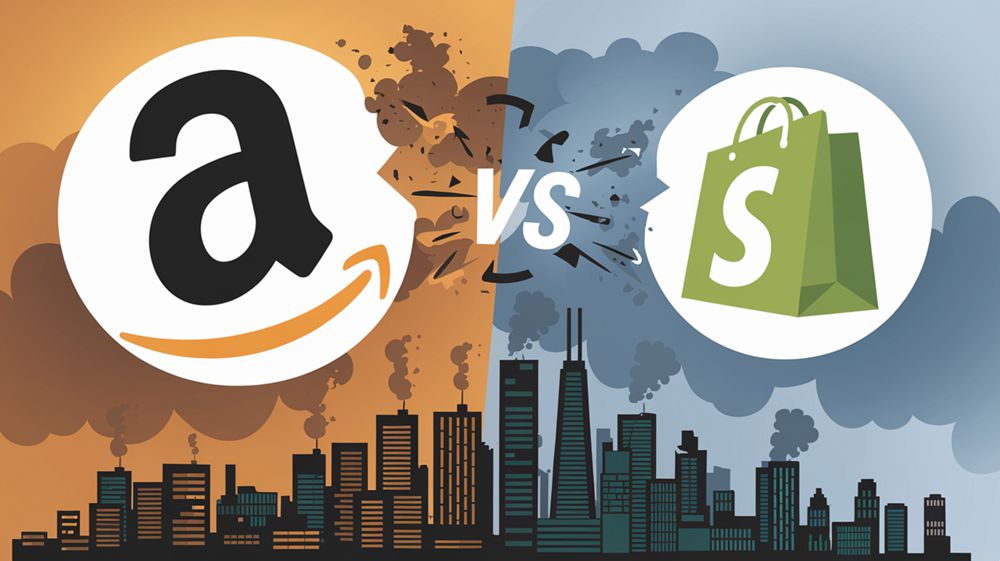
The Battle of Business Models: Shopify vs Amazon
Shopify: The Customization King
Shopify operates as a software-as-a-service (SaaS) platform, empowering businesses to create their own branded online stores. This model offers unparalleled control over branding, customer data, and the overall shopping experience. With over 4.9 million sites using Shopify, it’s clear that many businesses value this level of autonomy.
Key Features of Shopify:
- Customization and Branding: Shopify allows for extensive customization, enabling businesses to create unique storefronts that reflect their brand identity. This is a significant advantage for sellers looking to build a loyal customer base.
- Scalability: Shopify is highly scalable, capable of handling over 10,000 transactions per minute, making it suitable for businesses of all sizes.
- Marketing Tools: The platform offers robust marketing tools, including SEO features, email marketing, and integrations with social media platforms, allowing sellers to drive traffic and increase sales.
- Cost Structure: Shopify offers flexible pricing plans, starting from $29/month, with transaction fees that decrease as you move to higher-tier plans.
Challenges:
- Customer Acquisition: Unlike Amazon, Shopify does not provide an existing customer base. Sellers must invest in marketing and SEO to attract visitors to their stores.
- Technical Knowledge: While Shopify is user-friendly, extensive customization may require some technical expertise.
Amazon: The Marketplace Behemoth
Amazon, on the other hand, operates as a massive online marketplace, offering sellers access to its vast customer base. With over 300 million user accounts and more than 3 billion monthly visits, Amazon provides an unparalleled reach for sellers.
Key Features of Amazon:
- Immediate Access to Customers: Sellers benefit from Amazon’s established traffic and recommendation algorithms, making it easier to generate sales.
- Fulfillment by Amazon (FBA): This service handles storage, packing, and shipping, offering convenience and efficiency, especially for small businesses.
- SEO and Visibility: Amazon’s search engine (A11 algorithm) is optimized for product sales readiness, ensuring that products are easily discoverable by potential buyers.
Challenges:
- Branding Limitations: Sellers have limited control over branding and customer relationships, as Amazon owns the customer data.
- High Competition: The marketplace is highly competitive, with many sellers vying for visibility and sales.
- Fee Structure: Amazon’s fees can be complex and higher due to commissions on sales and additional charges for FBA.
The Future of E-commerce: Can Both Thrive?
Complementary Strengths
While Shopify and Amazon cater to different seller needs, they are not mutually exclusive. Many businesses choose to integrate both platforms to maximize their reach and sales potential. Shopify’s customization and branding capabilities complement Amazon’s vast audience and logistical prowess, creating a powerful multichannel strategy.
Market Trends and Innovations
The e-commerce landscape is rapidly evolving, with several trends shaping the future:
- AI and Automation: Both platforms are leveraging AI to enhance customer experiences. Amazon’s AI algorithms, such as Cosmo and Rufus, improve product search and recommendations, while Shopify uses AI for personalized marketing.
- Sustainability: Consumers are increasingly demanding eco-friendly products, prompting brands on both platforms to adopt sustainable practices.
- Omnichannel Experiences: The integration of online and offline sales channels is becoming crucial, with Shopify’s Shop app enhancing the omnichannel experience.
Shopify’s Stock Surge: A Sign of Strength
Shopify’s recent Q3 2024 earnings report showcased impressive financial performance, with a 26% year-over-year revenue growth and a 19% free cash flow margin. These results exceeded analysts’ expectations, leading to a 25% surge in Shopify’s stock, reaching its highest level in nearly three years. This growth reflects strong operational discipline and multiple avenues for expansion, positioning Shopify favorably as the holiday shopping season approaches.
A Dual Path to Success
Here’s the reality that Wall Street is missing: The e-commerce pie isn’t just growing – it’s exploding. Global online retail is projected to hit $8.1 trillion by 2026, making today’s $5.7 trillion market look like pocket change. And that’s precisely why both Shopify and Amazon can be massive winners.
Think of it this way: Amazon is the shopping mall of the internet, while Shopify is arming every brand with their own digital storefront. Different games, different growth runways, same explosive opportunity. Smart investors aren’t choosing sides – they’re playing both angles.
The bottom line? While the talking heads debate who’s eating whose lunch, savvy investors are watching three key metrics:
- Shopify’s merchant growth rate (up 23% year over year)
- Amazon’s third-party seller revenue (now 60% of total sales)
- Global e-commerce penetration (still under 20% in most markets)
Whether you’re backing the empire (Amazon) or the rebellion (Shopify), one thing’s crystal clear: The real winners will be investors who recognize that e-commerce isn’t a zero-sum game. It’s a gold rush – and both companies are selling the picks and shovels.