MarketLens
SkyWest's Grounded Ambition: Why Goldman Sachs Sees Limited Upside Despite Airline Tailwinds

Key Takeaways
- Goldman Sachs recently downgraded SkyWest (SKYW) to Neutral, citing concerns over aircraft utilization and the regional carrier's limited exposure to improving broader industry conditions.
- While major airlines are benefiting from resilient travel demand and higher ticket prices, SkyWest's contract-based model and management's lowered expectations for summer block hours are capping its growth.
- Despite a strong financial performance in FY2025 and Q1 2026, the company faces structural headwinds, including the ongoing shift of flying in-house by mainline partners and the persistent challenges of pilot supply dynamics.
The Goldman Downgrade That Signals Divergence
On July 2, 2026, Goldman Sachs delivered a notable downgrade to SkyWest, Inc. (SKYW), shifting its rating from Buy to Neutral and reducing its 12-month price target from $126 to $108. This move sent SkyWest shares down more than 1.5% on Thursday, settling at $96.88, a stark contrast to the broader airline industry's more optimistic trajectory. The downgrade, led by analyst Catherine O'Brien, highlighted growing concerns that slower aircraft utilization, measured by "block hours," would weigh on the regional airline's earnings.
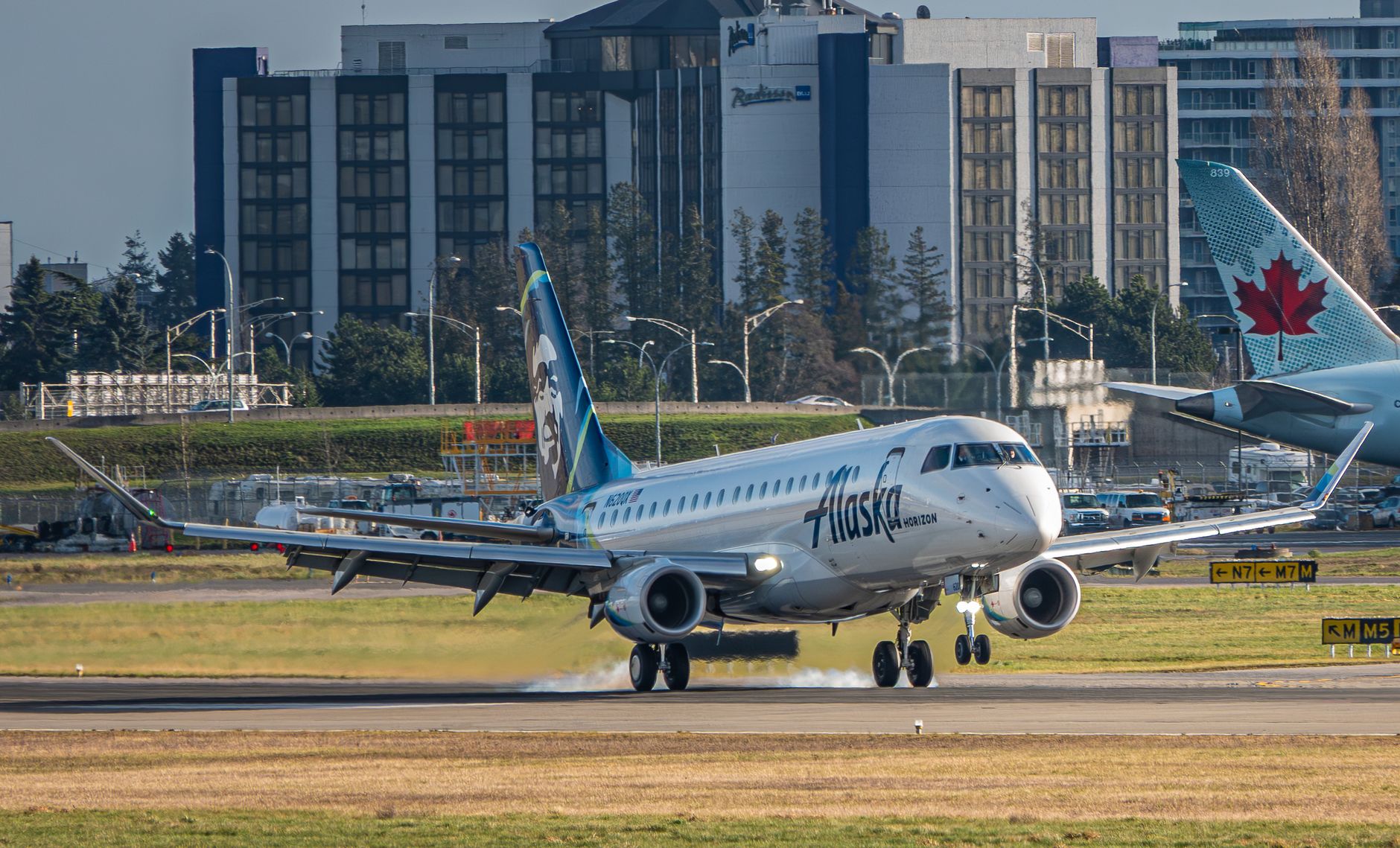
SkyWest, with a market capitalization of $3.84 billion, operates a unique contract-based model, providing regional lift for major carriers like Alaska, American, Delta, and United. Its stock has traded within a 52-week range of $77.89 to $123.94, reflecting a period of both recovery and volatility. Goldman's revised outlook suggests that while the macro environment for air travel is improving, SkyWest's specific operational constraints are preventing it from fully participating in that upside, creating a critical divergence between the regional and mainline sectors. This re-evaluation comes just weeks before SkyWest is set to host its Q2 2026 earnings call on July 23, 2026, where management's commentary on block hours and future outlook will be closely scrutinized.
The Block Hour Headwind
At the heart of Goldman Sachs' downgrade is the issue of aircraft utilization, specifically "block hours," a key metric for regional airlines operating under long-term capacity purchase agreements (CPAs). Block hours represent the time from when an aircraft's doors close at departure until they open at arrival, directly correlating to how much flying a regional carrier performs for its partners. Goldman Sachs reduced its forecast for SkyWest's 2026 block-hour growth, citing management's prior indication that summer block hours would come in "slightly below earlier expectations."
This slowdown in utilization is a significant concern because regional airline profitability heavily relies on maximizing the use of its fleet and crews to spread fixed costs across more flying. The U.S. Government Accountability Office (GAO) noted in an April 2026 report that easing pilot shortfalls have allowed regional air service to grow closer to pre-pandemic levels, with one network airline's regional affiliate monthly block hours increasing approximately 40% since 2023. However, SkyWest's situation appears to be an outlier, suggesting company-specific challenges or a more conservative approach to capacity deployment. For a company whose revenue is primarily derived from contract payments tied to flying activity, any reduction in expected block hours directly impacts its top line and, consequently, its earnings potential.
SkyWest's Contract-Based Model: Insulation and Exposure
SkyWest's business model is distinct within the airline industry, primarily operating through capacity purchase agreements (CPAs) with major network carriers. Under these agreements, SkyWest provides aircraft, crews, and operational support, while the mainline partner handles ticket pricing, yield management, and largely bears the revenue and fuel price risk. This structure insulates SkyWest from the demand and pricing volatility that directly impacts mainline carriers. For instance, SkyWest's aircraft fuel costs were a modest 3.5% of total operating expenses in FY2025, compared to much higher percentages for airlines that directly manage fuel procurement.
However, this insulation comes with its own set of exposures. While protected from fuel price swings and ticket demand fluctuations, SkyWest's profitability is highly dependent on controlling its operating costs (primarily labor and maintenance), maximizing aircraft and crew utilization, and negotiating favorable CPA terms. The recent downgrade by Goldman Sachs highlights that even with the benefits of CPAs, a slowdown in block hours directly undermines the model's efficiency. Furthermore, the concentration of SkyWest's revenue base across four large carriers means it operates with counterparties that possess significant bargaining power, influencing contract terms and the pace of aircraft utilization. The company's strategy to emphasize Embraer 175 flying and monetize surplus CRJ aircraft aims to improve its fleet mix towards stronger regional economics, but these efforts are challenged when overall utilization lags.
Diverging Fortunes: Regional vs. Mainline
Goldman Sachs' downgrade of SkyWest is particularly illuminating when contrasted with its more positive outlook for the broader airline industry. The firm raised its profit forecasts for the third and fourth quarters of 2026 for mainline carriers, citing resilient travel demand and rising ticket prices, even amidst elevated fuel costs. This suggests a robust environment for the major airlines that SkyWest serves, yet SkyWest itself is not expected to fully benefit. The divergence stems from structural shifts within the industry.
The Air Line Pilots Association (ALPA) noted in an October 2025 report that while regional airlines' scheduled departures and available seat miles (ASMs) increased by 11.6% and 11.9% respectively in 2025 over 2024, they still remain 10.9% and 10.5% below their 2019 levels. In contrast, network carriers' departures and ASMs are now 7% and 12% above 2019 levels. This indicates a trend where mainline carriers are increasingly bringing flying in-house, reducing their reliance on regional affiliates. The share of domestic ASMs flown by regional affiliates fell from 10.1% in 2019 to 8.3% in 2025, while mainline carriers' share increased. This strategic shift by major partners means that even if overall travel demand is strong, regional carriers like SkyWest may find their capacity growth constrained, limiting their ability to capitalize on the industry's tailwinds.
Financial Resilience Amidst Operational Pressures
Despite the recent downgrade and operational headwinds, SkyWest has demonstrated considerable financial resilience. In its FY2025 results, the company reported a net income of $428.3 million and diluted earnings per share (EPS) of $10.35. This strong performance continued into Q1 2026, with net income reaching $101.7 million. These figures reflect a period where constrained pilot supply and higher block-hour production, particularly for carriers that retained scale, lifted capacity-purchase economics across the regional sector.
However, the question now is whether this financial strength can be sustained in the face of the utilization challenges highlighted by Goldman Sachs. SkyWest's cost structure is dominated by labor, with salaries, wages, and benefits accounting for approximately 45% of its total operating expenses in FY2025, reaching $1.559 billion. While the company has pursued efficiencies from higher aircraft utilization, a slowdown in block hours could reverse some of these gains. The regional airline industry has seen significant increases in pilot pay, with the average hourly rate for a first-year first officer rising from about $52 in 2021 to approximately $93 in 2024. While this helps attract and retain talent, it also places upward pressure on operating costs, requiring robust block-hour growth to maintain margins under CPAs. The upcoming Q2 2026 earnings call will be crucial for investors to assess how these cost pressures and utilization concerns are impacting the company's forward guidance.
The Bear Case: Beyond Utilization
While aircraft utilization is a primary concern, the bear case for SkyWest extends to several other structural and competitive factors. One significant risk is the ongoing bargaining power of major airline partners. SkyWest's revenue is concentrated among four large carriers, giving these partners considerable leverage in contract negotiations. If pilot supply continues to ease, as some stakeholders indicated to the GAO in April 2026, this could weaken regional carriers' negotiating position for favorable CPA terms.
Another persistent challenge for regional airlines is the cost of maintaining an aging, mixed fleet. Aircraft ownership and maintenance, including lease and depreciation, materials, and repairs, were substantial at $943.8 million in FY2025 for SkyWest. These costs can be unpredictable and are exacerbated by supply-chain disruptions and limited parts availability, which have been a theme across the broader airline industry in 2025. Furthermore, scope-clause limitations, which restrict the size and number of aircraft regional affiliates can operate for mainline partners, can cap growth opportunities even if demand exists. While SkyWest's strategy of monetizing surplus CRJ aircraft and focusing on E175s aims to mitigate some of these issues, the fundamental constraints of its operating environment remain. The potential for future industry consolidation, as seen with the November 2025 Republic–Mesa merger, also introduces competitive dynamics that could reshape the regional landscape.
Analyst Consensus and the Path Forward
Wall Street analysts generally maintain a positive outlook on SkyWest, with a consensus rating of Buy from 17 analysts (1 Strong Buy, 9 Buy, 7 Hold, 0 Sell, 0 Strong Sell). The median price target stands at $115.00, suggesting an upside of approximately 18.7% from the current price of $96.88. However, Goldman Sachs' recent downgrade to Neutral and its revised target of $108.00 represents a significant shift in sentiment, pulling the low end of the target range down from $126.00. This new $108.00 target is now the lowest among the analyst community, reflecting a more cautious stance than the broader consensus.
The forward estimates for SkyWest also paint a picture of continued growth, albeit with some moderation. Analysts project revenue of $4.5 billion for FY 2027 and $4.6 billion for FY 2028. EPS is forecast at $11.99 for FY 2027 and $13.19 for FY 2028. These projections suggest that the market expects SkyWest to navigate its operational challenges and continue to generate profits. However, the Goldman Sachs downgrade serves as a reminder that the path to these targets is not without specific risks, particularly around the company's ability to maximize aircraft utilization and secure favorable contract terms in an evolving industry landscape. Investors will be closely watching for any signs that the broader industry tailwinds can eventually translate into more direct benefits for regional carriers like SkyWest.
The Verdict
SkyWest finds itself at a crossroads, caught between a robust broader airline industry and specific operational headwinds that Goldman Sachs believes will limit its upside. While the company's contract-based model offers insulation from certain market volatilities, its reliance on block hours and the shifting dynamics of mainline partners bringing flying in-house present tangible challenges. The recent downgrade underscores that SkyWest's ability to capitalize on the current travel boom is constrained by its unique position in the ecosystem.
For investors considering SkyWest, the current price of $96.88 offers a potential entry point for those who believe the market is overstating the impact of utilization concerns or that management can swiftly address these issues. However, the Goldman Sachs downgrade provides a critical re-evaluation. A prudent entry zone for new positions might be in the $90-$95 range, reflecting a more conservative valuation given the highlighted risks. Our 12-month target for SKYW is $108.00, aligning with Goldman Sachs' revised target, which accounts for the specific operational pressures while acknowledging the company's underlying financial strength. An invalidation level would be a sustained close below $85.00, as this would signal a deeper erosion of utilization or contract economics than currently anticipated, challenging the core thesis of a resilient, albeit constrained, regional operator. SkyWest's flight path ahead requires careful navigation, with its ability to optimize block hours determining whether it can truly soar with the rest of the industry.
Want deeper research on any stock? Try Kavout Pro for AI-powered analysis, smart signals, and more. Already a member? Add credits to run more research.
Related Articles
Why is Goldman Sachs so Bullish on Gold
Why Did Goldman Sachs Downgrade BioArctic
Category
You may also like


U.S. airline stocks are soaring as cheaper jet fuel and insatiable demand set up a summer boom

SkyWest's Cheap Valuation Leaves Meaningful Upside

Delta Air Lines: Bracing For A Potential Q2 Earnings Miss And Light Q3 Guidance
Breaking News
View All →Featured Articles
Top Headlines

The $82 Annual Fee Is Just the Start: TQQQ's Hidden Cost Structure Explained

Nvidia Stock Is Down 13% Over the Last Month. Here's Why That Could Be Good News.

AMD vs Palantir: Which AI Giant Is a Better Buy?

Amazon will stop accepting new customers for Mechanical Turk