MarketLens
The Freight Market's New Reality: A Supply-Driven Squeeze

J.B. Hunt's Intermodal Powerhouse: Q2 Earnings Confirm Dominance in a Tightening Freight Market
Key Takeaways
- J.B. Hunt's Q2 2026 performance significantly surpassed analyst expectations, driven by robust revenue and earnings growth across most segments, particularly Intermodal.
- The company is strategically leveraging a tightening freight market, characterized by reduced capacity and rising rates due to regulatory pressures, to enhance profitability and market share.
- Despite some segment-specific challenges, J.B. Hunt's strong balance sheet and disciplined cost management position it to capitalize on the current supply-driven market dynamics.
The freight market is undergoing a profound transformation, shifting from a period of stable, lower rates to one defined by tightening capacity and rising costs. J.B. Hunt Transport Services (NASDAQ: JBHT), a bellwether in the transportation sector, has not only navigated this change but appears to be thriving in it. The company's second-quarter 2026 earnings, reported on July 15, 2026, delivered a substantial beat on both top and bottom lines, signaling a powerful inflection point as it capitalizes on a structurally constrained supply environment.
Trading at $276.28, J.B. Hunt's stock closed down 1.63% on July 15, 2026, but surged to $297.15 in after-hours trading, a 7.55% jump that would mark a new 52-week high, surpassing its previous peak of $294.98. This immediate positive reaction underscores investor confidence in the company's ability to leverage the current market dynamics. With a market capitalization of $26.05 billion, J.B. Hunt is demonstrating that its strategic investments in intermodal and cost discipline are paying off precisely when the market needs it most.
The Freight Market's New Reality: A Supply-Driven Squeeze
For over three years, the North American freight market experienced relatively stable, lower rates following the highs of the COVID-19 pandemic. However, as of mid-2026, this phase has definitively ended. The market is now characterized by a "supply-driven tightening phase," according to ACT Research's June 29, 2026, forecast. This shift is not primarily due to a sudden surge in demand, but rather a significant contraction in available capacity.
Regulatory enforcement, including stricter English-language requirements and increased scrutiny of non-domiciled commercial driver's licenses (CDLs), is actively removing drivers from the road. Furthermore, ongoing efforts to eliminate fraudulent electronic logging devices (ELDs) and a decline in driver school closures are further limiting the pool of available capacity. This confluence of factors has created a firmer rate floor and a more constructive planning environment for carriers. TRAFFIX's Q2 2026 update, published on May 11, 2026, explicitly noted a shift to rising rates, tightening capacity, and higher diesel costs, advising shippers to expect 10-15% cost inflation versus 2025 for the remainder of 2026, with a "tightening case" scenario projecting 15-20% cost increases. J.B. Hunt's President and CEO, Shelley Simpson, affirmed this during the Q2 2026 earnings call, stating, "Capacity has tightened across the industry as safety-focused enforcement and broader supply pressures continue to affect available truckload capacity... The market tightness is being driven primarily by supply conditions." This new reality sets the stage for companies with robust networks and disciplined operations to gain significant pricing power.
J.B. Hunt's Q2 2026 Performance: Beating Expectations Amidst Tailwinds
J.B. Hunt's second-quarter 2026 financial results demonstrate a company effectively capitalizing on this tightening market. The Lowell, Arkansas-based transportation giant reported total operating revenue of $3.50 billion, a substantial 19% increase compared to $2.93 billion in the second quarter of 2025. This figure comfortably surpassed the Zacks Consensus Estimate of $3.19 billion by 9.5%, indicating a strong top-line beat.
The company's profitability metrics also showed impressive gains. Operating income for the quarter rose 32% to $259.5 million, up from $197.3 million in the prior-year period. Net earnings followed suit, jumping 40.7% to $181.0 million from $128.6 million. Diluted earnings per share (EPS) reached $1.91, a 45% increase over the $1.31 reported in Q2 2025, and an 11.7% beat against the consensus EPS estimate of $1.71. These results highlight J.B. Hunt's ability to not only grow revenue but also expand margins in a challenging, yet favorable, operating environment.
| Metric (Q2 2026) | Value ($ millions) | YoY Change (%) | | :---------------- | :----------------- | :------------- | | Total Operating Revenue | \$3,495.3 | 19% | | Operating Income | \$259.5 | 32% | | Net Earnings | \$181.0 | 40.7% | | Diluted EPS | \$1.91 | 45% | | Fuel Surcharge Revenue | \$641.5 | 82.3% | | Revenue (ex-Fuel Surcharge) | \$2,853.8 | 11% |
A significant contributor to the revenue growth was fuel surcharge revenue, which soared 82.3% year-over-year to $641.46 million, significantly exceeding the three-analyst average estimate of $416.28 million. Even excluding fuel surcharges, total operating revenue increased a healthy 11% versus Q2 2025, primarily driven by increased load volumes across Intermodal (JBI), Integrated Capacity Solutions (ICS), and Truckload (JBT), alongside higher revenue per load in these segments.
Intermodal Leads the Charge: A Decade of Volume Growth
The Intermodal (JBI) segment was the undisputed star of J.B. Hunt's Q2 2026 performance, showcasing the company's strategic advantage in a capacity-constrained market. JBI revenue climbed 22% year-over-year to $1.75 billion, accounting for half of the company's total revenue and surpassing analyst estimates of $1.52 billion. More impressively, JBI operating income surged 58% to $150.9 million, comprising 58% of J.B. Hunt's total operating income for the quarter.
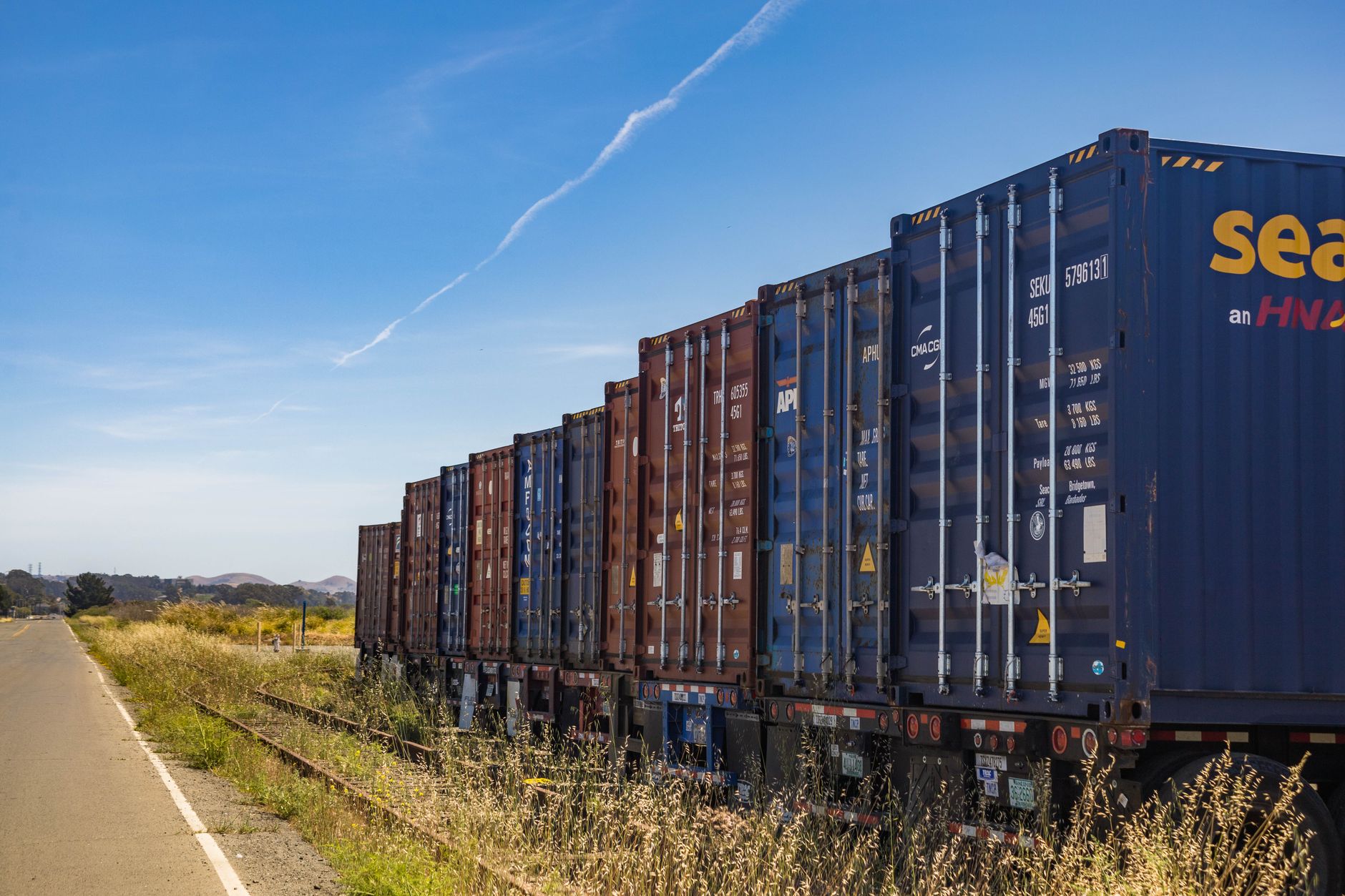
This strong financial performance was underpinned by a remarkable 10% increase in intermodal volume, marking the first double-digit growth in over a decade. The company achieved a record 578,000 intermodal loads, reflecting what Intellectia.AI described as "robust performance in market competition and rapid response to customer demand." This volume growth was broad-based, with transcontinental network loads increasing 5% and Eastern network loads jumping 16% compared to Q2 2025. The value proposition of intermodal, particularly in an environment of higher fuel prices and constrained driver availability in other modes, proved highly attractive to customers. JBI's gross revenue per load also increased 11%, driven by higher fuel surcharge revenue, customer rates, and a favorable mix of freight. The segment's operating income improvement was primarily due to enhanced network efficiency, strong volume growth, productivity gains across the dray network, and a lower proportion of empty container moves, partially offset by higher insurance and professional driver expenses.
Other segments also contributed to the overall strength. Integrated Capacity Solutions (ICS), the brokerage arm, saw its revenue skyrocket 49.3% to $388.5 million, significantly beating the $300.75 million average estimate. Crucially, ICS returned to operating profitability, reporting $1.69 million in operating income compared to a $3.55 million loss in Q2 2025, indicating a successful inflection point. Dedicated Contract Services (DCS) continued its steady growth, with revenue up 9% to $921 million and operating income also rising 9% to $102.5 million. This segment's consistent performance reflects its long-term contractual nature and ability to provide stable, customized transportation solutions.
Strategic Discipline and Balance Sheet Strength
J.B. Hunt's strong Q2 2026 performance is not merely a reflection of favorable market conditions; it is also a testament to disciplined financial management and strategic cost control. Chief Financial Officer Brad Delco highlighted the company's proactive approach, noting that J.B. Hunt has successfully removed over $135 million in structural costs over the past year. This initiative has been instrumental in improving margins and laying the groundwork for sustainable future growth, as reported by Intellectia.AI.
The company's balance sheet further reinforces its financial health and operational flexibility. As of June 30, 2026, J.B. Hunt had approximately $1.15 billion outstanding on various debt instruments. This represents a significant reduction from $1.72 billion at June 30, 2025, and $1.47 billion at December 31, 2025, demonstrating a concerted effort to deleverage. Net capital expenditures for the six months ended June 30, 2026, approximated $144.9 million, a notable decrease from $399.1 million for the same period in 2025. This reduction in capex, coupled with debt repayment, indicates a focus on capital efficiency and optimizing returns.
While the company's cash and cash equivalents stood at a modest $4.2 million at quarter-end, the overall financial picture suggests a lean, well-managed operation. The effective income tax rate for Q2 2026 was 25.4%, down from 26.9% in Q2 2025, with an expected annual tax rate between 24.0% and 24.5% for 2026. These operational and financial disciplines are critical in a market where cost pressures, including insurance, financing, labor, and equipment pricing, remain significant, as noted by ACT Research. By managing its cost structure and debt, J.B. Hunt is better positioned to sustain profitability even if demand remains uneven.
Navigating Headwinds: The Bear Case for J.B. Hunt
Despite the overwhelmingly positive Q2 results, J.B. Hunt is not immune to challenges, and a balanced perspective requires acknowledging potential headwinds. While Intermodal and ICS shone, the Final Mile Services (FMS) and Truckload (JBT) segments faced difficulties. FMS revenue decreased 6% compared to Q2 2025, primarily due to "known business losses given our ongoing efforts to improve revenue quality and profitability across various accounts." This strategic pruning, while aimed at long-term health, resulted in a 30% decline in FMS operating income to $5.6 million, driven by lower revenue and higher purchased transportation expense.
More concerning was the Truckload (JBT) segment, which reported an operating loss of ($1.3) million in Q2 2026, a reversal from the $3.4 million operating income in Q2 2025. Although JBT revenue increased 35%, driven by a 14% increase in load volume and a 13% improvement in revenue per load excluding fuel surcharge, the operating loss was attributed to higher purchased transportation expense, which led to a 12% decline in gross profit. This indicates that while J.B. Hunt is gaining volume in Truckload, it is struggling with profitability due to the cost of third-party capacity. Stephens analysts, while positive overall, specifically noted "weaker (truckload) results" and "slightly lagging results in (truckload) attributed to the cost of third-party capacity."
Furthermore, while the overall market is tightening, the "supply-driven" nature means that broad-based freight demand acceleration is "still not defined," according to ACT Research. This leaves the market exposed to uneven demand in consumer- and goods-producing sectors. If a significant economic slowdown materializes, even a tight supply market could see pressure on volumes and rates. TradingKey, in a May 14, 2026, article, also highlighted "persistent headwinds in the core intermodal delivery business, citing declining volume growth and ongoing pressure on revenue per load" (though Q2 results largely contradicted the declining volume growth claim). The same article also suggested that J.B. Hunt's projected operating profit improvement for 2026 was "modest and falls below current market expectations," and a discounted cash flow analysis indicated the stock was "approximately 8.6% overvalued." While the Q2 beat may alleviate some of these concerns, the underlying pressures in certain segments and the potential for a demand-side shock remain valid risks.
Wall Street's Shifting Outlook
Wall Street's reaction to J.B. Hunt's Q2 2026 earnings has been largely positive, reinforcing the company's strong position in the evolving freight market. Stephens analysts Bascome Majors, Brady Lierz, Reed Seay, and Joe Enderlin maintained an "overweight (buy)" rating on J.B. Hunt stock. They attributed the earnings beat to "better-than-expected results in (intermodal) and partially offset by weaker (truckload) results," specifically highlighting the acceleration of intermodal volumes to +10% year-over-year and the inflection of ICS/brokerage back to operating profitability.
Prior to the Q2 report, analyst sentiment was already leaning positive, with multiple analysts rating the company as a Buy. A May 14, 2026, TradingKey article noted an average price target of $234.25, with a high of $290.00 and a low of $169.34. However, the Q2 results, particularly the robust Intermodal performance and the overall earnings beat, are likely to prompt upward revisions to these targets. The immediate after-hours price jump to $297.15 on July 15, 2026, indicates that the market is quickly repricing the stock to reflect the improved outlook, pushing it beyond the previous high end of analyst targets.
While some older reports or aggregated data might show a more mixed picture, such as Intellectia.AI noting 22 analysts forecast JBHT stock price to "fall," the most recent commentary directly following the earnings report, like that from Stephens, is decidedly bullish. The company's leadership also expressed optimism about future pricing opportunities, with J.B. Hunt forecasting a substantial increase in truckload rates by approximately 20% over the next two years, driven by stricter regulatory enforcement and reduced industry capacity. This forward-looking guidance, coupled with the strong Q2 execution, suggests that the consensus view is shifting towards a more favorable outlook for J.B. Hunt.
The Verdict: A Clear Path Through the Freight Bottleneck
J.B. Hunt's Q2 2026 earnings report is a definitive statement: the company is not merely surviving the current freight market, it is mastering it. The impressive beats on revenue and EPS, fueled by a resurgent Intermodal segment and disciplined cost management, underscore J.B. Hunt's ability to leverage a supply-constrained environment to its advantage. While challenges persist in segments like Final Mile Services and Truckload profitability, the overall narrative is one of strategic execution and market leadership. The company's proactive debt reduction and capital efficiency further strengthen its position, allowing it to capitalize on rising rates and tightening capacity.
The market's immediate after-hours reaction, pushing the stock to what would be a new 52-week high, confirms that investors are recognizing this inflection point. J.B. Hunt is well-positioned to continue benefiting from the structural changes in the trucking industry, where capacity discipline, rather than just demand, is driving profitability. For investors looking for exposure to a transportation leader poised to thrive in this new market reality, J.B. Hunt presents a compelling opportunity.
Given the strong Q2 performance and the positive market outlook, we establish an entry zone between $270 and $280. Our 12-month price target for J.B. Hunt is $325, reflecting continued earnings momentum and multiple expansion as the market fully prices in the benefits of a tightening freight environment. An invalidation level of $255 would signal a deterioration in market conditions or a failure to execute on strategic initiatives, warranting a re-evaluation of the thesis. J.B. Hunt is not just moving freight; it's moving ahead of the curve.
Want deeper research on any stock? Try Kavout Pro for AI-powered analysis, smart signals, and more. Already a member? Add credits to run more research.
Related Articles
Category
You may also like


Cushman & Wakefield Report: Tight Supply, Rising Costs And Structural Uncertainty Set To Shift Power Back to Landlords Across Global Logistics Markets

Freight Boom: The Hormuz Blockade Payday

J.B. Hunt Says Freight Rates Are Rising as Capacity Tightens, Not Demand
Breaking News
View All →Featured Articles
Top Headlines

Japan's Enterprises and Startups Build Industry-Specialized AI With NVIDIA Nemotron Open Models
My 3 Favorite AI Stocks to Buy on the Continued Chip Sell-Off

Apple Could Buy an AI Chip Company. Its Hot Stock Just Set a Fresh Record High

Why QQQM's 0.15% Fee Crushes QQQ for Long-Term Growth Investors