- Rep. Robert E. Latta's consistent purchases of Farmers & Merchants Bancorp (FMAO) stock, including recent dividend reinvestments, signal strong conviction in the regional bank's long-term prospects.
- FMAO delivered a robust Q1 2026 performance, beating EPS estimates with $0.70 per share and growing net income to $9.6 million, supported by solid asset and deposit growth.
- While congressional stock trading raises ethical questions and calls for stricter bans, Latta's transparent disclosures offer a unique lens into a politician's personal investment thesis in a specific company.
The Political Playbook: Why Rep. Latta's FMAO Trades Matter
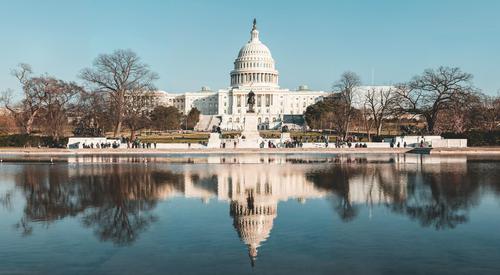
When a sitting member of Congress repeatedly buys stock in a specific company, it tends to turn heads. Representative Robert E. Latta (R-Ohio), a veteran House member, has been consistently accumulating shares of Farmers & Merchants Bancorp (NASDAQ: FMAO), a regional bank, with his latest purchase of $1,001 to $15,000 disclosed on April 24, 2026, for a transaction made on April 20, 2026. This isn't an isolated event; Latta has a documented history of FMAO purchases, often through dividend reinvestment, stretching back years.
This pattern of sustained buying, particularly from an individual with access to high-level economic and legislative insights, offers a fascinating, albeit controversial, signal to the market. While the Stop Trading on Congressional Knowledge (STOCK) Act of 2012 mandates disclosure of such trades, it doesn't prohibit them. The underlying concern, of course, is the potential for lawmakers to leverage non-public information for personal financial gain, or at least create the appearance of a conflict of interest.
The public's trust in Congress is already low, and congressional stock trading remains a hot-button issue, with polls showing widespread support for an outright ban. However, in the absence of such a ban, these disclosures provide a unique, if imperfect, window into the investment decisions of individuals who are deeply embedded in the nation's economic policy-making apparatus. Latta's consistent FMAO buys suggest a deep-seated conviction in the bank's stability and future performance, a conviction he's putting his own capital behind.
His role on the House Committee on Energy and Commerce, where he chairs the Subcommittee on Energy and serves on Communications and Technology and Environment, doesn't directly intersect with regional banking. This distance from direct banking oversight might actually lend more credibility to his FMAO investment as a pure financial play, rather than one influenced by legislative power. Still, the optics of any congressional trading are always under scrutiny, making Latta's FMAO position a notable data point for investors tracking political sentiment.
Beyond the intrigue of congressional trading, Farmers & Merchants Bancorp recently delivered a strong financial performance for the first quarter of 2026, underscoring the potential rationale behind Rep. Latta's continued investment. The bank reported a significant jump in net income, rising to $9.6 million compared to $7.0 million in the prior-year quarter. This translated into basic and diluted earnings per share (EPS) of $0.70, comfortably beating analyst consensus estimates of $0.68.
The robust earnings were primarily driven by a healthy increase in net interest income after provision for credit losses, which grew to $27.1 million from $23.4 million year-over-year. This was further bolstered by a rise in noninterest income, reaching $5.0 million compared to $4.2 million in Q1 2025. Key drivers for this noninterest income growth included customer service fees, loan servicing income, higher gains on the sale of loans, and an increased cash surrender value of bank-owned life insurance.
On the balance sheet front, FMAO demonstrated solid growth, with total assets expanding to $3.49 billion as of March 31, 2026, up from $3.43 billion at the end of 2025. Total deposits also saw a healthy increase, reaching $2.81 billion compared to $2.73 billion at December 31, 2025, indicating strong customer retention and attraction. While loans, net of allowance for credit losses, slightly decreased to $2.65 billion from $2.69 billion, the overall asset quality remained sound, with a provision for credit losses on loans of just $0.3 million, down from $0.8 million a year earlier.
The bank's commitment to shareholder returns is evident in its dividend policy. FMAO declared a cash dividend of $0.23 per share for Q1 2026, marking its 31st consecutive year of increasing annual cash dividends. This consistent return of capital, coupled with a tangible stockholders’ equity increase to $285.9 million (or $20.76 per share) from $252.9 million (or $18.44 per share) a year ago, paints a picture of a financially sound institution with a clear focus on long-term value creation.
Regional Banking Landscape: Headwinds and Tailwinds for FMAO
The regional banking sector, where Farmers & Merchants Bancorp operates, is navigating a complex environment marked by both significant challenges and unique opportunities. On one hand, the persistent high-interest rate environment has squeezed net interest margins for many banks, as the cost of deposits rises faster than loan yields. This pressure is compounded by intense competition from larger national banks and fintech disruptors, all vying for deposit share and lending opportunities. Regulatory scrutiny also remains a constant, with regional banks facing increasing compliance burdens.
However, regional banks like FMAO possess inherent advantages that can act as powerful tailwinds. Their deep community ties, personalized customer service, and local decision-making capabilities often foster stronger relationships with small businesses and individual clients. This local focus can translate into more stable deposit bases and a better understanding of regional economic dynamics, allowing for more tailored lending solutions. FMAO, headquartered in Archbold, Ohio, with operations extending into California, leverages this community-centric model across diverse markets.
The current economic outlook, while uncertain, also presents opportunities. Should interest rates stabilize or begin to decline, it could alleviate some of the pressure on net interest margins, allowing for improved profitability. Furthermore, the consolidation trend in the banking sector means that well-managed, profitable regional banks like FMAO could become attractive acquisition targets for larger institutions seeking to expand their geographic footprint or market share. This potential for M&A activity can provide a significant upside for shareholders.
FMAO's consistent dividend growth for over three decades speaks to its resilience and disciplined management through various economic cycles. This track record, combined with its strong Q1 2026 performance, positions it as a potentially robust player within the regional banking landscape. While the sector faces headwinds, FMAO's strategic focus on community banking and its demonstrated financial health suggest it is well-equipped to capitalize on its inherent strengths and navigate the broader economic currents.
Valuation and Analyst Sentiment: Is FMAO a Buy, Hold, or Sell?
Assessing Farmers & Merchants Bancorp's (FMAO) current valuation and analyst sentiment is crucial for any investor considering the stock. As of May 1, 2026, FMAO trades at $27.25, giving it a market capitalization of $374.6 million. The stock has seen a +1.76% increase from its previous close, but its 52-week range of $22.59 to $29.83 indicates it's trading closer to the upper end of its recent performance.
With a trailing P/E ratio of 10.21 and an annualized dividend yield of approximately 3.5% (based on the $0.23 quarterly dividend), FMAO presents a picture of a value-oriented investment. For comparison, the broader regional banking sector often trades at similar or slightly higher multiples, suggesting FMAO is reasonably valued given its consistent profitability and dividend history. The beta of 0.81 also indicates lower volatility compared to the overall market, which might appeal to risk-averse investors.
Analyst coverage, while not extensive, leans towards a "Hold" consensus. MarketBeat reports that one equities research analyst has a "Buy" rating, while three others maintain a "Hold" rating. The consensus target price stands at $28.25, implying a modest upside from the current trading price. This suggests that while analysts acknowledge the bank's solid fundamentals, they may not see significant short-term catalysts for a major price surge.
Recent analyst actions include Piper Sandler initiating coverage with a "neutral" rating and a $28.00 target price, Hovde Group lowering their target from $30.00 to $28.50 with a "market perform" rating, and Zacks Research downgrading to a "hold." Conversely, Weiss Ratings upgraded FMAO from "hold (c+)" to "buy (b-)." This mixed sentiment underscores the nuanced view of FMAO's prospects, balancing its stable performance against potential growth limitations in a competitive market. Investors should weigh these opinions against their own research and risk tolerance.
The Ethics of Congressional Trading: A Broader Context
Rep. Robert E. Latta's consistent FMAO purchases, while disclosed, inevitably bring to the forefront the ongoing debate surrounding congressional stock trading. The core issue revolves around the potential for conflicts of interest and the erosion of public trust. Lawmakers, by virtue of their positions, often have access to nonpublic information that could influence financial markets, or they may shape policies that directly impact sectors in which they hold investments. This creates an inherent ethical dilemma.
Despite the passage of the STOCK Act in 2012, which aimed to increase transparency by requiring timely disclosure of trades, it has largely fallen short of preventing the appearance of impropriety. The penalty for violating the STOCK Act is a mere $200, a negligible deterrent against potentially millions in profits. A 2020 report highlighted that House and Senate members reported approximately 1,600 stock trades valued up to $160 million during the initial months of the COVID-19 pandemic, a period when critical legislation impacting various industries was being debated.
Public sentiment overwhelmingly favors stricter regulations, with a recent poll indicating that 7 out of 10 Americans hold unfavorable views of Congress, partly due to these ethical concerns. Various proposals have been floated to address the issue, ranging from requiring lawmakers to place their assets in blind trusts, to permitting them to only keep stocks owned prior to holding office, or an outright ban on individual stock trading for members and their immediate families. The "Restore Trust in Congress Act," introduced in September 2025, aims to implement such a ban and has garnered bipartisan support.
While Latta's trades are transparently disclosed, the broader context of congressional trading highlights a systemic issue that continues to undermine confidence in government. For investors, tracking these trades can be a data point, but it also serves as a reminder of the ethical tightrope lawmakers walk. The push for a comprehensive ban reflects a growing recognition that transparency alone may not be sufficient to address the deep-seated concerns about self-dealing and the integrity of public service.
Insider Activity and Institutional Interest: Who Else is Buying FMAO?
Beyond Rep. Latta's notable activity, examining other insider trades and institutional ownership provides a more comprehensive picture of sentiment around Farmers & Merchants Bancorp. While Latta's purchases signal conviction, the broader corporate insider activity for Q1 2026 showed a mixed signal: 0 purchases and 2 sales, with a buy/sell ratio of 1.00. Specifically, Eric D. Faust, the Chief Risk Officer, sold 1,148 shares for $25.16 on March 23, 2026. Andrew S. Baker, SVP/Chief Strategy Officer, received 1,722 shares as an award on March 2, 2026, but also had an in-kind transaction of 90 shares on the same date. Shalini Singhal, SVP/Chief Information Officer, also received an award of 1,620 shares on March 2, 2026.
This mixed insider activity, with sales and awards but no open-market purchases by corporate executives, contrasts with Latta's consistent buying. It suggests that while executives are receiving shares as part of their compensation, some are also taking profits. This divergence can be interpreted in various ways: executives might be diversifying their portfolios, or they may have a different short-term outlook than Latta.
Institutional investors, however, show a significant presence, collectively owning roughly 23.96% of FMAO stock. This indicates that a substantial portion of the company is held by professional money managers, which often lends stability to a stock. Recent movements in Q4 2025 saw Royal Bank of Canada increase its stake by 124.6%, acquiring an additional 643 shares to own 1,159 shares valued at $28,000. CANADA LIFE ASSURANCE Co also acquired a new stake valued at approximately $34,000. BNP Paribas Financial Markets grew its stake by 36.0%, and Farther Finance Advisors LLC increased its holdings by 126.2%.
The growing interest from institutional investors, alongside Latta's personal conviction, suggests a quiet accumulation by sophisticated players who see value in FMAO's fundamentals and consistent performance. While corporate insider sales warrant attention, the overall picture from both political and institutional fronts points to a belief in FMAO's long-term stability and potential.
Farmers & Merchants Bancorp presents a compelling case for investors seeking a stable regional bank with a strong dividend history and solid financial performance. While the ethical debate around congressional stock trading continues, Rep. Latta's consistent FMAO purchases, coupled with growing institutional interest, suggest a quiet confidence in the bank's future. Investors should consider FMAO's robust Q1 2026 results and its position within the evolving regional banking landscape as they evaluate its place in their portfolios.
Want deeper research on any stock? Try Kavout Pro for AI-powered analysis, smart signals, and more. Already a member? Add credits to run more research.