Kavout

MarketLens

Log in

Unlocking Joel Greenblatt’s "Magic Formula": A Simple Guide to Smarter Investing

May 28, 2025
SHARE THIS ON:

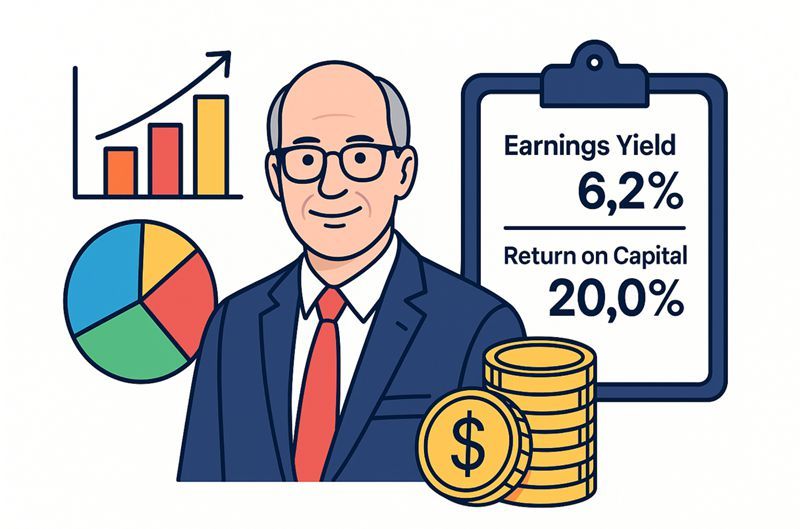
225052801.jpg Ever wonder how some investors consistently beat the market without advanced degrees or secret connections? Joel Greenblatt, a renowned hedge fund manager and professor, shared exactly how it's done in his book, The Little Book That Beats the Market. He calls it the "Magic Formula," and despite the whimsical name, it’s backed by real-world success—Greenblatt himself achieved annual returns averaging 40% over two decades with this method.

Demystifying the Magic Formula

At its core, the Magic Formula is about finding good companies at bargain prices, using straightforward metrics and a disciplined approach. Greenblatt made this method intentionally simple, explaining it with what he humorously calls "6th-grade math." It’s designed to strip away emotions, helping everyday investors avoid common pitfalls like panic selling or impulsive decisions based on market swings.

The Philosophy Behind the Magic

Greenblatt’s investment approach isn’t revolutionary—it’s deeply rooted in the classic value investing principles championed by legends like Benjamin Graham and Warren Buffett. The goal is straightforward: buy quality assets at attractive prices. By systematically using quantitative measures, the formula removes guesswork and emotion, which are typically the biggest hurdles for most investors.

Two Powerful Metrics: Earnings Yield and Return on Capital

The Magic Formula revolves around just two metrics: Earnings Yield and Return on Capital. Together, they help investors quickly identify undervalued yet financially strong companies.

1. Earnings Yield: Spotting Bargains

Earnings Yield essentially flips the familiar Price-to-Earnings (P/E) ratio on its head. Instead of focusing on how much you're paying for each dollar of earnings, Earnings Yield tells you how much a company earns relative to its price. Greenblatt refines this by using EBIT (Earnings Before Interest and Taxes) divided by Enterprise Value (EV)—a holistic measure that factors in a company’s total value, including debt and cash. This method ensures you're comparing apples to apples, giving a clearer picture of true value and profitability.

2. Return on Capital (ROC): Measuring Quality

Return on Capital measures how effectively a company uses its invested money to generate profits. Greenblatt uses EBIT divided by tangible capital (Net Fixed Assets plus Working Capital) to gauge efficiency clearly. High ROC companies typically have strong competitive advantages, efficient operations, and robust management—traits of a "good company."

Combining Quality with Value

The magic happens when these metrics work together. Companies are ranked separately by Earnings Yield and Return on Capital, then these ranks are combined. Stocks scoring well on both measures float to the top, ensuring you're looking at high-quality companies trading at attractive valuations.

Putting the Formula to Work: Step-by-Step

Setting the Universe

  • Size Matters: Start by focusing on larger companies (over $1 billion market cap) to ensure stability and liquidity.
  • Exclusions: Avoid financials, utilities, and ADRs since their financial structures differ significantly from other sectors.

Ranking and Selecting Stocks

  • Calculate and Rank: List companies first by Earnings Yield, then by Return on Capital.
  • Combine Scores: Sum both rankings. Lower combined scores mean better investment candidates.

Building a Diversified Portfolio

  • Diversify Wisely: Invest in 20-30 top-ranked companies to spread risk.
  • Stagger Investments: Buy stocks gradually throughout the year to average out market volatility.

Ongoing Management

  • Annual Rebalancing: Regularly update your portfolio by replacing lower-ranking stocks with new, higher-ranking ones each year.
  • Tax Efficiency: Time your trades smartly—sell losses just before one year to offset taxes, and hold winners slightly over a year for favorable long-term capital gains.

Does it Actually Work?

The Magic Formula boasts an impressive track record, historically outperforming the S&P 500 significantly. While independent studies confirm strong long-term performance, it's crucial to note periods of underperformance—sometimes lasting years. These phases, however, are part of the process, helping maintain the formula's long-term edge as impatient investors drop out. Studies have also shown the strategy to be effective globally, from the U.S. to Europe, Asia, and beyond, proving its broad applicability.

Navigating Common Pitfalls

Like any strategy, the Magic Formula isn't foolproof. It’s intentionally simple, sometimes overlooking qualitative details or sector concentration risks. Investors also face psychological challenges, particularly during inevitable downturns. The biggest enemy to success is impatience—sticking with the strategy during tough times is essential.

Enhancing the Magic: Adapting to Modern Markets

While powerful, the Magic Formula can also be adapted. Research suggests combining it with other factors—like momentum (buying stocks already trending upward) or Price-to-Book ratios (highlighting undervalued assets)—can enhance returns. Continuous learning and slight adjustments keep the strategy effective as markets evolve.

The Real Magic: Discipline and Patience

Joel Greenblatt’s Magic Formula isn’t magical because it's complex or secretive. Its power lies in disciplined execution and emotional control. By systematically finding undervalued, quality companies and sticking to clear rules, investors can achieve significant long-term success.

Whether you're new to investing or experienced yet looking for clarity, the Magic Formula provides a proven, simple method. Its greatest lesson? Real investment success isn't just about numbers—it’s about mastering your behavior and emotions to stick with a solid, rational strategy over the long haul. For a practical and user-friendly way to apply this powerful strategy, you can explore the Magic Formula stock selection at Kavout's AI Stock Picker, which offers a straightforward tool for identifying attractive investment opportunities based on Greenblatt’s criteria.

SHARE THIS ON:

Related Articles

Category

You may also like

No related articles available

Breaking News

View All →

No topics available at the moment