MarketLens
What Do Trump-Linked Crypto ETFs Mean for the Market

Key Takeaways
- Trump-linked entities are aggressively expanding into crypto ETFs, including staking products for Bitcoin, Ethereum, and Cronos, signaling a deepening political embrace of digital assets.
- Elon Musk's X platform is set to integrate direct stock and crypto trading via "Smart Cashtags," aiming to transform social media into a real-time financial hub.
- Despite a pro-crypto political environment, market volatility persists, with Bitcoin currently trading well below its 52-week high, challenging the narrative of guaranteed upside.
What Do Trump-Linked Crypto ETFs Mean for the Market?
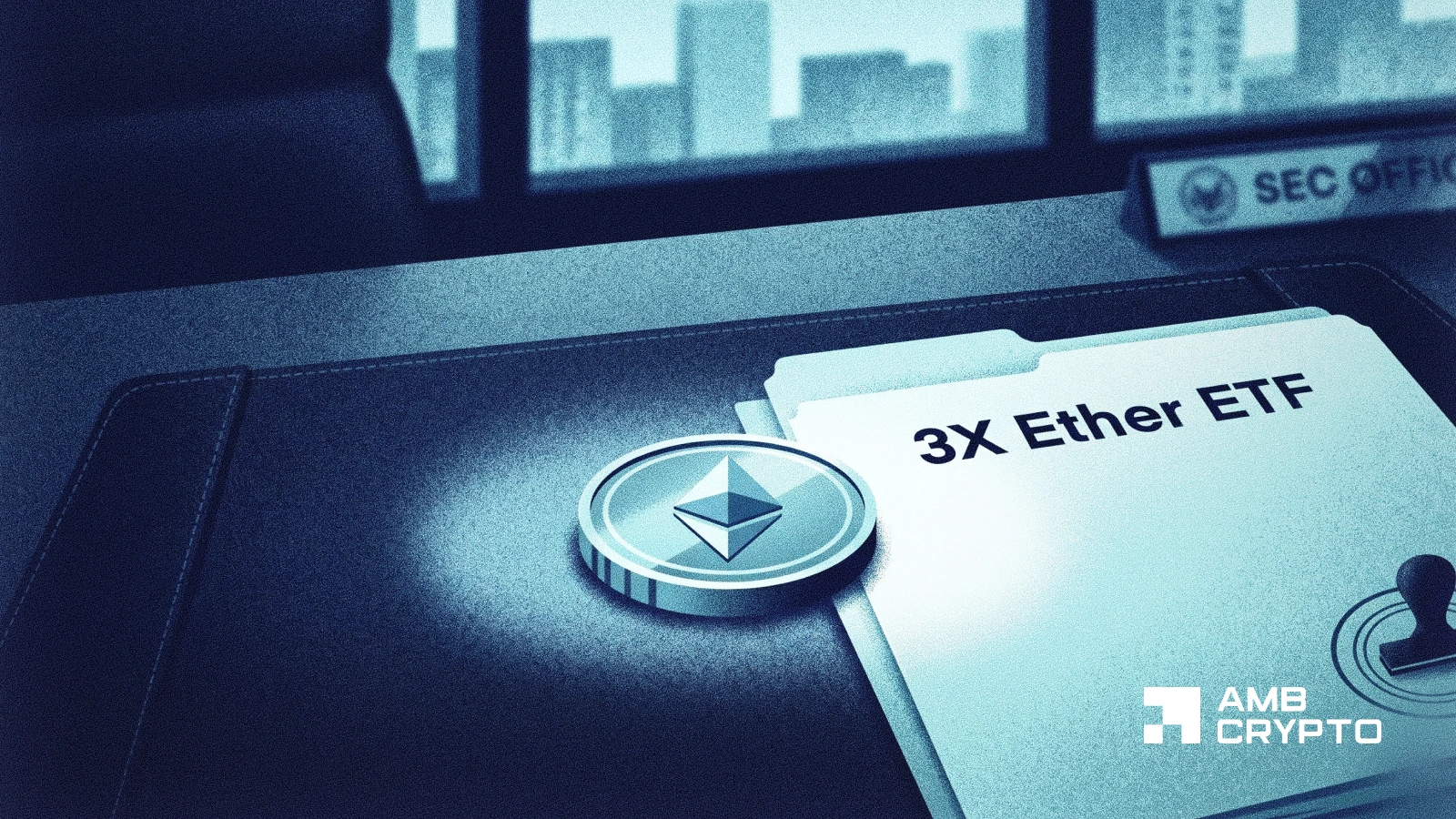
The recent filings by Truth Social Funds, the ETF arm of Trump Media and Technology Group, for new Bitcoin, Ethereum, and Cronos (CRO) staking ETFs represent a significant escalation in the political mainstreaming of digital assets. These aren't just vanilla spot ETFs; the "Truth Social Bitcoin and Ether ETF" will feature a 60-40 BTC-ETH split and offer staking rewards for its Ether position, while the "Truth Social Cronos Yield Maximizer ETF" will provide exposure to CRO with native staking benefits. This move, in partnership with Crypto.com for custody and staking services, builds on previous filings for a standalone Bitcoin ETF and a broader crypto blue-chip basket.
This aggressive push into diversified crypto products, especially those offering staking yields, signals a strategic intent to capture a wider segment of the crypto investment market. The 0.95% management fee, advised by Yorkville America Equities, is on the higher side, entering a market already crowded with established players like BlackRock, Fidelity, and Grayscale. These existing U.S. spot Bitcoin ETFs have recently seen over $360 million in outflows, indicating a challenging environment for new entrants, despite the political tailwinds.
The political ties are undeniable. President Trump has consistently advocated for making America the "crypto capital of the world," a narrative that has influenced market sentiment, with 52% of Americans believing crypto values will increase under his presidency. However, the actual impact on values in 2025 was less dramatic than expected, and the global crypto market capitalization has recently erased gains made since Trump's inauguration. This suggests that while political rhetoric can boost optimism, it doesn't insulate the market from inherent volatility or global macroeconomic pressures.
Beyond ETFs, Trump Media is also exploring distributing a new digital token to shareholders on the Cronos network and establishing a corporate crypto treasury involving CRO. These initiatives underscore a comprehensive strategy to integrate blockchain technology across its business ventures. The move deepens the overlap between U.S. politics and the crypto investment sector, but also raises questions about potential conflicts of interest as regulatory decisions affecting digital assets continue to be debated in Washington.
How Will Elon Musk's X Integration Reshape Crypto Adoption?
Elon Musk's social media platform, X (formerly Twitter), is poised to fundamentally alter how users interact with financial markets by integrating stock and cryptocurrency trading directly into user feeds. This ambitious initiative, spearheaded by X's Head of Product Nikita Bier, will roll out "Smart Cashtags" within a couple of weeks, allowing users to view real-time asset data and execute trades immediately after discovering an asset on their timeline. This isn't just a minor feature; it's a strategic pivot to transform X into a dominant player in financial technology and a real-time financial information hub.
The direct integration of trading capabilities on a platform with X's global reach could significantly accelerate mainstream crypto adoption. By embedding financial transactions within the social media experience, X aims to lower the barrier to entry for new investors and streamline the trading process for existing ones. This move aligns with broader industry trends where technology firms are building robust, compliant financial infrastructures, positioning cryptocurrency as a seamless utility rather than a disruptive novelty. The success of this feature, however, will hinge on critical factors such as execution speed, reliability, a competitive fee structure, comprehensive educational resources, and paramount security measures.
X's in-house payments system, X Money, is also preparing for an external beta launch within one to two months, further cementing the platform's financial ambitions. This ecosystem approach, combining social interaction with direct financial services, could create powerful network effects. Imagine a scenario where market-moving news breaks on X, and users can instantly react by trading the affected assets without leaving the app. This level of immediacy could amplify market movements, both positive and negative, as information dissemination and trading execution become virtually instantaneous.
While the potential for increased adoption is immense, there are inherent risks. The volatile nature of cryptocurrencies, coupled with the potential for rapid sentiment shifts on social media, could expose retail investors to heightened risks. X will need to implement robust safeguards and educational tools to prevent user error and protect against market manipulation. The platform's ability to balance accessibility with investor protection will be crucial for long-term trust and sustainable growth in this new paradigm of social finance.
Is the Current Crypto Market a Bull Trap or a Buying Opportunity?
The cryptocurrency market currently presents a complex picture, characterized by a mix of institutional adoption and persistent volatility, leaving investors questioning whether the recent price action is a bull trap or a genuine buying opportunity. Bitcoin, the market leader, is trading at $68,955.91, significantly below its 52-week high of $126,296.00. Similarly, Ethereum is at $2,004.54, far from its $4,955.90 high, and Cronos (CRO) sits at $0.08, a fraction of its $0.39 peak. These figures reflect a market that has seen substantial declines from previous highs, with Bitcoin's price behavior increasingly driven by leveraged derivatives exposure.
This downturn follows a period of "liquidity shock" in late 2025, triggered by macroeconomic uncertainty and tariff threats from the Trump administration, which saw Bitcoin plummet from $126,000 to $87,000 by January 2026. The market experienced over $18 billion in crypto sellouts through liquidations, highlighting Bitcoin's vulnerability to policy-driven market shocks despite its aspirational role as an inflation hedge. The fragility of leveraged crypto markets, where a single day of tariff-related uncertainty in February 2025 saw over $1 billion in liquidations, continues to amplify price swings.
However, beneath the surface of price fluctuations, institutional activity remains steady. Spot Bitcoin and Ethereum ETFs continue to attract capital, signaling long-term investment confidence from large financial players. This dichotomy—declining prices alongside sustained institutional interest—defines much of the current market discussion. While retail investors might be reducing risk exposure, smart money appears to be viewing dips as potential accumulation phases, especially with the backdrop of a more crypto-friendly regulatory environment.
The question of whether this is a bull trap or a buying opportunity hinges on an investor's time horizon and risk tolerance. For short-term traders, the market remains highly susceptible to macroeconomic headlines and leveraged liquidations. For long-term holders, the increasing institutional integration, coupled with a supportive political climate, could suggest a higher floor over time, even if day-to-day volatility remains punishing. The market is in a stress test, but capital appears to be pausing in stablecoins rather than exiting the ecosystem entirely, reflecting a deliberate "wait-and-see" approach.
What Are the Key Regulatory and Political Headwinds and Tailwinds?
The cryptocurrency market is navigating a complex regulatory and political landscape, characterized by both significant tailwinds from a pro-crypto administration and persistent headwinds from inherent market risks and ongoing legislative uncertainty. A major tailwind is President Trump's explicit embrace of crypto rhetoric, with pledges to make America the "crypto capital of the world" and a "clean break" from previous enforcement-first approaches. His administration signed "Strengthening American Leadership in Digital Financial Technology" in 2025, overturning key Biden-era directives and banning a U.S. CBDC.
This shift has led to concrete policy actions, including the establishment of a Strategic Bitcoin Reserve and a public treasury of ETH, XRP, SOL, and ADA. Furthermore, the GENIUS Act, passed in July 2025, created a pathway for the legal issuance of USD stablecoins, a significant step towards regulatory clarity for this crucial segment of the market. These policies, according to experts, aim to prioritize structure, safety, and regulatory clarity, fostering an environment where quality projects are rewarded over hype.
However, significant headwinds persist. Despite friendly rhetoric and executive actions, the market remains inherently volatile. As one expert noted, "In a small, illiquid market, every headline can hit like a sledgehammer." Friendlier policy, while attracting new capital, can paradoxically sharpen both rallies and crashes because underlying liquidity often remains shallow. This was evident in 2025, when Trump's tariff policies intensified Bitcoin's volatility, triggering risk-off sentiment and causing significant declines.
Regulatory approval for new products, such as the Truth Social ETFs, remains uncertain. The SEC's cautious stance, coupled with the need for Congress to pass comprehensive legislation for lasting crypto rules, creates an environment of ongoing ambiguity. While the administration protects "lawful self-custody," ensuring Americans can "access and use blockchain networks without persecution," fundamental concerns about security, volatility, and regulatory oversight continue to prevent broader adoption, keeping ownership around 30% for the past three years. The political embrace, while beneficial, cannot salvage projects with broken tokenomics or no real users, meaning investors must still conduct thorough due diligence.
How Do These Developments Impact Major Cryptocurrencies and Coinbase?
The confluence of Trump-linked ETF filings and X's trading integration creates a dynamic environment with distinct implications for major cryptocurrencies like Bitcoin, Ethereum, Dogecoin, and XRP, as well as for crypto platforms like Coinbase. For Bitcoin and Ethereum, the Truth Social ETFs, particularly the 60-40 BTC-ETH split fund with staking rewards, offer another institutional on-ramp. This increased accessibility, alongside existing spot ETFs, could drive further demand, especially if SEC approval is secured. However, the market is already crowded, and the 0.95% fee could make these new offerings less competitive than established, lower-cost alternatives.
The inclusion of CRO in a dedicated yield-maximizer ETF is a significant boost for the Cronos ecosystem and Crypto.com, which will handle custody and staking. This partnership lends considerable legitimacy and visibility to CRO, potentially increasing its adoption and trading volume. For Dogecoin and XRP, while not directly included in the new Truth Social ETFs, they are part of Trump Media's previously filed crypto blue-chip basket ETF, indicating a broader institutional interest. Elon Musk's X integration, with its "Smart Cashtags," could provide a massive liquidity and visibility boost for all these cryptocurrencies, making them instantly tradable to X's vast user base.
Coinbase Global, Inc. (COIN), as a leading publicly traded crypto exchange, stands to benefit significantly from these developments. Increased institutional adoption through ETFs and enhanced retail trading accessibility via X could drive higher trading volumes and user acquisition for platforms like Coinbase. The company's stock price, currently at $164.32, up 16.46% from its previous close, reflects a positive sentiment, though it remains well below its 52-week high of $444.65. Coinbase's robust infrastructure and regulatory compliance position it well to capitalize on any surge in crypto activity.
However, Coinbase also faces challenges. The high fees of the new Truth Social ETFs could set a precedent that impacts fee compression across the industry, potentially squeezing margins for exchanges. Furthermore, the integration of direct trading on X could introduce a new competitor for retail order flow, although X is likely to partner with existing brokers or exchanges for execution. The ongoing regulatory scrutiny and the inherent volatility of the crypto market mean that while the tailwinds are strong, Coinbase must continue to innovate and adapt to maintain its competitive edge and navigate potential market downturns.
The Road Ahead: Navigating Crypto's New Frontier
The convergence of political endorsement and technological integration is ushering in a new era for cryptocurrency, but investors must remain vigilant. While Trump-linked ETFs and X's trading features promise broader adoption and accessibility, the market remains susceptible to macroeconomic shifts and regulatory uncertainties. Bitcoin's current price of $68,955.91 and Ethereum's $2,004.54 reflect a market still finding its footing after significant volatility.
The narrative of crypto as an "anti-system" asset has largely evolved, with major politicians and financiers now deeply integrated. This institutionalization brings resilience but also ties crypto more closely to traditional financial markets and their inherent fluctuations. Investors should focus on projects with strong fundamentals and clear utility, rather than relying solely on political rhetoric or social media hype.
For platforms like Coinbase, the path forward involves capitalizing on increased mainstream interest while navigating competitive pressures and evolving regulatory frameworks. The market's future will be shaped by a delicate balance between innovation, regulatory clarity, and the ability of these digital assets to demonstrate sustained real-world value. As the landscape continues to shift, disciplined position sizing and a long-term perspective will be crucial for success in this rapidly developing frontier.
Want deeper research on any stock? Try Kavout Pro for AI-powered analysis, smart signals, and more. Already a member? Add credits to run more research.
Related Articles
Category
You may also like
No related articles available
Breaking News
View All →No topics available at the moment