MarketLens
What Does Baker Hughes' Commonwealth LNG Contract Signify

Key Takeaways
- Baker Hughes' recent contract for the Commonwealth LNG project underscores its strategic pivot towards high-growth LNG infrastructure and advanced energy technology, moving beyond traditional oilfield services.
- The company's robust Industrial & Energy Technology (IET) segment, bolstered by a $32.4 billion backlog and the pending Chart Industries acquisition, positions it as a critical player in the global energy transition.
- Despite strong operational performance and long-term tailwinds, BKR's stock, currently trading near its $67.00 52-week high, faces a valuation test as the market assesses whether its LNG-driven growth is already fully priced in.
What Does Baker Hughes' Commonwealth LNG Contract Signify?
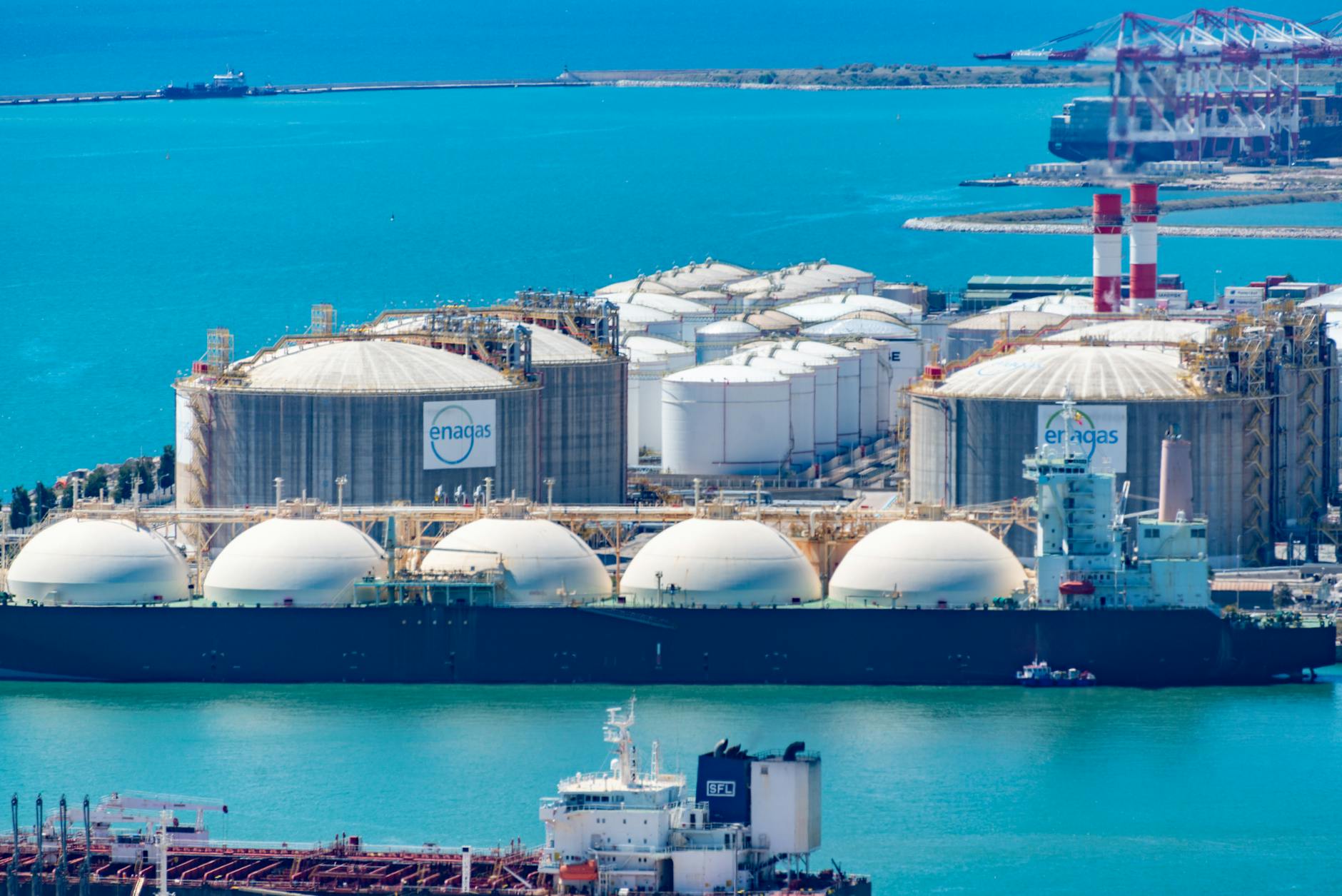
Baker Hughes recently secured a Full Notice to Proceed (FNTP) from Technip Energies for the delivery of critical liquefaction equipment for Commonwealth LNG’s export facility in Louisiana. This isn't just another contract; it's a clear signal of Baker Hughes' strategic entrenchment in the burgeoning global liquefied natural gas (LNG) market. The project, with a substantial 9.5 million tons per annum (MTPA) capacity, highlights BKR's role in expanding U.S. export capabilities to meet surging international demand.
The scope of this contract is comprehensive, covering six refrigerant turbo compressors powered by Baker Hughes' advanced LM9000 aeroderivative gas turbines, alongside centrifugal compressors. These LM9000 turbines are particularly noteworthy for their high efficiency, boasting over 44% under ISO conditions, and their relatively lower carbon emissions. This commitment to high-performance, lower-emission technology aligns perfectly with the global push for more sustainable energy solutions, even within the fossil fuel sector.
Beyond the hardware, the contract also includes crucial commissioning services, capital spares, and extended warranty services, ensuring long-term operational reliability. A full string test, where the turbine and compressor system is tested before installation, further de-risks the project for Commonwealth LNG. This holistic approach, from cutting-edge equipment to comprehensive support, reinforces Baker Hughes' strong position across the entire LNG equipment value chain.
This partnership with Technip Energies and Commonwealth LNG is a significant step towards the project's Final Investment Decision (FID), expected in the first quarter of 2026. It demonstrates how Baker Hughes is leveraging its technological prowess and strategic alliances to support the development of essential energy infrastructure. For investors, this contract is a concrete example of how BKR is translating its "New Energy" strategy into tangible revenue streams and strengthening its long-term visibility.
How is Baker Hughes Repositioning Itself in the Evolving Energy Landscape?
Baker Hughes is actively transforming its business model, moving beyond its historical identity as a pure-play oilfield services provider. This "industrial pivot" sees the company strategically aligning its portfolio to capitalize on robust long-term natural gas and LNG demand, alongside aggressive expansion into "New Energy" sectors like hydrogen and carbon capture. CEO Lorenzo Simonelli's "Horizon Two" strategy is clearly driving this evolution, aiming to position BKR as a critical infrastructure player for the 21st-century energy transition.
The company's Industrial & Energy Technology (IET) segment is the crown jewel of this transformation. This segment, which provides gas technology including turbomachinery, compressors, and turbines, holds a near-monopoly, with approximately 90% market share in the turbomachinery used for LNG liquefaction. This dominant position is reflected in a record equipment backlog of $32.4 billion in the IET division at the end of 2025, providing strong visibility into future revenue streams and earnings durability.
A key strategic move is the pending $13.6 billion acquisition of Chart Industries, expected to close by mid-2026. This acquisition is set to significantly broaden Baker Hughes' footprint in high-growth "New Energy" sectors, particularly hydrogen and carbon capture. Chart's expertise in cryogenic equipment for liquid hydrogen and CO2 transport creates a "one-stop-shop" for the entire value chain, cementing BKR's role in decarbonization efforts and further diversifying its revenue mix away from cyclical oil prices.
Beyond LNG and new energy, Baker Hughes is also tapping into the accelerating power demand from data centers and AI operations. Its NovaLT turbines are finding a new market in providing "behind-the-meter" power for massive data center complexes, addressing grid strain and offering reliable energy solutions. Furthermore, the company's digital solutions, such as the Cordant platform, leverage AI for predictive analytics and equipment maintenance, with over 2,000 assets under 24/7 monitoring, enhancing efficiency across various industrial sectors.
Is BKR's LNG-Driven Growth Already Priced into the Stock?
Baker Hughes shares have experienced a significant rally, climbing approximately 39.6% over the past year and 22% in the last six months, recently trading near its $67.00 52-week high. This robust performance suggests that much of the positive news surrounding its LNG-driven growth and strategic pivot may already be factored into the current stock price of $62.53. Investors are now grappling with a "valuation test," questioning whether there's substantial immediate upside remaining.
The market's reaction to Baker Hughes' 2025 financial results underscored this sentiment. While the company delivered a strong performance, with adjusted EBITDA growing 5% to a record $4.825 billion and revenue at $27.7 billion, the post-earnings stock pop was muted at just 4.78%. This indicates that the market had largely anticipated the strong operational execution, leading to a "buy the rumor, sell the news" dynamic or at least a "buy the rumor, hold the news" scenario.
Adding to the valuation debate is management's 2026 revenue guidance of approximately $27.25 billion, representing a modest 1% increase from 2025 levels. After a year of record backlog and strong execution, this guidance has been perceived by some as a "guidance reset," suggesting a more cautious outlook. For a stock trading at a P/E ratio of 23.87, a valuation that reflects a premium over traditional energy peers, such modest forward guidance can create an expectation gap.
Analyst sentiment, while largely positive, also reflects this caution. While 94% of analysts rate BKR a "Buy" or "Strong Buy," the consensus price target stands at $58, implying minimal immediate upside from the current trading level. Some analysts have even downgraded the stock from "Buy" to "Hold" citing valuation changes post-rally. This divergence between strong long-term fundamentals and near-term price targets suggests that the market is now demanding consistent outperformance against revised benchmarks for further significant appreciation.
What Are the Key Catalysts and Risks for BKR Investors?
For Baker Hughes investors, several catalysts could drive future stock performance, while equally significant risks warrant careful consideration. The most immediate catalyst is the formal closing of the $13.6 billion Chart Industries acquisition, expected by mid-2026. This event will allow Baker Hughes to provide combined guidance and synergy targets, potentially unlocking new value and solidifying its "New Energy" narrative. Successful integration and realization of synergies could lead to a stock re-rating, pushing BKR towards a "Tech-like" multiple (20x+ P/E) rather than its traditional "Energy-like" multiple (12x-15x P/E).
Another significant opportunity lies in the continued expansion of the global LNG market and the emerging hydrogen economy. Baker Hughes is uniquely positioned to benefit from the "second wave of LNG" as countries expand export capacity, particularly in the U.S. Gulf Coast. Any major government subsidy announcements for hydrogen infrastructure, such as extensions of the Inflation Reduction Act's 45Q tax credits for carbon capture, would provide a direct tailwind, accelerating demand for BKR's specialized equipment and services. The company's focus on providing power solutions for data centers also presents a growing, less cyclical revenue stream.
However, risks are equally pronounced. The integration of Chart Industries, being the largest acquisition in BKR's history as an independent company, carries inherent execution risks. Disruptions to existing operations or dilution of margins during the integration process could negatively impact financial results. Regulatory scrutiny, particularly from antitrust bodies in the EU and US, has already caused delays and remains a point of observation.
Furthermore, while BKR has diversified, it remains exposed to geopolitical sensitivities, especially in the Middle East and Central Asia, where regional conflicts can disrupt supply chains and project timelines. A prolonged global recession or a sharper downturn in upstream spending could still weigh heavily on its Oilfield Services (OFS) segment, even as the IET segment provides a buffer. Finally, the company's ambitious target of a 20% adjusted EBITDA margin by 2028 sets a high bar, and any miss could trigger profit-taking, especially given the stock's current valuation.
How Does BKR Stack Up Against Its Peers and What's the Long-Term Outlook?
Baker Hughes operates in a "Big Three" oligopoly alongside SLB (formerly Schlumberger) and Halliburton, but its strategic pivot gives it a distinct competitive edge. Unlike its peers, BKR boasts a near-monopoly in the heavy turbomachinery essential for LNG liquefaction, a critical component that neither SLB nor Halliburton manufactures. This unique "industrial" valuation premium is further enhanced by its aggressive expansion into "New Energy" sectors, differentiating it from companies more heavily exposed to international oil production cycles or North American shale.
The long-term outlook for Baker Hughes appears robust, underpinned by several macro trends. Global demand for natural gas is projected to increase by 20% by 2040, with LNG demand specifically expected to surge by approximately 75% over the same period. This sustained demand, driven by power requirements from data centers, AI operations, and Europe's pivot away from Russian pipeline gas, provides a multi-decade tailwind for BKR's turbomachinery and gas services. The company's record equipment backlog of $32.4 billion in its IET division provides strong visibility and a solid foundation for future growth.
Moreover, decarbonization mandates and carbon taxes are forcing industrial players to adopt carbon capture and storage (CCS) technologies, where Baker Hughes is a primary equipment provider. Its investments in the electrification of liquefaction and digital optimization further solidify its position as an energy technology company at the forefront of the transition. The pending Chart Industries acquisition is expected to accelerate this shift, creating a comprehensive offering across the hydrogen and carbon capture value chains.
While the stock's current P/E of 23.87 and recent price action suggest that much of the positive narrative is priced in, Baker Hughes' strategic repositioning offers a compelling long-term investment thesis. Its unique blend of critical LNG infrastructure, burgeoning "New Energy" solutions, and digital capabilities positions it to benefit from both the current energy reality and the accelerating energy transition. The company's ability to consistently execute its "Horizon Two" strategy and deliver on its ambitious margin targets will be key to unlocking further shareholder value.
Baker Hughes is no longer just an oil services company; it's an energy technology powerhouse. Its strategic pivot towards LNG and "New Energy" positions it for decades of growth, supported by a record backlog and key acquisitions. While the stock faces a near-term valuation test, its long-term narrative as a critical infrastructure provider for the global energy transition remains compelling.
Want deeper research on any stock? Try Kavout Pro for AI-powered analysis, smart signals, and more. Already a member? Add credits to run more research.
Related Articles
Category
You may also like


Airgain Secures Multi‑Million‑Dollar Purchase Order from Leading IoT Solutions Provider

Western Midstream Partners, LP Common Units (WES) Discusses Renegotiated Delaware Basin Contracts and Strategic Amendments for Natural Gas Gathering Transcript

Baker Hughes to Supply Liquefaction Equipment for Commonwealth LNG Export Project
Breaking News
View All →Featured Articles
Top Headlines

Meta Recruits Dreamer Team to Scale Personalized AI Agents

Melius analyst: Microsoft's Copilot reorganization is a ‘red flag'

Apple (AAPL) Beats Stock Market Upswing: What Investors Need to Know

Microsoft hires former Ai2 CEO Ali Farhadi and key researchers for Suleyman's AI team