MarketLens

Log in

What Does JD Sports Fashion's Share Buyback Mean for Investors

2 days ago
SHARE THIS ON:

What Does JD Sports Fashion's Share Buyback Mean for Investors

Key Takeaways

  • JD Sports Fashion PLC has completed a £100 million share buyback and announced another £100 million for FY27, signaling management confidence and aiming to bolster EPS.
  • The company faces a mixed retail environment, with strong performance in North America offsetting weaknesses in the UK and Europe, driven by strategic acquisitions and targeted marketing.
  • Analyst sentiment is cautiously optimistic, with recent price target trims reflecting fine-tuning of valuation models rather than a fundamental shift in the long-term growth narrative.

What Does JD Sports Fashion's Share Buyback Mean for Investors?

JD Sports Fashion PLC (LSE:JD.) has been actively engaging in capital allocation strategies designed to enhance shareholder value, most notably through significant share buyback programs. The company recently completed a tranche of its buyback program, repurchasing 115,071,637 shares for £100 million between August 27, 2025, and December 17, 2025. This move effectively reduced the company's share capital by 2.24%, demonstrating a clear commitment to returning capital to shareholders.

Looking ahead, JD Sports has already announced plans for an additional £200 million share buyback program for the fiscal year 2027, with the first £100 million tranche launched in April 2025, set to complete by July 31, 2025. These buybacks are not merely financial maneuvers; they serve as a strong signal of management's confidence in the company's intrinsic value and future cash flow generation. By reducing the number of outstanding shares, JD Sports aims to improve key per-share metrics like Earnings Per Share (EPS), making the stock potentially more attractive to investors.

The strategic rationale behind these buybacks extends beyond just financial engineering. In a volatile retail landscape, a consistent buyback program can provide a floor for the stock price and communicate stability. It suggests that management believes the company's shares are undervalued, making repurchasing them a more efficient use of capital than other investment opportunities. This ongoing capital allocation strategy is crucial for investors seeking long-term value and a company committed to shareholder returns amidst broader market uncertainties.

However, it's important to note that while buybacks can boost EPS, they don't fundamentally alter the company's operational performance. The success of this strategy ultimately hinges on JD Sports' ability to maintain and grow its underlying business, particularly its revenue and profit margins, in a challenging consumer environment. Investors should view the buyback as a positive sign of financial discipline, but also scrutinize the operational health that underpins such decisions.

How is JD Sports Navigating a Volatile Retail Landscape?

JD Sports is operating within a highly dynamic and often challenging retail environment, characterized by fluctuating consumer spending and intense competition. Despite these headwinds, the company's strategic focus on global expansion and a multi-brand, cross-category approach appears to be yielding mixed, but overall resilient, results. The fourth quarter of fiscal year 2026 saw group organic sales rise by 1.4%, though like-for-like (LFL) sales dipped by 1.8%, consistent with the third quarter's performance.

A key differentiator for JD Sports has been its robust performance in North America, its largest market. Here, LFL sales notably improved, increasing by 1.5% in Q4 FY26, a significant turnaround from the 1.7% decline recorded in Q3. This growth is attributed to disciplined execution of its trading plan, strong online performance, and increased brand awareness. The company is actively expanding its footprint in the U.S. through strategic acquisitions like Hibbett, Shoe Palace, and DLTR, and plans to double its JD fascia stores to 800 from the current 400. This aggressive push into the booming U.S. sneaker market, which now accounts for 60% of the country's footwear market, is a central pillar of its growth strategy.

Conversely, the company faced tougher conditions in its European and UK markets. Europe saw LFL sales decrease by 3.4% in Q4, while the UK experienced a 5.3% decline, both impacted by a cautious consumer environment and heightened promotional activity, particularly around Black Friday and the holiday season. This regional divergence highlights the importance of JD Sports' diversified global presence, allowing stronger markets to partially offset weaknesses elsewhere. Apparel sales remained resilient, but footwear sales were softer due to "end-of-cycle headwinds," despite positive momentum in running shoes.

CEO Régis Schultz acknowledged the "volatile consumer backdrop" but expressed confidence in the company's ability to "outperform the market" through its agile strategy. This involves targeted price investments during periods of softened demand, as seen in December, to maintain customer engagement. The company's ability to adapt swiftly to regional market conditions and product trends will be crucial for sustaining its competitive edge and driving future growth.

What Do Analysts Say About JD Sports' Valuation and Future Prospects?

Analyst sentiment surrounding JD Sports Fashion is a nuanced mix of cautious optimism and fine-tuning, rather than a wholesale shift in conviction. While the consensus rating remains a "Buy" from a majority of covering analysts, with an average 12-month price target around £107.8, there have been recent adjustments. Deutsche Bank lowered its price target by 10 GBp, and Citigroup by 1 GBp in early February 2026. These trims reflect slightly higher discount rate assumptions in their valuation models, along with marginal tweaks to long-term growth and P/E inputs.

Specifically, valuation models have seen the discount rate shift from 11.55% to 11.47% (a modest reduction in risk) or rise slightly from 11.47% to 11.52% (a small increase in risk assumption), depending on the analyst. Revenue growth assumptions have been adjusted from 3.70% to 3.29%, indicating a slightly softer top-line outlook. Similarly, the net profit margin has been revised from 4.68% to 4.53%, pointing to a small reduction in projected profitability. Despite these adjustments, the fair value, according to some models, has seen a small uplift from £1.07 to £1.08, suggesting that analysts are refining their models rather than fundamentally altering their long-term narrative for the company.

Bullish analysts appear comfortable that only modest adjustments to long-term growth inputs are needed, signaling a reasonable runway for the business case built into their models. They largely view the core operating story as intact, with adjustments primarily focused on how risk is being priced. Bearish analysts, however, are applying higher discount rates, leading to lower valuations and a more cautious stance on execution risk. They see less room for disappointment before the valuation becomes harder to justify.

The future P/E multiple has moved from 11.41x to 12.01x, implying that updated models are applying a somewhat higher multiple to projected earnings. This suggests that while near-term risks are being factored in, there's still an underlying belief in JD Sports' ability to support its earnings profile. Overall, the market is looking for stabilization in earnings and improved sentiment to drive a potential retail re-rating, especially given that the stock appears undervalued on traditional metrics relative to historical averages.

What are the Key Financial Health Indicators and Growth Drivers?

JD Sports' financial health, while facing some near-term pressures, remains robust, supported by strong cash flow generation and strategic capital management. For fiscal year 2026, the company expects its profit before tax and adjusting items (PBTAI) to broadly match City forecasts of around £849 million. This figure, however, represents a decline from £923 million in FY25 and £961 million in FY24, indicating a period of earnings pressure. The gross margin for FY26 is also anticipated to be around 0.5% lower than the previous year, settling at approximately 47.3%, primarily due to "controlled price investments" and increased promotional activity.

Despite these margin pressures, JD Sports is on track to deliver approximately £400 million in free cash flow for FY26. This strong cash generation is critical, as it underpins the company's ability to fund its share buyback programs and invest in future growth initiatives without relying heavily on external financing. The company's 'JD First' strategy, which prioritizes its core brand and global store expansion, has been a significant growth driver, evidenced by 226 net new JD fascia stores opened in FY25.

The primary growth engine for JD Sports continues to be its international expansion, particularly in North America. The U.S. market, with its booming sneaker culture and JD's strategic acquisitions, offers substantial upside. The company's plan to increase marketing initiatives in North America and expand its store count there underscores its commitment to leveraging this opportunity. In Asia Pacific, LFL sales growth of 2.8% in Q4 FY26 also points to healthy regional expansion.

However, the company's meaningful UK exposure makes it sensitive to domestic consumption cycles, and a cautious consumer environment in both the UK and Europe remains a headwind. The "muted broader industry growth" anticipated for FY27, coupled with the early stages of innovation from major brand partners in footwear, suggests that while the long-term growth trajectory is positive, the immediate future may require careful navigation. JD Sports' diversified revenue streams across physical retail and e-commerce platforms, combined with its strong partnerships with leading athletic brands, provide a solid foundation for navigating these challenges and capitalizing on long-term opportunities.

What are the Bull and Bear Cases for JD Sports?

The investment narrative for JD Sports Fashion presents a compelling bull case, primarily centered on its deep value valuation and aggressive global expansion. Bullish investors point to the stock appearing discounted relative to historical averages on traditional valuation metrics, suggesting significant upside potential if earnings stabilize and sentiment improves. The company's strategic focus on North America, a market with a booming sneaker culture and strong brand awareness for JD, is a major catalyst. Acquisitions like Hibbett and Courir, alongside plans to nearly double its JD fascia stores in the U.S., are expected to drive substantial revenue growth and market share gains.

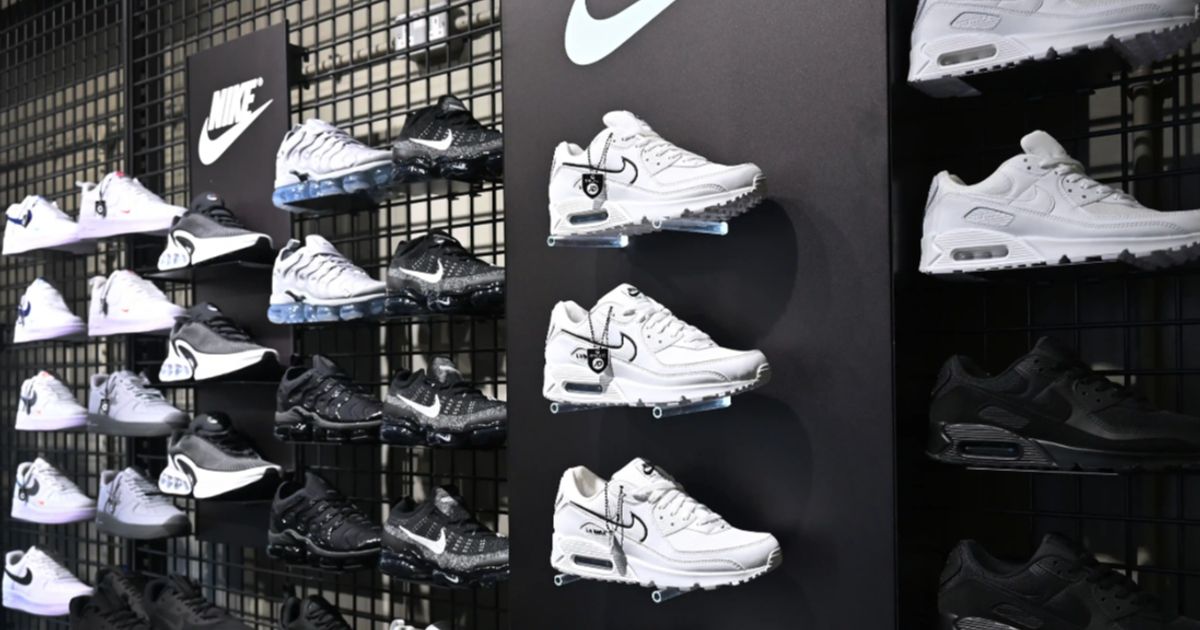
Furthermore, the ongoing share buyback programs, totaling £200 million for FY26 and FY27, signal strong management confidence and are expected to enhance EPS stability. This capital allocation discipline, combined with robust free cash flow generation (projected at £400 million for FY26), provides a solid financial foundation. The company's agile, multi-brand, cross-category approach, coupled with strong partnerships with leading athletic brands like Nike (which accounts for over 40% of JD's revenue), positions it to outperform the broader market despite a volatile consumer backdrop. Improved performance in North America, particularly the return to LFL sales growth in Q4 FY26, offers tangible evidence of this strategy's effectiveness.

On the flip side, the bear case for JD Sports highlights several significant risks. Prolonged retail demand weakness, particularly in its key European and UK markets, remains a considerable concern. LFL sales declines of 3.4% in Europe and 5.3% in the UK during Q4 FY26 underscore the impact of a cautious consumer environment and intense promotional activity. This pressure on demand is expected to lead to continued earnings volatility and margin compression, with the gross margin for FY26 projected to be 0.5% lower.

Competitive pressures are also intensifying, not just from direct rivals like Foot Locker and Sports Direct, but also from major brand partners like Adidas and Nike, which are increasingly focusing on direct-to-consumer (DTC) sales. This trend could erode JD Sports' market share and bargaining power. Additionally, macroeconomic factors such as high inflation, potential interest rate changes by the Bank of England, and GBP/USD exchange rate fluctuations pose risks to imported inventory costs and operating margins. The anticipated "muted broader industry growth" for FY27, combined with "end-of-cycle headwinds" in footwear and the early stages of innovation from brand partners, suggest a challenging period ahead where execution risk is high.

JD Sports Fashion presents a balanced risk-reward profile, offering deep value and strong international growth potential, particularly in North America, while navigating significant retail headwinds and competitive pressures. Investors should monitor quarterly earnings for signs of demand stabilization and track the progress of its U.S. expansion to gauge its long-term trajectory. If consumer confidence improves and earnings stabilize, the company could indeed emerge as a compelling retail re-rating candidate in 2026.


Want deeper research on any stock? Try Kavout Pro for AI-powered analysis, smart signals, and more. Already a member? Add credits to run more research.

SHARE THIS ON:

Related Articles

Category

You may also like

No related articles available

Breaking News

View All →

No topics available at the moment