Key Takeaways
- Pony.ai’s achievement of Gen-7 Robotaxi unit economics (UE) breakeven in Shenzhen marks a pivotal validation of its scalable commercialization strategy and operational efficiency in a critical market.
- The company is aggressively expanding its fleet and operational footprint, targeting over 3,000 robotaxis by late 2026 and exploring international markets, supported by an asset-light model and strategic partnerships.
- While Pony.ai demonstrates strong revenue growth and analyst bullishness, significant profitability challenges, high R&D costs, and intense competition necessitate a cautious, long-term investment perspective.
What Does Pony.ai's Shenzhen Breakeven Really Mean for Investors?
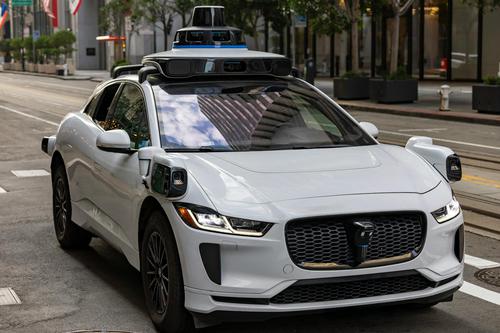
Pony.ai Inc. (NASDAQ: PONY) recently announced a significant milestone: its seventh-generation (Gen-7) Robotaxis have achieved unit economics (UE) breakeven in Shenzhen. This isn't just a technical achievement; it's a profound validation of the company's business model and a crucial step towards scalable commercialization in the fiercely competitive autonomous driving sector. For investors, this signals that Pony.ai is moving beyond the experimental phase, demonstrating its ability to generate sustainable revenue from its robotaxi operations in a major Chinese tier-one city.
The news, released on March 1, 2026, underscores Pony.ai's capability to build a viable business. Achieving UE breakeven means that the revenue generated by each robotaxi in Shenzhen now covers its direct operational costs, including vehicle depreciation, electricity, maintenance, remote assistance, insurance, ground support staff, and parking. This operational efficiency is a game-changer, proving that the company's technology and service model can indeed deliver a sustainable path to profitability, laying a solid foundation for multi-year expansion.
This milestone follows a similar achievement in Guangzhou last year, further solidifying the company's operational prowess across multiple key markets. The market has reacted positively, with Pony.ai's stock currently trading at $14.34, up 0.99% from its previous close. While the stock has seen a wide 52-week range of $4.11 to $24.92, this latest news provides a tangible catalyst, reinforcing investor confidence in its future prospects and its leadership position in China's rapidly evolving autonomous mobility landscape.
How is Pony.ai Driving Operational Efficiency and Fleet Expansion?
Pony.ai’s journey to unit economics breakeven in Shenzhen is underpinned by a combination of surging user demand and optimized operational efficiency. The company reported impressive metrics as of February 28, with a daily average net revenue per Gen-7 Robotaxi reaching RMB338 (approximately $47), driven by an average of 23 orders per vehicle per day. These figures are not just numbers; they reflect effective monetization strategies and a superior product offering that resonates with users, particularly during periods of robust travel activity like the Chinese New Year.
The company's strategic focus on cost reduction is also critical. Pony.ai has achieved an additional 20% reduction in the bill-of-materials (BOM) costs for its autonomous driving kits (ADK) designated for 2026 production, compared to the 2025 baseline. This continuous innovation in hardware and software, combined with efficient fleet management and a low remote-assistant-to-vehicle ratio, directly contributes to improved unit economics and a clearer path to overall profitability. It highlights a mature approach to scaling that balances technological advancement with financial prudence.
Fleet expansion is another key pillar of Pony.ai's growth strategy. As of Q3 2025, the company's Robotaxi fleet comprised 961 vehicles, with plans to exceed 1,000 by year-end 2025 and aggressively expand to over 3,000 vehicles by the end of 2026. This rapid scale-up is crucial for achieving the density needed to optimize operations and further improve unit economics. The company's partnerships, such as the one with Beijing ATBB Travel & Express Service Co., are instrumental in this expansion, allowing Pony.ai to leverage an asset-light model and focus on its core R&D and technology development.
What Does the Competitive Landscape Look Like for Pony.ai?
The autonomous driving market is a high-stakes race, and Pony.ai is a formidable contender, particularly within China. The company has established itself as a leader, being the first to secure city-wide driverless commercial permits in China and the first robotaxi company to join the MSCI China Index. This inclusion, effective February 27, 2026, significantly enhances its market recognition and investment appeal among global institutional investors, positioning it alongside major Chinese players.
In China, Pony.ai competes directly with giants like Baidu's Apollo Go and WeRide. Baidu claims its Apollo Go robotaxis are breaking even per car, and both Baidu and WeRide are aggressively expanding their operations, including into international markets like the Middle East. However, Pony.ai's repeated achievement of UE breakeven in multiple tier-one cities like Guangzhou and Shenzhen demonstrates a robust and replicable business model, a critical differentiator in a market where many competitors are still heavily subsidized.
Globally, the competition intensifies with players like Alphabet's Waymo, Amazon's Zoox, and Tesla. While U.S. rivals have largely focused on domestic expansion, Chinese companies, including Pony.ai, are actively pursuing international markets. Pony.ai aims to expand into eight countries, leveraging its partnerships and proven technology. The global robotaxi race is not just about technology; it's also about regulatory navigation, operational scalability, and capital efficiency, areas where Pony.ai's asset-light model and strategic focus on China's supportive regulatory environment give it a distinct advantage.
What are the Financial Implications and Risks for PONY Investors?
Pony.ai's financial trajectory, while showing promising signs of operational efficiency, still presents a mixed picture for investors. The company's revenue growth is robust, with total revenue up 72.0% year-over-year in Q3 2025 to $25.4 million, and Robotaxi services revenue surging 89.5% to $6.7 million. This growth is projected to accelerate, with a consensus analyst estimate of $700 million in revenue for FY 2028 and $1.6 billion for FY 2029. Gross margin also improved from 9.2% to 18.4% in Q3 2025, indicating better cost control.
However, profitability remains a significant challenge. Pony.ai reported a net loss of $61.6 million in Q3 2025, and its trailing twelve months (TTM) net margin stands at a negative 312.5%. The company's P/E ratio is a negative -20.55, and its P/S ratio is a high 58.75, reflecting its early-stage commercialization and heavy investment in R&D. While the recent Hong Kong IPO raised over $800 million, the capital requirements for R&D and fleet expansion are substantial, leading to continued cash burn.
Investors must weigh the high growth potential against these financial realities. The company's current market capitalization is $5.05 billion, with an enterprise value of $4.97 billion. Wall Street analysts are generally bullish, with a consensus "Buy" rating and a median price target of $29.00, suggesting significant upside from the current price. However, the wide range of price targets, from a low of $15.00 to a high of $32.80, reflects the inherent uncertainties and speculative nature of investing in an emerging technology leader that is not yet profitable.
What's the Regulatory Landscape and Future Outlook for Autonomous Driving in China?
China's regulatory environment is a critical enabler for Pony.ai's rapid advancement. The government has been proactive in fostering autonomous driving, with commercial driverless robotaxi services already operating across multiple major cities like Shanghai, Guangzhou, Shenzhen, Chongqing, and Hangzhou. Updated national rules now permit fully autonomous passenger and cargo services without onboard safety drivers under defined conditions, providing a clear pathway for companies like Pony.ai to scale.
The regulatory framework is evolving, with China's Ministry of Industry and Information Technology (MIIT) introducing new mandatory safety requirements for SAE Level 3 and Level 4 autonomous driving systems, set to be implemented by July 1, 2027. These regulations, which include requirements for data storage systems (similar to black boxes) and strict monitoring of driver takeover capability for Level 3 vehicles, signal a transition from experimentation towards standardized commercialization. For Level 4 robotaxis, the regulations explicitly state operation without human intervention, though remote assistance is permitted.
This supportive yet increasingly stringent regulatory backdrop provides both opportunities and challenges. While it accelerates deployment and technology maturity by providing massive real-world driving data, it also demands robust safety and reliability from operators. Pony.ai's ability to navigate these evolving standards and secure permits in key markets is crucial for its continued expansion. The company's deep engagement with Chinese regulatory bodies, coupled with its technological leadership, positions it favorably to capitalize on China's ambition to lead the global autonomous vehicle market by 2035.
Is Pony.ai a Buy, Hold, or Sell for Long-Term Investors?
Pony.ai's recent achievement of Gen-7 Robotaxi unit economics breakeven in Shenzhen is a powerful signal that the company is on a viable path to scalable commercialization. The operational metrics, fleet expansion plans, and strategic partnerships paint a compelling picture of a company executing effectively in a high-growth market. Its leadership in China, coupled with a supportive regulatory environment, provides a strong foundation for future growth and market penetration.
However, investors must temper enthusiasm with a realistic assessment of the risks. Pony.ai remains unprofitable, with substantial R&D investments and high capital requirements. While analyst sentiment is largely bullish, the path to sustained profitability is long and subject to intense competition and evolving technological hurdles. The stock's current valuation reflects significant future growth expectations, making it susceptible to market fluctuations based on news flow and earnings performance.
For long-term investors with a high-risk tolerance and a belief in the future of autonomous driving, Pony.ai could be an intriguing speculative buy. The company is demonstrating tangible progress in a sector poised for exponential growth. However, given the inherent volatility and the company's current unprofitability, it's prudent to maintain a diversified portfolio and consider a smaller allocation to PONY, closely monitoring its fleet expansion, cost efficiencies, and continued progress toward overall profitability.
Want deeper research on any stock? Try Kavout Pro for AI-powered analysis, smart signals, and more. Already a member? Add credits to run more research.