MarketLens

Log in

What Does Senator Peters' Corteva Sale Really Signal

5 days ago
SHARE THIS ON:

What Does Senator Peters' Corteva Sale Really Signal

Key Takeaways

  • Senator Gary Peters' recent sale of Corteva (CTVA) shares, while intriguing, appears more aligned with personal portfolio rebalancing than a bearish signal for the agricultural giant.
  • Corteva's robust Q1 2026 performance, including 11% net sales growth and strong EPS of $1.50, underscores a healthy underlying business and positive analyst sentiment.
  • The Department of Justice's recent intervention in Corteva's patent litigation with Inari Agriculture introduces a new regulatory dynamic, potentially impacting future intellectual property enforcement in the concentrated seed industry.

What Does Senator Peters' Corteva Sale Really Signal?

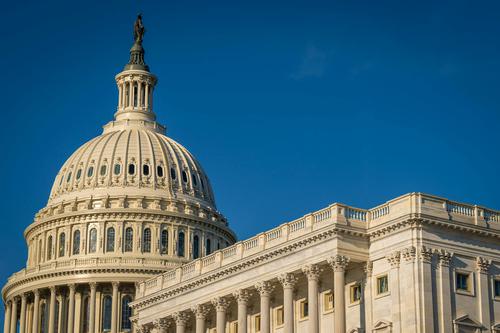
Senator Gary C. Peters (D-Michigan) recently divested a portion of his holdings in Corteva, Inc. (NYSE: CTVA), selling shares valued between $15,001 and $50,000 on April 23, 2026. This transaction, disclosed on May 11, 2026, immediately sparked investor curiosity, given the perceived informational edge that congressional trades sometimes offer. However, a deeper dive suggests this move is likely more nuanced than a simple bearish bet against the agricultural sector or Corteva specifically.

The timing of Peters' sale is particularly noteworthy, occurring shortly after Corteva reported a strong first quarter for 2026, beating analyst estimates on both profit and revenue. The company's shares had also seen support from this positive earnings report, trading near its 52-week high of $85.63 around the disclosure date. This context suggests the sale wasn't a knee-jerk reaction to negative news, but rather a calculated decision amidst a period of strength for the stock.

It's crucial to consider that a politician's personal investment decisions are not always a direct reflection of their policy views or an indicator of future legislative action. Senator Peters, for instance, also made other trades on April 23, 2026, including purchases of PepsiCo Inc. (PEP) and The J M Smucker Company (SJM). This broader activity points towards a portfolio rebalancing strategy, perhaps driven by diversification goals, liquidity needs, or simply taking profits from a strong performer.

While Senator Peters has been a vocal proponent of agriculture, his legislative focus is necessarily broad, encompassing committees like Homeland Security, Appropriations, and Commerce. Any specific insights he might gain would likely be at a macro-economic or policy level, rather than granular company-specific information that would directly influence a single stock trade. Attributing his Corteva sale solely to a negative outlook on the agricultural sector or the company itself would be an oversimplification, overlooking the complexities of personal financial management.

Is Congressional Trading a Reliable Indicator for Alpha?

The phenomenon of congressional stock trading has gained significant traction among retail investors and financial analysts, with many seeking to extract "alpha" from lawmakers' disclosures. Studies have indeed shown that, on average, the portfolios of members of Congress have historically outperformed the S&P 500 by an average of 3-5% annually. This outperformance fuels the belief that politicians might possess unique, non-public information that gives them an edge in the market.

However, relying solely on these disclosures for investment decisions comes with substantial caveats. The STOCK Act of 2012 requires members of Congress to disclose stock trades of more than $1,000 within 30 days of receiving notice of the transaction, and within 45 days of the transaction date. This reporting lag can significantly diminish the immediate actionable value of the information, as market conditions can shift considerably in that timeframe. By the time a trade is publicly disclosed, much of its potential alpha may already be priced in.

Furthermore, the motivations behind a politician's trade are not always transparent. A sale could be for purely personal reasons, such as a home purchase, college tuition, or tax planning, rather than a reflection of a company's fundamental outlook. The penalties for failing to disclose trades are also notoriously weak, starting at a mere $200 for a first-time violation, which does little to deter non-compliance or ensure full transparency.

While the data offers an intriguing layer of analysis, it should complement, not replace, thorough fundamental and technical research. Investors should approach such signals with a healthy degree of skepticism, understanding that a single trade, especially one of a mid-range size like Senator Peters' $15,001 - $50,000 sale, is rarely a definitive market signal. The broader context of a politician's portfolio, legislative priorities, and the company's fundamentals remain paramount.

How Strong Are Corteva's Fundamentals Amidst Agricultural Headwinds?

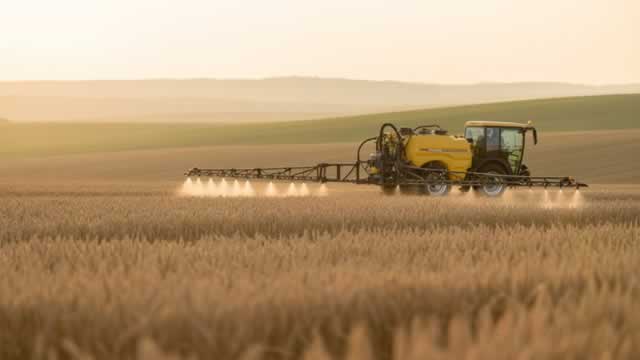
Corteva (CTVA) stands as a global leader in the agriculture business, focusing on seed genetics, crop protection, and digital solutions to enhance farm productivity and crop health. The company recently delivered a robust performance in the first quarter of 2026, reporting net sales up 11% year-over-year to $4.905 billion and operating EPS of $1.50, a significant 33% increase. This strong showing, coupled with reaffirmed full-year guidance, paints a picture of a healthy and growing business.

The company's market capitalization currently stands at $55.14 billion, with its shares trading at $82.44, just off its 52-week high of $85.63. Wall Street analysts generally hold a positive view on Corteva, with a consensus rating of "Moderate Buy" and an average price target of $87.05. This suggests that the market largely believes Corteva has further upside potential, driven by its innovation pipeline and strategic positioning in a vital industry.

Corteva's business model is inherently tied to global food demand, which remains a long-term growth driver. The company's focus on advanced seed technologies and crop protection solutions addresses critical needs for increasing agricultural output and efficiency, especially in the face of climate change and population growth. Its investments in ag-tech and digital solutions are positioning it for future growth, offering farmers tools to optimize yields and manage resources more effectively.

Despite these strengths, the agricultural sector is not without its challenges. Commodity price volatility, geopolitical tensions affecting trade, and evolving regulatory landscapes can all impact Corteva's performance. However, the company's diversified product portfolio and global reach provide some resilience against these headwinds. The strong Q1 results and positive analyst sentiment indicate that Corteva's fundamentals are robust, making it a compelling consideration for long-term investors focused on the essential agriculture market.

What Does the DOJ's Intervention in Corteva's Patent Case Mean?

A significant development for Corteva emerged on May 11, 2026, when the Department of Justice (DOJ) filed a statement of interest in the ongoing litigation between Corteva Agriscience LLC and Inari Agriculture Inc. This intervention, while not taking a position on the ultimate disposition of the case, highlights the DOJ's concern for competition and innovation within the highly concentrated U.S. seed industry. The core issue revolves around public access to patented "biological material" to foster follow-on innovation.

Corteva had sued Inari in 2023, alleging patent infringement of its seed technology. Corteva claimed Inari illegally obtained protected seeds, exported them, made slight genetic modifications, and then sought U.S. patents for these modified traits. The DOJ's statement, however, underscores that intellectual property protections must strike a balance: rewarding innovators while ensuring public disclosure to promote the state of the art and enable further innovation.

The DOJ's Antitrust Division, through its Food Supply Chain Security Task Force, is actively investigating anticompetitive behavior in food-related industries. This signals a broader regulatory focus on ensuring fair competition in critical sectors like agriculture. For Corteva, this intervention could imply increased scrutiny on its intellectual property enforcement strategies and potentially influence how courts interpret patent rights in the context of promoting competition.

This development introduces a new layer of regulatory risk for Corteva and the broader seed industry. While strong patent protection is crucial for incentivizing innovation, the DOJ's stance suggests a potential shift towards prioritizing broader market access and competition. Investors should monitor this litigation closely, as its outcome could set precedents for intellectual property rights and competitive dynamics within the agricultural biotechnology space, impacting future R&D investments and market entry for smaller players.

What Are the Key Risks and Opportunities for CTVA Investors?

For investors considering Corteva, the landscape presents a mix of compelling opportunities and notable risks. On the opportunity side, Corteva is a dominant force in a non-discretionary sector: global food production. The world's growing population and the increasing demand for sustainable, high-yield agriculture provide a robust long-term tailwind. Corteva's continuous innovation in seed genetics and crop protection, coupled with its expanding digital agriculture solutions, positions it to capture a significant share of this growth.

The company's strong financial performance, as evidenced by its Q1 2026 results with 11% net sales growth and 33% operating EPS increase, demonstrates its ability to execute and generate value. Its current market valuation, with shares trading at $82.44 and a consensus price target of $87.05, suggests analysts see further upside. Furthermore, Corteva's commitment to shareholder returns, including its recently declared quarterly dividend of $0.18 per share, adds to its appeal for income-focused investors.

However, risks are inherent. The agricultural sector is susceptible to commodity price fluctuations, which can impact farmer profitability and, consequently, demand for Corteva's products. Weather patterns, geopolitical events affecting trade routes, and currency volatility also pose challenges. The ongoing patent litigation with Inari Agriculture, now with the DOJ's involvement, introduces regulatory uncertainty regarding intellectual property enforcement and potential shifts in competitive dynamics within the seed industry.

Another consideration is the increasing public and regulatory pressure on agricultural practices, particularly concerning pesticide use and genetically modified organisms. While Corteva invests heavily in sustainable solutions, evolving environmental regulations could impact product development and market access. Despite these risks, Corteva's strategic importance in global food security, its strong financial footing, and its innovation pipeline make it a compelling, albeit not risk-free, investment in the long run.

Corteva's position as a leader in agricultural innovation, coupled with its solid financial performance, makes it a stock worth watching. While Senator Peters' recent trade offers an interesting data point, investors should prioritize the company's strong fundamentals and the broader trends in global agriculture. The evolving regulatory environment, particularly concerning intellectual property, will be a critical factor to monitor as Corteva navigates its path forward.


Want deeper research on any stock? Try Kavout Pro for AI-powered analysis, smart signals, and more. Already a member? Add credits to run more research.

SHARE THIS ON:

Related Articles

Category

You may also like

Stock News2 days ago

Agricultural ETFs to Gain as China Pledges to Buy $17B of US Crops

Agricultural ETFs like TAGS may rise as China commits to purchasing $17B in U.S. crops annually through 2028. This multi-year trade pledge is expected to drive a rebound in U.S.
Stock News1 week ago

Senator Buys Up Consumer Staples: Here's Two Stocks On The Shopping List

A U.S. senator recently disclosed the purchase of two consumer staples stocks, drawing attention from retail investors who monitor congressional trading activity. The disclosure highlights specific in...
Stock News1 week ago

Corteva Q1 Earnings Call Highlights

Corteva (CTVA) reported a stronger-than-expected Q1 2026, driven by robust demand for seed and crop protection products. Earnings growth was further supported by favorable North American delivery timi...
Stock News3 weeks ago

Arizona State Retirement System Sells 7,973 Shares of Corteva, Inc. $CTVA

The Arizona State Retirement System lowered its holdings in Corteva, Inc. (NYSE: CTVA) by 4.0% during the most recent quarter. The fund sold 7,973 shares, leaving it with a remaining position of 191,3...

Breaking News

View All →

Top Headlines

View More →
Stock News29 minutes ago

Nvidia raises dividend to $0.25: Is NVDA stock a buy now?

Stock News54 minutes ago

NVIDIA Q1 Earnings Call Highlights

Stock News1 hour ago

Data Center & Edge: NVDA Redefines itself After Blockbuster EPS

Stock News1 hour ago

Nvidia's revenue blows past Wall Street expectations as AI boom accelerates

Stock News1 hour ago

Nvidia: The AI Factory Is Open, And Demand Keeps Exploding