MarketLens
What Does the Air Force Contract Mean for Virtuix's Defense Ambitions

Key Takeaways
- Virtuix Holdings (NASDAQ: VTIX) secured a Phase I AFWERX SBIR contract with the U.S. Air Force for its Virtual Terrain Walk (VTW) platform, signaling a deeper penetration into the defense sector.
- The company is actively pursuing strategic acquisitions in defense training, targeting firms with $10 million to $50 million in recurring defense revenues to accelerate its market presence.
- Despite a 51% stock decline over the past quarter, today's 18.69% surge on the Air Force news suggests a potential inflection point for investor sentiment as Virtuix executes its "dual-use" strategy.
Virtuix Holdings (VTIX) is making a calculated and aggressive pivot towards the high-margin U.S. defense sector, a strategy that appears to be gaining traction with today's announcement of an Air Force research contract. This move, coupled with an active acquisition strategy, positions the company for a potential re-rating, despite its significant stock volatility since its January 27, 2026, IPO. While the stock has faced headwinds, today's 18.69% price jump to $3.56 suggests investors are beginning to recognize the long-term implications of its defense-centric initiatives.
What Does the Air Force Contract Mean for Virtuix's Defense Ambitions?
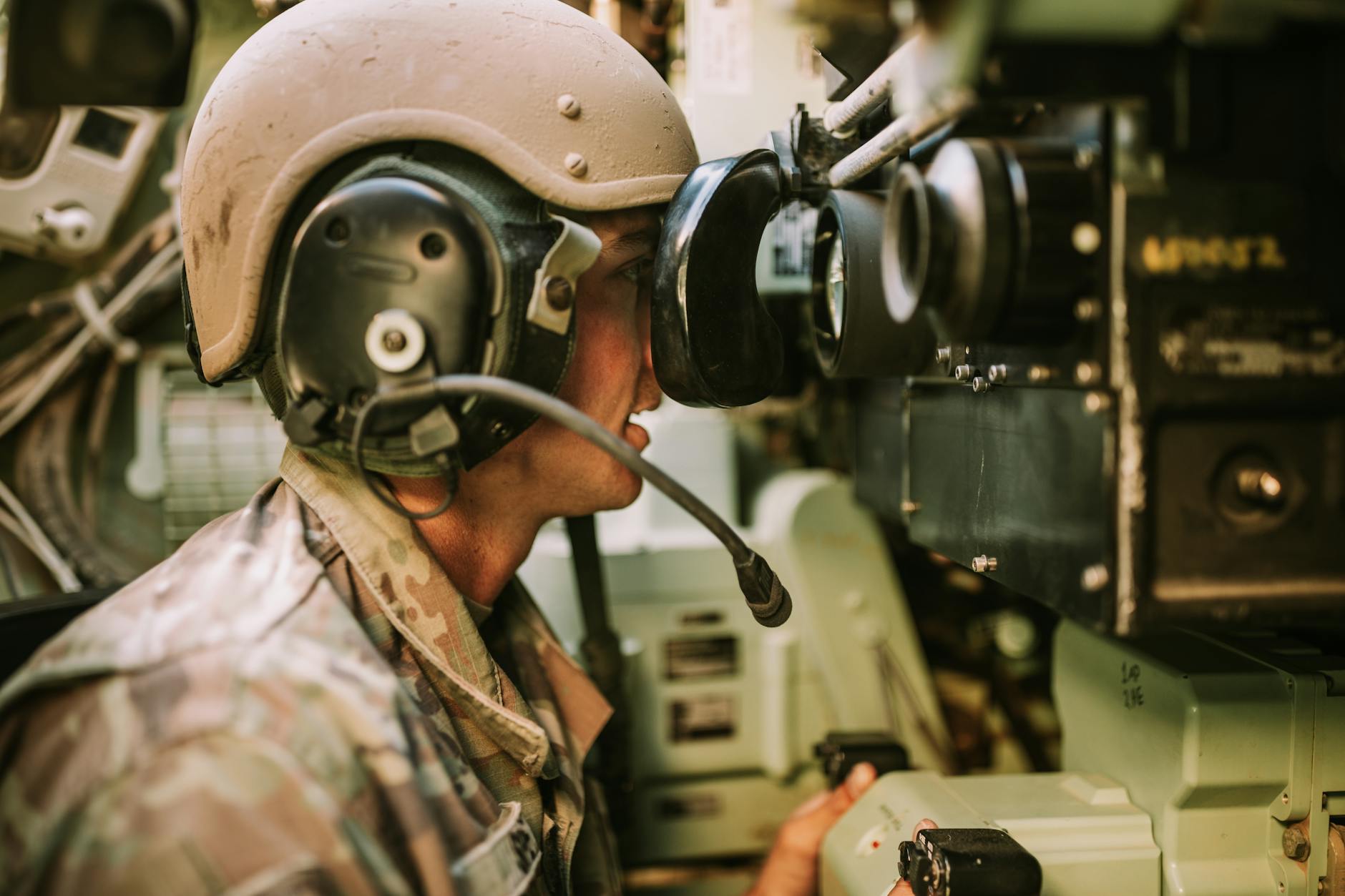
Today, May 27, 2026, Virtuix Holdings announced it was selected by the U.S. Air Force for Phase I funding under the AFWERX SBIR program, specifically for its Virtual Terrain Walk (VTW) platform. This award is a significant validation of Virtuix's AI-enabled immersive training technology and marks a concrete step in its stated goal of expanding across all branches of the U.S. military. The VTW system is designed for immersive mission planning and leader rehearsals, allowing warfighters to physically traverse geo-specific virtual battlefields.
The VTW platform leverages omni-directional treadmills, XR (extended reality), spatial computing, and AI-driven 3D terrain reconstruction. This technology can convert camera footage into photorealistic virtual replicas within hours, enabling rapid creation of highly realistic training environments. CEO Jan Goetgeluk emphasized that this represents the "next generation of military simulation," highlighting the system's ability to support collaborative planning and tactical decision-making for distributed teams of 12 or more personnel. The immediate market reaction to this news was notably positive, with VTIX shares climbing 18.69% to $3.56 by midday.
Crucially, this Phase I award creates a pathway to potential Phase II funding, which typically exceeds $1 million, and even larger Phase III opportunities. Phase III contracts can include sole-source government contracts without predefined value limits, offering substantial revenue potential if Virtuix continues to advance through the program. This structured funding mechanism provides a clear roadmap for Virtuix to secure more substantial, long-term government engagements, moving beyond initial deployments and partnerships. The company already boasts 26 U.S. patents supporting its locomotion and training systems, providing a strong intellectual property moat in this specialized field.
Beyond the Air Force, Virtuix has been building momentum across various military branches. The company has reported recent deployments and partnerships with the U.S. Army, Navy, and Marine Corps, including sales to the U.S. Air Force Academy and West Point. It was also selected as the lead integrator for a VR infantry training system for the U.S. Marine Corps Training and Education Command (TECOM). These engagements underscore a growing demand for immersive, movement-based training solutions, positioning Virtuix as a key player in a rapidly expanding market.
How Will Strategic Acquisitions Accelerate Virtuix's Growth?
Beyond organic growth through contracts like the Air Force SBIR, Virtuix is actively pursuing an inorganic growth strategy through strategic acquisitions in the defense training sector. On May 7, 2026, the company's Board of Directors formed a special committee to evaluate potential targets, with a clear focus on companies that can provide immediate access to government contract vehicles and recurring defense revenues in the $10 million to $50 million range. This initiative was highlighted during an investor webinar on May 8, 2026, where management discussed its growth strategy and business model.
The rationale behind this aggressive acquisition strategy is multi-faceted. First, it aims to accelerate Virtuix's revenue scale in 2026 by integrating established revenue streams. Second, acquiring companies with existing government contracts provides crucial "past performance" credentials, which are often a prerequisite for winning larger, multi-year government contracts. This is a significant barrier to entry for smaller companies like Virtuix, and acquisitions can effectively bypass years of building such a track record from scratch.
Furthermore, these acquisitions are expected to provide access to established sales channels and contract vehicles across all branches of the U.S. military, and potentially abroad. Virtuix believes there are meaningful synergies between its 360-degree movement technology and the capabilities of potential acquisition targets. These synergies could lead to cross-selling opportunities, enhanced training solutions, and more competitive contract bids, particularly as Virtuix integrates AI-driven adaptive simulation and real-time performance analytics into its VR training environments. This focus aligns with increasing demand across U.S. defense programs for advanced, data-rich training solutions.
The defense training and simulation market is experiencing robust growth, driven by geopolitical tensions and increased defense budgets. The global AI in military training market is estimated at $1.57 billion in 2026 and is projected to grow to $2.17 billion by 2030, at a compound annual growth rate (CAGR) of 8.3%. Virtuix's acquisition strategy is designed to capture a larger share of this expanding market, positioning itself among larger players like BAE Systems, Lockheed Martin, and CAE Inc. By targeting companies with immediate revenue and contract access, Virtuix aims to rapidly scale its defense footprint and enhance its competitive standing.
What Are the Key Risks and Opportunities for VTIX Investors?
While Virtuix's defense pivot presents significant opportunities, investors must also weigh the inherent risks. The company's stock has experienced extreme volatility since its IPO in January 2026, with shares plummeting from highs near $92 to lows of $3.00 in its 52-week range. Over the past quarter, the stock declined approximately 51% from late January levels near $10.67 to a recent close of $5.26 (as of April 23, 2026), reflecting a post-IPO correction and muted responses to positive news. This volatility is amplified by a relatively small market capitalization of $97.4 million and a modest revenue base, which stood at $3.0 million for the nine months ended December 31, 2025, representing 41% year-over-year growth.
One major risk is execution. The successful integration of acquired companies, particularly those with complex government contracts, can be challenging. There is no assurance that Virtuix will identify or consummate any acquisition on favorable terms, or at all. Furthermore, while the defense sector offers high-margin potential, the sales cycles can be lengthy and subject to government budget fluctuations. The company's "dual-use" strategy, combining high-volume consumer sales of its Omni One treadmill with high-margin defense contracts, also introduces complexity. Scaling Omni One production to 3,000 units per month, targeting $100 million in annual revenue potential, requires significant marketing and operational execution.
However, the opportunities are compelling. The global VR market is forecasted at $26.71 billion in 2026, with a CAGR exceeding 20% through the decade, driven by gaming, enterprise training, and defense simulations. Virtuix's locomotion specialization offers a defensible niche against larger tech players. Its expanding intellectual property portfolio, with 26 U.S. patents, provides a competitive advantage. The Air Force SBIR award, coupled with existing engagements with the Army, Navy, and Marine Corps, demonstrates a growing acceptance of its technology within the defense establishment.
The potential for larger Phase II and Phase III contracts from the AFWERX program, along with the strategic acquisitions, could significantly de-risk Virtuix's revenue profile by adding recurring defense contracts. This could also provide valuable "past performance" credentials necessary for winning larger government contracts. Analyst coverage, while nascent, shows optimism; Singular Research initiated coverage with a $10.90 price target (versus a recent close around $5.26 on April 23, 2026), indicating substantial upside potential if execution aligns with sector tailwinds.
Is Virtuix's "Dual-Use" Strategy a Sustainable Path?
Virtuix's long-term growth strategy hinges on a "dual-use" approach, simultaneously targeting high-volume consumer sales with its Omni One system and pursuing high-margin defense contracts. This strategy aims to diversify revenue streams and leverage its core VR locomotion technology across different markets. CEO Jan Goetgeluk has articulated this vision, emphasizing that combining a potentially high-volume consumer business with high-margin defense contracts is the company's path to creating long-term growth and shareholder value.
On the consumer front, Virtuix is scaling production of its Omni One, a home "Peloton for gamers" system, with a capacity to produce 3,000 units per month. This production capacity alone could unlock over $100 million in annual revenue potential. The company plans to expand marketing through paid social media, influencer programs, and customer referrals to meet this target. While the consumer VR market is competitive, Virtuix's proprietary omni-directional treadmill technology, protected by 26 patents, offers a unique selling proposition that differentiates it from standard VR headsets.
In parallel, the defense sector provides a stable, high-value revenue stream less susceptible to discretionary consumer spending fluctuations. The Air Force SBIR award and the ongoing acquisition strategy are central to this pillar. The integration of AI-driven adaptive simulation and real-time performance analytics into its VR training environments addresses a critical need within U.S. defense programs for advanced readiness technologies. The military simulation and virtual training market is projected to continue its strong growth, driven by the need for cost-effective, realistic training solutions amid evolving geopolitical landscapes.
The sustainability of this dual-use strategy will depend on Virtuix's ability to execute on both fronts without overstretching its resources. Success in the defense sector could provide the financial stability and credibility to further invest in consumer market expansion, while consumer adoption could generate brand awareness and economies of scale for its core technology. The company's recent nine-month revenue growth of 41% to $3.0 million and gross margin expansion to 29% in Q3 2025 (reported March 9, 2026) indicate early signs of operational improvement, but scaling both segments simultaneously will be the ultimate test.
What Does This Mean for Investors?
Virtuix Holdings is at a critical juncture, with its recent Air Force contract and aggressive acquisition strategy signaling a serious commitment to the defense sector. While the stock has faced significant post-IPO volatility, today's 18.69% surge on the Air Force news suggests a potential shift in investor perception. The company's "dual-use" strategy, combining consumer market ambitions with high-margin defense contracts, offers a compelling long-term narrative.
Investors should closely monitor Virtuix's progress on its AFWERX contracts, particularly the transition to Phase II and Phase III funding, which could unlock substantial government revenue. The success of its acquisition strategy, including the integration of new defense revenue streams and contract vehicles, will also be a key determinant of future performance. While risks remain, the expanding military simulation market and Virtuix's patented technology provide a strong foundation for potential growth.
The path ahead for VTIX will be defined by its execution in scaling both its consumer and defense businesses. If Virtuix can successfully leverage its unique VR locomotion technology and AI-driven platforms to secure larger, recurring defense contracts while simultaneously expanding its consumer footprint, the stock could see a significant re-rating. The current market cap of $97.4 million suggests there is considerable upside if the company delivers on its ambitious strategy.
Want deeper research on any stock? Try Kavout Pro for AI-powered analysis, smart signals, and more. Already a member? Add credits to run more research.
Related Articles
Category
You may also like


Exyn Defense Subsidiary Range Advances USSOCOM Evaluation Pathway for Autonomous Systems

Sandbox VR Continues to Expand Presence in Georgia with New Location in Savannah, Opening May 15

Bitcoin In the US Military: How BTC Could Help Strengthen National Security
Breaking News
View All →Featured Articles
Has Impinj (PI) Stock Finally Turned the Corner
Has Lululemon's Proxy Battle Finally Ended
How Have Industrial Stalwarts IEX and NDSN Performed YTD
Top Headlines

AI Buildout Fuels Record Results for These Companies

DuckDuckGo installs are up 30% as users reject being ‘force-fed' Google's AI Search

Is AMD Stock an Undervalued Stock to Buy?

How a stock market ‘melt-up' could carry the S&P 500 to 8,000 or beyond