MarketLens
What Drove Vishay's Strong Q1 2026 Performance

Key Takeaways
- Vishay Intertechnology's Q1 2026 performance exceeded expectations, with revenue of $839.2 million and a return to $0.05 GAAP EPS, driven by strong demand and market share gains.
- The company's "Vishay 3.0" strategy, including significant $400-$440 million CAPEX for 2026, is fueling capacity expansion and a 1.34 book-to-bill ratio, particularly in AI and automotive sectors.
- Despite positive top-line and margin trends, heavy investments led to negative $46.9 million free cash flow in Q1, requiring close monitoring as VSH aims for long-term revenue and margin targets by 2028.
Vishay Intertechnology (NYSE: VSH) is demonstrating a compelling turnaround, with its Q1 2026 results and Q2 guidance signaling robust revenue growth and margin expansion driven by strategic investments in key end markets. This momentum suggests a bullish outlook for the stock, though investors should monitor the execution of its capacity expansion and the path to sustainable free cash flow generation. The stock's recent surge, climbing 8.42% on May 20, 2026, to close at $40.16, underscores growing investor confidence as it approaches its $40.19 52-week high.
What Drove Vishay's Strong Q1 2026 Performance?
Vishay Intertechnology delivered a robust first quarter for 2026, reporting net revenues of $839.2 million, which comfortably surpassed analyst estimates of $827.5 million and the company's own guidance range of $800 million to $830 million. This represented a significant 17.3% year-over-year increase from $715.2 million in Q1 2025, and a 4.8% sequential improvement from the fourth quarter of 2025. The strong top-line performance was a key highlight, signaling a broad-based rebound across Vishay's end markets.
The company also achieved a notable return to profitability, posting GAAP earnings per share (EPS) of $0.05, a substantial improvement from the $0.01 reported in Q4 2025 and a $0.03 loss in Q1 2025. This positive shift was supported by an adjusted EBITDA of $80.34 million, well above analyst estimates of $67.36 million, translating to a 9.6% margin. CEO Joel Smejkal emphasized that "revenue is growing across the board, in all of our end markets, in all of our channels, and in all 3 regions," attributing the momentum to increased customer consumption, inventory replenishment, and market share gains.
Further evidence of strengthening demand came from the impressive book-to-bill ratio, which stood at 1.34 at quarter-end, indicating strong order growth. The backlog consequently increased by 21% to $1.6 billion. This positive trend was observed across both semiconductor and passive components, with book-to-bill ratios of 1.47 and 1.23, respectively. These figures suggest that Vishay's strategic initiatives and capacity expansions are effectively capturing market demand, particularly in high-growth areas like AI-related applications and the automotive sector.
The company's operational efficiency also saw an uplift, with gross margin improving to 21.0% from 19.0% in Q1 2025, and operating margin rising to 2.6% from 0.1% in the prior year. CFO Dave McConnell noted that higher volumes played a crucial role in offsetting increased raw material and metals costs. This combination of strong revenue growth, improved profitability, and robust order momentum paints a positive picture for Vishay's immediate future.
How is Vishay 3.0 Reshaping the Business?
Vishay Intertechnology's "Vishay 3.0" strategic plan is clearly gaining traction, serving as a pivotal driver behind the company's recent financial improvements. This multi-year transformation focuses on expanding capacity for high-growth, high-margin products, aligning more closely with customer technology needs, and enhancing overall operational efficiency. A cornerstone of this strategy is the significant capital expenditure program, with Vishay maintaining its CAPEX plan of $400 million to $440 million for the full year 2026.
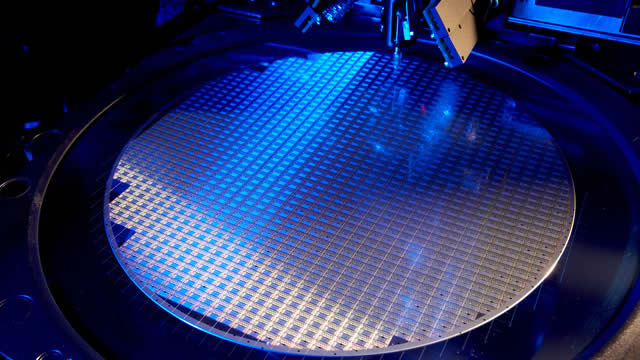
A key investment under Vishay 3.0 is the new 12-inch fab in Germany, which is crucial for expanding semiconductor manufacturing capabilities. In Q1 2026 alone, capital expenditures totaled $110.7 million, with approximately $87 million allocated to this German facility. While these heavy investments are currently impacting free cash flow, as discussed later, they are essential for future growth. CFO David McConnell confirmed that the Newport facility, another strategic asset, exited Q1 2026 near breakeven, with its results now integrated into the broader business, indicating progress in bringing new capacity online.
The strategic focus on specific end markets is also yielding results. CEO Joel Smejkal highlighted strong demand in AI-related applications, particularly for high-voltage MOSFETs used in AI power solutions. He projected that AI revenue for 2026 would be "well above" last year's sub-$100 million figure, driven by growth in both semiconductors and passive components. This targeted approach allows Vishay to capitalize on emerging technological trends and secure market share in rapidly expanding sectors.
Furthermore, Vishay is actively pursuing market share gains in the automotive sector. Ruplu Bhattacharya from Bank of America inquired about these gains versus competitors like Nexperia, to which CEO Smejkal confirmed expanded approvals and anticipated further gains as new capacity, including that from Newport, becomes fully qualified. This strategic emphasis on high-demand, high-value components, coupled with substantial investments in manufacturing capacity, positions Vishay 3.0 as a critical engine for sustainable revenue growth and margin expansion in the coming years.
What Does Q2 2026 Guidance Signal for the Near Term?
Vishay Intertechnology's guidance for the second quarter of 2026 provides a clear indication of management's confidence in continued operational momentum. The company expects revenues to be in the range of $875 million to $905 million. This midpoint of $890 million is notably above analyst estimates of $875.7 million, suggesting that the positive trends observed in Q1 are anticipated to persist and even accelerate. This guidance reflects sustained demand across end markets and the ongoing benefits of the Vishay 3.0 strategy.
In terms of profitability, Vishay is forecasting a gross margin of approximately 22.0%, plus or minus 50 basis points, for Q2 2026. This projection represents a further improvement from the 21.0% gross margin achieved in Q1 2026 and the 19.0% reported in Q1 2025. CFO Dave McConnell explained that while higher material prices and expedited logistics costs continue to be factors, these are expected to be offset by recently enacted price increases, with full effects anticipated in the coming quarters. This indicates a proactive approach to managing cost pressures and protecting margins.
The expected sequential growth in revenue and gross margin for Q2 2026 underscores Vishay's ability to navigate a dynamic market environment. The company's strategic investments in capacity expansion, particularly the 12-inch fab in Germany, are designed to support this growth trajectory. As these new facilities ramp up, they are expected to contribute to higher shipments and improved economies of scale, further bolstering the company's financial performance.
Management also reiterated confidence in achieving its long-term revenue and margin targets by 2028, despite acknowledging some delays due to inventory digestion and tariffs. This long-term vision, coupled with strong near-term guidance, suggests a positive outlook for Vishay. The Q2 guidance reinforces the narrative that Vishay is in a period of recovery and strategic growth, making the execution of its capacity expansion and market share gains critical for meeting these optimistic projections.
Are Heavy Investments Impacting Free Cash Flow and Shareholder Returns?
While Vishay Intertechnology's Q1 2026 results showcased impressive top-line growth and a return to profitability, the company's aggressive capital expenditure program has notably impacted its free cash flow. In Q1 2026, Vishay generated $63.7 million of net cash from operating activities. However, after accounting for substantial capital expenditures totaling $110.7 million (including $87 million for the new 12-inch fab in Germany), free cash flow for the quarter was negative $46.9 million. This negative free cash flow reflects the company's commitment to long-term growth through significant investments in manufacturing capacity.
The heavy CAPEX is a direct consequence of the Vishay 3.0 strategy, which prioritizes expanding capacity for high-growth, high-margin products. While essential for future revenue and market share gains, these investments consume a considerable amount of cash in the short term. This capital allocation strategy has implications for shareholder returns beyond dividends. CFO David McConnell clarified that while dividends remain stable at $0.10 per share, matching the prior two quarters, share buybacks are not currently planned given the substantial cash needs for expansion projects.
Vishay's balance sheet as of April 4, 2026, shows $479.4 million in cash and cash equivalents, with total assets of $4.26 billion. Long-term debt, excluding the current portion, stood at $983.1 million, and total equity was $2.08 billion. The current ratio of 2.64 indicates a healthy liquidity position, suggesting that while free cash flow is negative due to investments, the company has sufficient resources to fund its operations and strategic initiatives. The net debt-to-EBITDA ratio of 2.50 also reflects a manageable leverage profile.
Investors should recognize that the current negative free cash flow is a strategic choice, reflecting a growth-oriented phase. The expectation is that these investments will eventually translate into higher revenue, improved margins, and ultimately, stronger sustainable free cash flow in the future. Monitoring the pace at which these capacity expansions translate into higher shipments and margin gains will be crucial for assessing the long-term success of this capital-intensive strategy.
What are the Key Catalysts and Risks for VSH Investors?
For investors considering Vishay Intertechnology, several key catalysts and risks warrant close attention in the coming quarters. On the bullish side, the continued execution of the Vishay 3.0 strategy stands out. The company's capacity expansion, particularly at the new German 12-inch fab and the Newport facility, is expected to translate into higher shipments and margin gains as these facilities become fully qualified and operational. This will be critical for meeting the strong demand indicated by the 1.34 book-to-bill ratio and the $1.6 billion backlog.
Another significant catalyst is the sustained demand strength in key end markets. CEO Joel Smejkal's projection for AI-related revenue to be "well above" $100 million in 2026, combined with confirmed market share gains in the automotive sector, suggests Vishay is well-positioned in high-growth areas. The broad-based rebound across all end markets, channels, and regions, as highlighted in the Q1 earnings call, provides a solid foundation for continued top-line growth. The company's ability to implement price increases to offset rising material costs also bodes well for margin stability.
However, several risks could temper Vishay's trajectory. The most immediate concern is the ongoing heavy capital expenditure, which led to negative $46.9 million free cash flow in Q1 2026. While strategic, a prolonged period of negative free cash flow could strain liquidity or limit financial flexibility for other initiatives like share buybacks. Investors will need to closely monitor the timeline for these investments to yield positive cash generation.
Furthermore, management acknowledged that achieving their 2028 financial targets for revenue and margins has seen some delays due to inventory digestion and tariffs. While price adjustments are helping to mitigate material cost pressures, global trade policies and supply chain dynamics remain potential headwinds. The company's ability to maintain competitive lead times as consumption accelerates will also be vital to fully participate in the market upcycle and avoid losing market share.
Vishay Intertechnology's Q1 2026 results and optimistic Q2 guidance suggest a company in a strong recovery phase, effectively leveraging strategic investments to capture demand in critical markets. While the heavy capital expenditures currently impact free cash flow, the long-term growth potential driven by the Vishay 3.0 strategy and robust market demand makes VSH an intriguing prospect for investors. Continued monitoring of capacity utilization and the path to sustainable free cash flow will be essential for assessing its long-term value.
Want deeper research on any stock? Try Kavout Pro for AI-powered analysis, smart signals, and more. Already a member? Add credits to run more research.
Related Articles
What Drove Autodesk's Strong Q4 2026 Performance
Category
You may also like


Vishay Intertechnology Q1 Earnings Call Highlights

Diodes Incorporated Reports First Quarter 2026 Financial Results
Qnity Electronics Rides AI and Semiconductor Momentum
Breaking News
View All →Featured Articles
Top Headlines
Nvidia raises dividend to $0.25: Is NVDA stock a buy now?

NVIDIA Q1 Earnings Call Highlights

Data Center & Edge: NVDA Redefines itself After Blockbuster EPS

Nvidia's revenue blows past Wall Street expectations as AI boom accelerates