MarketLens

Log in

What Fueled Valaris's Explosive 65% Surge in February

1 hour ago
SHARE THIS ON:

What Fueled Valaris's Explosive 65% Surge in February

Key Takeaways

  • Valaris Limited (VAL) surged over 65% in February 2026, primarily driven by its announced $5.8 billion all-stock acquisition by Transocean (RIG) and strong Q4 2025 earnings.
  • The merger creates the world's largest offshore drilling contractor, boasting 73 rigs and a combined $10 billion backlog, positioning it for enhanced pricing power and operational efficiencies.
  • Despite a consensus "Hold" rating and a target price below current levels, Valaris's operational excellence, robust contract backlog, and the strategic rationale of the Transocean merger present a compelling, albeit complex, investment narrative.

What Fueled Valaris's Explosive 65% Surge in February?

Valaris Limited (NYSE: VAL) delivered an electrifying performance in February 2026, with its stock price rocketing by an impressive 65.46%. This dramatic upward trajectory wasn't a fluke but the direct result of two powerful catalysts converging: a transformative acquisition announcement and a stellar earnings report that underscored the company's operational prowess. Investors, keenly watching the offshore drilling sector, quickly repriced VAL shares, pushing them from around $58 at the start of the month to a peak near its $102.19 52-week high.

The primary driver was the news on February 9, 2026, that Transocean Ltd. (NYSE: RIG) would acquire Valaris in an all-stock transaction valued at approximately $5.8 billion. This strategic move immediately signaled a significant consolidation in the offshore drilling industry, promising enhanced scale and market power. Valaris shareholders are set to receive 15.235 shares of Transocean stock for each Valaris share, ultimately owning about 47% of the combined entity. This implied a substantial premium to Valaris's pre-announcement price, igniting a rapid revaluation.

Adding fuel to the fire, Valaris reported robust fourth-quarter 2025 results on February 19, 2026, which significantly topped analyst expectations. The company announced adjusted earnings per share (EPS) of $0.79, handily beating the Zacks Consensus Estimate of $0.51. While revenue saw an 8% year-over-year decline to $537.4 million, it still surpassed expectations by $42.99 million. Crucially, net income surged an astounding 448.9% to $716.8 million, showcasing strong profitability despite revenue contraction. These strong fundamentals, coupled with the merger news, created a potent cocktail for investor enthusiasm.

How Does the Transocean Merger Reshape the Offshore Drilling Landscape?

The proposed all-stock acquisition of Valaris by Transocean is not just another deal; it’s a seismic shift poised to fundamentally reshape the offshore drilling industry. This combination creates an undisputed titan, forming the world’s largest offshore drilling contractor by fleet size and backlog. The strategic rationale is clear: achieve unparalleled scale to gain pricing power and operational efficiencies in a market long plagued by oversupply.

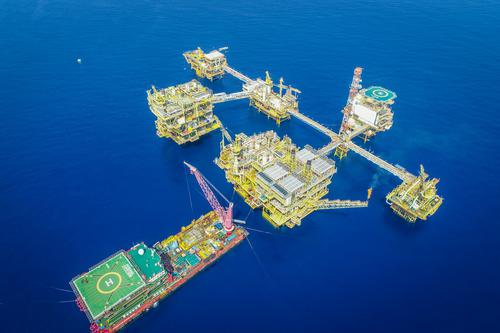
Upon completion, expected in the second half of 2026, the combined entity will boast a formidable fleet of 73 offshore rigs, including 33 ultra-deepwater drillships, nine semisubmersibles, and 31 jackups. This expansive and diversified fleet will be supported by an industry-leading combined backlog of approximately $10 billion, offering enhanced cash flow visibility for years to come. This scale is critical in an industry where the number of rigs competing for work has historically led to depressed dayrates and contract terms.

The merger is explicitly designed to address this structural problem of excess rig supply. By consolidating two major players, the new Transocean aims to reduce market fragmentation, allowing for more disciplined capacity management and, ultimately, stronger bargaining power with major energy producers like ExxonMobil, Shell, and BP. Identified incremental transaction-related synergies of more than $200 million are expected, building on Transocean’s existing cost-reduction program of over $250 million through 2026. These synergies, alongside an expanded geographical footprint and increased financial flexibility, are central to the bull case for the combined company.

For Valaris shareholders, the all-stock structure means their investment will transition into a significant stake, approximately 47%, in this newly formed industry leader. This ties their future economic outcome directly to the integration's success, the realization of synergies, and the market's perception of a much larger, more diversified fleet. The deal signals a continued trend of consolidation in the upstream sector, a strategic lever for growth that analysts like Wood Mackenzie have been highlighting.

What Do Valaris's Q4 Earnings and Backlog Tell Us About Its Operational Strength?

Valaris's Q4 2025 earnings report, released on February 19, 2026, provided a compelling snapshot of a company firing on all cylinders operationally, even as it navigated a dynamic market. The headline figures were impressive: adjusted EPS of $0.79 significantly outpaced the consensus estimate of $0.51, and net income surged by 448.9% to $716.8 million. This robust profitability, despite an 8% year-over-year revenue decline to $537.4 million, underscores Valaris's ability to manage costs and maximize efficiency.

A key highlight from the earnings call was the company's exceptional revenue efficiency, which stood at 98% for Q4 2025 and an impressive 96% for the full year. This marks the fifth consecutive year Valaris has achieved revenue efficiency at or above 96%, a testament to its disciplined operations and strong customer relationships. In a capital-intensive industry where rig downtime can quickly erode margins, this consistent operational excellence provides a crucial competitive advantage and enhances customer trust.

Beyond the quarterly numbers, Valaris demonstrated significant commercial momentum, securing nearly $900 million in additional backlog since its last quarterly report in October 2025. This pushed the total contract backlog to approximately $4.7 billion, providing substantial revenue visibility through 2026 and 2027. Notably, the company expects all ten of its active drillships to be operational by 2027, a key objective that will further stabilize future revenues.

Recent contract awards include a five-well extension for the Valaris DS-7 drillship with Azule Energy offshore Angola, adding about $125 million to backlog. The Valaris DS-9 secured a two-year extension with an ExxonMobil affiliate, and the Valaris DS-8 landed a multi-year contract with Shell offshore Brazil, valued at roughly $300 million. In the jackup segment, the Valaris 106 was awarded an eight-well contract with BP offshore Indonesia for an estimated $74 million. These wins highlight strong demand across key deepwater and jackup markets, reinforcing the company's strong foundation ahead of the Transocean merger.

Is the Offshore Drilling Market Entering a New Upcycle?

The strong performance of Valaris and the strategic consolidation move by Transocean signal a broader narrative: the offshore drilling market appears to be entering a sustained upcycle. After a decade-long bear market characterized by oversupply, low oil prices, and bankruptcies, the industry is now seeing a confluence of factors driving renewed demand and improved pricing power. This shift is attracting significant investor interest, as evidenced by the energy sector's positive performance, even if the "Oil & Gas Energy" industry specifically saw a -5.76% dip on February 27, 2026, likely due to profit-taking after recent gains.

Global exploration and production (E&P) budgets are expanding, particularly for deepwater projects. Analysts project a 40% increase in deepwater investment to reach $130 billion by 2027, directly boosting demand for high-specification drillships and semisubmersibles. This increased capital allocation reflects a growing recognition among major oil and gas companies that offshore resources are critical for long-term supply security and portfolio diversification. The lengthy lead times for offshore projects also mean that once investments are committed, they tend to be more resilient to short-term price fluctuations.

Supply constraints are also playing a crucial role. The global offshore fleet has shrunk dramatically, from approximately 300 vessels a decade ago to an effective operational fleet of as low as 120-130 units today. This significant reduction, combined with the challenge of building new rigs (which takes 2-4 years and costs over $1 billion for an 8th generation drillship), has created a tightening market. Modern, high-spec rigs like Valaris’s 7th generation drillships are commanding premium day rates, with leading-edge rates now exceeding $500,000 per day, a substantial increase from $250,000 in 2022.

This tightening supply-demand dynamic is translating into longer contract durations, moving from 1-2 years to 2-3 years, providing greater revenue stability and visibility for drillers. Valaris's CEO, Anton Dibowitz, noted that the company expects all ten of its active drillships to be working by 2027, a clear indicator of strengthening demand. The industry is moving closer to "duopoly conditions," as observed by Wood Mackenzie, where rig owners gain pricing power, supporting higher dayrates and positioning companies like the combined Transocean-Valaris entity to capitalize more efficiently on offshore upcycles.

What Are the Risks and Opportunities for Investors in the Combined Entity?

For investors holding Valaris shares, the pending merger with Transocean presents a complex blend of risks and opportunities that warrant careful consideration. The immediate opportunity lies in the re-rating of Valaris shares following the acquisition announcement, which has already delivered a substantial return. Looking ahead, the primary opportunity is the creation of a market leader with unparalleled scale, a diversified fleet, and a robust $10 billion backlog, positioning it to benefit from the ongoing offshore drilling upcycle.

The combined company is expected to achieve significant cost synergies, with over $200 million identified on top of Transocean's existing cost-reduction programs. This enhanced financial flexibility and improved cash flow visibility could accelerate debt reduction and support future growth initiatives. The larger fleet and broader geographical footprint will also allow the new entity to offer a more comprehensive service to major energy clients, potentially strengthening its competitive moat and bargaining power.

However, significant risks accompany this opportunity. Integration risk is paramount; merging two large, complex organizations with distinct cultures and operational systems is challenging. Delays or failures in realizing the projected synergies could undermine the investment thesis. Regulatory approvals, though anticipated, are not guaranteed and could prolong the closing timeline, currently set for the second half of 2026. Furthermore, the all-stock nature of the deal means Valaris shareholders' future returns are tied to Transocean's share performance and the market's perception of the combined entity.

The broader market dynamics also present risks. While an upcycle is underway, the offshore drilling industry remains cyclical and sensitive to crude oil prices, global economic conditions, and shifts in energy policies. Excess rig supply, though being addressed by consolidation, could still pressure dayrates if demand falters. Analyst sentiment for Valaris currently leans "Hold," with a consensus price target of $63.50, implying a potential downside from the current price of $95.85. This reflects the inherent uncertainties and the need for successful execution of the consolidation strategy to unlock the intrinsic value of the combined enterprise.


Valaris's February surge was a clear signal of market confidence in its strategic direction and operational strength. While the Transocean merger promises a powerful new leader in offshore drilling, investors must weigh the significant upside potential against the inherent integration risks and cyclical nature of the energy sector. The path forward for the combined entity will be a true test of execution, but the foundation for a compelling long-term story has certainly been laid.


Want deeper research on any stock? Try Kavout Pro for AI-powered analysis, smart signals, and more. Already a member? Add credits to run more research.

SHARE THIS ON:

Related Articles

Category

You may also like

Stock News2 days ago

Can These 3 Names Be 2026's Biggest Retail Comebacks?

Valaris PLC (VAL) shares rose 80% year-to-date as of early 2026, significantly outpacing the S&P 500's less than 1% gain, positioning it as an early top performer.
Stock News1 week ago

Why this top Warren Buffett oil stock is soaring

Occidental Petroleum (OXY) shares rose 9% over the last 24 hours, reaching a price of $51.51 by the February 20 press time.
Stock News1 week ago

Silver's Explosive Rally: What Drove the Metal From $29 to $70 and What Happens Next

Silver prices surged 137% between February 2025 and February 2026, marking one of the most explosive commodity performances over the past year.
Stock News1 months ago

What's Behind Ondas' 5x Surge?

Ondas (NASDAQ: ONDS) shares delivered approximately 5x returns over the last six months, driven by strategic growth, defense contracts, and increased investor enthusiasm for autonomous systems.

Breaking News

View All →

Top Headlines

View More →
Stock News2 hours ago

Anthropic's Claude hits No. 2 on Apple's top free apps list after Pentagon rejection

Stock News2 hours ago

Is Meta Platforms a Buy After AMD Deal?

Stock News2 hours ago

Amazon's Best Days Could Still Be Yet to Come

Stock News3 hours ago

Nvidia: The Panic Buying Opportunity That I've Been Waiting

Stock News3 hours ago

Is Microsoft the Next Alphabet?