MarketLens

Log in

What Happened in Dubai and How Did Oracle React

2 hours ago
SHARE THIS ON:

What Happened in Dubai and How Did Oracle React

Key Takeaways

  • Oracle's recent incident in Dubai, where a building was struck by debris from an intercepted projectile, underscores the escalating geopolitical risks now facing global tech infrastructure.
  • Despite the localized event, Oracle's robust cloud security, disaster recovery capabilities, and substantial backlog position the company to navigate these operational challenges effectively.
  • The broader trend of data centers becoming strategic targets demands that multinational corporations reassess supply chain diversification and regional investment strategies, shifting focus from pure efficiency to resilience.

What Happened in Dubai and How Did Oracle React?

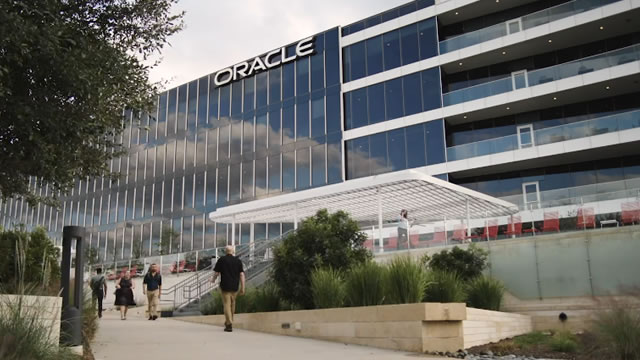
On April 4, 2026, an Oracle building in Dubai was hit by debris from an intercepted aerial projectile, according to UAE authorities. This incident quickly became a focal point of geopolitical tensions, particularly after Iran's Islamic Revolutionary Guard Corps (IRGC) claimed responsibility for striking an Oracle data center in the city. However, the Dubai Government Media Office swiftly denied these claims, labeling them "fake news" and asserting that the damage to Oracle's building was minor with no operational disruptions reported. This clarification was crucial in managing the immediate narrative, distinguishing between a direct attack on critical infrastructure and incidental damage from defensive actions.

The event unfolded against a backdrop of heightened regional conflict, following earlier reports of Iranian drone strikes impacting Amazon Web Services (AWS) data centers in the UAE and Bahrain on March 1, 2026. Those earlier incidents reportedly caused significant disruption to financial, enterprise, and consumer digital services across the region, highlighting the vulnerability of cloud infrastructure. The targeting of US-linked tech companies, including Oracle, AWS, Google, Microsoft, IBM, and Nvidia, has been explicitly threatened by Iran, accusing them of supporting US and Israeli military and intelligence operations. This pattern suggests a deliberate strategy to impose economic and reputational costs on adversaries by disrupting critical digital assets.

For Oracle, the immediate market reaction, as reflected in its stock performance, appears to have been relatively muted. On April 2, 2026, prior to the news breaking, ORCL shares closed at $145.23 and traded up 0.78% to $146.37 by market close. This suggests that either the market had not fully digested the implications of the incident, or investors perceived the damage as truly minor and Oracle's operations resilient. The Dubai government's quick denial likely played a significant role in preventing a more severe knee-jerk reaction, emphasizing the importance of official statements in shaping investor confidence during times of crisis.

This incident, whether a direct hit or collateral damage, serves as a stark reminder that even in seemingly stable economic hubs like Dubai, global tech giants are increasingly exposed to the physical manifestations of geopolitical conflicts. It forces a re-evaluation of what constitutes "safe" operating environments and how companies like Oracle must factor in non-traditional risks into their global expansion strategies. The narrative quickly shifted from a confirmed attack to a denial, but the underlying vulnerability of digital infrastructure in conflict zones remains a pressing concern for investors and corporate strategists alike.

Why Are Data Centers Becoming Strategic Targets?

The recent incidents in the Middle East underscore a profound shift in modern warfare: data centers, once considered purely commercial assets, are now unequivocally strategic targets. This evolution is driven by the indispensable role these facilities play in the global digital economy and, increasingly, in national security and military operations. Interfering with digital infrastructure can cripple banking, communication, and logistics, making them high-value targets for state and non-state actors seeking to impose asymmetric costs or disrupt enemy capabilities.

Consider the dual-use nature of hyperscale cloud infrastructure. Companies like Oracle provide cloud services to a vast array of clients, including regional businesses, government services, and digital platforms that underpin critical national infrastructure. Simultaneously, these same cloud providers often hold significant contracts with military and intelligence agencies, such as Oracle's agreements with the US Department of Defense and its participation in the $9 billion Joint Warfighting Cloud Capability contract. This intertwining of civilian and military workloads means that a data center, regardless of its primary commercial function, can become a legitimate target under certain interpretations of international law, especially if it is perceived to be supporting enemy military capabilities.

The economic motivations behind these strikes are also significant. Gulf countries have invested billions to attract American technology companies, aiming to diversify their economies away from petrochemicals and cultivate a reputation as a neutral, peaceful hub for investment. Strikes on data centers directly undermine this carefully cultivated image, deterring further foreign investment and imposing economic costs on US allies. Furthermore, by targeting US tech companies that drive overall growth in the US stock market, adversaries can aim to inflict broader economic pain, aligning with objectives of re-establishing deterrence through asymmetric methods.

This new reality forces governments to urgently reclassify commercial data centers as critical national security infrastructure, placing them alongside traditional assets like power plants and oil fields. The sheer value of the hardware alone, with an Nvidia NVL72 GB300 system potentially costing $6 million and a data center housing 50,000 Blackwell processors estimated at $4.16 billion (excluding supporting infrastructure), means that kinetic attacks can cause dramatically more financial damage than traditional targets. The strategic imperative is clear: control or disruption of digital infrastructure is now a key battleground in geopolitical conflicts, fundamentally altering the risk calculus for global tech companies and their investors.

How Resilient is Oracle's Cloud Infrastructure?

Oracle's cloud infrastructure, particularly its Oracle Cloud Infrastructure (OCI), is designed with a strong emphasis on security, resilience, and disaster recovery, which becomes paramount in an increasingly volatile geopolitical landscape. The company explicitly highlights its "global, secure network of cloud regions" and offers a broad range of flexible business continuity solutions. This includes high-bandwidth file synchronization, zero data loss database protection, and detailed database failover options, all aimed at providing scalable, reliable, and cost-effective resiliency.

A key aspect of Oracle's strategy is its unique dual-region cloud approach. This enables customers to deploy resilient applications in multiple geographically separated locations while ensuring sensitive data remains within the country. This architecture is crucial for meeting data sovereignty requirements and providing in-country disaster recovery capabilities, a significant advantage when regional conflicts threaten single-point-of-failure deployments. The ability to manage the transition of infrastructure, platforms, and applications between OCI regions globally with a single click, through services like Full Stack Disaster Recovery, offers a robust mechanism to maintain operational continuity even if one region is compromised.

Furthermore, Oracle's security posture is built on a "zero trust" model, integrating prescriptive and built-in security capabilities directly into the OCI platform. This includes features like Hardware Root of Trust for firmware-based attack protection, Isolated Network Virtualization to prevent malware spread, and Security Zones for enforcing granular security policies. The company also offers advanced threat intelligence services, aggregating data from Oracle experts, vast telemetry, and partners like Crowdstrike, to proactively detect and respond to threats. These layers of security are not just theoretical; they are operational components designed to protect customer tenants and data from sophisticated attacks and disruptions.

The incident in Dubai, while minor in its reported impact on Oracle's operations, serves as a real-world stress test for these resilience measures. The fact that no operational disruptions were reported in Dubai, despite the proximity of conflict, speaks to the effectiveness of these underlying architectural and security principles. In an environment where cloud infrastructure vulnerability is no longer a theoretical risk but an operational reality, Oracle's commitment to multi-region deployments, robust disaster recovery, and comprehensive security frameworks provides a critical buffer for its enterprise clients and, by extension, for investor confidence in its long-term stability.

What Does This Mean for Global Supply Chains and Regional Investment?

The recent incidents in the Middle East, particularly the alleged and confirmed impacts on cloud infrastructure, send a clear signal: geopolitical risk has moved from theoretical contract language to operational reality, profoundly affecting global supply chains and regional investment strategies. For multinational corporations, the assumption of globally accessible, regionally distributed cloud infrastructure is now under severe strain. Companies that built entire regional strategies around single-region deployments, optimizing for efficiency and cost reduction, are now facing the hard costs of re-architecture, migration expenses, and potential service degradation during transitions.

This shift necessitates a fundamental re-evaluation of supply chain design. Traditionally, supply chains prioritized lean inventory systems and global sourcing for efficiency. However, the current environment demands a focus on resilience, diversification, and visibility. Geopolitical uncertainty is no longer a distant concern but a day-to-day operating reality, forcing businesses to integrate supply chain management into strategic decision-making. This includes horizon scanning for geopolitical signals and regulatory changes, and running scenario modeling to understand the impact of conflicts or sanctions before they occur. The insight here is that resilience must be economically segmented, not emotionally distributed, meaning diversification should be strategic rather than blanket.

For regional investment, particularly in the Gulf, the implications are significant. Countries like the UAE and Saudi Arabia have invested heavily in logistics infrastructure, modern ports, and integrated logistics zones to become global hubs and diversify their economies. However, repeated disruptions or the perception of heightened risk can undermine these efforts, deterring foreign direct investment. While the strategic drivers for data center expansion in the Gulf—cheap energy, sovereign wealth investment, and its position between East and West—have not evaporated, the added layer of geopolitical instability introduces a new variable into the investment calculus.

The incidents also highlight the growing pressure on governments to treat data centers as critical or essential infrastructure, similar to regulations already in place in the EU, UK, and US. This reclassification will likely lead to more stringent regulatory frameworks, including data localization requirements, which, while enhancing cybersecurity and data sovereignty, can also create operational constraints for companies relying on global cloud networks. The challenge for policymakers and businesses alike is to design frameworks that allow for secure cross-border data movement in emergencies while protecting national security, potentially through pre-approved contingency mechanisms for rapid data mirroring to allied jurisdictions.

Is Oracle a Buy Amidst Rising Geopolitical Risks?

Investing in Oracle (ORCL) today means weighing its robust financial health and strategic cloud growth against an undeniable backdrop of escalating geopolitical risks. The company currently trades at $146.37, reflecting a 0.78% gain on the day, with a substantial market capitalization of $420.97 billion. While the recent incident in Dubai was quickly downplayed by local authorities, it serves as a potent reminder that even tech giants are not immune to global instability. However, Oracle’s fundamental strengths suggest it is well-positioned to navigate these challenges.

One of Oracle's most compelling attributes is its massive backlog, which was reported to be around $500 billion following its March 10 earnings report. This substantial figure provides significant revenue visibility and a strong buffer against short-term market volatility or localized disruptions. This backlog, largely driven by demand for its cloud services, indicates strong customer commitment and a robust pipeline of future revenue, underpinning the company's long-term growth trajectory. The Reddit sentiment, which swung sharply to "Very Bullish" (scores hitting 88) after the earnings, further highlights investor confidence in this growth story.

Oracle's strategic focus on cloud infrastructure (OCI) and its emphasis on security and disaster recovery are critical differentiators in the current environment. The company's dual-region cloud strategy, enabling in-country data residency and multi-region resilience, directly addresses the vulnerabilities exposed by recent geopolitical events. This architectural foresight, coupled with integrated security features and full-stack disaster recovery solutions, positions Oracle as a reliable partner for enterprises and governments increasingly concerned about data sovereignty and business continuity. Such capabilities are likely to drive increased adoption, especially as companies are forced to abandon single-region deployments and pay for multi-region disaster recovery.

However, investors must also acknowledge the risks. Oracle carries a significant debt load, reported at around $125 billion, which could be a concern if interest rates remain elevated or if economic conditions tighten. Furthermore, while the Dubai incident was minor, the broader trend of tech infrastructure becoming a target means that future, more impactful events cannot be entirely ruled out. The ongoing legal challenge regarding a securities fraud lawsuit, with a deadline of April 6, 2026, for shareholders to participate, also presents a potential overhang. Despite these considerations, Oracle's strategic positioning in the high-growth cloud market, coupled with its proven resilience and substantial backlog, makes a compelling case for its continued outperformance, potentially even against industry darlings like Nvidia over the next five years, as some analysts suggest.

What Does This Mean for Investors?

For investors, the Oracle incident in Dubai, despite its minor impact, serves as a critical inflection point, signaling a new era where geopolitical risk is a tangible, operational factor for global tech investments. The takeaway is clear: resilience, not just efficiency, must now be a core tenet of investment analysis. Companies with diversified infrastructure, robust disaster recovery plans, and strong security postures like Oracle are better positioned to weather these storms.

This environment favors companies that can demonstrate true operational continuity in the face of external shocks. Investors should prioritize tech firms with multi-cloud strategies, sovereign cloud partnerships for sensitive workloads, and accelerated edge computing initiatives. Oracle's current valuation and strategic direction, particularly its strong cloud backlog and focus on secure, resilient infrastructure, suggest it is building the necessary foundations for this new reality, making it a potentially attractive long-term holding for those seeking stability amidst global uncertainty.

The future belongs to organizations that build resilience into their foundation, not those that optimize for cost alone. In uncertain times, redundancy isn't overhead; it is a strategic imperative that will increasingly define success in the global digital economy.


Want deeper research on any stock? Try Kavout Pro for AI-powered analysis, smart signals, and more. Already a member? Add credits to run more research.

SHARE THIS ON:

Related Articles

Category

You may also like

Stock News7 hours ago

Debris from aerial interception strikes Oracle building in Dubai, UAE says

Oracle's Dubai office sustained minor damage after debris from an aerial interception struck the building. The incident follows a Tuesday threat from Iran to target U.S. technology companies operating...
Stock News3 weeks ago

Oracle: The AI Darkhorse?

Oracle stock declined recently, raising questions about whether the selloff is excessive. The company appears well-positioned if current AI forecasts materialize.
Stock News3 weeks ago

Oracle, OpenAI End Plans to Expand Flagship Data Center | Bloomberg Tech 3/9/2026

Oracle and OpenAI terminated plans to expand a flagship data center project located in Texas. The decision follows discussions regarding the ongoing conflict in the Middle East.
Crypto News1 months ago

Stocks crash while Bitcoin holds above $66,000 as strikes in Dubai kill 3 people

Dow futures fell 571 points, or ~1.5%, following Iranian strikes in the UAE that killed three in Dubai after U.S./Israel actions; Bitcoin held above $66,000.

Breaking News

View All →

Top Headlines

View More →
Stock News1 hour ago

Arm Holdings: The Chip Designer Drawing NVIDIA Comparisons—Is It Justified?

Stock News2 hours ago

Amazon's $200 Billion AI Spending Spree Is Lighting the Fuse for Explosive Growth

Stock News2 hours ago

Got $5,000? 3 AI Supercycle Growth Stocks at Every Layer of the Stack.

Stock News2 hours ago

5 Incredible AI Stocks to Buy in April

Stock News3 hours ago

Apple's 50th Anniversary Was April 1. Is the Tech Giant's Stock Worth Buying and Holding for Another 50 Years?