MarketLens
What Happened with First Solar's Q4 Earnings and 2026 Guidance

Key Takeaways
- First Solar (FSLR) shares plunged after missing Q4 2025 EPS estimates and providing conservative 2026 sales guidance, signaling a challenging near-term outlook.
- Despite immediate headwinds, the company's unique thin-film technology and extensive U.S. manufacturing footprint position it to capitalize on long-term domestic policy tailwinds and energy independence initiatives.
- The broader solar industry faces a potential demand trough in 2026, but First Solar's robust balance sheet and strategic focus on utility-scale projects offer a degree of insulation.
What Happened with First Solar's Q4 Earnings and 2026 Guidance?
First Solar's latest earnings report for Q4 2025 delivered a mixed bag, leading to a significant drop in its stock price. The company reported quarterly earnings per share (EPS) of $4.84, falling short of the Zacks Consensus Estimate of $5.22 and the Benzinga consensus of $5.14. This marks a miss on EPS, though it still represents a substantial increase from $3.65 per share in the prior year.
On the revenue front, First Solar showed strength, posting $1.68 billion in net sales for the fourth quarter. This figure comfortably surpassed the Zacks Consensus Estimate of $1.57 billion and Benzinga's $1.56 billion, demonstrating an 11.1% increase from Q4 2024. For the full year 2025, the company achieved record module sales of 17.5 gigawatts (GW) and net sales of $5.2 billion, hitting the upper end of its guidance. Diluted EPS for the full year came in at $14.21, aligning with expectations.
However, the primary driver behind the market's negative reaction was the company's 2026 guidance. First Solar projected net sales between $4.9 billion and $5.2 billion, which, while stable to modestly higher than 2025, fell below some analyst expectations. Adjusted EBITDA for 2026 is guided between $2.6 billion and $2.8 billion. Management cited several factors for the conservative outlook, including anticipated volatile tax and accounting effects, particularly from the uncertain impact of Pillar Two global taxation frameworks, and evolving trade environments.
Why Did First Solar's Stock Plunge, and What Are the Immediate Headwinds?
First Solar's stock experienced a sharp downturn following the earnings release, primarily due to the combination of an EPS miss and a conservative sales outlook for 2026. While the revenue beat was positive, investors often prioritize earnings per share and forward guidance as key indicators of a company's health and future growth trajectory. The $4.84 EPS, missing consensus by a notable margin, immediately raised concerns about profitability in the current operating environment.
The 2026 net sales guidance, ranging from $4.9 billion to $5.2 billion, implied a flat to slight increase from 2025's $5.2 billion. This lack of aggressive growth projection, especially in a sector often associated with rapid expansion, disappointed investors looking for stronger top-line acceleration. Management's commentary on "volatile tax and accounting effects" and "uncertain impact of Pillar Two global taxation frameworks" further added to the ambiguity, making it difficult for the market to model future earnings with confidence.
Beyond the numbers, First Solar faces several immediate headwinds. The broader solar industry is grappling with a potential global module oversupply, largely driven by aggressive capacity expansion in China. This could lead to increased price volatility and intensifying competition, potentially compressing margins even for a differentiated player like First Solar. Additionally, the company acknowledged the impact of regulatory initiatives, including potential AD/CVD investigations and FEOC restrictions, which may shift sector dynamics for both First Solar and its crystalline silicon competitors.
Is First Solar's U.S. Manufacturing Strategy a Long-Term Advantage?
Absolutely, First Solar's strategic alignment with U.S. domestic manufacturing policy is a significant long-term advantage, particularly in an era prioritizing secure and localized supply chains. Unlike many competitors who rely heavily on crystalline silicon (c-Si) modules often sourced from Asia, First Solar specializes in proprietary thin-film cadmium telluride (CdTe) technology. This differentiation is crucial, as CdTe offers a lower-carbon manufacturing alternative and performance advantages in certain applications, while also being less reliant on Chinese supply chains.
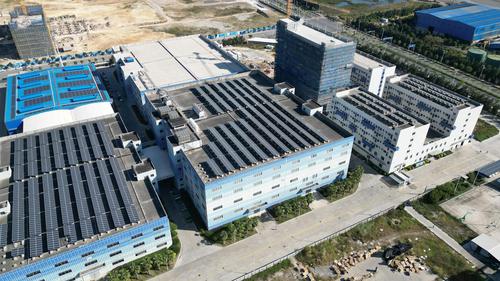
The company's extensive U.S. production footprint, with new facilities in Louisiana online and a South Carolina facility underway, positions it to disproportionately benefit from incentives like the Section 45X tax credit. These credits provide direct cash rebates or tradable credits for domestically produced solar components, offering a substantial financial tailwind. In 2025 alone, First Solar monetized $1.6 billion in Section 45X tax credits, with an expected $2.10 billion to $2.19 billion in 2026. This ability to leverage domestic content adders commands a premium over fully international sales, which realize average selling prices (ASPs) closer to $0.30 per watt.
First Solar aims to achieve 25 GW of global capacity by the end of 2026, with 14 GW of that in the U.S. This commitment to onshore manufacturing not only reduces dependence on foreign entities and supply chains but also guards against price volatility and creates American jobs. The company's vertical integration, from raw materials to finished panels, takes approximately four hours, providing operational control and efficiency. This strategic positioning makes First Solar a compelling play in the evolving renewable energy landscape, especially as the U.S. continues to strengthen its energy independence.
What Does the Broader Solar Industry Outlook for 2026 Mean for FSLR?
The broader solar industry is entering a challenging period, with 2026 projected to mark the first year of negative growth in global PV demand in over a decade. Global module demand is forecast to decline to 529–624 GWdc, down from an estimated 653–706 GWdc in 2025. This downturn is primarily driven by a pullback in traditional core markets like China and the U.S., while Europe maintains steady but not significantly incremental growth. An increasing number of countries are also tightening renewable energy policies, contributing to what appears to be a short-term trough for the sector.
Despite this gloomy outlook, First Solar's unique positioning offers some insulation. The company's core market, the utility-scale sector, is projected to add 197 GWdc between 2025 and 2030, presenting a significant growth opportunity that could partially offset broader market weakness. While permitting delays and grid interconnection issues remain challenges, First Solar's focus on this segment provides a more stable demand base compared to the more volatile residential and commercial markets.
Furthermore, the trend of deglobalization continues to gain momentum, with a primary focus on restructuring supply-chain footprints and bargaining power amid a wave of localization in non-China markets. This plays directly into First Solar's strengths, as its U.S.-centric manufacturing and differentiated CdTe technology allow it to navigate trade tensions and tariffs more effectively than crystalline silicon competitors. While the overall industry faces headwinds from inventory pressure and cost volatility, First Solar's ability to defend margins and cash flow through its strategic advantages will be paramount.
How Do First Solar's Financials and Valuation Stack Up Against Risks?
First Solar's financial health remains robust, providing a solid foundation to navigate the current market uncertainties. The company ended 2025 with a strong net cash balance of $2.4 billion, exceeding guidance and representing a $1.2 billion increase year-over-year. This substantial liquidity, coupled with a low debt-to-equity ratio of 0.05, offers significant financial flexibility to fund ongoing capacity expansions and withstand industry volatility. The trailing twelve months (TTM) gross margin stands at an impressive 40.6%, with an operating margin of 30.6% and a net margin of 29.3%, reflecting strong profitability.
From a valuation perspective, First Solar trades at a P/E ratio of 17.08, which is competitive within the renewable energy sector. Its P/S ratio of 5.00 and EV/EBITDA of 11.90 also suggest a reasonable valuation for a company with its growth prospects and strategic advantages. The company's return on equity (ROE) of 17.3% and return on invested capital (ROIC) of 14.2% demonstrate efficient capital utilization and strong shareholder value creation.
However, investors must weigh these strengths against inherent market volatility and execution risks. The conservative 2026 guidance, particularly the lack of explicit EPS guidance due to tax uncertainties, introduces a layer of unpredictability. While First Solar's long-term contracted backlog of 50.1 GW, valued at $15 billion, provides revenue visibility, the potential for debookings (as seen with 8.3 GW in 2025 due to customer breaches) and the impact of global oversupply on ASPs remain concerns. The company's ability to convert its strong cash position into profitable growth, especially with planned capital expenditures of $0.8 billion to $1.0 billion in 2026, will be critical.
What's the Investment Outlook for First Solar Now?
First Solar finds itself at a pivotal juncture. The immediate post-earnings stock reaction reflects investor disappointment over the Q4 EPS miss and the conservative 2026 sales guidance, signaling a potentially bumpy road ahead in the near term. The broader solar industry faces a challenging 2026, marked by a projected decline in global demand and persistent oversupply pressures.
However, looking beyond the immediate horizon, First Solar's long-term investment thesis remains compelling. Its unique thin-film CdTe technology, coupled with a robust U.S. manufacturing strategy, positions it as a key beneficiary of domestic policy tailwinds and the push for energy independence. The substantial Section 45X tax credits, strong balance sheet, and focus on the stable utility-scale market provide a defensive moat against industry volatility.
While the stock may experience continued choppiness as the market digests the 2026 outlook and broader industry dynamics, First Solar's strategic advantages and financial strength suggest resilience. For long-term investors with a high conviction in the U.S. solar manufacturing narrative, the current dip could present an opportune entry point, provided they are prepared for potential short-term fluctuations.
First Solar's journey through 2026 will be a test of its operational discipline and strategic foresight amidst a complex global energy transition. The company's ability to execute on its capacity expansion plans, navigate trade policy shifts, and maintain its pricing power will ultimately determine its trajectory. Investors should closely monitor management's commentary on policy clarity, tax credit monetization, and any shifts in the competitive landscape.
Want deeper research on any stock? Try Kavout Pro for AI-powered analysis, smart signals, and more. Already a member? Add credits to run more research.
Related Articles
Category
You may also like
No related articles available
Breaking News
View All →No topics available at the moment