
Stock News•5 days ago
700,000 Global Sales: How JETOUR's Boxy SUVs Won Recognition Worldwide
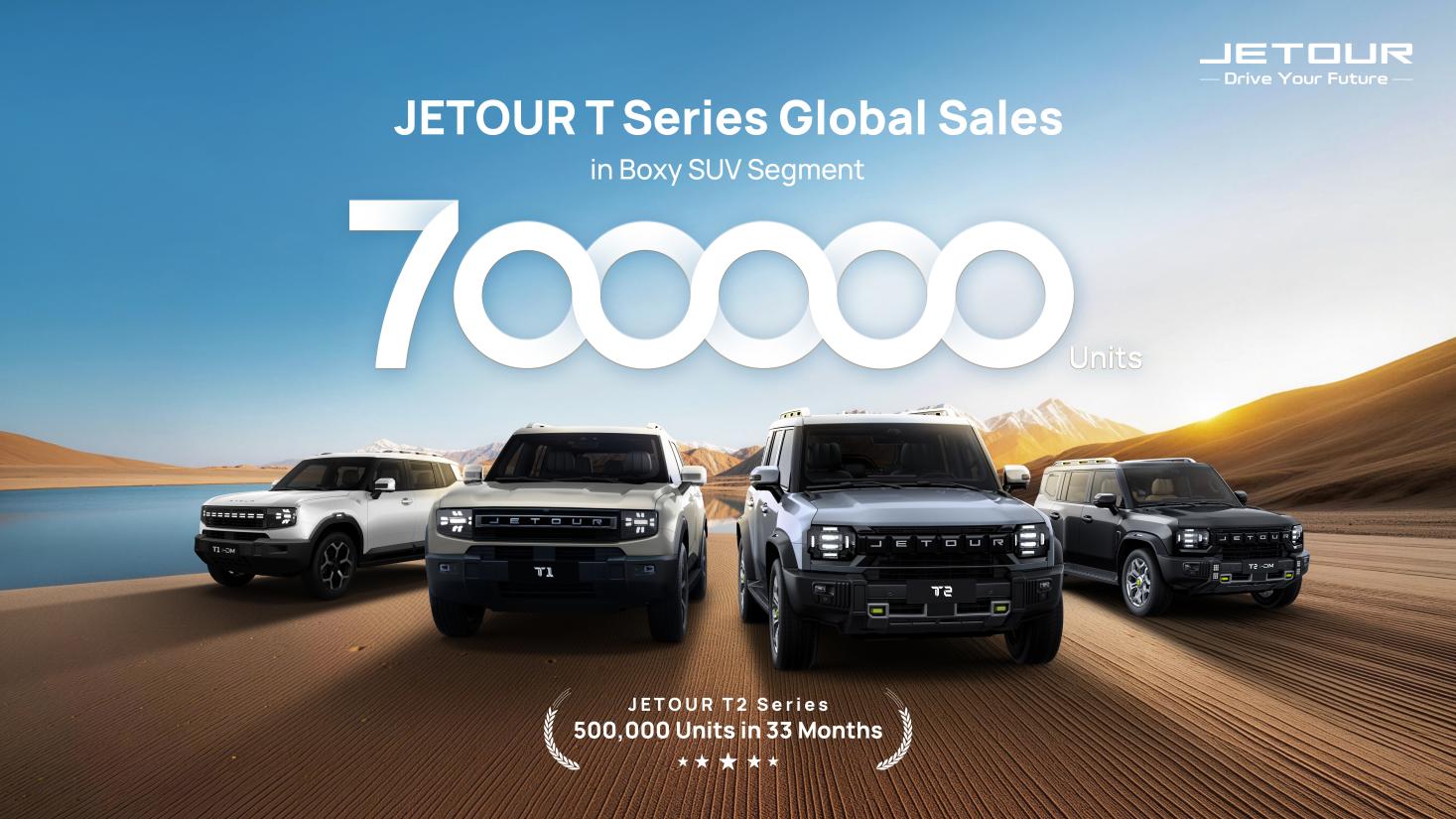
JETOUR reached 700,000 global sales, driven by rising demand for boxy SUVs that blend urban practicality with off-road capability.
Key Takeaways
Hyundai's "Boulder" concept, unveiled at the 2026 New York International Auto Show, is far more than just another design study; it's a bold declaration of intent. This rugged, body-on-frame SUV concept directly previews a production midsize pickup truck and potentially an SUV variant, both slated to arrive in the U.S. market by 2030. This marks a significant strategic pivot for Hyundai, moving beyond its previous unibody Santa Cruz compact pickup, which, while innovative, struggled to capture significant market share against rivals like the Ford Maverick.
The significance of the Boulder lies in its fundamental architecture: body-on-frame construction. This traditional truck and SUV platform is synonymous with durability, towing capability, and serious off-road prowess – qualities highly valued by American consumers. Hyundai Motor Company President and CEO, José Muñoz, emphasized this commitment, stating that these vehicles will be "designed in America, built by Americans for American customers," signaling a deep, localized investment in the U.S. market.
This isn't merely about adding another model to the lineup; it's about entering a segment Hyundai has never truly competed in before. The company is not just dipping its toes into the water; it's diving in headfirst, aiming to weave these new body-on-frame vehicles into the very fabric of American work and adventure. The Boulder concept, with its aggressive stance, 37-inch mud-terrain tires, and functional design cues like a tailgate-mounted spare and power-drop rear window, clearly communicates Hyundai's serious ambitions to capture a piece of this lucrative market.
The move is a direct response to evolving consumer demand, particularly the explosion in popularity of adventure-oriented, off-road capable vehicles. Hyundai recognizes the substantial growth opportunity in the midsize pickup segment, a market that has historically generated larger profits than passenger cars. By developing a robust body-on-frame platform, Hyundai is positioning itself to tap into this demand and challenge the established order with a fresh, purpose-built offering.
Hyundai plans to challenge established giants like the Jeep Wrangler, Ford Bronco, and Toyota Tacoma by offering a fresh, American-designed and built alternative, infused with advanced technology and potentially innovative powertrains. The midsize truck segment is fiercely competitive, with nearly 1 million units produced in North America annually, and Hyundai understands that brand loyalty runs deep among truck and off-road SUV buyers. To succeed, the company must differentiate itself beyond just price.
The Boulder concept itself provides a strong indication of Hyundai's strategy. Its design marries boxiness with sleek lines, dubbed "Art of Steel," and incorporates features like aggressive approach/departure angles and tow hooks, directly targeting the aesthetic and functional demands of off-road enthusiasts. Hyundai's design chief, SangYup Lee, highlighted that the Boulder is "a four-wheeled love letter to the dynamic, off-road way of life," suggesting a deep understanding of the target demographic's aspirations. This focus on authentic capability, rather than just rugged looks, is crucial for gaining credibility.
Furthermore, Hyundai's track record with its Genesis luxury brand and N performance division demonstrates its ability to successfully enter and disrupt established segments. The company has shown it can "put its money where its mouth is," building award-winning vehicles and cultivating strong brand identities. This experience suggests Hyundai won't shy away from the significant investment and sustained effort required to break into the truck market. The expansion of its XRT subbrand, which will be "taken to the next level" with body-on-frame vehicles, further underscores this commitment to rugged capability.
The company also aims to leverage its strengths in technology and design. While the Boulder concept features physical knobs and chunky switchgear – a welcome departure from the trend of massive touchscreens in off-road vehicles – it also hints at advanced digital displays and reconfigurable cabin elements. This blend of tactile usability and modern innovation could appeal to a broad spectrum of buyers, from traditional truck owners to those seeking a more refined adventure vehicle. Hyundai's approach is to challenge the likes of Ford, Jeep, and Toyota, but "done the Hyundai way," promising a unique blend of capability and cutting-edge features.
Hyundai's "Built in America" strategy is a cornerstone of its ambitious plan, representing a massive $12.6 billion investment in its U.S. manufacturing footprint, most notably the Metaplant America facility in Savannah, Georgia. This commitment goes far beyond mere assembly; it encompasses design, development, and even the sourcing of materials, with the new body-on-frame vehicles explicitly stated to be "forged with Hyundai-produced U.S. steel." This deep localization effort is designed to achieve multiple strategic objectives, fundamentally reshaping Hyundai's presence in North America.
Firstly, localizing production is a direct response to the ever-present threat of tariffs and trade barriers. As Randy Parker, President and CEO of Hyundai Motor North America, noted, "The best way to alleviate tariffs is to localize production." By aiming to have at least 80% of its U.S. sales produced domestically by 2030, Hyundai significantly reduces its exposure to import duties, such as the long-standing "chicken tax" on imported trucks. This move provides greater cost stability and predictability, crucial for a high-volume segment like midsize trucks.
Secondly, the "Built in America" narrative resonates powerfully with American consumers, fostering goodwill and potentially boosting sales. In a market where domestic brands have historically dominated the truck segment, emphasizing local design, manufacturing, and job creation can be a significant competitive advantage. The Georgia Metaplant alone is projected to create 8,700 manufacturing jobs, further solidifying Hyundai's economic contribution to the U.S.
The Metaplant's initial phase will be capable of producing 300,000 vehicles annually, with phase two targeting 500,000 by 2030. While currently focused on electric vehicles like the IONIQ 5 and IONIQ 9, Hyundai is rapidly expanding its capabilities to include hybrid production. This multi-powertrain flexibility is key to supporting the diverse needs of the U.S. market, including the forthcoming body-on-frame trucks and SUVs. The Alabama factory, opened in 2005, already produces the Santa Fe, Tucson, Santa Cruz, and Genesis GV70, demonstrating Hyundai's long-standing commitment to U.S. manufacturing. This dual-plant strategy provides robust capacity and flexibility for Hyundai's expanding American portfolio.
Hyundai's powertrain strategy for its new body-on-frame trucks and SUVs is shaping up to be a pragmatic blend of traditional and electrified options, reflecting the diverse demands of the American market. While the Boulder concept press release did not specify a powertrain, industry speculation and Hyundai's broader electrification roadmap point towards a strong emphasis on extended-range electric vehicles (EREVs) and hybrids, alongside potential internal combustion options. This multi-powertrain approach is critical for appealing to a wide customer base, particularly in segments where range anxiety and towing capability are paramount.
The production vehicle previewed by the Boulder is widely expected to feature an EREV powertrain. CEO José Muñoz confirmed that EREV models are coming to the U.S. market, with Hyundai previously stating that an EREV pickup truck is part of its electrification roadmap. This technology operates primarily on electricity, with a combustion engine acting solely as a generator to charge the battery, rather than directly driving the wheels. This offers the driving experience of an EV while eliminating range anxiety, a significant advantage for long-distance travel or off-road adventures where charging infrastructure might be sparse.
Beyond EREVs, conventional hybrid options are also highly likely. Hyundai is already moving quickly to bring hybrid production to its Georgia facility, broadening the plant's role in its multi-powertrain strategy. The success of hybrid powertrains in competitors like the Ford Maverick highlights the strong consumer demand for fuel-efficient truck options. Hyundai's previous compact pickup, the Santa Cruz, notably lacked a hybrid option, a factor acknowledged by Hyundai Motor America VP Olabisi Boyle as a weakness compared to the Maverick. This suggests the company has learned from past experiences and will prioritize electrified options for its new body-on-frame offerings.
For those who prefer traditional power, a mix of V-6 and turbo-4 cylinder internal combustion engines could also be offered, particularly for the most rugged applications. The Boulder concept's platform is designed to accommodate pure electric, combustion, and hybrid options, providing Hyundai with maximum flexibility. This comprehensive powertrain strategy ensures that Hyundai can cater to various customer preferences, from those seeking maximum fuel efficiency and electric driving range to those prioritizing raw power and traditional truck performance, thereby maximizing its competitive reach in the midsize truck segment.
Hyundai's aggressive push into the U.S. body-on-frame truck and SUV market presents a compelling, albeit long-term, investment thesis for HYMTF, but it's not without significant risks. The stock, trading at $51.00 today, down 7.44%, reflects broader market sentiment and the inherent volatility of the automotive sector. However, the strategic moves outlined by the Boulder concept and the "Built in America" initiative could unlock substantial value over the next five to seven years, as the company aims to have its new trucks on the road by 2030.
The primary opportunity lies in tapping into a highly profitable segment that Hyundai has largely missed. Midsize trucks and off-road SUVs command higher margins than many passenger cars, and successfully capturing even a modest share of this market could significantly boost Hyundai's revenue and profitability. The $12.6 billion investment in U.S. manufacturing, coupled with the goal of localizing 80% of production, positions Hyundai to mitigate tariff risks and benefit from strong consumer preference for domestically built vehicles. This localization also provides greater supply chain stability and responsiveness to market demands.
However, investors must weigh these opportunities against considerable challenges. The U.S. truck market is dominated by deeply entrenched players with decades of brand loyalty, such as Ford, Jeep, and Toyota. Breaking into this segment requires not only a compelling product but also a sustained marketing effort and a robust dealer network capable of serving truck buyers. Hyundai's previous attempt with the Santa Cruz, while a good "tiptoe into the waters," ultimately failed to capture significant market share, highlighting the difficulty of competing in this space.
Execution risk is paramount. Developing a new body-on-frame platform, establishing a new production line for it, and ensuring the vehicles meet the rigorous demands of American truck owners is a monumental task. Any delays, quality issues, or missteps in product positioning could severely impact the success of this initiative. Furthermore, the automotive industry is undergoing rapid transformation, with shifts towards electrification and autonomous driving. While Hyundai's multi-powertrain strategy is prudent, the long-term viability of internal combustion or even EREV powertrains in a rapidly evolving market remains a consideration.
For investors considering HYMTF, Hyundai's "Boulder" strategy represents a long-term growth play, not a quick win. The company is making a substantial, multi-billion-dollar bet on a new segment, and the fruits of this investment will likely not be fully realized until closer to 2030. This requires patience and a willingness to monitor execution closely.
The current stock price of $51.00 and its $39.53 billion market cap reflect a company navigating a complex global automotive landscape. While today's 7.44% dip might be concerning, the focus for this particular initiative should be on the strategic long game. Hyundai's commitment to U.S. manufacturing and its multi-powertrain approach for the new truck lineup are strong signals of a company adapting to market realities and consumer preferences.
Investors should watch for concrete updates on the production version of the midsize pickup, including powertrain details, pricing strategy, and initial sales figures once launched. The success of the Georgia Metaplant's ramp-up and the ability to achieve the 80% localization target will also be critical indicators. Ultimately, Hyundai's ability to deliver a truly competitive and desirable body-on-frame vehicle, backed by its "Built in America" promise, will determine whether this ambitious venture translates into sustained shareholder value.
Hyundai's Boulder concept is a clear signal of its intent to carve out a significant presence in the lucrative U.S. truck and off-road SUV market. While the path ahead is challenging, the company's substantial investment and strategic localization efforts position it for meaningful long-term growth. Investors with a patient outlook may find HYMTF an interesting proposition as this ambitious strategy unfolds over the coming years.
Want deeper research on any stock? Try Kavout Pro for AI-powered analysis, smart signals, and more. Already a member? Add credits to run more research.