MarketLens

Log in

What is Seagate Technology Holdings and Why Does it Matter Now

2 days ago
SHARE THIS ON:

What is Seagate Technology Holdings and Why Does it Matter Now

Key Takeaways

  • Seagate Technology Holdings (STX) is a critical infrastructure play, poised to benefit from the insatiable demand for mass capacity data storage driven by AI and cloud computing.
  • Despite a strong market position and significant tailwinds, STX faces intense competition, cyclical demand, and geopolitical risks, particularly concerning its supply chain and international sales.
  • The stock's recent surge to $795.47 and a 2.01 Beta suggest high volatility and investor enthusiasm, but also underscore the importance of discerning fundamental strength from speculative fervor.

What is Seagate Technology Holdings and Why Does it Matter Now?

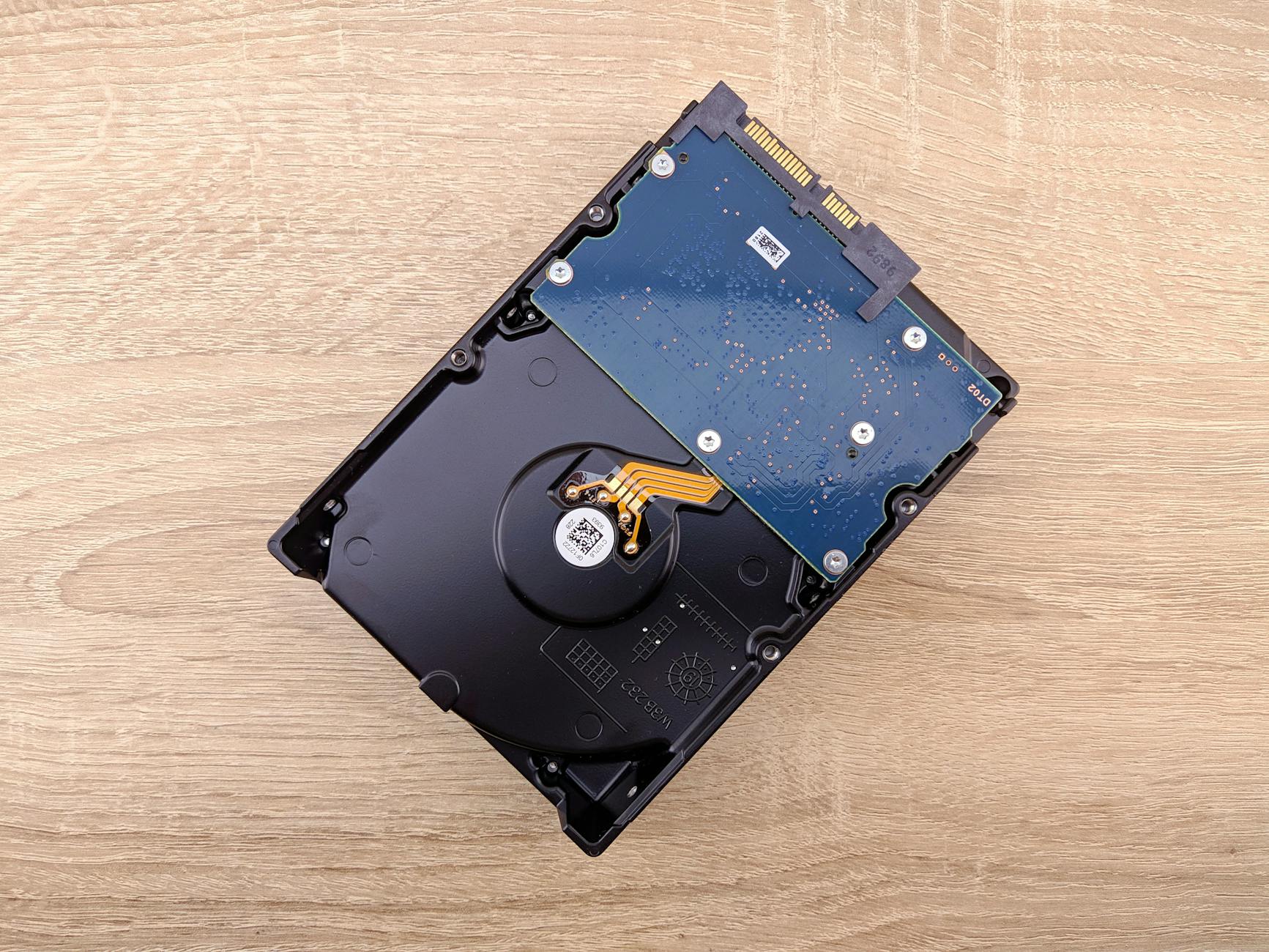
Seagate Technology Holdings plc (STX) stands as a foundational pillar in the digital economy, providing the essential data storage technology and solutions that power everything from enterprise data centers to personal devices. Headquartered in Singapore, this technology giant specializes in mass capacity storage products, including enterprise nearline hard disk drives (HDDs) and solid-state drives (SSDs). In an era defined by an explosion of data, Seagate's offerings are not just components; they are the very bedrock upon which the modern digital infrastructure is built.

The company's relevance has surged in recent years, propelled by the relentless growth of cloud computing, big data analytics, and the burgeoning artificial intelligence (AI) revolution. Every byte of data generated, processed, and stored requires robust and reliable solutions, a demand Seagate is uniquely positioned to meet. Its products are integral to hyperscale data centers, which are the backbone of today's digital services, making STX a crucial, albeit often overlooked, player in the broader tech landscape.

As of May 15, 2026, Seagate trades at $795.47, commanding a substantial market capitalization of $178.37 billion. This valuation reflects investor confidence in its long-term prospects, particularly as the world generates more data than ever before. The stock has seen significant movement, with a 52-week range spanning from a low of $103.73 to a high of $841.31, indicating both strong upward momentum and considerable volatility.

This volatility, coupled with its Beta of 2.01, suggests that STX is a high-beta stock, meaning its price tends to move more dramatically than the overall market. For investors, this translates to higher potential returns but also increased risk. Understanding Seagate's core business and its strategic position within the evolving data ecosystem is paramount for anyone considering an investment in this critical infrastructure provider.

The Unseen Engine: Data Storage and the AI Revolution

The AI revolution, characterized by large language models, advanced analytics, and machine learning, is fundamentally a data revolution. These sophisticated AI systems require colossal amounts of data for training, inference, and continuous improvement, creating an insatiable demand for storage solutions. Seagate, as a leading provider of mass capacity HDDs and enterprise SSDs, is directly in the crosshairs of this exponential growth, positioning it as a key beneficiary of the AI boom.

Consider the sheer scale: training a single large language model can involve petabytes of data, and once deployed, these models continue to generate and process data at an unprecedented rate. This isn't just about storing data; it's about storing it efficiently, reliably, and at a cost-effective scale that traditional storage solutions struggle to match. Seagate’s enterprise nearline HDDs, designed for high capacity and cost-efficiency, are particularly well-suited for these massive, cold and warm data storage requirements.

The shift towards cloud-native architectures and hyperscale data centers further amplifies this demand. Cloud providers, who are at the forefront of AI adoption and deployment, are constantly expanding their infrastructure, necessitating vast quantities of high-density storage. Seagate's strategic partnerships and product roadmap are geared towards meeting these specific needs, ensuring its hardware remains a cornerstone of the burgeoning AI infrastructure.

While the spotlight often shines on AI chip manufacturers, the reality is that without the underlying data storage infrastructure, AI cannot function. Seagate operates as the unseen engine, providing the fuel for the AI revolution. This fundamental role, often underestimated, underpins the company's long-term growth trajectory and its integral position within the broader technology landscape.

Geopolitical Currents and Supply Chain Resilience: A Double-Edged Sword for STX

Seagate's global footprint and reliance on international supply chains expose it to significant geopolitical risks, particularly concerning U.S.-China relations and broader trade policies. As a company operating internationally and headquartered in Singapore, STX navigates a complex web of regulations, tariffs, and national security concerns that can directly impact its operations and profitability. The ongoing technological competition between the United States and China, especially in critical sectors like semiconductors and data infrastructure, casts a long shadow over companies like Seagate.

The House Select Committee on Strategic Competition Between the United States and the Chinese Communist Party, on which Representative Ro Khanna serves, highlights the strategic importance of shoring up manufacturing and rebalancing trade relationships. While Khanna has advocated for a "new economic patriotism" and bringing semiconductor manufacturing back to American soil, the data storage industry, with its intricate global supply chains, remains highly interdependent. Any escalation in trade tensions or restrictions on technology exports could disrupt Seagate's ability to source components or sell its products in key markets.

Furthermore, the company's manufacturing processes and raw material acquisition are inherently global. Disruptions due to geopolitical events, natural disasters, or even localized conflicts can lead to supply chain bottlenecks, increased costs, and delays in product delivery. This vulnerability necessitates robust risk management strategies and a diversified manufacturing base, which Seagate has been actively pursuing.

However, these geopolitical currents also present opportunities. As nations prioritize data sovereignty and digital infrastructure security, there could be increased government spending and incentives for domestic or allied-nation-based technology providers. Seagate's ability to adapt to these evolving geopolitical landscapes, diversify its supply chain, and strategically position itself as a trusted partner will be crucial for mitigating risks and capitalizing on new opportunities in a fragmented global market.

The data storage industry is fiercely competitive, dominated by a handful of major players including Western Digital, Toshiba, and a host of emerging SSD and cloud storage providers. Seagate's ability to maintain its market leadership hinges on continuous innovation, cost efficiency, and strategic product development. The company’s focus on mass capacity HDDs for enterprise and cloud environments has been a key differentiator, allowing it to capitalize on the specific needs of hyperscale data centers.

Seagate’s strategy involves pushing the boundaries of HDD technology, developing higher-density drives through advancements like Heat-Assisted Magnetic Recording (HAMR) and multi-actuator technology. These innovations are critical for increasing storage capacity per drive and improving performance, which are paramount for data centers grappling with ever-growing data volumes. Simultaneously, the company is expanding its enterprise SSD portfolio, recognizing the increasing demand for high-performance, low-latency storage in critical applications.

The competitive landscape is not static; it includes the rise of NAND flash memory and the increasing adoption of all-flash arrays. While SSDs offer superior speed, HDDs still hold a significant cost-per-terabyte advantage, making them indispensable for archival and nearline storage where capacity and cost are primary concerns. Seagate’s dual-pronged approach, investing in both HDD and SSD technologies, allows it to address a broad spectrum of customer needs and maintain relevance across different tiers of data storage.

Ultimately, Seagate's strategic positioning is about balancing innovation with market demand and cost leadership. Its long-standing relationships with major cloud providers and enterprise customers, coupled with its engineering prowess, provide a strong foundation. However, sustained success will require agile adaptation to technological shifts, aggressive cost management, and the ability to fend off both traditional rivals and disruptive newcomers in the dynamic data storage market.

Insider Sentiment and Financial Health: A Closer Look at STX

While the research context did not reveal any specific purchases of STX by Representative Ro Khanna's spouse, a broader look at insider sentiment and Seagate's financial health provides valuable insights for investors. Recent corporate insider trading activity for STX in Q2 2026 shows a net selling trend, with 0 purchases and 92 sales. Insiders acquired 9,240 shares but disposed of 77,633 shares, resulting in a buy/sell ratio of 0.04. This indicates that insiders, on balance, have been selling more shares than buying, which can sometimes be interpreted as a lack of strong conviction in the stock's immediate upside, or simply routine liquidity events.

For instance, Teh Ban Seng, EVP & Chief Commercial Officer, executed several M-Exempt transactions on May 14, 2026, acquiring shares at prices ranging from $64.31 to $101.34, totaling over $611,000. However, these were likely option exercises. Crucially, on May 13, 2026, Teh Ban Seng also made two significant sales, disposing of 520 shares at $800.26 (totaling $416,135) and 200 shares at $801.39 (totaling $160,278). While these are not massive sales relative to the company's market cap, a pattern of net selling by officers warrants attention.

From a financial health perspective, Seagate's employee trend shows a slight reduction from 33,400 in June 2023 to 30,000 in June 2024 and 2025. This could reflect efficiency gains, automation, or strategic workforce adjustments. Executive compensation remains substantial, with CEO William D. Mosley receiving a total of $17,176,927 in 2025, heavily weighted towards stock awards. This aligns executive interests with shareholder value, as a significant portion of their compensation is tied to the company's stock performance.

The overall picture suggests a company that is managing its workforce and compensating its leadership in line with market practices. While insider selling can be a yellow flag, it's essential to consider the context – it could be for personal financial planning, diversification, or tax purposes, rather than a direct signal of poor company prospects. Investors should weigh this insider activity against Seagate's strong market position and the compelling tailwinds from the AI and data growth sectors.

The Road Ahead: What to Watch for in Seagate's Future

Seagate Technology Holdings is navigating a dynamic market, with significant opportunities and challenges on the horizon. The company's future performance will largely hinge on its ability to capitalize on the relentless demand for data storage driven by AI, cloud expansion, and edge computing. Continued innovation in mass capacity HDDs and strategic growth in enterprise SSDs will be paramount to maintaining its competitive edge against rivals like Western Digital and Toshiba.

Investors should closely monitor Seagate's quarterly earnings reports for insights into its revenue growth, profit margins, and, critically, its capital expenditure plans. These metrics will reveal how effectively the company is scaling its production to meet demand and managing its operational costs. Any significant shifts in its product mix, particularly the adoption rate of its next-generation HAMR technology, will also be a key indicator of its long-term technological leadership.

Furthermore, the geopolitical landscape remains a critical factor. Developments in U.S.-China trade relations, potential tariffs, and shifts in global supply chain policies could introduce both headwinds and tailwinds. Seagate's ability to diversify its manufacturing footprint and navigate complex international regulations will be crucial for ensuring supply chain resilience and market access. For a company so deeply embedded in global tech infrastructure, geopolitical stability is not just a macro concern, but a direct business driver.

Seagate's journey ahead promises to be eventful, reflecting the broader trends in data, AI, and global technology. Its current valuation at $795.47 and $178.37 billion market cap suggests high expectations, making it imperative for investors to understand the underlying drivers and potential risks. The company's role as a fundamental enabler of the digital economy positions it for continued relevance, but success will demand agility, innovation, and strategic foresight in an ever-evolving technological landscape.


Want deeper research on any stock? Try Kavout Pro for AI-powered analysis, smart signals, and more. Already a member? Add credits to run more research.

SHARE THIS ON:

Related Articles

Category

You may also like

Stock News1 week ago

Looking for a Growth Stock? 3 Reasons Why Seagate (STX) is a Solid Choice

Seagate (STX) is positioned for potential growth, with analysts citing strong underlying attributes as a catalyst for future returns. The company's performance outlook remains a focal point for invest...
Stock News2 weeks ago

Seagate: The Biggest Risk Is Buying At The Top Of The Industry Capex Cycle

Seagate Technology shares have doubled over the past year, fueled by robust data center demand and hyperscaler capital expenditure. The stock now trades at 34x FY26 and 23x FY27 P/E, as investors weig...
Stock News2 weeks ago

Why Seagate Stock Surged Today

Seagate shares rose today as demand for high-performance data storage solutions accelerates. The surge reflects growing market appetite for advanced storage hardware, likely driven by increased enterp...
Stock News2 weeks ago

Seagate Technology Holdings plc (STX) Q3 2026 Earnings Call Transcript

Seagate Technology Holdings plc (STX) released its Q3 2026 earnings transcript, providing updated financial performance metrics and management commentary. The report details the company's operational ...

Breaking News

View All →

Top Headlines

View More →
Stock News29 minutes ago

Apple's Upgraded Siri to Feature Auto-Delete Chat Function

Stock News1 hour ago

Warren Buffett Successor Greg Abel Just More Than Tripled Berkshire's Stake in This "Magnificent Seven" Stock. Is It a Buy?

Stock News3 hours ago

Apple's Siri revamp could include auto-deleting chats

Stock News4 hours ago

Nvidia Stock Is Poised to Rocket From the Booming Space Economy

Stock News4 hours ago

The AI Stock With a 10-Year Head Start That Wall Street Still Hasn't Fully Priced In