MarketLens

Log in

What is the "Parks Engine" and why is it so crucial for Disney's future

2 weeks ago
SHARE THIS ON:

What is the "Parks Engine" and why is it so crucial for Disney's future

Key Takeaways

  • Josh D'Amaro's ascension to Disney CEO marks a pivotal moment, with the company's future hinging on his ability to balance the reliable theme parks engine with the evolving media landscape.
  • The "biggest decision" facing D'Amaro is the strategic future of Disney's traditional linear TV networks, including ESPN, as streaming profitability takes center stage.
  • Disney's $60 billion parks expansion, coupled with a renewed focus on new, cross-platform franchises and interactive experiences, aims to reignite growth and shareholder value.

The Walt Disney Company (NYSE: DIS) stands at a critical juncture. As Josh D'Amaro officially takes the helm as CEO today, March 18, 2026, succeeding the legendary Bob Iger, the market is keenly watching how he navigates the complex currents of media, entertainment, and consumer experiences. Shares are currently trading at $99.41, down 0.88% today, and have struggled to gain traction over the past year, signaling that the company's turnaround remains a work in progress despite Iger's efforts.

D'Amaro, a veteran of Disney's highly profitable Parks, Experiences, and Products division, steps into a role demanding both operational rigor and creative vision. His appointment, paired with Dana Walden as President and Chief Creative Officer, signals a strategic shift towards a "Creative + Operations" leadership duo. This new chapter aims to capitalize on Disney's unique "flywheel" business model, where beloved intellectual property (IP) is monetized across multiple touchpoints, from films and streaming to theme parks and merchandise. The challenge, however, lies in adapting this proven model to a rapidly changing world where audience consumption habits are in constant flux.

What is the "Parks Engine" and why is it so crucial for Disney's future?

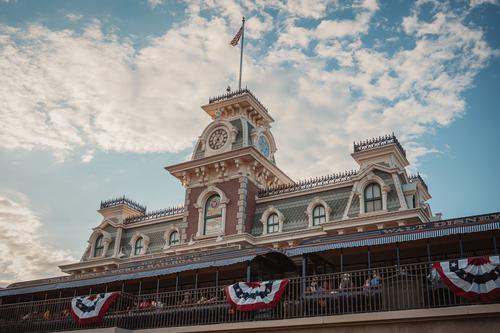
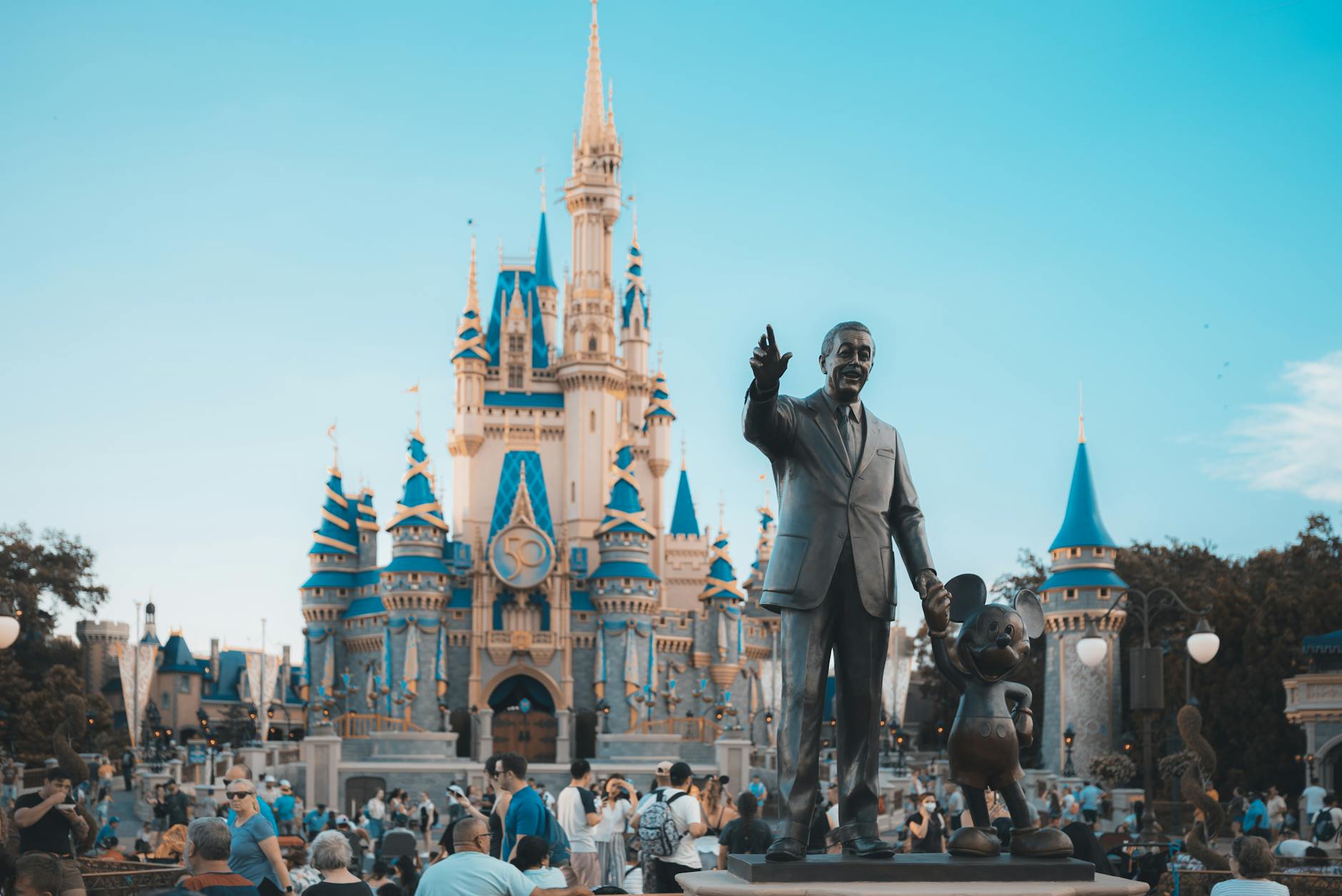
The "Parks Engine" refers to Disney's Experiences segment, encompassing its global theme parks, resorts, and cruise lines. This division has consistently been Disney's most reliable and profitable business line, acting as a crucial cash flow generator that often subsidizes other, more volatile segments. D'Amaro's deep roots in this area, having successfully led the division, are seen as a significant asset for his CEO tenure.

Under Iger's leadership, the Experiences unit drove approximately $10 billion of Disney's $17.6 billion operating income last year, with analysts forecasting roughly 22% growth in its operating income by 2028. This robust performance is why the board is betting on D'Amaro, whose background centers on "immersive environments, pricing discipline, and repeat visitation." His success in this segment translates directly to Disney's current priorities, emphasizing engagement-driven experiences that foster consumer trust and loyalty.

Disney is currently embarking on its largest global parks expansion ever, a roughly $60 billion, decade-long investment. This ambitious plan includes new cruise ships, domestic park expansions like "Villains Land" at Magic Kingdom and a Cars-themed area, and a planned resort in Abu Dhabi. This capital intensity, however, presents a risk; a global recession could leave Disney with high fixed costs and lower-than-expected attendance, potentially derailing the very engine meant to drive the company forward.

The competitive landscape for themed entertainment is also intensifying. Universal Destinations & Experiences, a division of Comcast (CMCSA), significantly upped the ante with the opening of Epic Universe in Orlando in 2025. This "mega-park" has increased competition for tourism dollars in Florida, forcing Disney to accelerate its own expansion plans and promotions to maintain its dominant market share. D'Amaro's challenge will be to ensure these massive investments yield sufficient returns and maintain Disney's "category of one" status in the face of formidable rivals.

How will Disney navigate the evolving streaming landscape?

Disney's approach to streaming has undergone a significant transformation, shifting from a "growth at any cost" mentality to a sharp focus on profitability and Average Revenue Per User (ARPU). The direct-to-consumer (DTC) segment, which includes Disney+, Hulu, and ESPN+, has now reached structural profitability, a major milestone that Iger had prioritized. The company's goal is to achieve a 10% operating margin for the DTC segment by the end of Fiscal Year 2026.

A key part of this strategy is the unification of Disney+ and Hulu into a single, seamless experience, expected to be completed later this year. This integration aims to drive more value for subscribers and the business by offering a broader content library and potentially reducing churn. D'Amaro emphasized Disney+ as "the digital centerpiece of our company," highlighting its role in delivering "a more connected, personalized, and immersive experience to our consumers – wherever they are and whenever they would like to engage with us."

International growth also remains a significant opportunity. Disney has been investing strategically in global markets, releasing seven of its most viewed international originals ever in just over a year, including the International Emmy-winning Rivals and the breakout hit Battle of Fates. This focus on localized content and expanding global reach is crucial for sustaining subscriber engagement and ARPU outside of mature markets like the U.S.

However, the streaming wars are far from over. Disney+ continues to compete with giants like Netflix (NFLX), which remains the market leader in engagement and global scale, and tech behemoths Amazon (AMZN) and Apple (AAPL), who often use content as a loss-leader to bolster their broader ecosystems. Disney's advantage lies in its unparalleled library depth and the ability to monetize IP beyond just the screen, but maintaining content quality and managing subscriber acquisition costs will be critical to sustaining profitability in this fiercely competitive environment.

What is the "biggest decision" D'Amaro faces regarding linear TV?

The most pressing and arguably "biggest decision" facing CEO Josh D'Amaro is the strategic future of Disney's traditional linear television networks, including ABC and the various Disney Channels, as well as the sports powerhouse ESPN. The decline of the traditional cable bundle continues to erode high-margin affiliate fees, forcing Disney to manage the "glide path" of these legacy assets while simultaneously scaling their digital replacements.

Former CEO Bob Iger had previously floated the idea of selling ABC, stating it "may not be core" to Disney's future, before walking back those remarks. Analysts like Joseph Bonner of Argus Research believe that figuring out what to do with the TV networks is "the one thing Iger never really solved." Bonner suggests that Disney's long-lagging stock would likely rise if it divested some of its cable networks, which he considers the weakest part of its business.

ESPN presents a more complex dilemma. Valued at an estimated $30 billion, its must-see live sports content remains highly valuable in a fragmented media landscape. Disney has already made significant moves to digitize ESPN, launching a standalone streaming service, ESPN "Flagship," in August 2025, which features integrated betting via ESPN Bet and fantasy sports. Furthermore, the NFL's acquisition of a 10% equity stake in ESPN in exchange for NFL Network and other media assets provides a powerful defensive moat for Disney's sports business, solidifying its position as an indispensable daily touchpoint for millions of fans.

Despite these strategic maneuvers, the cost of live sports rights continues to soar, and the transition of ESPN to a direct-to-consumer model carries inherent risks. If the digital transition doesn't scale fast enough or if subscriber adoption lags, it could create a significant revenue gap, impacting Disney's overall financial performance. D'Amaro must decide whether to fully embrace the digital pivot by divesting linear channels, or to justify holding onto them, navigating a delicate balancing act between maximizing value from declining assets and investing aggressively in the future of sports streaming.

How will Disney's content strategy evolve under new leadership?

Under Josh D'Amaro, Disney's content strategy is poised for a critical evolution, moving beyond simply chasing subscriber numbers to focusing on creating high-quality, interconnected franchises that can thrive across all platforms. The era of "growth at any cost" in streaming is over; the new emphasis is on content that drives engagement, reduces churn, and can be monetized across Disney's unique "flywheel" of businesses.

Analysts like Brandon Katz, a content strategy director at Greenlight Analytics, highlight that the real question for Disney now isn't just "Is this piece of content a hit?" but rather, "Can this piece of content live across parks, merchandise, games, and streaming?" This necessitates a shift from relying solely on "squeezing cash from superheroes or nostalgia-inducing sequels" to developing new franchises that can keep the flywheel spinning. While shows like FX's The Bear are critically acclaimed, Disney needs new IP with inherent cross-platform sellability.

The 2026 movie slate offers a glimpse into this strategy, with highly anticipated releases like Toy Story 5, Avengers: Doomsday, and the return of Star Wars to theaters via The Mandalorian & Grogu. These tentpole franchises are designed to drive theatrical revenue, boost Disney+ engagement, and fuel merchandise sales and theme park attendance. Maintaining the quality and freshness of these core franchises is paramount, as "franchise fatigue" remains a persistent threat.

Beyond traditional content, D'Amaro is also embracing interactivity and new technologies. Disney's $1.5 billion investment in Epic Games aims to create a persistent digital universe where fans can play, watch, and shop within Disney, Marvel, and Star Wars environments. Furthermore, a polarizing deal with OpenAI is exploring how AI-generated short-form vertical clips could boost streaming engagement on Disney+. This push into video games and AI reflects a recognition that winning over the next generation requires taking down the "velvet ropes" and offering more interactive, personalized experiences.

What are the key opportunities and risks for Disney investors?

For investors, Disney presents a complex but potentially rewarding proposition, blending "Old Media" value with "New Media" growth, underpinned by a robust balance sheet. The company's Fiscal Year 2025 results showcased a position of strength, with revenue at $94.4 billion (a 3% increase year-over-year) and net income sharply rising to $12.0 billion, reflecting the elimination of streaming losses. Adjusted EPS grew 19% to $5.93, and the company declared a $1.50 per share dividend for 2026, a 50% increase, signaling management's confidence.

Opportunities and Catalysts:

  1. Experiences Growth: The $60 billion parks investment, coupled with D'Amaro's expertise, positions the Experiences segment for continued strong performance. International parks, particularly in Asia, offer significant untapped growth potential.
  2. DTC Profitability & ARPU Expansion: With streaming now profitable, the focus on ARPU, advertising revenue, and the unified Disney+/Hulu experience should drive margin expansion, aiming for that 10% operating margin by FY 2026.
  3. Strategic IP Monetization: The "flywheel" model, enhanced by new franchises and ventures into gaming (Epic Games partnership) and AI, promises to maximize the value of Disney's unparalleled IP across multiple consumer touchpoints.

Risks and Challenges:

  1. Linear TV Decline: The accelerating "linear die-off" remains the single largest threat to Disney's cash flow. D'Amaro's decision on divesting or transforming these assets will be critical.
  2. Capital Intensity & Macroeconomic Sensitivity: The massive parks investment makes Disney highly sensitive to consumer spending. A global recession could significantly impact attendance and returns on capital.
  3. Content Fatigue & Competition: Maintaining the quality and freshness of core franchises like Marvel and Star Wars is essential to avoid audience fatigue. Fierce competition in streaming and themed entertainment demands continuous innovation.

Wall Street is cautiously bullish on DIS as the D'Amaro era begins, with a consensus "Buy" rating and an average price target of $139.33, implying significant upside from the current $99.41. While the stock has underperformed for a decade, the pieces are now in place for a potential multi-year recovery, provided the new leadership can execute the "Quality Pivot" without losing the creative spark that defines the brand.

D'Amaro's tenure will be defined by his ability to successfully migrate ESPN to a digital powerhouse, defend theme park dominance against surging competition, and consistently deliver new, compelling content that resonates across generations. For investors, Disney offers a unique blend of legacy stability and new media potential, making it a compelling, albeit complex, long-term play.


Want deeper research on any stock? Try Kavout Pro for AI-powered analysis, smart signals, and more. Already a member? Add credits to run more research.

SHARE THIS ON:

Related Articles

Category

You may also like

Stock News1 week ago

Tesla's upcoming delivery report is a lot more important than it may seem

Tesla's upcoming EV delivery report holds heightened importance for investors because strong sales are critical to funding Elon Musk's futuristic ambitions.
Stock News2 weeks ago

New CEO Josh D'Amaro Wants Disney's Flywheel to Spin Faster

New CEO Josh D'Amaro, succeeding Bob Iger Wednesday, plans to use technology to accelerate Disney's franchises. This strategy aims to boost the company's stagnant stock performance.
Stock News2 months ago

Will Disney's Experiences Investments Pay Off Over the Long Term?

Disney is heavily investing capital into its Experiences segment, focusing on new parks and cruise ships to fuel long-term growth, even as the division faces immediate margin pressure.
Stock News3 months ago

Investors Heavily Search The Walt Disney Company (DIS): Here is What You Need to Know

The Walt Disney Company (DIS) is experiencing increased user interest on Zacks.com, making it timely for investors to assess current stock prospects based on underlying facts.

Breaking News

View All →

Top Headlines

View More →
Stock News3 hours ago

High-Yield And Tax-Advantaged Income Funds From NEOS (April Update)

Stock News5 hours ago

TSMC vs. Nvidia: Which AI Supercycle Growth Stock Is the Better Long-Term Buy?

Stock News5 hours ago

Ca$htag$: Can WMT Win Retail War Against AMZN & TGT?

Stock News6 hours ago

1 Artificial Intelligence (AI) Stock That Could Be Worth a Fortune by 2030

Stock News7 hours ago

Microsoft Is Going Multi-Model with Copilot. Does the Enterprise King Win Again?