Stock News•8 hours ago
Why Is TG Therapeutics (TGTX) Down 5.7% Since Last Earnings Report?
TG Therapeutics shares fell 5.7% since its last earnings report 30 days ago, as investors weigh the company's outlook.
Key Takeaways
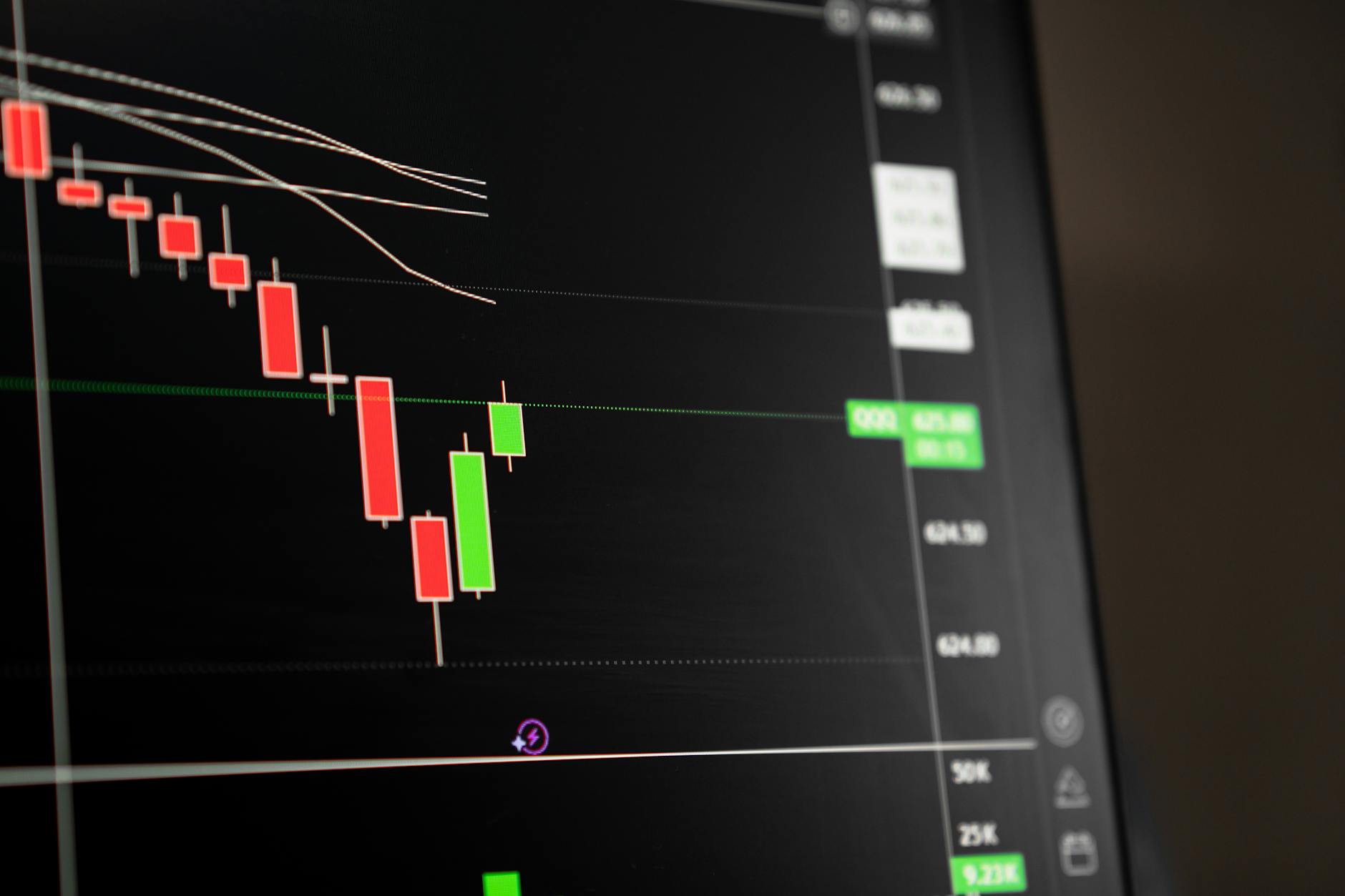
Ocular Therapeutix (NASDAQ: OCUL) investors woke up to a rude awakening on February 17, 2026, as shares plummeted by a staggering 24.27%, closing at $6.72. This sharp decline, wiping out a significant portion of its $1.46 billion market capitalization, came on the heels of the company announcing "positive" topline results from its pivotal SOL-1 Phase 3 superiority trial for AXPAXLI (OTX-TKI), its investigational wet age-related macular degeneration (AMD) therapy. The stock's dramatic fall from its previous close of $8.88 clearly signals that the market's interpretation of "positive" diverged significantly from the company's.
Prior to this announcement, optimism surrounding AXPAXLI had been palpable. Shares had surged nearly 40% in the preceding days, pushing the company's valuation towards $2.2 billion and fueling speculation about a potential acquisition by a larger pharmaceutical player like Sanofi. Analysts, too, had maintained an overwhelmingly bullish stance, with an average price target of $21.00 and projections of peak sales reaching $1 billion in wet AMD. This backdrop of high expectations set the stage for a classic "buy the rumor, sell the news" event, where even statistically significant clinical success wasn't enough to satisfy an already inflated narrative.
The market's reaction suggests that while the data was indeed "positive" in meeting its primary endpoint, it likely fell short of the superlative durability profile that investors had priced into the stock. In the highly competitive wet AMD landscape, incremental improvements, even if statistically significant, may not translate into the commercial dominance required to justify a premium valuation. The stock's 52-week range of $5.79 to $16.44 underscores its inherent volatility as a clinical-stage biotech, where a single trial readout can make or break investor sentiment.
This immediate downturn highlights the binary nature of biotech investing, especially for companies heavily reliant on a single lead asset. Despite the company's press release touting "first ever successful demonstration of superiority" and the potential for a "superiority label," the market's focus quickly shifted to what the data didn't deliver in terms of a truly transformative, long-duration therapy that could fundamentally disrupt the existing treatment paradigm.
To understand the market's reaction, we need to dissect the "positive" SOL-1 data for AXPAXLI (OTX-TKI) in wet AMD. Ocular Therapeutix announced that the trial met its primary superiority endpoint at Week 36 with high statistical significance (p=0.0006), comparing a single dose of AXPAXLI (0.45 mg) to a single dose of aflibercept (2 mg) after a loading phase. Specifically, 74.1% of subjects in the AXPAXLI arm maintained vision at Week 36, a 17.5% risk difference compared to the aflibercept arm. This superiority was further demonstrated at Week 52, with 65.9% of AXPAXLI subjects maintaining vision, a 21.1% risk difference over aflibercept (p<0.0001).
The trial also reported impressive rescue-free rates for AXPAXLI: 80.6% at Week 24, 74.7% at Week 36, and 68.8% at Week 52. These figures, coupled with a generally well-tolerated safety profile and no treatment-related ocular serious adverse events, would typically be hailed as a resounding success for an investigational drug. The company plans to submit a New Drug Application (NDA) based on this data, subject to formal discussions with the FDA, and believes AXPAXLI could be the first tyrosine kinase inhibitor (TKI) commercialized for wet AMD with a potential superiority label.
However, the market's "disappointment" stemmed from what analysts and investors likely perceived as a shortfall in the durability advantage, particularly when compared to the high expectations built into the stock's valuation. While the data showed clear superiority, the commercial appeal of a new wet AMD therapy often hinges on significantly extending the treatment interval beyond existing anti-VEGF therapies like Eylea (aflibercept) or Lucentis (ranibizumab). The market was likely looking for a "game-changer" that could dramatically reduce the injection burden for patients, perhaps offering a much longer duration of effect than what was ultimately demonstrated.
The nuance here is critical: "superiority" in a clinical trial doesn't automatically equate to "market-shattering" commercial potential, especially when the bar for innovation is set incredibly high by investor sentiment. The fact that the durability advantage "fell short of expectations" suggests that while AXPAXLI is a strong contender, it might not be the paradigm shift some had hoped for, leading to a reassessment of its peak sales potential and, consequently, Ocular Therapeutix's valuation.
The SOL-1 results, while causing a market stir, are just one piece of Ocular Therapeutix's broader retina pipeline strategy, which leverages its proprietary ELUTYX bioresorbable hydrogel-based formulation technology. The company's lead candidate, AXPAXLI, is also being evaluated in other significant retinal diseases, most notably diabetic retinal disease (DRD), including non-proliferative diabetic retinopathy (NPDR) and non-center-involved diabetic macular edema (non-CI-DME). This diversification is crucial, as it mitigates some of the "binary event" risk associated with a single indication.
Beyond SOL-1, Ocular Therapeutix has two other key trials for AXPAXLI in wet AMD: the SOL-R Phase 3 non-inferiority trial and the SOL-X open-label extension trial. The SOL-R trial, which completed randomization of 631 subjects in December 2025, is expected to deliver topline data in Q1 2027, potentially earlier than initially anticipated. This trial aims to demonstrate that AXPAXLI is at least as effective as existing treatments, providing another pathway for regulatory approval and market access. The SOL-X trial, slated to begin in Q2 2026, will offer long-term safety and durability insights for patients completing SOL-1 or SOL-R, which could further strengthen AXPAXLI's profile.
In the diabetic retinal disease space, Ocular Therapeutix initiated the HELIOS-3 Phase 3 superiority trial in November 2025, targeting moderately severe or severe NPDR. This trial is designed to support a broad label by including subjects with non-CI-DME. The company has a Special Protocol Assessment (SPA) agreement with the FDA for the HELIOS-2 trial, which has informed the design of HELIOS-3, using a novel ordinal endpoint (DRSS 2-step change status at Week 52) that measures disease improvement, stability, and worsening across the DRSS spectrum. This innovative endpoint could allow for smaller, shorter, and less expensive trials, potentially accelerating development.
Depending on discussions with the FDA regarding AXPAXLI's wet AMD filing, Ocular Therapeutix may pursue a streamlined development approach in DRD, potentially advancing with only the single HELIOS-3 trial. This strategic flexibility underscores the company's commitment to maximizing AXPAXLI's potential across multiple indications, leveraging its ELUTYX platform to redefine the retina experience. While the market's immediate focus is on wet AMD, the broader pipeline offers multiple shots on goal and long-term growth avenues.
A critical factor in Ocular Therapeutix's ability to navigate clinical setbacks and pursue its extensive pipeline is its financial health. The company ended 2025 in a robust cash position, reporting $737.1 million in cash and cash equivalents as of December 31, 2025. This significant war chest provides an expected cash runway into 2028, offering substantial flexibility to fund ongoing clinical trials and pre-commercialization activities for AXPAXLI. This strong financial standing is largely due to a September 2025 equity offering that raised approximately $475 million in gross proceeds, with net proceeds of about $445.6 million.
However, a closer look at the company's financials reveals a challenging operational landscape. For the full year 2025, Ocular Therapeutix reported total net revenue of $51.95 million, a decline from $63.72 million in 2024. The fourth quarter of 2025 saw revenue drop to $13.3 million from $17.1 million in the prior-year period. This revenue shortfall is primarily attributed to reimbursement challenges for DEXTENZA, its only marketed product, despite achieving record annual unit volume. This signals potential commercial execution headwinds that could impact AXPAXLI's market penetration, even if approved.
The company's net loss widened significantly in 2025, reaching $265.9 million (or 193.5 million (or -1.22** per share) in 2024. This widening loss is driven by substantial investments in research and development (R&D), which jumped **54%** year-over-year to **197.1 million in 2025, reflecting the costs associated with the SOL-1, SOL-R, and HELIOS-3 clinical trials, as well as pre-commercial AXPAXLI investments. Selling and marketing expenses also increased by 20% to $53.9 million for the full year.
Despite these widening losses and revenue challenges, the substantial cash balance provides a crucial buffer. The market's focus remains squarely on clinical outcomes, as evidenced by the stock's muted reaction to the Q4 2025 revenue miss compared to the dramatic drop post-SOL-1 data. While the cash runway into 2028 is a positive, the high R&D burn rate and DEXTENZA's commercial struggles underscore the imperative for AXPAXLI to achieve significant market success to justify these investments and eventually drive profitability.
Investing in Ocular Therapeutix, like many clinical-stage biotechs, comes with a distinct set of risks and opportunities. The most immediate risk, as demonstrated by the recent stock plunge, is the "binary catalyst" nature of clinical trial readouts. While SOL-1 was "positive," the market's high expectations for a truly transformative durability profile were not fully met, leading to a significant re-rating. Future readouts from SOL-R (Q1 2027) and HELIOS-3 (timing TBD) will present similar volatility. Any further perceived shortcomings could trigger additional sell-offs.
Regulatory uncertainty also looms. Even with positive SOL-1 data, the FDA may still require additional trials or impose label restrictions, potentially delaying commercialization or limiting market access. The company intends to pursue the 505(b)(2) pathway, which could shorten review timelines, but this is not guaranteed. Furthermore, the competitive landscape in wet AMD is fierce, with established blockbusters and a robust pipeline of new, long-acting therapies. AXPAXLI's commercial potential will depend on its ability to differentiate itself effectively, especially if its durability advantage isn't as pronounced as initially hoped.
On the financial front, the company's widening TTM losses ($-265.9 million) and declining revenue from DEXTENZA highlight the challenges of commercial execution. If AXPAXLI faces similar reimbursement hurdles or struggles to gain market share, the path to profitability could be extended, potentially necessitating further dilutive equity raises. The share count has already increased by 38% year-over-year to 217.7 million, following the September 2025 equity raise.
However, significant opportunities remain. If AXPAXLI secures a "superiority label" from the FDA, it could be a powerful differentiator in the market, potentially commanding a premium price and capturing a meaningful share of the wet AMD market, which analysts project could reach $1 billion in peak sales for AXPAXLI. The expansion into diabetic retinal disease with the HELIOS program offers a substantial additional market opportunity, leveraging the same core ELUTYX technology. The novel ordinal endpoint in HELIOS-3 could also increase the probability of success with more efficient trials.
Moreover, the company's strong cash position of $737.1 million provides a crucial safety net, funding operations into 2028. This runway allows Ocular Therapeutix to continue advancing its pipeline without immediate pressure for additional financing, offering time to demonstrate AXPAXLI's long-term value and potentially attract renewed acquisition interest if future data proves more compelling. The long-term safety and durability insights from the SOL-X trial could also bolster AXPAXLI's profile.
For Ocular Therapeutix and its investors, the immediate future involves a critical period of data presentation and regulatory engagement. Detailed results from the SOL-1 trial are slated for presentation at the 49th Macula Society Annual Meeting between February 25-28, 2026. This presentation will provide a deeper dive into the data, potentially offering more clarity on the nuances of AXPAXLI's performance and its competitive positioning, which could influence market sentiment.
Following this, the company intends to engage in formal discussions with the U.S. FDA regarding the submission of a New Drug Application (NDA) for AXPAXLI based on the SOL-1 data. The outcome of these discussions will be pivotal, determining the regulatory pathway and potential timeline for AXPAXLI's market entry. Any indication of a smooth path to approval or, conversely, a requirement for additional trials, will significantly impact the stock.
Beyond wet AMD, investors will be closely watching the progress of the SOL-R non-inferiority trial, with topline data expected in Q1 2027, and the initiation of the SOL-X open-label extension trial in Q2 2026. These trials are crucial for reinforcing AXPAXLI's profile and expanding its long-term data set. In diabetic retinal disease, the ongoing HELIOS-3 superiority trial represents another significant catalyst, with its novel ordinal endpoint potentially offering a more efficient route to market.
Ocular Therapeutix remains a high-risk, high-reward biotech play. While the recent market reaction to SOL-1 data was a sharp reminder of the sector's volatility, the company's strong cash position and diversified pipeline offer multiple avenues for value creation. Investors should monitor the upcoming data presentations, FDA discussions, and the progress of its broader retinal disease programs to assess the long-term potential of this integrated biopharmaceutical company.
Ocular Therapeutix stands at a crossroads, with its future valuation heavily dependent on how effectively it can translate clinical superiority into commercial success and leverage its platform across multiple indications. The coming months will be critical in shaping its narrative and determining whether it can recover from this setback to deliver on its ambitious vision.
Want deeper research on any stock? Try Kavout Pro for AI-powered analysis, smart signals, and more. Already a member? Add credits to run more research.