MarketLens
What Just Happened with Meta Platforms and Manus

Key Takeaways
- Meta Platforms' $2 billion acquisition of AI startup Manus was formally unwound on June 11, 2026, following a late April 2026 order from China's National Development and Reform Commission (NDRC) citing national security and tech transfer concerns.
- The forced dissolution of the deal, despite significant integration and investor payouts, represents a strategic setback for Meta's agentic AI roadmap and highlights escalating geopolitical risks in cross-border tech M&A.
- While Meta's shares currently trade at $564.12, down 1.20% today, the long-term impact on its AI ambitions is likely manageable given its vast internal resources, though the incident casts a shadow over future external AI growth avenues.
What Just Happened with Meta Platforms and Manus?
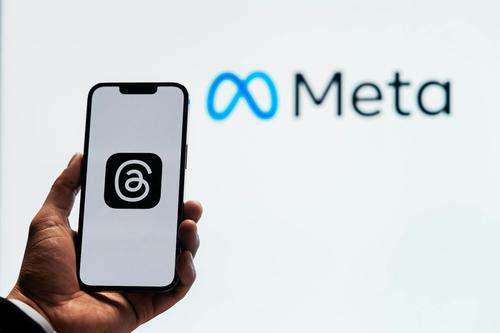
Today, June 11, 2026, Meta Platforms (NASDAQ: META) officially completed the operational split from AI startup Manus, halting data sharing and taking a pivotal step towards unwinding a $2 billion acquisition that Beijing vehemently opposed. This move follows a directive issued by China's National Development and Reform Commission (NDRC) in late April 2026, which ordered the deal's dissolution. The acquisition, initially announced in December 2025, was intended to bolster Meta's agentic AI capabilities, integrating Manus's "general-purpose AI agent" technology into Meta's advertising manager service by February 2026 and seeing Manus executives join Meta's AI team in Singapore.
The rapid integration, including the migration of Manus employees into Meta's Singapore offices and the payment of proceeds to investors like Tencent, Hongshan, and Benchmark, made the NDRC's unwinding order particularly complex. A legal order cannot simply reverse the transfer of institutional knowledge or the working relationships built over months. Despite Meta's earlier assertion in March 2026 that the transaction "complied fully with applicable law," the Chinese government's intervention proved decisive, forcing Meta to "sunset" Manus and ringfence its operations.
This forced separation marks a significant moment, not just for Meta, but for the global tech landscape. Manus, founded in Beijing in 2022 by Mr. Xiao Hong, Mr. Ji Yichao, and other co-founders, had relocated its operational headquarters to Singapore in mid-2025, a strategy often dubbed "Singapore-washing" to mitigate geopolitical risks. However, Beijing's ruling underscores its extraterritorial reach and its determination to control the flow of strategically sensitive technologies, regardless of a company's legal domicile. The current market capitalization of Meta stands at a robust $1.43 trillion, yet even a titan like Meta is not immune to these geopolitical currents.
The unwinding process is now focusing on the intricate task of dismantling a transaction that was, in practice, largely complete. Manus's founders are reportedly exploring options to raise approximately $1 billion to fund a buyback of their stakes from Meta, aiming to match or exceed the original $2 billion valuation. This ongoing saga highlights the new complexities and risks inherent in cross-border AI mergers and acquisitions, where national security concerns increasingly trump commercial logic and legal structuring.
Why Did China Block the Meta-Manus Deal?
China's decision to block Meta's $2 billion acquisition of Manus was rooted primarily in national security and technology transfer concerns, reflecting Beijing's "holistic view of national security" (HVNS) that extends beyond traditional defense to include technological and data security. The NDRC's terse public notice cited only "in accordance with law and regulation," but analysts quickly pointed to the strategic nature of Manus's AI technology and its Chinese origins. Manus, despite relocating its headquarters to Singapore in mid-2025 and reducing its domestic workforce, was still considered by Beijing to hold intellectual property (IP) and core data originating from China.
The core issue revolved around the potential transfer of advanced AI capabilities, particularly agentic AI, to a major U.S. tech rival. Manus's "personalized information-push service technologies based on data analytics," including recommendation algorithms and user profiling, fall under China's 2023 Catalogue of Technologies Prohibited and Restricted from Export. Any cross-border transfer of these core technologies—whether through staff redeployment, code migration, or equity transfer—without the requisite license could constitute a breach of technology-export administration. This regulatory framework is designed to prevent foreign acquisition of key domestic technologies, especially in sectors where China aims for technological leadership.
Furthermore, the deal implicated China's stringent data and cybersecurity rules, notably the Data Security Law, the Personal Information Protection Law, and the Cybersecurity Law, all revised in 2025. AI businesses are critically dependent on training and user data, and Beijing is highly concerned about "China-origin strategically sensitive technologies — and the data and talent behind them — effectively transferred offshore by corporate restructuring in Singapore," as noted by NYU School of Law adjunct professor Winston Ma. The unwinding of data, in particular, is far more challenging than reversing a physical goods transaction, adding another layer of complexity and concern for Chinese regulators.
The timing of the block, just days before Meta's scheduled earnings release in late April 2026 and less than a month before a planned visit by U.S. President Donald Trump to Beijing, also underscored its political significance. It served as a clear warning to Chinese tech founders attempting "Singapore-washing" — the practice of relocating offshore to circumvent domestic regulations or attract foreign investment. As Duncan Clark, chairman of consultancy firm BDA China, stated, "Founders will know that if you start in China, you stay in China." This intervention signals a new, more aggressive stance by Beijing in the U.S.-China tech rivalry, drawing a clearer line in the global AI race.
What are the Financial and Strategic Implications for Meta?
For Meta Platforms, the forced unwinding of the Manus acquisition represents a tangible strategic setback, though its financial impact is likely to be absorbed by the company's immense scale. The immediate financial cost includes the $2 billion paid for Manus, which now needs to be recovered or written off, alongside the operational expenses incurred during the four months of integration. While Meta's CEO, Mark Zuckerberg, received $25.1 million in total compensation in 2025, highlighting the company's executive investment, the Manus deal's failure underscores the increasing difficulty of executing strategic M&A in a geopolitically charged environment.
Strategically, the biggest blow is to Meta's accelerated agentic AI roadmap. Manus was hailed for its "genuinely autonomous AI agent" capable of multi-step tasks like stock analysis, candidate screening, and code execution. Its integration into Meta's advertising manager service and other platforms was meant to provide a strategic shortcut in the agent layer, where Meta has visibly trailed competitors like OpenAI and Anthropic. The loss of Manus's product, which had achieved an impressive $100 million in annualized recurring revenue (ARR) by late 2025, means Meta must now rely more heavily on its internal development or seek alternative acquisition targets, which will likely face similar scrutiny.
However, it's crucial to put this setback in perspective. Meta is a technology behemoth with 76,834 employees as of 2025, a significant portion of whom are dedicated to AI research and development. The company's employee count has steadily grown from 67,317 in 2023 to 78,865 projected for 2025, indicating robust internal investment in talent. Meta has already made substantial strides in agentic AI through initiatives like Advantage+, which uses AI to automate and optimize advertising campaigns, demonstrating its existing capabilities in multi-step task automation. The company's long-term vision for AI agents, including business messaging agents and personal agents, is not solely dependent on Manus.
From an investor perspective, Meta's shares are currently trading at $564.12, reflecting a 1.20% dip today, but remaining well within its 52-week range of $520.26 to $796.25. The market's reaction to the unwinding has been relatively muted, suggesting that investors view this as a geopolitical risk rather than a fundamental flaw in Meta's core business or long-term AI strategy. While the Manus "mess" sets Meta back on its AI product release roadmap, the company's vast resources and existing AI prowess mean it is well-positioned to pivot and continue its agentic AI journey, albeit with a more cautious approach to cross-border acquisitions.
The Broader Chill: What Does This Mean for Cross-Border AI M&A?
The forced unwinding of the Meta-Manus deal sends a chilling message across the global tech sector, fundamentally altering the calculus for cross-border mergers and acquisitions, particularly in the sensitive AI domain. This incident establishes a precedent: governments, especially China, are willing to intervene and reverse deals even after they are "done in practice," with technology integrated and investors paid out. This creates a new, significant layer of risk that companies must now price into any M&A strategy involving entities with Chinese origins or substantial IP ties to the country.
The concept of "Singapore-washing," where Chinese tech firms use the city-state as a global launchpad to shed their Chinese identity and attract foreign investment, has been severely undermined. As Chris Pereira, president and CEO of consulting firm iMpact, noted, "Singapore incorporation alone does not de-risk a deal from Chinese regulatory reach." This means that the legal domicile of an AI startup may no longer be sufficient to shield it from Beijing's scrutiny if its core technology, data, or founding team have strong ties to China. The message is clear: "If you start in China, you stay in China," as articulated by Duncan Clark of BDA China.
This heightened regulatory intervention is not unilateral. The deal had also attracted scrutiny from Washington, where lawmakers have prohibited American investors from backing Chinese AI companies directly. This dual-front pressure means that any cross-border AI deal now effectively has a "third party at the table: Governments." The complexity of enforcement is also a critical factor; while Beijing can order a reversal, it cannot erase the institutional knowledge or absorbed context that has already transferred. This "partial unwind" creates legal and operational ambiguities that will deter future transactions.
The broader implication is a further division of the global AI ecosystem between China and the U.S. While some analysts, like Dan Wang of Eurasia Group, suggest this could deter overseas AI talents from returning to China, it also means that Western companies will increasingly shy away from acquiring Chinese-founded AI startups, regardless of their current location. This "AI cold war" is turning bilateral, with national security concerns overriding economic benefits. For investors and founders, the Manus case serves as a stark reminder that geopolitical considerations are now paramount in the strategic technology sector, making future cross-border AI M&A significantly riskier and more complex.
Is Meta Still a Strong AI Play Without Manus?
Despite the setback with Manus, Meta Platforms remains a formidable player in the artificial intelligence landscape, with its long-term AI strategy largely intact. The company's internal AI development capabilities are vast, supported by a significant portion of its 76,834 employees and a substantial R&D budget. Meta has consistently invested in foundational AI research, developing its own large language models (LLMs) and pushing the boundaries of generative AI. This internal strength provides a robust foundation for its agentic AI ambitions, even without Manus's specific contributions.
Meta's existing AI-driven products, such as Advantage+, which automates and optimizes advertising campaigns, demonstrate its ability to integrate advanced AI into its core business. This platform already functions closer to an agent than a traditional chatbot, handling multi-step tasks to maximize advertiser ROI. The company has also publicly discussed other agentic AI initiatives, including business messaging agents and personal AI assistants across its family of apps. These projects indicate that Meta was not solely reliant on Manus to provide agentic solutions, but rather viewed the acquisition as an accelerator.
The incident might even prompt Meta to double down on its organic AI development and explore partnerships with less geopolitically sensitive entities. While the Manus deal offered a strategic shortcut, Meta's history shows a strong capacity for building innovative technologies in-house. The company's commitment to AI is evident in its executive compensation structures, where key leaders like COO Javier Olivan and CTO Andrew Bosworth receive substantial stock awards, totaling $18.38 million each in 2025, aligning their incentives with long-term technological advancement.
Ultimately, the Manus unwinding is a lesson in geopolitical risk rather than a fatal blow to Meta's AI aspirations. The company's ability to attract and retain top AI talent, its extensive data sets from billions of users, and its deep pockets position it well to continue innovating in AI. While the path to agentic AI may be slightly longer or more challenging without Manus, Meta's fundamental strengths in research, development, and deployment of AI technologies remain undiminished. Investors should view Meta as a strong AI play, albeit one navigating an increasingly complex global regulatory environment.
The forced unwinding of the Manus acquisition represents a clear, albeit manageable, setback for Meta's accelerated AI strategy, underscoring the escalating geopolitical risks in cross-border tech deals. While the $2 billion transaction's dissolution is a short-term hit, Meta's robust internal AI capabilities and vast resources position it to pivot effectively. Investors should monitor how Meta adjusts its M&A strategy and continues to advance its agentic AI initiatives, as the company's long-term AI vision remains a key driver for its $1.43 trillion market valuation.
Want deeper research on any stock? Try Kavout Pro for AI-powered analysis, smart signals, and more. Already a member? Add credits to run more research.
Related Articles
Category
You may also like


Meta's Manus Mess: Why China Blocked the Deal and What It Means

Why Is Meta Stock Crashing, and is it a Buying Opportunity?

Tuesday's Final Takeaways: Jamie Dimon's Bond Crisis Warning & META Unwinding Manus
Breaking News
View All →Featured Articles
Top Headlines

S&P 500: Setting Up The Second Leg Lower (Technical Analysis)

The Better AI Cloud Stock: Microsoft or Amazon?

3 AI Stocks Poised for Long-Term Gains Despite Strong Year-to-Date Performance

Google Is Paying $920 Million Per Month to SpaceX. Here's Why Nvidia Is the Quiet Winner Nobody's Talking About.