MarketLens
What Makes TORM plc a Long-Term Play for Value Investors

Key Takeaways
- TORM plc (TRMD) has been a significant, long-term holding for Howard Marks' Oaktree Capital, reflecting a nuanced value play despite recent stake reductions.
- The company benefits from structural tailwinds in refined product tanker demand, driven by geopolitical shifts and refinery dislocations, leading to increased ton-mile demand.
- TRMD offers a compelling dividend yield, making it attractive for income-focused investors, though future payouts are inherently linked to the cyclical nature of the shipping industry.
What Makes TORM plc a Long-Term Play for Value Investors?
TORM plc (NASDAQ: TRMD) has long been a fascinating fixture in the portfolio of Oaktree Capital Management, the renowned investment firm co-founded by value investing legend Howard Marks. While Marks is celebrated for his astute insights into credit markets and distressed debt, his firm's consistent, multi-year stake in TORM, a product tanker company, speaks volumes about its perceived underlying value. Oaktree Capital first established a position in TORM in the third quarter of 2018, steadily building it to over 53 million shares by the end of 2020, before beginning to trim in late 2023 and early 2024.
This long-term commitment from a firm known for its rigorous, contrarian approach suggests that TORM offers more than just a fleeting opportunity. Marks' philosophy often centers on identifying value in less efficient markets, and the shipping industry, with its inherent volatility and complex dynamics, certainly fits that description. The company, currently trading at $31.27 with a market capitalization of $3.19 billion, specializes in transporting refined oil products like gasoline, jet fuel, and naphtha globally.
For Marks, the initial investment in TORM may have stemmed from its 2016 restructuring, where bondholders, including Oaktree, took over the company. This background aligns perfectly with Oaktree's expertise in distressed debt, turning a challenging situation into a strategic equity position. The subsequent relisting allowed for a recovery of lost capital and interest, transforming TORM into a core holding that has evolved with the market.
The question for investors today isn't just about Marks' past actions, but what this long-term conviction implies about TORM's fundamentals and future prospects. It forces a deeper look into the company's operational strengths, financial health, and the broader industry trends that could sustain its appeal, even as Oaktree adjusts its exposure.
How Does TORM plc Navigate the Volatile Shipping Market?
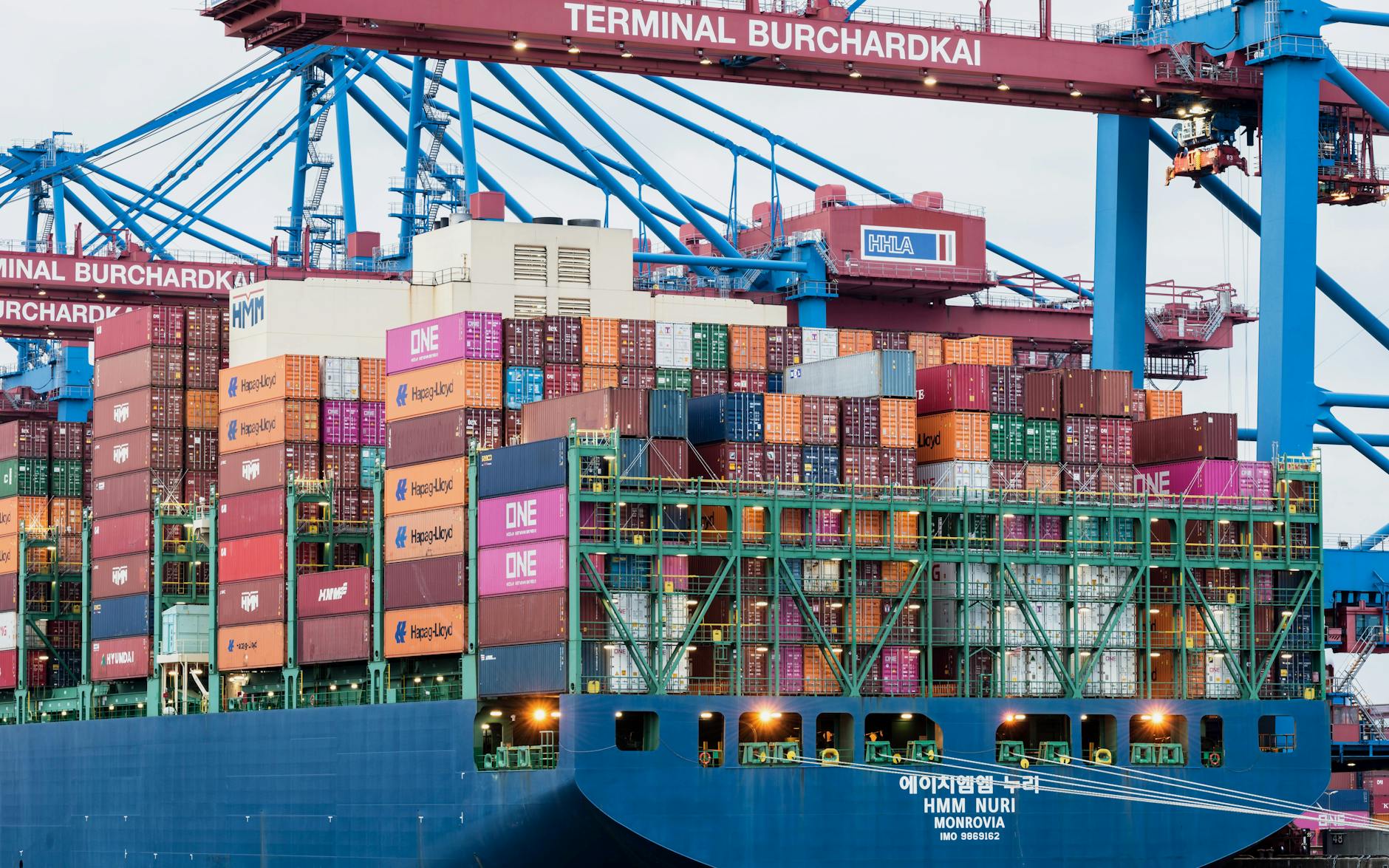
TORM plc distinguishes itself in the vast energy sector by focusing almost exclusively on the transportation of refined oil products, rather than crude oil. This specialization in vessels known as "product tankers" is crucial, as it positions the company to capitalize on specific market dynamics. TORM's fleet, which stood at approximately 85 vessels as of March 2022, transports essential fuels like gasoline, jet fuel, and diesel, a segment that hedge funds are increasingly viewing as a structural long-term play.
The key driver here is "ton-mile demand," a metric that combines cargo volume with the distance it travels. Geopolitical shifts and significant refinery closures in regions like Europe and Australia have created a scenario where refined products must be hauled over much longer distances. Instead of local processing, these products are now frequently sourced from distant hubs in the Middle East and India, dramatically increasing the average voyage length and, consequently, ton-mile demand. This allows companies like TORM to charge higher rates for their services.
TORM has been strategically expanding its fleet to meet this demand. Last year, the company acquired eight second-hand Medium Range (MR) vessels for $371 million, building on a history of opportunistic purchases, including seven LR1 vessels constructed between 2011 and 2013 in 2023. This expansion demonstrates a commitment to scaling operations and enhancing its capacity to serve these extended trade routes, directly benefiting from the current market structure.
However, the shipping industry remains inherently cyclical and susceptible to global economic fluctuations, regulatory changes, and unforeseen geopolitical events. While the current environment favors product tankers, a significant shift in global refining capacity or a slowdown in energy demand could quickly reverse these tailwinds. TORM's ability to maintain high utilization rates and strong time charter equivalent (TCE) earnings will be critical in sustaining its competitive edge.
Is TORM plc's Dividend Sustainable in a Cyclical Industry?
TORM plc has garnered significant attention from income-seeking investors due to its robust dividend policy, which has seen it become one of the most aggressive dividend payers in the market. As of April, TORM’s dividend yield sits at a compelling 6.9% on a TTM basis, with a payout ratio of 68.6%. In Q1 2026, the company paid out $0.70 per share, representing a substantial portion of its net profit for the period. This generosity is a key attraction for many, especially in a high-rate environment where dependable yield is prized.
However, the nature of the shipping industry means that these dividends are not always consistent. TORM's dividend per share has seen significant fluctuations, with a -62.6% year-over-year decline in FY2025. For instance, the dividend per share ranged from $0.40 to $0.70 in 2025-2026, a stark contrast to the $1.80 paid in August 2024 or the $2.59 in March 2023. This volatility underscores that TORM's dividend policy is largely performance-based, distributing a high percentage of earnings when times are good, but adjusting downwards when market conditions soften.
The company's TTM financial fundamentals show an EPS of $2.87 and a P/E ratio of 10.68, which appears reasonable. However, recent growth figures indicate challenges: revenue growth for FY2025 was -10.9%, net income declined by -51.7%, and EPS fell by -53.5%. While analysts recently upgraded their 2026 forecasts, projecting US$1.3 billion in revenue (a 6.2% decline from the past 12 months) and EPS to soar 21% to US$3.38, these figures still suggest a period of adjustment.
Investors looking at TORM for its dividend must understand that it functions more like a variable distribution tied to the company's cyclical profitability rather than a fixed, steadily growing payout. While the current yield is attractive, its sustainability is directly linked to the strength of the product tanker market and TORM's ability to maintain high TCE rates and manage its operating costs effectively.
What Do Howard Marks' Recent Moves Signal for TRMD Investors?
Howard Marks' Oaktree Capital Management has a long history with TORM, but recent filings reveal a significant shift in their position. In the fourth quarter of 2025, Marks reduced Oaktree's stake in TORM plc by a substantial 34.88%, offloading 14,156,061 shares. This move had a -5.56% impact on his overall portfolio and brought Oaktree's total holdings down to 26.4 million shares. While this is a notable reduction, it's crucial to remember that TORM still represented 9.77% of Marks' portfolio at the end of Q4 2025, making it his second-largest holding.
This reduction doesn't necessarily signal a complete loss of conviction. Marks is known for his disciplined approach to value investing, which includes taking profits when an asset becomes less undervalued or when better opportunities arise. The stock traded at an average price of $21.11 during the quarter of the reduction, and has since returned 15.60% over the past three months and 31.31% year-to-date (as of the filing date). This suggests Marks was selling into strength, potentially rebalancing his portfolio or locking in gains after a period of strong performance.
Marks' broader investment philosophy, as articulated in his memos, emphasizes caution when optimism and "credulousness" are high, and a focus on dependable returns from credit in environments where equity valuations are stretched. He has also noted the difficulty of forecasting in rapidly changing technological regimes, suggesting a preference for recognizing favorable odds rather than predicting the future. This reduction in TORM could be a manifestation of this cautious stance, especially given the stock's recent appreciation.
For investors, Marks' move serves as a reminder that even long-term admirers adjust their positions. It highlights the importance of not blindly following "guru" moves but understanding the underlying rationale. While Oaktree remains a significant holder, the trimming suggests a more measured outlook on TORM's immediate upside potential, perhaps balancing the strong dividend yield against the inherent cyclical risks and the stock's recent rally.
What's the Outlook for Product Tankers and TORM's Future?
The future for product tanker companies like TORM plc appears to be a mixed bag of compelling tailwinds and inherent industry volatility. On the bullish side, the structural shifts in global energy markets continue to favor longer shipping routes for refined products. Geopolitical tensions, such as those impacting the Red Sea, and the ongoing rationalization of refinery capacity in Western economies, mean that demand for product tankers to transport fuels from distant, efficient refining hubs in the Middle East and Asia is likely to persist. This increased "ton-mile" demand translates directly into higher charter rates and improved profitability for operators like TORM.
TORM's recent financial performance, while showing some year-over-year declines in FY2025 (revenue -10.9%, net income -51.7%), has also demonstrated resilience. The company reported Q4 2024 results above analyst expectations, with EPS of $0.77 against a projection of $0.61, and revenues of $214.7 million exceeding the $211.57 million forecast. Analysts have recently upgraded their 2026 forecasts, now expecting US$1.3 billion in revenue and EPS of US$3.38, indicating an improved perception of the company's earnings power.
However, the shipping industry is notoriously cyclical. TORM itself expects TCE earnings in 2025 to be between $650 million and $950 million, a notable decrease from $1.135 billion in 2024. Similarly, EBITDA for 2025 is projected to range from $350 million to $650 million. These projections highlight the sensitivity of earnings to market conditions. A global economic slowdown, a resolution of geopolitical conflicts that shortens shipping routes, or an oversupply of new vessels could quickly dampen the current favorable environment.
TORM's strategy of expanding its fleet with second-hand vessels helps manage capital expenditure but also exposes it to the risks of an aging fleet over the long term. While the current market dynamics are strong, investors must weigh these against the inherent cyclicality and the potential for rapid shifts in supply and demand that define the product tanker sector.
Valuation and Investor Implications for TORM plc
Considering TORM plc's current market position and financial metrics, investors face a nuanced decision. The stock trades at a P/E ratio of 10.68, which is relatively attractive compared to the broader market, especially given its robust dividend yield of 6.9%. Its P/B ratio of 1.39 suggests it's trading at a modest premium to its book value of $22.03 per share, while an EV/EBITDA of 6.86 indicates a reasonable valuation for its enterprise value.
However, the company's recent growth figures show a significant slowdown, with FY2025 revenue, net income, and EPS all declining. While analysts project a rebound in EPS for 2026, the overall industry is still expected to grow slower than TORM's historical five-year average of 17%. This suggests that while the company is profitable and returns capital to shareholders, its growth trajectory might be moderating.
For income-focused investors, TORM's dividend is a primary draw, but its variability must be factored in. The high payout ratio of 68.6% means that a substantial portion of earnings is distributed, but this also makes the dividend susceptible to market downturns. Value investors, following Marks' lead, might see the current valuation as fair, but perhaps not deeply undervalued enough to warrant aggressive buying, especially after the stock's recent run-up.
Ultimately, TORM plc presents a compelling case for those who believe in the sustained structural tailwinds for refined product tankers and are comfortable with the cyclical nature of the shipping industry. Its strong operational margins (gross 43.4%, net 21.4%) and efficient asset turnover of 0.40 demonstrate solid management. However, the recent stake reduction by Howard Marks, even if for profit-taking, serves as a prudent reminder to balance the attractive yield and market tailwinds with the inherent risks of a volatile sector.
TORM plc offers a unique blend of income and exposure to critical global trade routes. While Howard Marks has trimmed his stake, the company's fundamental strengths in the product tanker market remain compelling. Investors should weigh the attractive dividend yield and structural tailwinds against the industry's inherent cyclicality and the potential for future earnings volatility.
Want deeper research on any stock? Try Kavout Pro for AI-powered analysis, smart signals, and more. Already a member? Add credits to run more research.
Related Articles
Category
You may also like


Why PVH (PVH) is a Top Value Stock for the Long-Term

Heidmar Maritime (NASDAQ:HMR) & Ultrapetrol (Bahamas) (OTCMKTS:ULTRF) Head to Head Review

Tractor Supply: Unclear Future Ahead
Breaking News
View All →Featured Articles
Top Headlines

Alphabet Earnings Preview: Q1 2026

Why This Week Could Be Huge For AI Stocks

Google signs classified AI deal with Pentagon, The Information reports

Meta, Google, OpenAI among Big Tech firms seeing top staff leaving to launch AI startups