MarketLens

Log in

What's Behind the Recent Insider Selling at Yum! Brands

4 days ago
SHARE THIS ON:

What's Behind the Recent Insider Selling at Yum! Brands

Key Takeaways

  • Recent insider selling by Yum! Brands' CEO and KFC Division CEO, while individually small, contributes to a broader pattern of net selling by executives over the past six months.
  • A potential Pizza Hut spin-off is a major catalyst, aiming to sharpen Yum!'s focus on high-growth brands like Taco Bell and KFC, which are demonstrating robust performance.
  • Despite strong analyst sentiment and positive growth prospects for its core brands, Yum! Brands appears to be trading at a premium based on current valuation metrics.

What's Behind the Recent Insider Selling at Yum! Brands?

Recent insider selling by Yum! Brands' CEO Christopher Lee Turner and KFC Division CEO Scott Mezvinsky, though individually minor, contributes to a broader pattern of net selling by executives over the past six months, raising questions about internal sentiment. On April 1, 2026, CEO Christopher Lee Turner disposed of 257 shares for $39,624, while KFC Division CEO Scott Mezvinsky sold 271 shares for $41,783 on the same day, alongside other smaller transactions. These sales, combined with earlier dispositions, highlight a consistent trend: zero insider purchases against 20 sales totaling $2.4 million in recent Form 4 filings.

This pattern of insider selling, particularly the absence of any purchases, warrants closer examination. While executives often sell shares for routine diversification, tax planning, or personal liquidity needs—often under pre-arranged 10b5-1 plans—the sheer volume of sales without corresponding buys can signal a lack of strong conviction at current price levels. Over the past six months, Yum! insiders have engaged in 18 sales with 0 purchases, disposing of 3,910.45 shares in Q3 2026 alone, resulting in a buy/sell ratio of 0.00.

Notable sales beyond the recent transactions include Tracy L. Skeans (COO and CPO) selling 32,643 shares for an estimated $4.96 million, Aaron Powell (CEO - Pizza Hut) selling 14,790 shares for $2.36 million, and David W. Gibbs (former CEO) selling 7,176 shares for $1.07 million. These larger sales, alongside the more recent, smaller ones, indicate a broad-based trend among top leadership. StoxPulse's AI system, which analyzes Form 4 filings, flags this as a "Heavily Skewed Sell" conviction signal, suggesting a bearish insider sentiment despite a relatively stable market AI sentiment score for the company.

The divergence between a "Bullish" market AI sentiment score of 7.4 and a "Bearish" insider conviction level of 2.4 creates an "Institutional Skew." This phenomenon, where news sentiment remains stable but insiders sell at a significantly faster rate than they buy, often precedes a correction in mid-cap equity markets. While the individual sales by Turner and Mezvinsky are small relative to their total holdings, they add to a cumulative picture that suggests a cautious stance from those closest to the company's operations.

Is Pizza Hut the Key to Unlocking Yum!'s Future Growth?

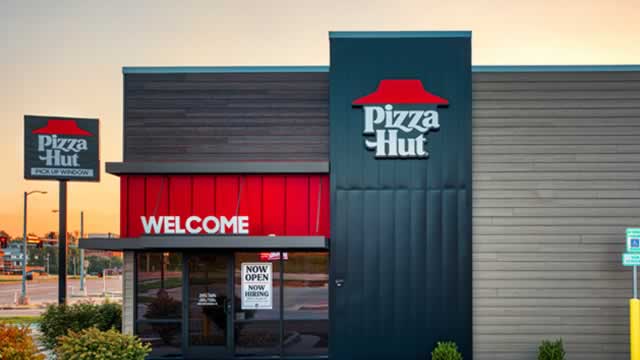
The strategic future of Pizza Hut looms large over Yum! Brands, with a potential spin-off or sale emerging as a significant catalyst to sharpen the company's focus on its faster-growing assets. TD Cowen, for instance, upgraded Yum! Brands, explicitly citing a likely Pizza Hut sale as a move that would enhance the company’s long-term development profile. This potential divestiture is not merely a rumor; analysts suggest it could generate approximately $3.4 billion after tax, providing substantial capital for Yum! to reinvest or return to shareholders.

Pizza Hut currently accounts for about 12% of Yum!'s projected 2025 operating profit, but it has been a drag on overall growth. The brand is grappling with a negative outlook, including a projected -15% core operating loss for Pizza Hut in Q1 2026, largely due to one-time marketing investments impacting franchise margins. Furthermore, development disruption is expected to continue into 2026 with elevated Pizza Hut closures as the chain is prepared for a sale, including 250 underperforming units in the U.S.

A separation would mark a new chapter under CEO Chris Turner, who is actively pursuing strategic alternatives for Pizza Hut to bolster Yum!'s growth trajectory. The vision is clear: by shedding the underperforming Pizza Hut, Yum! can center investor attention on Taco Bell and KFC, its strongest assets. Cowen expects Yum!, excluding Pizza Hut, to recover to about 6% net restaurant growth and deliver approximately 3% same-store sales across the portfolio, a significant improvement over the current modest net restaurant growth forecast of below 5.0% for 2026.

This strategic realignment would allow Yum! to focus resources on Taco Bell’s consistent same-store sales outperformance and renewed KFC expansion, particularly in international markets. The market's perception of Yum! Brands could shift dramatically, moving from a diversified restaurant conglomerate to a more streamlined, high-growth entity. The potential for a Pizza Hut sale, therefore, isn't just about divesting an underperforming asset; it's about fundamentally reshaping Yum!'s investment narrative and unlocking greater shareholder value by concentrating on its most dynamic brands.

How Are Yum!'s Core Brands — Taco Bell and KFC — Performing?

Yum! Brands' core growth engine is unequivocally driven by the robust performance of Taco Bell and the ongoing turnaround at KFC, particularly its international operations. Taco Bell continues to be a standout performer, consistently posting strong comparable sales growth. In Q4 2025, Taco Bell saw U.S. same-store sales growth of 7%, a testament to its effective strategy of blending value-based menu design with premium limited-time offerings. This success extends across income bands and demographics, with transaction growth observed among younger consumers and families, and even more rapidly for higher-income consumers.

KFC, especially its international division, is also showing significant momentum. The KFC International division, which along with Taco Bell comprises over 80% of Yum!'s core operating profit, reported comparable-sales growth of 3% in Q1 2025, handily beating estimates of 1.6%. This strong performance comes despite challenges, including a recovery from boycotts related to the Middle East conflict that impacted Western brands last year. In the U.S., KFC posted 1% same-store sales growth in Q4 2025, marking its second consecutive quarter of comps growth after a prolonged period of slipping sales.

The synergy between these brands is a key strategic priority for CEO Chris Turner, who aims to adapt Taco Bell's "magic formula playbook" for KFC. Scott Mezvinsky, KFC Division CEO and former president of Taco Bell North America and International, is spearheading this effort. This involves replicating Taco Bell's successful approach of combining value offerings, like KFC's new $5 bowls, with buzzy, recurring menu items such as Hot n' Spicy Wings and Potato Wedges. The goal is to drive consistent sales growth and market share gains for KFC, mirroring Taco Bell's impressive 40% increase in system sales since 2021.

Digital innovation is another shared strength, with Yum!'s proprietary digital platform, "Byte," playing a crucial role. Digital sales increased by 20% year-over-year, now accounting for a substantial 60% of sales worldwide. This robust digital ecosystem, coupled with strong loyalty programs, helps funnel consumers into digital channels, giving Yum! a competitive edge. The combined strength and strategic alignment of Taco Bell and KFC are vital for Yum!'s long-term growth, especially as the company contemplates divesting its struggling Pizza Hut segment to further concentrate on these high-performing assets.

What Do Analysts and Institutional Investors Say About YUM?

Wall Street analysts maintain a largely optimistic outlook on Yum! Brands, with a consensus recommendation of "Moderate Buy." Out of 21 analysts covering the stock, 13 recommend a "Buy" and 8 suggest a "Hold," with no "Sell" ratings. This aggregate sentiment is further reinforced by Public.com's analysis of 16 analysts, which shows 25% recommending a "Strong Buy," 25% a "Buy," and 50% a "Hold." The median price target among 12 analysts over the last six months stands at $167.50, with some targets reaching as high as $190.00 from Evercore ISI Group.

Recent analyst reports highlight the positive sentiment. TD Cowen issued a "Buy" rating on February 5, 2026, with a price target of $180.00, while Gordon Haskett also initiated a "Buy" on January 8, 2026. JPMorgan adjusted its price target to $170.00 from $160.00 on February 24, 2026, maintaining an "Overweight" rating. These upgrades and positive affirmations underscore confidence in Yum!'s strategic direction, particularly the potential Pizza Hut divestiture and the strong performance of Taco Bell and KFC.

However, institutional investor activity presents a more mixed picture, reflecting a nuanced view on Yum! Brands. In Q4 2025, 580 institutional investors added shares to their portfolios, while 592 decreased their positions. This near-even split suggests a lack of overwhelming consensus among large funds. Notably, UBS AM, A DISTINCT BUSINESS UNIT OF UBS ASSET MANAGEMENT AMERICAS LLC, removed a substantial 5,459,329 shares (a -75.0% reduction) from its portfolio, valued at an estimated $825.89 million. T. Rowe Price Investment Management, Inc. also significantly reduced its stake by 5,152,750 shares (-32.8%), worth approximately $779.51 million.

Conversely, some major players increased their exposure. JPMORGAN CHASE & CO added 4,120,268 shares (+25.9%), valued at $623.31 million, and CAPITAL INTERNATIONAL INVESTORS added 3,240,190 shares (+20.0%), worth $490.18 million. This divergence in institutional activity indicates that while analysts are largely bullish, smart money is taking varied positions, potentially reflecting different interpretations of Yum!'s valuation, growth prospects, and the implications of its strategic shifts. The significant selling by some large funds could be a red flag, contrasting with the generally positive analyst sentiment.

Is Yum! Brands Currently Overvalued, or Is There Still Upside?

Assessing Yum! Brands' current valuation reveals a complex picture, with some metrics suggesting the stock is trading at a premium, while others point to potential upside. The stock closed at $153.69 on April 1, 2026, down 1.15% for the day, with a market cap of $42.67 billion. Simply Wall St's analysis in January 2026 indicated a Price-to-Earnings (P/E) ratio of 29.4x, which screens as expensive compared to its estimated fair P/E of 26.2x. This suggests the market is currently paying a premium for Yum!'s earnings, implying it may be overvalued relative to its intrinsic P/E.

However, it's worth noting that Yum!'s 29.4x P/E, while above its fair value, trades below the peer average of 34.1x within the hospitality group. This suggests investors are still pricing it more conservatively than some close comparables, even though it's higher than the broader US Hospitality industry average of 21.9x. The company's asset-light, highly franchised business model, with 98% of its 61,000+ global restaurants operated as franchises, generates substantial and recurring revenue from royalties and marketing contributions, accounting for 66% of overall earnings. This model often commands a higher multiple due to its predictability and lower capital intensity.

A Discounted Cash Flow (DCF) model also points to a potential overvaluation, with Yum! Brands trading at $153.20 (as of January 2026) above an estimated fair value of $144.85. This reinforces the idea that the market might be pricing in future growth aggressively. Yet, Jim Cramer recently opined that Yum! Brands has "come down to a very attractive price," citing its $153 valuation (down from $169), 23 times earnings, and "excellent growth." He believes the plan to shed Pizza Hut will lead to "amazing numbers" for Taco Bell, which will "shine."

Ultimately, whether Yum! Brands is overvalued depends on an investor's perspective on its future growth trajectory and the success of its strategic initiatives. The median analyst price target of $167.50 suggests a modest upside from the current price, implying that analysts see room for appreciation. However, the insider selling and mixed institutional activity, coupled with valuation metrics indicating a premium, suggest that investors should carefully weigh the growth catalysts against the current price and potential for a market correction.


Yum! Brands stands at a pivotal juncture, with strategic divestitures and strong brand performance offering a compelling narrative for growth, yet tempered by insider selling and a valuation that demands careful consideration. Investors should monitor the progress of the Pizza Hut spin-off and the continued execution of the Taco Bell playbook across its other brands, as these factors will be crucial in determining if the current premium is justified.


Want deeper research on any stock? Try Kavout Pro for AI-powered analysis, smart signals, and more. Already a member? Add credits to run more research.

SHARE THIS ON:

Related Articles

Category

You may also like

Stock News2 weeks ago

What's Behind Naspers's Steady Exit From Remitly?

Insider selling occurred at Remitly, a global digital remittance provider, as detailed in recent regulatory filings. The extent of the selling, linked to Naspers's exit, was significant.
Stock News2 weeks ago

Insiders Are Buying These 3 Beaten-Down Stocks. Should You Follow?

Three beneficial owners filed open-market purchases targeting stocks under significant pressure this past week. Insider buying suggests potential undervaluation in these specific beaten-down names.
Stock News1 months ago

Why Is Yum China (YUMC) Down 5.9% Since Last Earnings Report?

Yum China (YUMC) shares fell 5.9% over the 30 days following its last earnings report, prompting investor focus on the stock's near-term trajectory.
Stock News3 months ago

Monster Beverage Insider Sale Leads to Investor Scrutiny

Monster Beverage (MNST) stock faces scrutiny after its largest insider sale in a year occurred while shares traded near multi-year highs, coinciding with a lack of recent insider purchasing activity.

Breaking News

View All →

Top Headlines

View More →
Stock News7 hours ago

Top Wall Street analysts see strong growth potential in these 3 stocks

Stock News9 hours ago

How Amazon Just Turned Your Smart Speaker Into Its Next Big Opportunity

Stock News10 hours ago

A Generational Investment Opportunity: 3 AI Stocks I'm Buying Now

Stock News11 hours ago

2 Stocks About To Make a Killing on the SpaceX IPO

Stock News12 hours ago

Buy 7 S&P 500 April Dividend Dogs