MarketLens
What Triggered Walgreens' Shift to Private Ownership

Key Takeaways
- Walgreens Boots Alliance (WBA) is undergoing a radical transformation under private equity firm Sycamore Partners, shifting from a struggling public conglomerate to a fragmented, cost-focused entity.
- Recent layoffs, including 469 Illinois employees, and widespread store closures signal an aggressive cost-cutting strategy aimed at stabilizing profitability and streamlining operations.
- Former shareholders received $11.45 per share plus a potential $3.00 per share from future VillageMD divestitures, marking a definitive exit from a decade of significant value destruction.
What Triggered Walgreens' Shift to Private Ownership?
Walgreens Boots Alliance, once a cornerstone of the Dow Jones Industrial Average, underwent a seismic shift in August 2025 when it was acquired by private equity firm Sycamore Partners. This move was not a sudden event but the culmination of a decade-long struggle marked by strategic missteps, mounting debt, and a catastrophic decline in shareholder value. From its peak near $96 per share in 2015, the stock plummeted, losing roughly 75% of its value between 2020 and 2025 alone.
The company's ambition to transform from a retail pharmacy giant into a comprehensive healthcare provider proved costly and ultimately unsustainable. Multi-billion dollar investments in VillageMD, Shields Health Solutions, and CareCentrix, while aiming for an "integrated healthcare model," burdened WBA with a massive debt load and failed to deliver the anticipated profitability. This over-leveraged expansion, coupled with declining retail foot traffic and the significant financial drain of opioid litigation settlements totaling $1.4 billion, broke the company's financial back.
WBA's business model, prior to privatization, was a sprawling conglomerate encompassing U.S. Retail Pharmacy, International (primarily Boots UK), and the ambitious U.S. Healthcare segment. This diversification, intended to leverage global scale, instead created a "conglomerate discount," where the sum of the parts was valued less than their potential individual worth. The company's inability to effectively integrate its healthcare acquisitions and manage its debt led to its removal from the Dow Jones Industrial Average in February 2024, replaced by Amazon, a symbolic passing of the torch from traditional retail to digital commerce.
The market's sentiment towards WBA had turned decidedly bearish, with analysts citing intense competition from online pharmacies and persistent margin pressure from pharmacy benefits managers (PBMs). CEO Tim Wentworth himself acknowledged the unsustainability of the traditional pharmacy model, signaling the urgent need for a different approach. The acquisition by Sycamore Partners for $23.7 billion represented an ultimate market reaction, offering public shareholders an exit at $11.45 per share and the promise of a radical restructuring away from public scrutiny.
How Is Private Equity Reshaping Walgreens' Operations?
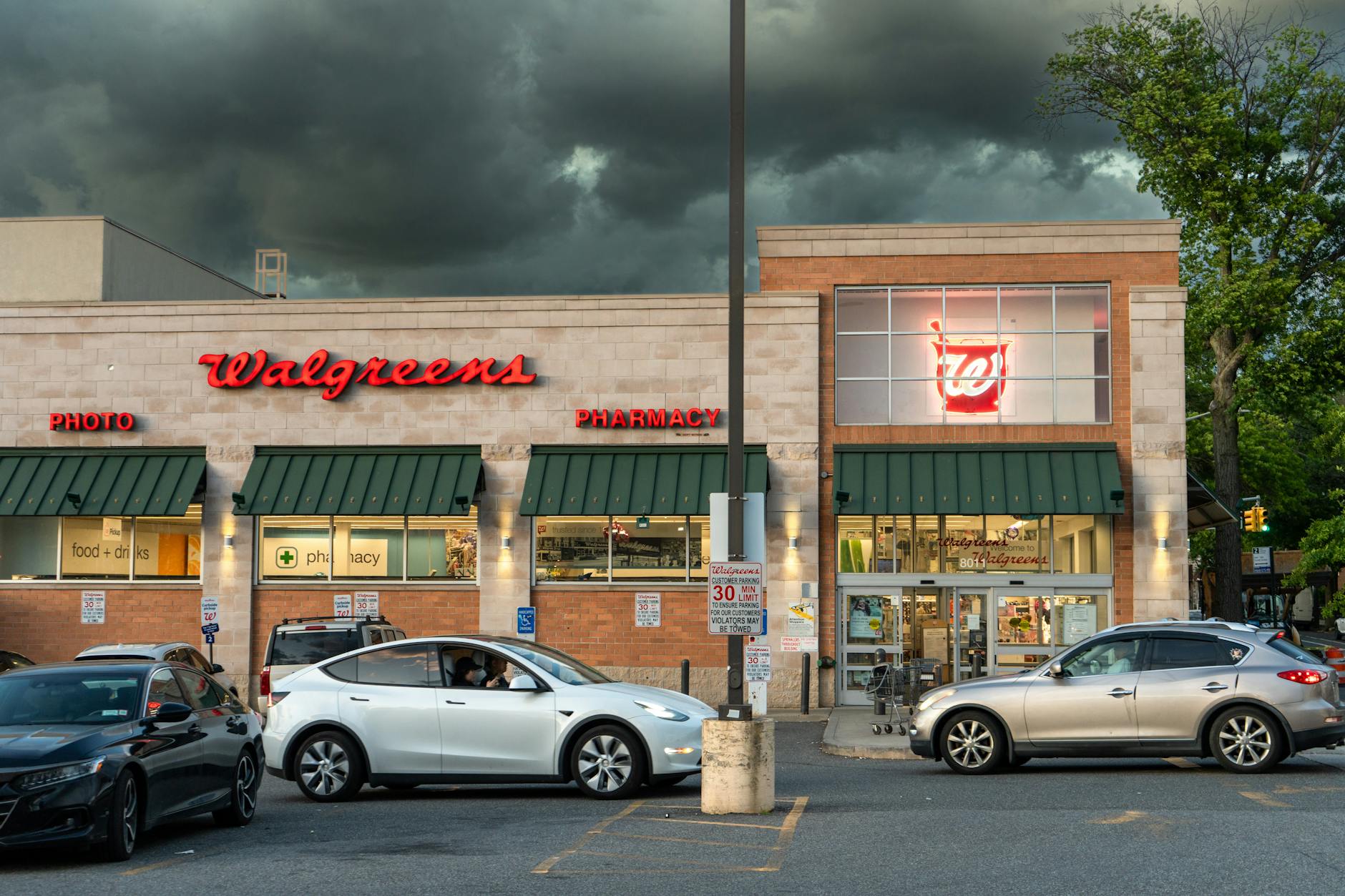
Sycamore Partners' acquisition of Walgreens Boots Alliance on August 28, 2025, marked the beginning of an aggressive restructuring phase, immediately shifting the company’s focus from public market pressures to intense cost-cutting and operational streamlining. The recent announcement of 469 layoffs in Illinois, part of a broader reduction of over 600 employees across the U.S., is a clear manifestation of this strategy. These job cuts, alongside the elimination of paid holidays for hourly workers, signal a deep commitment to reducing overhead and improving the bottom line.
Beyond workforce reductions, Sycamore Partners is systematically dismantling the former conglomerate structure. The integrated model, which attempted to combine retail, wholesale, and primary care, has been fragmented into five independent units: U.S. Walgreens retail, The Boots Group, Shields Health Solutions, CareCentrix, and VillageMD. This "back-to-basics" approach for the U.S. Walgreens business aims to reclaim its identity as a convenient, retail-first health destination, while the healthcare assets are being prepared for divestiture.
A core component of this operational overhaul is retail footprint optimization. Walgreens plans to close approximately 1,200 locations over the next three years, with about 500 closures slated for fiscal year 2025. This is a significant reduction, considering the company operated around 8,500 stores and employed 220,000 workers in August 2025 before the buyout. By February 2026, the company already operated approximately 8,000 locations with 211,000 employees, representing a 5.9% reduction in stores and a 4.1% reduction in workforce.
Sycamore's track record, notably at Staples where it closed roughly one-third of U.S. stores and extracted a $1 billion dividend by adding debt, suggests that these early cuts are likely just the beginning. The goal is to enhance efficiency by aligning labor deployment with demand patterns and reallocating resources to more profitable areas. This private ownership structure grants Sycamore the operational liberty to make tough, long-term decisions without the constant pressure of quarterly earnings reports, a luxury WBA desperately needed after years of financial strain.
What Does This Mean for Walgreens' Profitability and Competitive Standing?
The aggressive restructuring under Sycamore Partners is fundamentally geared towards restoring profitability, a metric that had severely deteriorated in WBA's public years. Prior to the buyout, the company's TTM net margin stood at a concerning -4.1%, with operating margins at -2.0%. Returns on equity (ROE) were a dismal -70.2%, and return on assets (ROA) at -9.1%, illustrating the deep financial distress. The private equity firm's immediate focus on cost-cutting, including layoffs and store closures, directly addresses these inefficiencies.
The strategy of splitting WBA into independent units allows each segment to focus on its own balance sheet and core competencies, theoretically removing the "drag" of underperforming divisions. For the U.S. Walgreens retail business, this means a renewed emphasis on its core pharmacy operations and front-end retail, including over-the-counter medications, beauty products, and groceries. The expansion of high-margin "No7" and "Walgreens" brand beauty and health products is a key tactic to combat margin pressure from national brands and PBMs.
In the competitive landscape, Walgreens faces a "barbell" threat from integrated healthcare giants like CVS Health and digital disruptors like Amazon. CVS successfully integrated its Aetna insurance arm and Caremark PBM, creating a "closed-loop" system that directs patients to its own stores, a structural advantage WBA lacked. Under private ownership, Walgreens aims to regain its footing by optimizing its retail footprint and leveraging technology. Investments in micro-fulfillment centers, for instance, process thousands of prescriptions an hour, reducing in-store workload and enhancing efficiency.
The U.S. Healthcare segment, while being prepared for divestiture, still holds some strategic value in the short term. The surge in demand for GLP-1 weight-loss drugs, for example, has been a growth bright spot, with Walgreens positioning its specialty pharmacy arm as a primary distributor for these high-cost medications. However, the long-term profitability hinges on the successful divestiture of assets like VillageMD, which is key to former shareholders receiving the full potential of the additional $3.00 per share from the buyout. The goal is a healthier, more profitable store network and a leaner operational structure, even if it means a smaller overall footprint.
What Was the Investor Sentiment Leading Up to the Buyout?
Leading up to its privatization, investor sentiment around Walgreens Boots Alliance was a complex mix of caution, frustration, and a hunt for yield, ultimately culminating in a "sell" consensus from many analysts. The stock's performance was abysmal, losing 85% of its value over the last 10 years and 64% in 2024 alone. This dramatic decline saw WBA trade below $10 for the first time since 1996, marking nearly three decades of no capital appreciation for long-term holders.
Despite the plummeting stock price, WBA's dividend yield became a focal point for many retail investors, reaching almost 11.5% at one point, the highest among S&P 500 constituents. However, this high yield was largely a "value trap," as the company's cash flows were insufficient to cover its payouts. Indeed, Walgreens cut its dividend by 48% to $0.25 per quarter in January 2025, a move intended to right-size costs and increase cash flow, but one that further eroded investor confidence.
Analyst ratings reflected this bearish outlook. Out of 31 analysts covering WBA, 17 recommended a "Hold," 9 a "Sell," and zero a "Strong Buy." The consensus price target was $23.57, with a median of $13.00, indicating a significant disconnect and uncertainty about the company's fair value. Simply Wall St's community data showed fair value estimates ranging wildly from $11.93 to $78.83, highlighting the deep divisions in how the market perceived WBA's future.
The company's financial fundamentals painted a grim picture: a P/E ratio of -1.65, P/S of 0.07, and negative operating and net margins. While revenues grew 6.2% in FY2024, net income and EPS plummeted -180.4%, and free cash flow dropped -357.4%. This financial deterioration, coupled with the strategic pivot to healthcare services that failed to deliver quick profitability, made WBA a classic turnaround story that few public investors had the patience for. The acquisition by Sycamore Partners, offering a guaranteed $11.45 per share plus potential upside from VillageMD, was ultimately seen by many as a necessary, albeit painful, exit from a deeply troubled public investment.
What Are the Long-Term Implications for Former Shareholders and the Retail Pharmacy Sector?
For former Walgreens Boots Alliance shareholders, the Sycamore Partners acquisition on August 28, 2025, definitively closed a chapter of significant underperformance. Shareholders received $11.45 per share in cash, along with a Contingent Value Right (CVR) that could yield up to an additional $3.00 per share from the future monetization of VillageMD assets. This CVR represents the final piece of the puzzle for public investors, tying their ultimate return to Sycamore's ability to successfully divest the healthcare segment. The delisting from Nasdaq on August 29, 2025, marked the end of public trading and the constant pressure of quarterly earnings.
The implications for the broader retail pharmacy sector are profound. Walgreens' "fall and fragmentation" serves as a cautionary tale against the "conglomerate discount" and over-leveraged expansion. The industry is clearly moving towards either highly integrated models (like CVS Health with its insurance and PBM arms) or specialized, efficient retail operations. The private equity playbook being executed at Walgreens—aggressive cost-cutting, asset divestiture, and a "back-to-basics" focus—could become a template for other struggling legacy retailers facing similar competitive pressures from e-commerce and evolving healthcare dynamics.
The planned 1,200 store closures by fiscal year 2027 and the reduction of 9,000 workers since August 2025 highlight the harsh realities of optimizing a vast retail footprint. While these moves are intended to create a healthier, more profitable core business, they also raise concerns about access to basic healthcare services, particularly in rural and underserved communities where Walgreens stores are often primary points of contact. The Private Equity Stakeholder Project (PESP) has voiced these concerns, questioning whether the cuts are truly for long-term strengthening or to free up cash for private equity payouts.
Looking ahead, the success of the new, fragmented Walgreens will depend on its ability to reclaim its identity as a convenient, retail-first health destination, free from the drag of its past ambitions. The potential Boots IPO, if it materializes, could offer a glimpse into the value Sycamore Partners is creating through its restructuring efforts. For the retail pharmacy sector, Walgreens' transformation underscores that even historic brands are not immune to the disruptive forces of digital commerce and structural shifts in healthcare economics, compelling a relentless pursuit of efficiency and a clear, focused strategy.
Walgreens' journey under private equity is a high-stakes experiment in corporate transformation. The aggressive cost-cutting and strategic fragmentation aim to carve out a profitable future from a troubled past. For those watching the retail pharmacy space, it's a critical case study in how legacy players adapt to an unforgiving market.
Want deeper research on any stock? Try Kavout Pro for AI-powered analysis, smart signals, and more. Already a member? Add credits to run more research.
Related Articles
Category
You may also like


Why Did Buffett Dump Amazon?

Why Wendy's Stock Tanked on Tuesday

Allbirds Is Closing All U.S. Stores. Here's What Went Wrong
Breaking News
View All →Featured Articles
Top Headlines

Nvidia plans new chip to speed AI processing, WSJ reports

1 Oversold AI Stock to Buy Before It Rebounds

Nvidia Plans New Chip to Speed AI Processing, Shake Up Computing Market

Alphabet Inc. (GOOG) Increases Despite Market Slip: Here's What You Need to Know