MarketLens

Log in

Why Did Lowe's Stock Drop Despite Beating Q4 Estimates

4 hours ago
SHARE THIS ON:

Why Did Lowe's Stock Drop Despite Beating Q4 Estimates

Key Takeaways

  • Lowe's Q4 2025 results beat Wall Street estimates across the board, but a cautious FY2026 outlook, particularly on comparable sales and EPS, sent the stock down 5.59%.
  • The company's conservative guidance reflects ongoing pressure from high mortgage rates, sluggish housing turnover, and tariff uncertainty, signaling a challenging year ahead for the home improvement sector.
  • Lowe's "Total Home" strategy and aggressive push into the Pro segment are long-term plays, but investors are prioritizing near-term margin stability and clear growth catalysts, where Home Depot currently holds an advantage.

Why Did Lowe's Stock Drop Despite Beating Q4 Estimates?

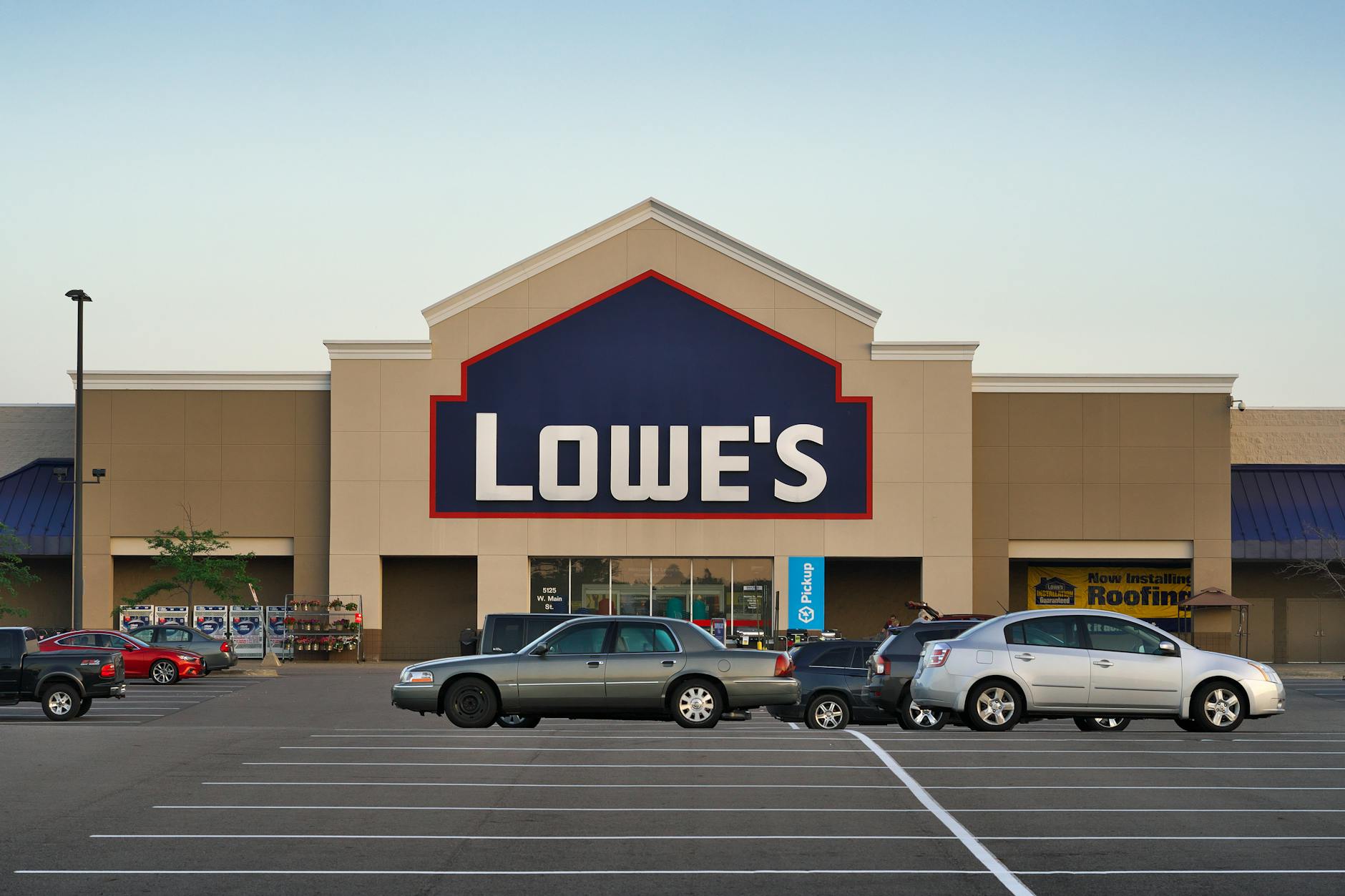
Lowe's Companies, Inc. (NYSE: LOW) delivered what appeared to be a strong fourth-quarter fiscal 2025 earnings report, surpassing Wall Street's expectations for both revenue and adjusted earnings per share. The retailer posted adjusted diluted EPS of $1.98, comfortably beating the consensus estimate of $1.94, and total sales reached $20.6 billion, exceeding the $20.34 billion anticipated by analysts. Comparable sales, a key metric for retailers, also impressed, climbing 1.3% against a modest 0.2% expectation.

Despite these headline beats, Lowe's stock experienced a significant decline, falling 5.59% to $263.02 on the day of the announcement. This immediate negative reaction underscores a critical market dynamic: in today's environment, forward guidance often matters more than backward-looking results. Investors quickly focused on the company's softer-than-expected outlook for fiscal year 2026, which overshadowed the operational strength demonstrated in Q4.

The market's skepticism was amplified by CEO Marvin Ellison's candid remarks, acknowledging the "reality" of a challenging macroeconomic backdrop. He highlighted persistent headwinds from a "dynamic tariff environment" and housing turnover at its lowest level since the early 1990s. This cautious tone contrasted sharply with the relatively more stable reception Home Depot (HD) received for its own earnings report earlier in the week, where its stock initially rose before giving back some gains.

The divergence in stock performance, despite both companies reporting beats, signals that investors are highly sensitive to management's confidence in future growth. For Lowe's, the strong Q4 performance, driven by gains in its Pro segment, online sales, and home services, was simply not enough to offset concerns about the company's tempered near-term projections. The market is clearly looking for a clearer path to sustained growth, which Lowe's guidance, unfortunately, did not provide.

What Specific Guidance Spooked Investors for 2026?

The primary driver behind Lowe's stock decline was its fiscal year 2026 guidance, which fell short of analyst expectations in several key areas. While the company projected total sales of $92 billion to $94 billion, implying a respectable 7% to 9% year-over-year growth, the crucial comparable sales forecast was notably conservative, ranging from flat to just +2%. This modest outlook signals that Lowe's anticipates only incremental improvement in underlying demand, rather than a significant rebound.

Even more concerning for investors was the adjusted diluted EPS guidance, set between $12.25 and $12.75. This range came in below the Street's consensus estimate of $12.94, indicating a potential earnings contraction or at best, very modest growth. The discrepancy between total sales growth and comparable sales/EPS guidance suggests that much of the revenue increase is expected to come from new store openings or acquisitions, rather than organic growth in existing stores.

Lowe's also provided an operating margin outlook of 11.6% to 11.8% for FY2026. While management expects some expansion, these levels still sit below Home Depot's more robust margin profile and did not signal the meaningful leverage investors were hoping for. Capital expenditures are planned at approximately $2.5 billion, with a focus on Pro enhancements, supply chain optimization, and digital capabilities, reflecting continued investment in strategic priorities.

Underlying these cautious projections are persistent macroeconomic headwinds. High mortgage rates, hovering around 6%, continue to sideline potential homebuyers and deter large-scale renovation projects. Housing turnover, at its lowest rate since 1995, further limits demand for move-related home improvement spending. CEO Marvin Ellison explicitly stated that the housing market "does not have a lot of tailwind," reinforcing the pragmatic, rather than optimistic, tone that spooked investors.

How Does Lowe's Strategy Address These Headwinds?

Despite the cautious near-term outlook, Lowe's is actively pursuing a "Total Home" strategy designed to capture market share and drive long-term growth, even in a challenging environment. This approach emphasizes strength across its Pro segment, online sales, and home services, which proved resilient in the fourth quarter. CEO Marvin Ellison highlighted how this integrated strategy is resonating with customers, enabling Lowe's to perform regardless of macro conditions.

A significant pillar of this strategy is the aggressive expansion into the professional contractor market. Lowe's has been deepening its exposure to this segment through strategic acquisitions, notably Foundation Building Materials (FBM) and Artisan Design Group (ADG). These moves are aimed at enhancing the company's offerings and services for contractors, roofers, electricians, and other professionals, who tend to be a more stable source of business compared to the more cyclical DIY customer.

The company is also making substantial investments in its digital capabilities and supply chain infrastructure. These capital expenditures, projected at approximately $2.5 billion for FY2026, are critical for improving operational efficiency, enhancing the customer experience, and supporting the growth of both its Pro and online channels. By streamlining its supply chain and leveraging technology, Lowe's aims to differentiate itself and provide better service to its diverse customer base.

Furthermore, Lowe's remains committed to returning value to shareholders. In fiscal year 2025, the company returned a substantial $2.6 billion through dividends and share buybacks, including $673 million in dividends during Q4 alone. With a current dividend yield of 1.8% and a payout ratio of 39.6%, Lowe's offers a steady income stream, providing some downside support for investors. While these strategic initiatives are crucial for future success, the market's immediate reaction suggests a desire for quicker returns on these investments, especially given the current macro pressures.

Lowe's vs. Home Depot: Who Has the Edge in a Challenging Market?

The recent earnings reports from both Lowe's and its larger rival, Home Depot (HD), offered a fascinating comparison of how two giants navigate the same challenging home improvement landscape. While Lowe's Q4 comparable sales growth of 1.3% actually outpaced Home Depot's 0.4%, the market's reaction diverged significantly, highlighting a perceived confidence gap in their respective forward outlooks.

Home Depot's operating margin guidance of 12.4% to 12.6% for FY2026 provided investors with greater comfort compared to Lowe's projected 11.6% to 11.8%. This margin differential suggests that Home Depot is better positioned to maintain profitability amidst economic pressures, potentially due to its extensive scale, deeper Pro penetration, and superior supply-chain leverage. Analysts like Steven Zaccone from Citi noted a "déjà vu" feeling, implying that Home Depot's narrative often instills more confidence despite similar underlying market conditions.

Both retailers are aggressively pursuing the professional contractor segment through acquisitions, with Home Depot's moves into SRS Distribution and GMS mirroring Lowe's purchases of Foundation Building Materials and Artisan Design Group. However, Lowe's is still perceived by some as playing catch-up in Pro penetration and scale, which may be weighing on its valuation multiples relative to HD. Home Depot's management also framed demand as relatively stable beneath the surface, emphasizing share gains, a more optimistic tone than Lowe's pragmatic assessment.

Looking at analyst projections, Lowe's is expected to show a slightly higher projected revenue CAGR of 5.0% from FY2025 through FY2028, compared to Home Depot's 4.0%. Lowe's also has a higher percentage of "buy" ratings among analysts (67% vs. Home Depot's 58%). However, Home Depot's ability to hold margins steady and leverage its entrenched Pro strength appears to be giving the Street more confidence in its near-term earnings trajectory, despite Lowe's stronger Q4 comparable sales. This suggests that while Lowe's has long-term growth potential, Home Depot's operational stability and market leadership currently give it an edge in investor sentiment.

What Does This Mean for the Broader Home Improvement Sector in 2026?

Lowe's cautious FY2026 guidance, coupled with similar sentiments from Home Depot, paints a clear picture for the broader home improvement sector: 2026 will be a year of gradual improvement, not a sharp rebound. The industry continues to grapple with significant macroeconomic headwinds, primarily high mortgage rates and low housing turnover. These factors are limiting big-ticket renovation projects, such as kitchens, bathrooms, and flooring, as consumers remain financially equipped but emotionally constrained.

The "lock-in" effect, where homeowners opt to renovate rather than move due to high borrowing costs, is providing some support, particularly for essential repairs and smaller upgrades. Lowe's CEO Marvin Ellison noted high-single-digit sales growth in home installation services, driven by customers replacing critical items like water heaters and HVAC systems. However, this demand for maintenance and repair is not fully offsetting the slowdown in larger discretionary projects.

Industry forecasts for remodeling growth in 2026 range from a modest 1.8% to 4%, indicating a consensus for tempered expansion. The Home Improvement Research Institute (HIRI) and other experts highlight persistent uncertainty stemming from potential tariff impacts, labor shortages, and consumer hesitation. While fears of a recession are eroding, the market is not expecting a significant surge in activity.

Despite the challenges, the long-term fundamentals for home improvement remain strong. A persistent housing shortage, especially for single-family homes, is driving up home values and equity, providing homeowners with capital for future projects. Millennials, now the average first-time homebuyers at 38, are entering their prime remodeling years and are more optimistic about home improvement spending. This demographic shift, combined with an aging housing stock, suggests that demand will eventually rebound, but 2026 will likely be a period of navigating caution and incremental gains.

Investor Implications: Navigating the Uncertainty

Lowe's recent earnings report and conservative guidance underscore that investors in the home improvement sector need to brace for continued volatility and prioritize companies demonstrating resilience and clear strategic execution. The market is clearly penalizing uncertainty, even when headline numbers beat expectations. For Lowe's, the immediate focus will be on how effectively it can translate its Pro segment investments and "Total Home" strategy into tangible margin expansion and comparable sales growth beyond the current muted outlook.

The stock's current valuation, with a P/E of 22.10 and an EV/EBITDA of 14.38, reflects some of the market's skepticism. While analysts maintain a "Buy" consensus with a median price target of $295.00, the path to that target appears fraught with macro-related challenges. Investors should closely monitor upcoming economic data, particularly trends in mortgage rates and housing turnover, as these will be critical determinants of the sector's performance in the latter half of 2026 and into 2027.

For those considering an investment in Lowe's, patience will be key. The company's long-term strategic initiatives, particularly its Pro segment expansion and digital investments, hold promise, but they are unlikely to yield immediate, dramatic results. The current environment favors companies that can demonstrate consistent margin stability and a clear narrative for navigating ongoing headwinds.


Want deeper research on any stock? Try Kavout Pro for AI-powered analysis, smart signals, and more. Already a member? Add credits to run more research.

SHARE THIS ON:

Related Articles

Category

You may also like

No related articles available

Breaking News

View All →

No topics available at the moment