MarketLens

Log in

Why Did Trump Waive the Jones Act, and What Does It Mean

2 hours ago
SHARE THIS ON:

Why Did Trump Waive the Jones Act, and What Does It Mean

Key Takeaways

  • The Trump administration's 60-day Jones Act waiver is a political response to surging energy prices driven by the Iran war, aiming to ease domestic shipping constraints for oil, natural gas, and other commodities.
  • Despite White House claims, independent analyses suggest the waiver will have a negligible impact on national average gasoline prices, likely less than $0.01 per gallon, with benefits primarily accruing to intermediaries.
  • Domestic shipping companies like Kinder Morgan (KMI), a major Jones Act tanker owner, may face limited direct impact in the short term due to existing long-term charter agreements, but medium-term re-contracting bears watching.

Why Did Trump Waive the Jones Act, and What Does It Mean?

President Trump recently issued a 60-day temporary waiver of the Jones Act, a century-old maritime law, in a move aimed at combating surging domestic energy prices. This decision comes amidst intense political pressure and global market disruptions stemming from the ongoing war in Iran, which has seen critical shipping routes like the Strait of Hormuz effectively shut down. The White House, through press secretary Karoline Leavitt, stated the waiver is in the "interest of national defense" to ensure "vital energy products and agricultural necessities are flowing freely to U.S. ports."

The Jones Act, officially the Merchant Marine Act of 1920, mandates that all cargo transported between U.S. ports must be carried on vessels that are built, owned, flagged, and crewed by Americans. This protectionist statute was designed to bolster the domestic shipping industry after World War I, but critics argue it creates market inefficiencies and higher costs. Waivers are rare, typically reserved for national security emergencies or natural disasters, making this broad 60-day suspension a notable intervention into U.S. maritime policy.

This temporary suspension opens up domestic shipping routes to foreign-flagged vessels, allowing them to transport a range of commodities including crude oil, refined products like gasoline and diesel, natural gas, fertilizer, and coal. The administration hopes this will expand transportation options, speed up deliveries, and ultimately provide some economic relief to American consumers facing elevated prices at the pump. U.S. regular grade gasoline prices stood at $3.72 per gallon in the week ended March 16, a significant jump from $2.94 per gallon before military strikes on Iran began.

The decision reflects a familiar playbook during oil price shocks, as the administration seeks to demonstrate proactive steps to address "pain at the pump." However, the effectiveness of such a measure in fundamentally altering the trajectory of global energy prices, which are primarily driven by geopolitical events and supply-demand imbalances, remains a subject of considerable debate among analysts and industry experts. The core question is whether this waiver is a meaningful market intervention or largely a symbolic gesture.

Will This Waiver Actually Lower Gasoline Prices for Consumers?

Despite the White House's stated goal, a consensus among independent analyses and industry experts suggests the Jones Act waiver will have a negligible impact on national average gasoline prices. A new report by Navigistics Consulting, released on March 12, estimates that allowing foreign-flag tankers into domestic fuel trades would reduce the national average gasoline price by only about $0.0027 per gallon. This amount is described as "negligible for consumers."

Even under a more optimistic scenario, where traders achieve the often-cited five-cent-per-gallon shipping savings on all gasoline carried by Jones Act tankers, the national average price would still decline by only about $0.0033 per gallon, according to Navigistics. The report concludes that any economic benefit from a Jones Act waiver would likely accrue to intermediaries in the fuel market, such as traders, rather than directly to U.S. consumers. These intermediaries could capture an estimated $371 million in potential savings if lower freight rates were realized.

Other organizations echo this sentiment. The Center for American Progress estimated a modest 3-cent decrease in East Coast gas prices but warned of potential cost increases on the Gulf Coast. The Cato Institute, a long-time critic of the Jones Act, also reported that a waiver would not "produce dramatic drops in fuel costs." They emphasize that transportation is just one of many factors determining pump prices, and global supply disruptions, particularly the closure of the Strait of Hormuz, are the primary drivers.

Sam Ori, executive director of the Institute for Climate and Sustainable Growth and Energy Policy Institute at the University of Chicago, succinctly stated that "Jones Act waivers are really a sideshow and unlikely to result in any significant relief in oil or refined product prices at a national level." He views such measures as part of a "familiar playbook" to show the administration is taking action, but ultimately "inadequate to address a global oil supply disruption of this unprecedented magnitude."

What Market Realities Limit the Waiver's Impact?

The limited potential impact of the Jones Act waiver stems from several fundamental market realities and structural characteristics of the U.S. energy supply chain. First, only a small fraction of total U.S. gasoline consumption is transported by Jones Act tankers. The Navigistics study estimates that approximately 8.9 billion gallons, or roughly 6.5% of total U.S. gasoline consumption, moves via these vessels annually. The vast majority of fuel is distributed through pipelines, trucks, and other domestic infrastructure, which are unaffected by the waiver.

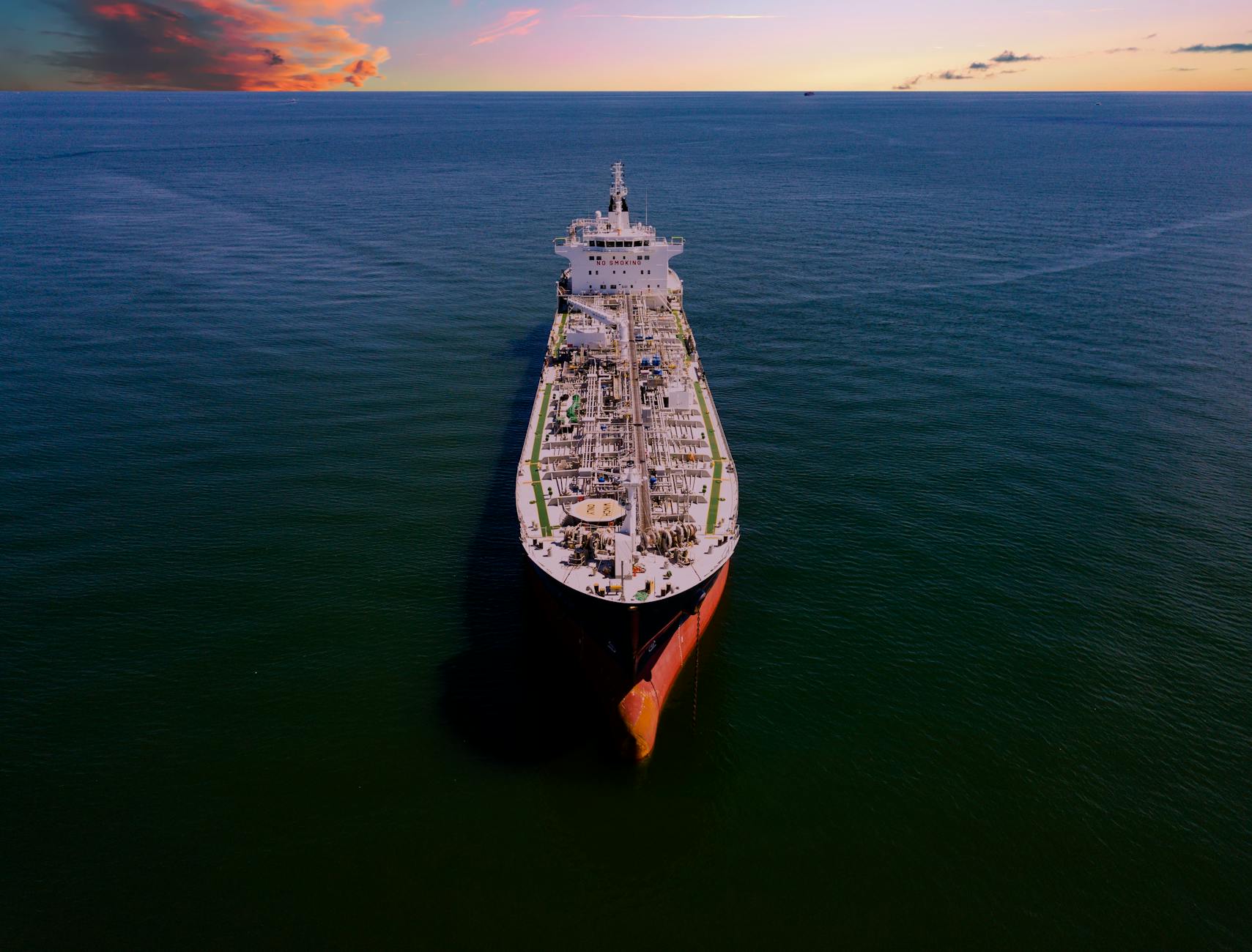
Second, the Jones Act tanker market itself presents unique challenges. The 43 medium-range product tankers serving Jones Act trades are largely under long-term charter agreements, with rates around $90,000 per day. These contracts must be paid regardless of whether the vessels are actively transporting cargo. Consequently, allowing foreign-flag vessels to enter domestic trades under a temporary waiver would not necessarily reduce transportation costs for refiners who already have shipping capacity secured under these long-term contracts.

Furthermore, the assumption that foreign tanker freight is inherently cheaper than Jones Act shipping is not always accurate, especially in the current tight global tanker market. Overseas Shipholding Group CEO Sam Norton highlighted this, estimating that transporting gasoline from Houston to New York on a foreign-flag tanker at current market rates would cost about 14.5 cents per gallon, compared with roughly 13.5 cents per gallon on a Jones Act tanker. This suggests that in some critical routes, foreign shipping could actually be more expensive due to elevated global freight rates tied to the ongoing conflict and disruptions.

Finally, a significant "mismatch" exists between U.S. refining capacity and domestic crude production. Most U.S. refineries are built to process heavier Middle Eastern crude, while the U.S. primarily produces lighter shale oil. This means even if more foreign vessels could transport crude domestically, the refining infrastructure might not be optimally equipped to process it, further limiting the waiver's effectiveness in easing supply bottlenecks and lowering prices.

How Will Domestic Shipping Companies Be Affected?

The Jones Act waiver introduces a new layer of competition for domestic shipping companies, but the immediate impact on their financials may be less severe than initially perceived. Kinder Morgan (KMI), for instance, which owns the largest U.S. tanker fleet with 16 vessels, saw its stock dip by 1.1% on the day of the announcement, while the broader S&P 500 equity index shed 0.5%. This initial market reaction reflects investor concern over potential revenue displacement.

However, Kinder Morgan has publicly stated that all of its vessels are currently under long-term term agreements, implying the 60-day waiver "will have no impact on our business." Analysts from TPH echoed this, noting that KMI's fleet is fully contracted, with only one contract rolling off midyear. This contractual insulation provides a near-term buffer, protecting the company's revenue streams from the sudden influx of foreign-flagged competition. Investors should, however, monitor medium-term re-contracting efforts closely, as this is where the waiver's competitive pressure could eventually manifest.

The broader domestic maritime industry, represented by groups like the American Maritime Partnership, has expressed "deep concern" about the waiver. They warn of the potential for the 60-day broad waiver to be "abused and unnecessarily displacing American workers and American companies." This sentiment underscores the protectionist nature of the Jones Act and the industry's reliance on its provisions to maintain market share and employment. While the short-term financial impact on major players like KMI might be mitigated by existing contracts, smaller operators or those with more flexible charter arrangements could face immediate pressure.

The waiver also highlights the scarcity of Jones Act-compliant vessels. With fewer than 100 such vessels country-wide, and only 54 permitted to ship fossil fuels from the continent to Hawaii, the domestic fleet is already stretched. This limited capacity contributes to higher shipping costs in normal times. While the waiver aims to alleviate this, the long-term implications for domestic shipbuilding and fleet expansion remain uncertain if such waivers become more frequent or extended, potentially disincentivizing investment in U.S.-flagged vessels.

What Are the Broader Geopolitical and Policy Implications?

The Jones Act waiver is more than just a domestic shipping policy adjustment; it's a direct response to a significant geopolitical crisis. The ongoing war in Iran has led to the effective closure of the Strait of Hormuz, a critical waterway handling roughly 20% of the world's oil supply. This disruption has triggered the "largest supply disruption in global oil market history," according to Senator Ted Cruz, driving crude prices sharply higher. Brent crude, the international benchmark, recently rose to $107.38 per barrel, while U.S. oil prices (WTI) traded around $95.55 per barrel on March 19, 2026, up from $95.46 the previous day, and significantly higher than its 50-day average of $71.73.

Beyond the waiver, the administration is pursuing other measures to stabilize energy markets. This includes a planned drawdown of up to 172 million barrels of crude from the U.S. Strategic Petroleum Reserve (SPR) over the next four months, part of a coordinated release of over 400 million barrels by the International Energy Agency. The Jones Act waiver could facilitate the movement of this SPR crude to U.S. ports without relying on the typically more costly Jones Act tankers. Additionally, the Treasury Department has eased sanctions on Venezuela's state-owned oil and gas company and temporarily freed up Russian oil from U.S. sanctions, all in an effort to boost global supply.

The debate also reignites calls for fundamental Jones Act reform. Opponents argue that the law creates an "inefficiency in the market" that leads to higher costs, particularly for non-continent parts of the country like Hawaii, which are wholly dependent on shipping. Representative Ed Case of Hawaii noted the waiver "shines a high-beam spotlight on the crippling effects of the Jones Act on the cost of living" for island communities, where the law's monopoly-like conditions drive some of the highest shipping rates globally. He has introduced legislation to open Hawaii-continent shipping to international competition.

However, proponents of the Jones Act, including maritime labor unions and industry groups, vehemently oppose such reforms, citing national security concerns and the protection of American jobs. They argue that relying on foreign vessels for domestic energy supplies introduces new vulnerabilities. This ongoing tension between economic efficiency and national security, amplified by the current crisis, ensures the Jones Act will remain a contentious policy issue with significant implications for energy markets and the U.S. maritime industrial base.

What's the Investment Takeaway?

The Jones Act waiver, while a significant policy move, appears to be more of a political gesture than a market-altering event for energy prices. Investors should temper expectations for a dramatic reduction in gasoline costs, as expert analyses consistently point to a negligible impact on the national average. The primary drivers of energy prices remain global supply dynamics and geopolitical stability, particularly in the Middle East.

For domestic shipping companies, the short-term impact is likely contained, especially for those with fully contracted fleets like Kinder Morgan. However, the waiver sets a precedent and highlights the vulnerability of the Jones Act market to future policy interventions. Long-term investors in this sector should closely monitor any discussions around permanent Jones Act reform or extended waivers, as these could fundamentally alter the competitive landscape.

The broader energy market remains volatile, with crude oil prices fluctuating based on developments in the Iran war and strategic reserve releases. While the Jones Act waiver offers little direct relief, the administration's multi-pronged approach to increase supply, including SPR drawdowns and sanction adjustments, could collectively influence market sentiment. Investors should focus on the larger geopolitical narrative and global supply-demand fundamentals rather than placing significant weight on this specific domestic shipping policy.


Want deeper research on any stock? Try Kavout Pro for AI-powered analysis, smart signals, and more. Already a member? Add credits to run more research.

SHARE THIS ON:

Related Articles

Category

You may also like

Stock News5 days ago

What Is the Jones Act—and Why Could the Trump Administration Waive It? What You Need To Know

The Jones Act mandates the use of American shipping vessels for domestic transport; waiving the act would allow foreign support to deliver goods to U.S. ports.
Stock News1 week ago

Trump announces sanctions relief to ease oil prices, says Iran war to end ‘very soon'

President Trump announced the U.S. is waiving oil-related sanctions on certain countries to ease crude prices. The move coincides with his estimation that the war with Iran will conclude "very soon."
News3 weeks ago

Trump Claims He Doesn't Need Congress For Tariffs—Why That's True Yet Misleading

Section 122 tariffs allow presidents to impose duties up to 15% for 150 days to address balance-of-payments deficits or dollar stability. This authority exists without explicit Congressional approval.
News3 weeks ago

The Supreme Court struck down Trump's tariffs. Now what?

The Supreme Court struck down President Trump's sweeping blanket tariffs in a 6-3 ruling Friday, scrambling the U.S. trade landscape one year into his second term.

Breaking News

View All →

Top Headlines

View More →
Stock News28 minutes ago

Amazon acquires Rivr, maker of a stair-climbing delivery robot

Stock News1 hour ago

Netflix (NFLX) Falls More Steeply Than Broader Market: What Investors Need to Know

Stock News1 hour ago

U.S. tech execs smuggled Nvidia chips to China, prosecutors say

Stock News1 hour ago

Amazon acquires startup Rivr to test robots for 'doorstep delivery'

Stock News2 hours ago

Nvidia to sell 1 million chips to Amazon by end of 2027 in cloud deal