MarketLens

Log in

Why is Data Storage the New Frontier in the AI Revolution

1 day ago
SHARE THIS ON:

Why is Data Storage the New Frontier in the AI Revolution

Key Takeaways

  • Seagate Technology (STX) has transformed from a legacy hardware provider into a critical AI infrastructure play, driven by insatiable demand for high-capacity storage.
  • Proprietary technologies like Heat-Assisted Magnetic Recording (HAMR) and Mozaic platforms provide a significant competitive moat, enabling superior density and lower total cost of ownership for hyperscalers.
  • Despite a substantial re-rating, STX's strong financial performance, robust free cash flow, and multi-year demand visibility suggest continued upside, though current valuations reflect high growth expectations.

Why is Data Storage the New Frontier in the AI Revolution?

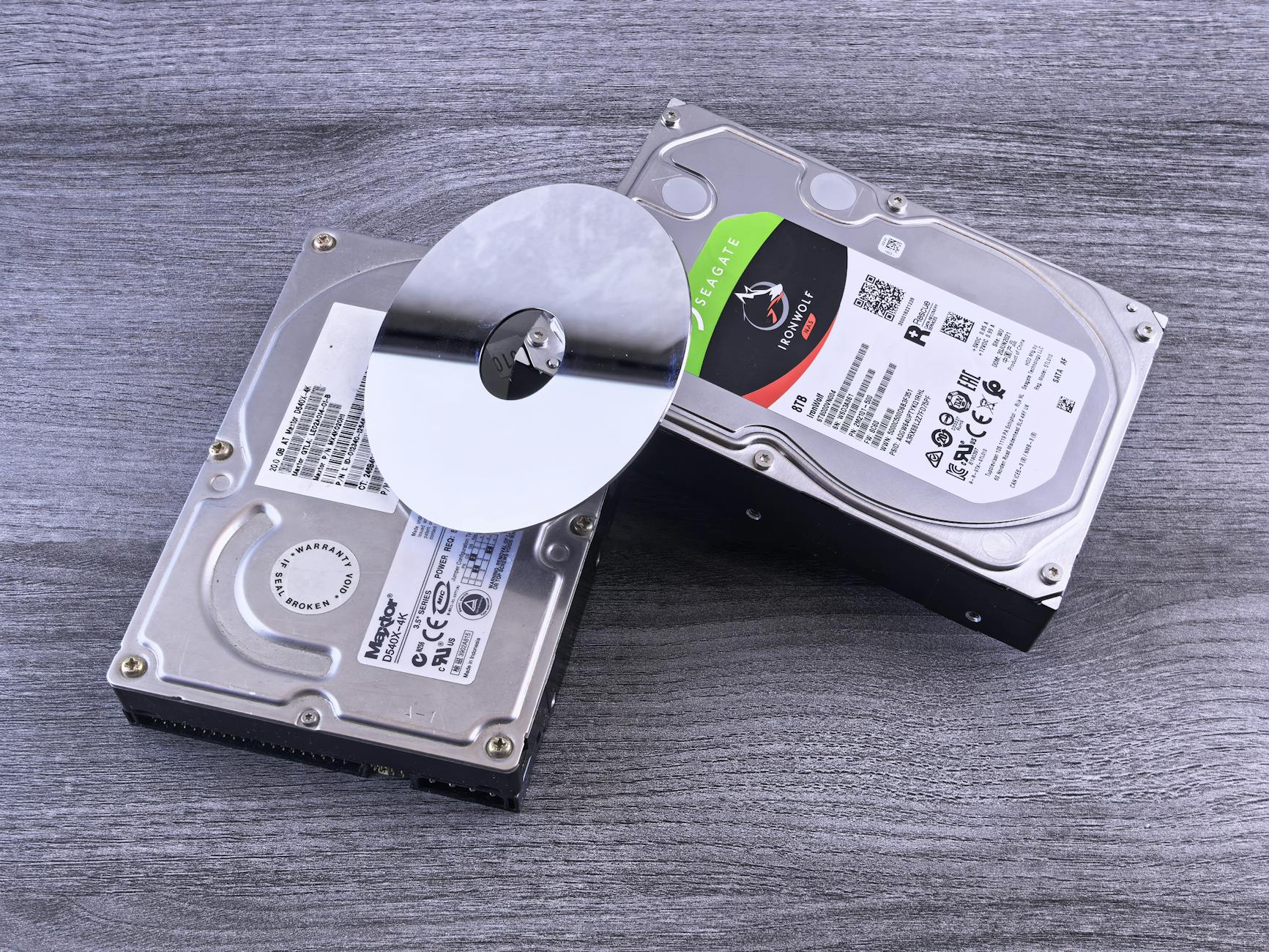
The AI revolution, initially dominated by the narrative around powerful GPUs and specialized chips, has fundamentally shifted focus. While compute power remains essential, the market is now keenly aware that high-performance processing is useless without a massive "memory bank" to store the colossal training datasets and daily outputs of generative AI models. This realization has propelled companies like Seagate Technology (STX) from perceived legacy hardware manufacturers to critical pillars of AI infrastructure, driving a dramatic re-rating of the stock.

The sheer volume of unstructured data required to train and maintain these advanced AI models has created an insatiable appetite for high-capacity, cost-effective storage. Global data creation is projected to leap from 72 zettabytes (ZB) in 2020 to an astounding 394 ZB by 2028, with data center storage demand projected at a mid-20s% CAGR. This "iceberg effect" means current AI applications are just the tip, with new "killer apps," particularly in video, demanding massive data snapshots. For instance, one minute of AI-generated video can be almost 20,000 times larger than a 1,000-word text file, creating an enormous surge in data generation that only the latest generation of Hard Disk Drives (HDDs) can currently satisfy at scale.

This structural shift has redefined the role of HDDs. They are no longer merely "legacy" components but indispensable infrastructure for the AI era. Seagate's data center segment, for example, reported a 28% year-over-year revenue increase, directly driven by demand from AI workloads. This underscores a broader trend where the market is recognizing that the "AI supercycle" is as much about data persistence and efficient storage as it is about processing speed, making the HDD market a high-margin, high-visibility infrastructure play.

How Do Seagate's HAMR and Mozaic Technologies Create a Competitive Moat?

Seagate's strategic advantage in this data-intensive AI landscape is largely underpinned by its proprietary Heat-Assisted Magnetic Recording (HAMR) technology, integrated into its Mozaic platform. This isn't just an incremental improvement; it represents a generational leap in storage density, allowing Seagate to pack significantly more data into the same physical footprint. By using iron platinum alloys, Seagate engineers magnetic domains at an atomic level, enabling capacities of 3TB+ per disk with its current Mozaic 3+ platform, which is already shipping in volume and qualified by three of the top eight Cloud Service Providers (CSPs).

The immediate future looks even more promising with Mozaic 4+, which aims to reach 4TB per disk, translating to 40TB drives. Qualification for these next-generation drives is expected to begin next quarter, with a volume ramp anticipated in the first half of 2026. This technological lead is crucial because as AI models grow, the need for cheap, high-capacity bulk storage (HDDs) is growing alongside the need for fast storage (SSDs). Seagate's HAMR drives offer a significantly lower total cost of ownership (TCO) for hyperscalers compared to all-flash arrays, solidifying their position as the primary beneficiary of this "cold storage" explosion.

This technological differentiation has translated directly into financial performance. The company recently posted record gross margins of 42.2% in its latest quarter, a testament to the pricing power granted by its advanced technology. While the trailing twelve months (TTM) gross margin stands at 38.6%, the recent quarter's figure highlights the impact of HAMR adoption and a favorable product mix. Seagate's vertical integration further strengthens this moat, giving it a distinct advantage in controlling costs and quality, which is paramount when scaling complex new technologies. This strategic positioning creates a formidable barrier to entry for competitors and ensures Seagate's leadership in the mass capacity storage segment.

What Does Seagate's Recent Financial Performance Tell Us?

Seagate Technology has delivered a compelling financial narrative, marked by consistent outperformance and robust growth, particularly in its latest fiscal second-quarter 2026 results. The company reported an impressive $3.11 EPS for the quarter, significantly beating the consensus estimate of $2.77. Revenue also surpassed expectations, coming in at $2.83 billion against an anticipated $2.73 billion, representing a 21.5% year-over-year increase. This marks Seagate's eighth consecutive quarter of earnings beats, showcasing a strong operational momentum driven by AI-related storage demand and margin improvements.

Looking ahead, management has issued optimistic guidance for fiscal Q3 2026, projecting EPS between $3.20 and $3.60 and revenue between $2.8 billion and $3.0 billion, both exceeding Street estimates. This forward guidance, coupled with a 305% explosion in free cash flow in the latest quarter, underscores a significant strengthening of the company's financial profile. The TTM Free Cash Flow (FCF) per share stands at $8.82, yielding 2.1%, while the FCF growth for FY2025 was 23.2%. This robust cash generation provides flexibility for strategic investments and shareholder returns.

Seagate's commitment to shareholder value remains a core pillar. The company announced a quarterly dividend of $0.74 per share, translating to a yield of 0.7% (based on TTM data) and a payout ratio of 31.1%, suggesting manageable obligations. Furthermore, the company has initiated a new $5 billion share buyback program, signaling confidence in its future prospects and a prioritization of high-margin, AI-driven growth. These actions, combined with a rebalanced supply chain and disciplined capacity management, are expected to shift revenue growth from historical double digits to the mid-teens, reinforcing the perception of Seagate as a top-performing large-cap stock.

Is STX Overvalued, or is the Market Still Underestimating its AI Potential?

Seagate's stock has experienced a dramatic re-rating, reflecting Wall Street's shift in perception from a legacy hardware manufacturer to a critical pillar of AI infrastructure. Trading at $421.85 as of February 25, 2026, the stock has seen significant appreciation, up 6.52% today alone, and a massive gain over the past year, close to a 4x move over three years. This surge has pushed its market capitalization to $91.99 billion. The current valuation metrics, such as a P/E ratio of 46.04, P/S of 9.15, and P/FCF of 48.52, indicate that the market is already pricing in substantial future growth expectations.

Analyst sentiment remains largely positive, with a consensus "Buy" rating from 52 analysts (24 Buy, 23 Hold, 4 Sell). The average analyst price target is $413.20, with a median of $440.00 and a high of $505.00, suggesting some further upside potential from current levels. However, some analysts warn of valuation and technical pullback risk after the rapid run-up. The stock's beta of 1.62 highlights its heightened sensitivity to market movements, implying continued volatility.

While the AI storage thesis is intact, investors need to go in with eyes open. The current valuation assumes continued strong execution and sustained AI demand growth. A key risk factor is managing the "lumpiness" of hyperscale orders and expanding manufacturing capacity without overcommitting. Additionally, insider selling, such as the CEO's significant share sale on February 2, 2026, and $29.9 million in insider sales on February 24, 2026, can raise short-term uncertainty, prompting investors to revisit their thesis. Despite these concerns, the underlying demand for mass-capacity storage, driven by AI, suggests that the market may still be underestimating the long-term structural shift rather than just a cyclical rebound.

What Lies Ahead for Seagate in the AI-Driven Data Economy?

Seagate's future trajectory is deeply intertwined with the continued expansion of the AI-driven data economy. The company is strategically positioned to capitalize on the "modernization cycle" of the global grid, where older, less efficient drives are being replaced by its advanced Mozaic HAMR platforms. With capacity reportedly sold out through 2026 and margins hitting record highs, the "old" world of spinning disks has found a definitive place in the "new" world of artificial intelligence. This structural shift, rather than a mere cyclical rebound, suggests Seagate has entered a new earnings regime aligned with long-term AI data growth.

The multi-year visibility for demand is a significant advantage. Hyperscale customers are rapidly expanding storage capacity for data-intensive AI training and inference workloads, and this demand extends beyond the "Big 8" Cloud Service Providers to local data centers and "Edge" applications. Seagate expects 7.2 ZB of new near-line storage demand over the next four years, exceeding the industry's total requirement in the entire previous decade. This sustained demand, coupled with Seagate's technology leadership in high-capacity drives, reinforces its role as a foundational infrastructure provider for the digital economy.

Key monitoring points for investors include the cadence of hyperscale orders, the velocity of HAMR adoption, and the sustainability of gross margins above 40%. While near-term volatility is expected as the market digests supply constraints and demand fluctuations, the long-term outlook remains robust. If AI demand proves as durable as current projections suggest, the storage sector could see a multi-year period of sustained profitability, breaking its historical pattern of boom-and-bust cycles and solidifying Seagate's position as a critical, high-margin player in the AI value chain.

Seagate Technology has successfully pivoted from a cyclical hardware business to a structurally scarce asset, indispensable to the AI revolution. Its proprietary HAMR technology and strong financial discipline position it for continued growth, making it a compelling consideration for investors looking beyond the immediate AI compute layer. The market has begun to recognize this transformation, but the long-term implications of AI's insatiable data appetite may still offer further upside.


Want deeper research on any stock? Try Kavout Pro for AI-powered analysis, smart signals, and more. Already a member? Add credits to run more research.

SHARE THIS ON:

Related Articles

Category

You may also like

Stock News1 months ago

AI's Energy Demands Point to Potency of Clean Energy Investing

AI's known high energy consumption highlights the significant power requirements of necessary data centers. This energy intensity suggests increased potential for clean energy investing opportunities.
Stock News1 months ago

What Is Happening With Sandisk Stock?

Sandisk stock rose on strong trading volume, driven by a sector-wide pursuit of data storage assets. This pursuit is fueled by relentless AI-driven demand from hyperscalers.
Stock News1 months ago

Did Amazon Just Crack the Code on One of AI's Biggest Bottlenecks?

The artificial intelligence revolution is advancing rapidly, but companies currently struggle to match the necessary pace of development.
Stock News1 months ago

NVIDIA BlueField-4 Powers New Class of AI-Native Storage Infrastructure for the Next Frontier of AI

NVIDIA's BlueField-4 now powers the Inference Context Memory Storage Platform, a new AI-native infrastructure designed for gigascale inference. This platform accelerates agentic AI systems requiring f...

Breaking News

View All →

Top Headlines

View More →
Stock News1 hour ago

Alphabet Inc. (GOOG) Increases Despite Market Slip: Here's What You Need to Know

Stock News1 hour ago

Alphabet (GOOGL) Ascends While Market Falls: Some Facts to Note

Stock News1 hour ago

Hegseth Designates Anthropic As Supply Chain Risk After Trump Bans Government Us

Stock News2 hours ago

Opinion | Why Netflix Lost Warner to Paramount

Stock News2 hours ago

Stock Market Today, Feb. 27: Inflation and AI Fears Lead to February Slump