MarketLens

Log in

Why is Dollar General Stock Sliding Despite Strong Q4 Results

2 hours ago
SHARE THIS ON:

Why is Dollar General Stock Sliding Despite Strong Q4 Results

Key Takeaways

  • Dollar General's recent Q4 earnings beat was overshadowed by a cautious fiscal 2026 outlook, signaling slower sales growth and persistent margin pressures.
  • Despite a strong turnaround in 2025, investors are now scrutinizing the sustainability of growth amidst a challenging macroeconomic environment and intense retail competition.
  • The company's aggressive store expansion and remodel strategy presents a long-term growth catalyst, but near-term execution risks and significant capital expenditure demands warrant careful consideration.

Why is Dollar General Stock Sliding Despite Strong Q4 Results?

Dollar General (DG) shares have been under pressure, closing at $120.71 on April 24, 2026, marking a -1.11% decline against a broader S&P 500 rally of 0.8%. This recent weakness extends a trend that began with a significant 5.4% drop on March 12, 2026, immediately following the company's fiscal fourth-quarter earnings release. The market's reaction might seem counterintuitive, given that the off-price retailer actually delivered a strong beat on its Q4 FY2025 results.

For the quarter ending January 30, 2026, Dollar General reported impressive numbers: earnings per share (EPS) surged to $1.93, comfortably surpassing the consensus estimate of $1.61. Net sales also climbed 5.9% to $10.91 billion, beating analyst projections of $10.78 billion. Even more encouraging, same-store sales increased by a robust 4.3%, marking the fastest year-over-year growth in three years, driven by increased customer traffic across all income brackets and higher average transaction sizes.

However, the market is a forward-looking mechanism, and investors quickly pivoted from celebrating past performance to scrutinizing the company's cautious fiscal 2026 outlook. Management projected same-store sales growth to decelerate significantly, expecting a range of just 2.2% to 2.7%, falling short of the consensus estimate of 2.7%. Similarly, the net sales growth forecast of 3.7% to 4.2% (midpoint of $44.1 billion) came in below the analyst consensus of $44.43 billion.

The EPS forecast for FY2026, ranging from $7.10 to $7.35, with a midpoint slightly below the consensus of $7.25, further fueled investor concerns. The company specifically cited "severe winter storm activity" in February as a factor impacting its Q1 outlook, leading to temporary store closures and reduced traffic. This downbeat guidance, despite the strong Q4 beat, signaled to the market that Dollar General anticipates a tougher operating environment ahead, with growth deceleration and potential margin pressures taking precedence over recent successes.

What Are the Key Headwinds Facing Dollar General's Growth Trajectory?

Dollar General's path forward is not without significant challenges, many of which are exerting downward pressure on its stock. A primary concern revolves around its core customer base: lower-income consumers. This demographic is particularly vulnerable to persistent inflation and rising gas prices, which directly impact their discretionary spending power. While Dollar General's value proposition often attracts trade-down customers during economic tightening, these same pressures can limit their ability to absorb price increases, potentially squeezing the retailer's margins.

Beyond consumer sensitivity, the company's fiscal 2026 outlook incorporates several margin-eroding factors. Management highlighted an anticipated higher effective tax rate, projected to be around 25%, and a profit headwind stemming from the expiration of the Work Opportunity Tax Credit. These external factors, combined with potential selling, general, and administrative (SG&A) deleverage, suggest near-term operating pressure that could outweigh the benefits of increased sales. The market is clearly focused on these margin and tax-rate headwinds, rather than just top-line growth.

Intense competition within the discount retail sector also presents a formidable challenge. Rivals like Dollar Tree (DLTR) are vying for the same value-conscious customers, and any misstep in pricing or product assortment can quickly shift market share. The risk of market oversaturation, as Dollar General and its competitors continue aggressive expansion, could lead to diminishing returns per new store and increased promotional activity, further pressuring profitability.

Finally, the company's past performance shows a mixed bag. While fiscal 2025 saw strong net income and EPS growth of 34.4% and 34.1% respectively, the three-year and five-year cumulative growth in net income per share stands at a concerning -36.0% and -35.8%. This historical volatility in profitability, despite consistent revenue growth, raises questions about the long-term sustainability of its earnings trajectory, especially as it navigates a more challenging economic landscape.

How is Dollar General Addressing These Challenges Through Strategic Initiatives?

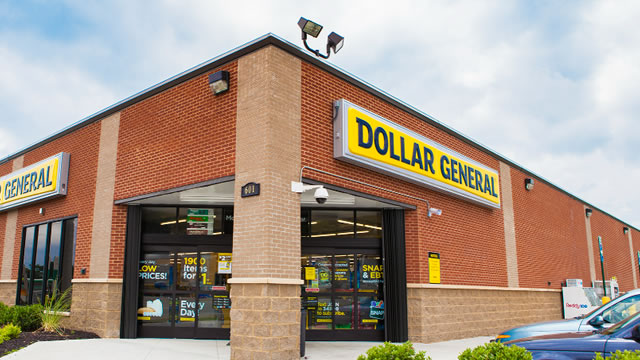
Despite the headwinds, Dollar General is not standing still; it's actively implementing a multi-pronged strategy to drive future growth and enhance profitability. A cornerstone of this plan is an aggressive real estate expansion and renovation program for fiscal 2026. The company intends to execute approximately 4,730 real estate projects, including opening around 450 new stores in the United States and roughly 10 new stores in Mexico. This expansion aims to extend its reach into underserved rural communities, leveraging its convenience and value proposition.

Beyond new store openings, Dollar General is heavily investing in its existing footprint through two key remodel programs: Project Renovate and Project Elevate. Approximately 2,000 stores are slated for Project Renovate, while another 2,250 will undergo Project Elevate remodels. These initiatives are designed to enhance the customer experience, improve merchandising, and optimize store layouts, ultimately aiming to boost same-store sales and improve operational efficiencies. The company also plans to relocate around 20 existing stores to better locations.

The strategic focus also includes enhancing its product mix and customer engagement. Dollar General has seen success with initiatives like its DG delivery service and the "Value Valley" offering, which have contributed to significant comparable store sales benefits. The company reported a 17% increase in $1 items in Q4, highlighting its commitment to extreme value. Furthermore, the expansion of Dollar General's Media Network and improved merchandising strategies for seasonal and home products are anticipated to further enhance profitability and growth moving forward.

CEO Todd Vasos emphasized these efforts, stating the company is "excited about our plans to drive continued growth through a variety of initiatives designed to further enhance the customer experience, elevate our brand, drive greater enterprise-wide efficiencies, and extend our reach, all while creating long-term shareholder value." These strategic investments, while requiring substantial capital expenditures of $1.4 billion to $1.5 billion for the year, are crucial for Dollar General to adapt to evolving consumer preferences and maintain its competitive edge in the discount retail segment.

What Do Valuation Metrics and Analyst Sentiment Suggest for DG?

Examining Dollar General's valuation metrics reveals a mixed picture that reflects the current investor uncertainty. The stock currently trades at a P/E ratio of 17.57, which is below the industry median, suggesting it might be undervalued relative to its peers. Its Forward P/E ratio stands at 16.77, also indicating a discount compared to the industry average of 29.25. The P/S ratio of 0.62 and P/FCF of 8.62 further reinforce a potentially attractive valuation, especially given its robust free cash flow generation.

However, other metrics paint a more cautious view. The EV/EBITDA of 12.67 is not exceptionally low, and the Net Debt/EBITDA of 4.49 highlights a relatively leveraged balance sheet. While the company has paused share buybacks to preserve cash for store remodels and inventory rationalization, it continues to pay a quarterly dividend of $0.59 per share, offering a 2.0% yield. This dividend, with a payout ratio of 34.4%, appears sustainable, and investors might anticipate annual increases and a resumption of buybacks possibly by fiscal year-end.

Wall Street analysts currently hold a "Buy" consensus rating for DG, based on the opinions of 50 analysts. This includes 1 Strong Buy, 26 Buys, 20 Holds, and 3 Sells. The average analyst price target is $145.00, with a median of $140.00, suggesting a potential upside from the current price of $120.71. The highest target reaches $170.00, while the lowest is $111.00. This range reflects the divided sentiment, with some firms like JPMorgan and Gordon Haskett raising targets, while others, like Wall Street Zen, recently downgraded the stock from "buy" to "hold."

Despite the overall "Buy" consensus, the market reaction to recent earnings suggests that investors are focusing on the cautious guidance rather than the backward-looking beat. The stock's performance on April 22, 2026, saw it command a trading volume of $290 million, the highest among all equities that day, indicating heightened institutional interest and a significant shift in sentiment. This suggests that while the valuation may appear attractive on paper, the market is demanding clearer evidence that strategic growth initiatives will translate into sustained long-term earnings growth without diluting profitability.

What Are the Bull and Bear Cases for Dollar General Stock?

The investment narrative for Dollar General is currently a tug-of-war between compelling bull and bear arguments. On the bullish side, proponents point to the company's strong Q4 performance as evidence of its turnaround strategy gaining traction. The 4.3% same-store sales growth, driven by increased traffic and higher average transaction sizes, demonstrates the continued relevance of Dollar General's value and convenience proposition, especially as consumers remain budget-conscious. The aggressive real estate strategy, including 450 new stores and 4,250 remodels, is seen as a powerful engine for future revenue growth and enhanced customer experience.

Bulls also highlight Dollar General's robust free cash flow generation, with TTM FCF at $3.08 billion and a FCF Yield of 11.6%. This financial strength provides the capital needed for its ambitious expansion plans and supports its dividend, which currently yields 2.0%. The company's focus on closing underperforming stores and reallocating capital to stronger locations is expected to support higher margins over time. Furthermore, the potential for consumer tailwinds in 2026, such as larger tax returns injecting capital into its customer base, could provide an unexpected boost to sales.

Conversely, the bear case centers on the cautious fiscal 2026 outlook and the underlying pressures it reveals. The projected deceleration in same-store sales growth to 2.2%-2.7% and modest net sales growth of 3.7%-4.2% signal a tougher operating environment. Bears are particularly concerned about margin compression, driven by factors like a higher effective tax rate and the expiration of the Work Opportunity Tax Credit, which could lead to SG&A deleverage and near-term operating pressure. The three-year and five-year cumulative declines in net income per share underscore historical challenges in sustaining profitability.

The vulnerability of Dollar General's lower-income customer base to economic fluctuations, such as rising gas prices and inflation, remains a significant risk. This demographic's limited ability to absorb price increases could hinder margin expansion. Additionally, intense competition and the risk of market oversaturation from aggressive expansion by both Dollar General and its rivals could lead to increased promotional activity and diluted returns. Bears argue that the substantial capital expenditures for new stores and remodels, while necessary, could weigh on short-term profitability and cash flow, especially if the expected returns do not materialize as quickly as anticipated.

What Does This Mean for Investors?

For investors, Dollar General presents a nuanced picture, balancing a strong value proposition and ambitious growth plans against near-term operational headwinds and a cautious outlook. The stock's current valuation, with a P/E of 17.57 and a Forward P/E of 16.77, suggests it may be trading at a discount relative to its industry, potentially offering an attractive entry point for long-term investors. However, the market's recent reaction clearly indicates that future guidance and margin sustainability are paramount concerns.

The company's aggressive investment in new stores and remodels, while a significant capital outlay, is a strategic imperative to maintain relevance and capture market share in a competitive retail landscape. Investors should closely monitor the execution of these initiatives and their impact on same-store sales growth and operating margins in upcoming quarters. Any signs of improved efficiency or better-than-expected sales performance from these revamped stores could serve as powerful catalysts.

Ultimately, Dollar General's ability to navigate the delicate balance between aggressive expansion and margin preservation will dictate its stock performance. While the dividend provides a steady income stream, the real upside will come from demonstrating that its strategic pivot translates into sustained, profitable growth. Investors with a long-term horizon and a tolerance for some near-term volatility might find value here, but those seeking immediate, explosive growth may need to look elsewhere until the company provides clearer evidence of an accelerating earnings trajectory.


Want deeper research on any stock? Try Kavout Pro for AI-powered analysis, smart signals, and more. Already a member? Add credits to run more research.

SHARE THIS ON:

Related Articles

Category

You may also like

Stock News•1 day ago

Dollar General (DG) Stock Slides as Market Rises: Facts to Know Before You Trade

Dollar General (DG) shares fell by 1.11% to close at $120.71 during the most recent trading session. The decline occurred despite a broader market rally, highlighting recent downward pressure on the s...
Stock News•1 day ago

Why Charter Communications Stock Plummeted Today

Charter Communications shares fell following its Q1 report, which revealed weaker-than-expected earnings and a decline in internet subscribers. The pullback reflects investor concerns over slowing gro...
Stock News•2 days ago

Flowers Foods: The Double-Digit Yield Is Hard To Ignore, Despite The Shaky Fundamentals

Flowers Foods reported Q4 sales growth in the double digits, primarily driven by an extra week in the fiscal period and the acquisition of Simple Mills. Despite top-line gains, the company faces conce...
Stock News•2 days ago

Everforth: I See Panic Selling Creating Opportunity

Everforth (EFOR) shares have faced a significant decline following recent execution challenges and macroeconomic headwinds. The company, formerly known as ASGN Incorporated, previously saw a substanti...

Breaking News

View All →

Top Headlines

View More →
Stock News•3 hours ago

Microsoft: Preparing For Pivotal 'Show-Me' Q3 Earnings

Stock News•3 hours ago

Prediction: This Will Be Meta's Stock Price in 5 Years

Stock News•4 hours ago

3 Impressive Quantum Computing Stocks to Buy Now

Stock News•4 hours ago

Morningstar Says Software Stocks Haven't Been This Undervalued In 3 Years. These 3 Look Like Good Deals.

Stock News•5 hours ago

Nvidia stock just flashed a major crash signal