MarketLens

Log in

Why is Southwest Airlines Exiting O'Hare and Dulles

1 hour ago
SHARE THIS ON:

Why is Southwest Airlines Exiting O'Hare and Dulles

Key Takeaways

  • Southwest Airlines' decision to exit Chicago O'Hare and Washington Dulles airports is a strategic move to prune underperforming routes, aligning with its "most ambitious transformation" aimed at boosting profitability.
  • The route cuts are part of a broader network optimization strategy, focusing capacity on high-demand, high-return corridors where Southwest already holds a dominant position, such as Chicago Midway and Baltimore/Washington International.
  • This network refinement, coupled with new revenue levers like assigned seating and bag fees, underpins management's aggressive 2026 adjusted EPS guidance of at least $4.00, a 300%+ increase from 2025.

Why is Southwest Airlines Exiting O'Hare and Dulles?

Southwest Airlines (NYSE: LUV) is discontinuing all flight operations to Washington Dulles International Airport (IAD) and Chicago O’Hare International Airport (ORD) starting June 4, 2026. This move is not a sign of weakness, but rather a calculated strategic retreat from underperforming routes, central to the airline's ongoing network optimization efforts. The company explicitly stated these exits are part of "ongoing efforts to refine its network," a direct response to routes that "just don't have a path to the level of financial performance that we need."

The decision reflects a disciplined approach to capacity deployment, prioritizing profitability over sheer market presence. Southwest's foray into O'Hare began in 2021 as part of a pandemic-era expansion, but the growth did not meet expectations, leading to dramatic flight cuts even before the full exit. Similarly, service at Dulles, which started two decades ago, stagnated after the airline expanded its presence at Ronald Reagan Washington National Airport (DCA) in 2012 and maintained its large base at Baltimore/Washington International (BWI).

This rationalization allows Southwest to reallocate resources to more lucrative markets. At O'Hare, the airline faced intense competition from legacy carriers like American and United, where its unique point-to-point model struggled to gain traction. Instead, Southwest will double down on Chicago Midway International Airport (MDW), where it already dominates, operating over 90% of departures. This strategic focus on airports where it holds a competitive advantage is a hallmark of the airline's revised network strategy.

For passengers, the change means rebooking or refunds for flights after June 3, 2026. Southwest is offering flexibility, including rebooking without fare difference or full refunds for unused portions of tickets, including ancillary purchases like extra legroom or priority boarding. While inconvenient for some, this customer-centric approach aims to mitigate negative sentiment during a period of significant operational change.

How Do These Cuts Fit into Southwest's Broader Transformation?

The withdrawal from O'Hare and Dulles is a critical piece of what CEO Bob Jordan has termed "the most ambitious transformation in Company history." This sweeping overhaul, initiated in 2025, fundamentally redefines Southwest's business model beyond its traditional "bags fly free" and open seating policies. The goal is clear: enhance profitability and attract a broader customer base, particularly higher-yield business travelers.

Key elements of this transformation include the implementation of assigned seating and extra legroom options, which launched on January 27, 2026. This marked the end of a 55-year-old open seating policy. Alongside this, Southwest has introduced bag fees and basic economy fares, moving closer to industry-standard practices to unlock new revenue streams. Management expects these changes to drive first-quarter revenue per available seat mile (RASM) up at least 9.5% year-over-year.

Furthermore, Southwest is expanding its online distribution through partnerships with Expedia and Priceline and joining the Sabre GDS platform. This strategic shift opens its inventory to business travelers and corporate accounts, a segment historically challenging for Southwest to capture without standardized booking channels. The company also optimized its Rapid Rewards program and forged six new international partnerships, including with Icelandair and Turkish Airlines, to expand its global reach and loyalty ecosystem.

These initiatives are designed to generate incremental revenue exceeding $1 billion by 2026. The network cuts, therefore, are not isolated events but rather a complementary strategy to ensure that the enhanced product offerings and new revenue levers are applied to the most financially viable routes. By pruning underperforming segments, Southwest can concentrate its transformed model on routes where it can maximize these new revenue opportunities and improve overall unit economics.

What's the Impact on Operational Efficiency and Cost Structure?

The decision to exit O'Hare and Dulles directly contributes to Southwest's drive for enhanced operational efficiency and a leaner cost structure. Operating in highly competitive and often congested airports like ORD and IAD can lead to increased operational costs, gate availability challenges, and potential delays that ripple through the network. By consolidating operations at its dominant bases, Southwest can improve on-time performance, reduce ground times, and optimize aircraft utilization.

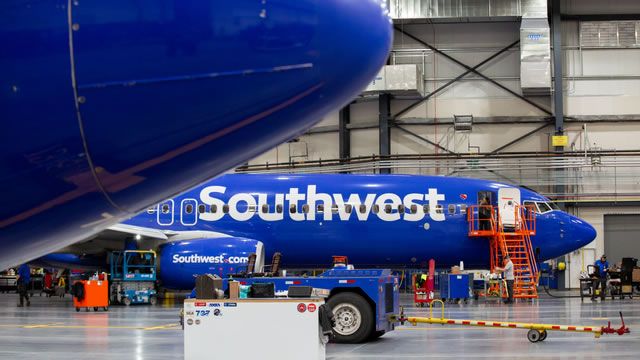
Southwest's uniform Boeing 737 fleet is a core competitive advantage, enabling high aircraft utilization and lower training and maintenance costs. However, this advantage is maximized when the network supports efficient turnarounds and concentrated operations. Exiting less strategic airports allows the airline to redeploy its 737s to routes where they can generate higher returns and contribute to better overall network flow. This is particularly relevant as the company expects 66 Boeing 737-8 deliveries in 2026 while retiring approximately 60 aircraft.

Beyond network adjustments, Southwest has aggressively pursued cost reduction. The company achieved cost reductions exceeding $370 million in 2025, which included its first-ever layoffs of non-contract and management employees. CFO Tom Doxey committed to keeping "management headcount expense flat to 2025 levels in 2026," with expectations for overall employee totals to decline through attrition. These cost discipline measures are crucial for improving margins, especially as the airline discontinued its fuel hedging program in 2025, making it more exposed to volatile WTI crude oil prices, which currently sit at $61.60 per barrel.

The strategic cuts and cost management efforts are designed to improve key financial metrics. For the trailing twelve months (TTM), Southwest reported a net margin of just 1.6% and an operating margin of 1.5%. By focusing on high-yield routes and reducing inefficiencies, the airline aims to significantly expand these margins, ultimately translating into higher profitability and a stronger financial position.

How Will This Affect Southwest's Market Share and Competitive Positioning?

Southwest's exit from O'Hare and Dulles will undoubtedly impact its market share in those specific metropolitan areas, but the strategic intent is to strengthen its overall competitive positioning. At O'Hare, Southwest's three gates will likely be absorbed by American Airlines or United Airlines, further solidifying their dominance at that hub. However, this loss is offset by Southwest's overwhelming presence at Chicago Midway (MDW), where it operates over 90% of flights. This concentration allows Southwest to leverage its operational efficiencies and loyal customer base without directly battling legacy carriers in their strongholds.

In the Washington, D.C. area, Southwest's presence remains robust through its large base at Baltimore/Washington International (BWI) and its position as the second-largest carrier by seats at Ronald Reagan Washington National Airport (DCA) after American. The IAD exit, two decades after its initial landing, reflects a rationalization of its D.C. footprint, focusing on airports where it has established a stronger competitive advantage and network density. Travelers affected by the IAD change can rebook to BWI, DCA, Philadelphia (PHL), or Richmond (RIC), maintaining Southwest's regional connectivity.

The transformation also includes a significant push into international markets and new partnerships. Southwest has announced six strategic international partnerships with carriers like Icelandair, EVA Air, and Turkish Airlines, expanding its reach beyond its traditional near-international routes to Mexico, the Caribbean, and Central America. This move, alongside new domestic stations like Knoxville and Santa Rosa, and an expansion of red-eye flights (to 53 daily by October 2026), signals a shift towards a more diversified network strategy aimed at capturing new segments of leisure and business travelers.

While the media attention around the business model changes has been mixed, the market's reaction has been largely positive. Shares of LUV surged 22.99% year-to-date as of February 12, 2026, significantly outperforming Delta Air Lines (DAL) which gained 6.29% in the same period. This indicates investor confidence in Southwest's ability to adapt its competitive strategy to the evolving airline industry landscape, even if it means shedding some peripheral market share in specific competitive airports.

What Does This Signal for Southwest's Profitability Outlook?

The strategic route cuts and the broader business transformation are strong signals that Southwest Airlines is laser-focused on driving significant profitability improvements. The company's Q4 2025 earnings call on January 28, 2026, served as a major catalyst, sending shares up nearly 19% and closing at $48.50, the highest since November 2021. The real story was the 2026 guidance: management projected full-year adjusted EPS of at least $4.00, a staggering increase from $0.93 in 2025. This forecast significantly exceeded analyst expectations of $3.19.

Management emphasized the conservative nature of this $4.00 EPS target, stating it represents the "lower end of our internal forecast." They anticipate further upside from close-in bookings and premium upsell capture as customers adapt to assigned seating and extra legroom options. The new revenue model, including bag fees and basic economy fares, is expected to drive first-quarter RASM up at least 9.5% year-over-year, well above the 8.5% analysts expected.

Analysts have taken notice, with a consensus price target of $51.27 and a median of $50.00, suggesting considerable upside from the current price of $38.75. Several firms have raised their price targets, with Susquehanna moving to $55 and BMO Capital upgrading to Outperform with a $57.50 target. The current P/E ratio of 45.34 reflects a premium on future growth, but based on the $4.00 guidance floor, shares trade at a forward P/E of roughly 13x. Applying Wall Street's forward target of $4.75 in adjusted EPS for 2027, the forward P/E drops to about 10.7x, suggesting a more attractive valuation as earnings materialize.

Southwest's commitment to capital returns also underscores its financial health. In 2025, the company returned $2.9 billion to shareholders through share repurchases ($2.6 billion) and dividends ($399 million), representing approximately 14% of shares outstanding. With a dividend yield of 1.9% and a payout ratio of 90.5%, the company aims to maintain shareholder value while executing its growth strategy. This focus on network optimization, new revenue streams, and cost discipline positions Southwest for a robust and sustained recovery in profitability.


Southwest Airlines is undergoing a profound transformation, with the O'Hare and Dulles exits serving as a clear signal of its commitment to profitable growth. Investors should watch closely for continued execution on new revenue initiatives and further network optimization. The path ahead is challenging, but the potential for significant earnings expansion makes LUV a compelling story in the airline sector.


Want deeper research on any stock? Try Kavout Pro for AI-powered analysis, smart signals, and more. Already a member? Add credits to run more research.

SHARE THIS ON:

Related Articles

Category

You may also like

Stock News1 week ago

How Low Can LUV Stock Go?

Southwest Airlines (LUV) stock slid 6.9% in one day, extending a month-long 19% decline, due to investor anxiety over logistical hurdles in overhauling its business model and rising fuel costs.
Stock News2 weeks ago

United and American Fight at Chicago's O'Hare Draws Federal Scrutiny

The FAA plans to cut flights this summer at Chicago's O'Hare International Airport due to operational conflicts between United and American Airlines.
Stock News2 weeks ago

Portillo's: Texas, Traffic, And Other Challenges

Portillo's shifts focus from aggressive expansion to turnaround, emphasizing free cash flow and deleveraging after Berkshire Partners' exit. The company halts Sunbelt clustering to prioritize traffic-...
Stock News2 weeks ago

DoorDash to Wind Down Deliveroo and Wolt Operations in Four Countries

DoorDash announced it is exiting four countries—Qatar, Singapore, Japan, and Uzbekistan—across its Deliveroo and Wolt brands following a multi-month review of local conditions.

Breaking News

View All →

Top Headlines

View More →
Stock News4 hours ago

Meta Mulls Cutting 20% Or More Of Jobs Amid Big AI Spending, Setbacks

Stock News7 hours ago

Exclusive: Meta planning sweeping layoffs as AI costs mount

Stock News7 hours ago

The Smartest Growth Stock to Buy With $200 Right Now

Stock News7 hours ago

Wall Street's Favorite Artificial Intelligence (AI) Bargain Stock for 2026 Is Hiding in Plain Sight

Stock News7 hours ago

Apple MacBook Neo emerges as company's most repairable laptop in more than a decade