MarketLens
Why is the U.S. Cattle Herd Vanishing, and What Does it Mean for Beef Prices

Key Takeaways
- The U.S. cattle herd has shrunk to a 75-year low, driving unprecedented beef price hikes and market volatility.
- Consumer staples companies reliant on beef face significant margin pressure, requiring strategic shifts in product mix and supply chain management.
- While the sector presents risks, selective investment opportunities may emerge in companies adept at carcass optimization, alternative proteins, or efficient supply chain coordination.
Why is the U.S. Cattle Herd Vanishing, and What Does it Mean for Beef Prices?
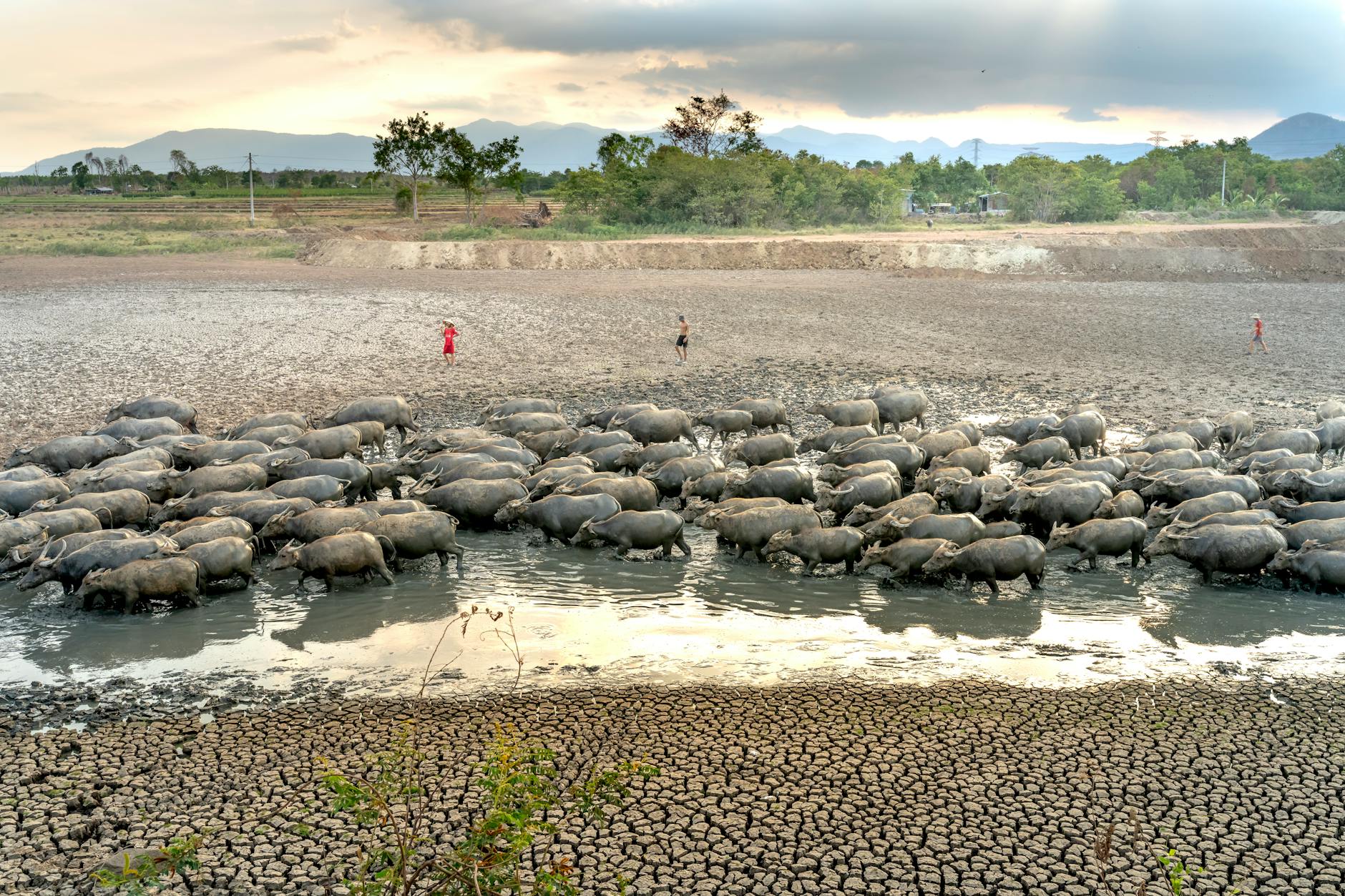
The U.S. cattle herd is currently at its smallest size since 1951, a staggering 75-year low, with 86.2 million head as of January 1, 2026. This dramatic contraction, down 0.3% from 2025, marks a prolonged liquidation phase in the cattle cycle, driven by a confluence of environmental and economic pressures. Years of persistent drought have decimated grasslands across the West and Plains, forcing ranchers to sell off cattle, including breeding cows, due to insufficient feed and water.
Compounding the environmental stress are soaring production costs. Elevated interest rates make it expensive for ranchers to hold onto young heifers for breeding, as the investment in an "open young heifer" is simply "not very rewarding" when compared to the immediate profits from selling them for slaughter. This economic incentive to sell younger animals for immediate cash flow, rather than retain them for herd expansion, has prolonged the contraction phase, pushing any meaningful herd rebuild out to at least 2028. The 2025 calf crop, at 32.9 million head, was the smallest since 1941, further confirming tighter supplies for years to come.
The direct consequence of this supply squeeze is skyrocketing beef prices. As of December 2025, ground beef hit an average of $6.69 per pound, a 19.3% increase year-over-year and a massive 72% surge since 2020. This marks the highest price on record since the Department of Labor began tracking beef prices in the 1980s. The broader beef and veal category saw a 15% price increase over the past year, significantly outpacing overall food inflation.
Looking ahead, the USDA forecasts farm-level cattle prices to climb another 6.1% in 2026, following a 20.8% rise in 2025, with wholesale beef prices expected to increase by 6.9% this year after a 13.9% gain last year. Some analysts even project ground beef prices could rise by an additional 60% by Q3 2026, building on a 26% increase since 2024. This pricing pressure is not merely a short-term blip; it’s a structural shift that will redefine the economics of beef for consumers and the entire supply chain.
How Are Beef Processors and Retailers Navigating This Supply Crisis?
The vanishing cattle herd is creating an unprecedented challenge for beef processors and retailers, forcing them to rethink long-standing strategies. For processors, the tight supply means higher input costs for live cattle, which, when combined with reduced slaughter volumes, severely squeezes margins. Tyson Foods, for instance, reported a staggering $319 million operating loss in its beef division in Q1 fiscal 2026, a more than 12-fold increase from the $26 million loss a year prior. This financial strain has led to significant operational adjustments, including Tyson’s permanent closure of its Lexington, Nebraska beef plant in January, eliminating 3,200 jobs and roughly 5,000 head of daily processing capacity.
This reduction in processing capacity, estimated to trim U.S. slaughter capacity by about 6.6%, improves operational efficiency for the remaining plants but also shifts leverage slightly toward packers who must now compete more aggressively for fewer available cattle. The industry is producing more beef with fewer cattle, with average production from a beef cow reaching 928 pounds in 2025, up from 840 pounds in 2014. However, this efficiency gain is insufficient to offset the overall decline in supplies, with beef production falling 4% in 2025 and an additional 1% forecast for 2026.
Retailers face an equally sharp challenge: protecting traffic and loyalty while beef remains expensive and consumers are increasingly promotion-conditioned. Beef inflation in the mid-teens year-over-year is precisely where shoppers begin to change behavior, trading down or even trading out of beef entirely. Supply assurance is also a critical operational and brand risk; tighter supplies lead to out-of-stocks, increased substitutions, and eroded customer trust. Retailers are now deploying markdown strategies for products with less shelf life, an approach previously "looked down on" but now a "much-needed lever to pull to decrease waste."
The situation is further complicated by trade dynamics. While U.S. beef exports are projected to decline to 2.4 billion pounds in 2026 due to tougher competition in Asian markets, imports are expected to rise to 5.5 billion pounds, providing some stabilization, especially for lean beef inputs used in ground beef. However, import availability is subject to policy shifts, such as changes in tariff-rate quotas, which can significantly impact ground beef economics. The bottom line is that processors are exposed on exports, retailers on imports, and both are vulnerable to the cascading effects of global rerouting, making 2026 a defining year for strategic coordination or margin erosion.
What are the Broader Implications for Consumer Staples and Food Sector Investments?
The ongoing beef supply crisis and resulting price hikes have significant implications for the broader consumer staples and food sectors, creating both headwinds and potential tailwinds. Consumer staples, as a sector, have seen a rally in early 2026, becoming the third-best performing sector in the S&P 500, up more than 15.5% year-to-date. This surge is partly attributed to investors rotating out of tech names and into more defensive plays. However, within this sector, companies heavily reliant on beef products face distinct challenges.
"Big food" firms like Nestlé and General Mills, which surged during the pandemic, are now navigating normalized sales volumes but still maintain elevated margins compared to pre-pandemic averages, aided by streamlined operations and selective price hikes. However, for companies deeply embedded in the meat supply chain, the picture is more nuanced. The performance gap in food manufacturing is expected to widen in 2026, with smaller manufacturers and co-ops, particularly those focused on specialty goods or heavily commoditized products, facing greater margin pressure due to fluctuating input costs and intensifying competition.
The rise in beef prices is a standout driver of U.S. food inflation, even as overall food inflation is expected to cool in 2026 (midpoint forecasts: all food +2.7%, food-at-home +2.3%). This divergence means that while consumers might see relief in other grocery categories, the meat case will remain a pain point. This persistent high cost of beef could accelerate consumer shifts towards more affordable protein alternatives, such as poultry, pork, or plant-based options. Companies with diversified protein portfolios or strong positions in these alternative segments may find themselves better insulated from the beef market's volatility.
Moreover, the crisis highlights the importance of supply chain resilience and strategic partnerships. Retailers are being urged to move promo planning upstream, aligning with processors on ad schedules and item selection that support carcass balance, rather than creating demand they cannot fulfill or forcing margin destruction. The "uncomfortable truth" is that processors and retailers will "rise or fall together" in 2026, necessitating greater coordination to reduce volatility and protect profitability across the value chain. This environment favors companies with robust supply chain management, diversified sourcing, and the agility to adapt their product offerings to changing consumer preferences and input costs.
Are There Any Investment Opportunities Amidst the Beef Shortage?
Despite the pervasive challenges, the current landscape of the U.S. beef market isn't devoid of investment opportunities, particularly for discerning investors. The volatility and structural shifts are forcing innovation and strategic re-evaluation across the supply chain, creating winners and losers. One area of potential opportunity lies in companies that can effectively manage and optimize the entire animal carcass. With fewer cattle available, maximizing value from each animal is paramount. This means tighter fabrication discipline to protect yield capture and product mix decisions that reduce "forced discounting" of less popular cuts.
Consider companies that are investing heavily in operational efficiency and technology to extract more value from their existing supply. Tyson Foods, for example, is investing $700 million to $1 billion in 2026 on profitability improvement projects, alongside maintenance and repair, at existing facilities. While their beef division faces headwinds, these investments could position them for stronger performance once the cattle cycle eventually turns. Companies with strong balance sheets and the ability to absorb short-term losses while investing in long-term efficiency gains might be attractive.
Another avenue is the growing demand for alternative proteins. As beef prices remain elevated, consumers are increasingly exploring poultry, pork, and plant-based options. Companies with diversified protein portfolios, or those specializing in these alternatives, could see increased demand. Tyson has already expanded into plant-based products with its Raised & Rooted brand and invested in insect ingredient companies like Protix, signaling a strategic hedge against traditional meat market volatility. While the "pure play" meat stock opportunities are dwindling due to consolidation, companies that are strategically diversifying their protein offerings could be well-positioned.
Furthermore, the "cow-calf operations and feedlots are seeing record-per-head profits," according to MetLife Investments, indicating that profitability is not uniformly distributed across the value chain. While direct investment in these highly cyclical and often private segments is challenging for most retail investors, it highlights where the economic leverage currently resides. For investors, this means looking for companies that have strong relationships with producers or those that can pass on higher costs to consumers effectively without significant demand destruction. The ability to hedge food inflation is also cited as a benefit of investing in meat stocks, offering a potential defensive play in an inflationary environment.
What are the Key Risks and How Can Investors Mitigate Them?
Investing in the current agricultural and food processing landscape, particularly with exposure to beef, comes with a distinct set of risks that investors must carefully consider. The most immediate and significant risk is the prolonged contraction of the U.S. cattle herd. With herd expansion unlikely before 2028, and the 2026 calf crop continuing to trend downward, tight supplies will persist, keeping live cattle and wholesale beef prices elevated. This sustained high input cost directly impacts the profitability of beef processors, as evidenced by the substantial losses reported by major players like Tyson Foods and JBS.
Another critical risk is consumer demand elasticity. While demand for beef has remained strong despite rising prices, with Americans spending over $45 billion on beef in 2025, there's a limit to how much consumers can absorb. Beef inflation in the mid-teens is already a "behavioral nudge," prompting shoppers to "trade down" or "trade out" of beef. If prices continue to climb as projected – with ground beef potentially rising 60% by Q3 2026 – consumer fatigue could lead to a more significant shift towards cheaper proteins like chicken (up only 1.1% in the past 12 months) or plant-based alternatives, eroding sales volumes for beef-focused companies.
Operational risks within the supply chain are also heightened. The closure of the U.S.-Mexico border to live cattle since July 2025 due to the New World screwworm outbreak has cut off over 1.2 million head of annual Mexican feeder cattle imports, exacerbating already tight domestic supplies. This unexpected disruption highlights the vulnerability of the supply chain to external factors, from disease outbreaks to geopolitical events. Additionally, the consolidation within the meatpacking industry, with the "big four" dominant processors, makes the sector a target for political intervention, including antitrust probes and expanded import quotas, which could further disrupt market dynamics and profitability.
To mitigate these risks, investors should prioritize companies with strong financial health, diversified product portfolios, and robust supply chain management. Look for firms that are not solely reliant on beef but also have significant exposure to poultry, pork, or plant-based proteins, allowing them to pivot as consumer preferences and input costs shift. Companies demonstrating effective carcass optimization, disciplined export strategies, and strong retail partnerships that facilitate coordinated promo planning are also better positioned. Furthermore, monitoring global trade flows and policy changes, particularly regarding beef imports and tariffs, will be crucial, as these can significantly influence domestic market stability.
What Does This Mean for Investors in Consumer Staples?
For investors in the consumer staples sector, the vanishing cattle herd and surging beef prices necessitate a nuanced approach, moving beyond broad sector trends to focus on individual company resilience and strategic agility. While the consumer defensive sector has performed well, up 1.43% with an average P/E of 44.0, the beef crisis creates a significant divergence within this category. Companies with heavy reliance on beef will face continued margin pressure and potential demand destruction, while those with diversified protein portfolios or strong positions in alternative proteins may thrive.
The current market environment underscores the importance of a company's ability to adapt to evolving consumer behavior. As beef becomes a luxury item for many households, the "meat case is now a strategy decision, not a department decision" for retailers. Investors should favor companies that are proactively defining their protein strategy, investing in scalable volume with carcass optimization, and treating promo planning as an integrated supply chain process. This strategic foresight will be crucial for protecting margins and maintaining consumer trust in a highly inflationary and volatile segment of the food market.
Ultimately, the beef market is undergoing a structural transformation, not just a cyclical downturn. The confluence of environmental, economic, and geopolitical factors means that "business as usual" is a recipe for margin erosion. Investors should seek out companies that demonstrate clear leadership in navigating these complex pressures, whether through innovation in alternative proteins, superior supply chain coordination, or a proven ability to pass on costs without alienating price-sensitive consumers. The next few years will be a defining period, separating the resilient from the vulnerable in the consumer staples and food processing sectors.
Want deeper research on any stock? Try Kavout Pro for AI-powered analysis, smart signals, and more. Already a member? Add credits to run more research.
Related Articles
Category
You may also like
No related articles available
Breaking News
View All →No topics available at the moment