MarketLens
Why is TSM a High-Conviction AI Bet for Smart Money

Key Takeaways
- Taiwan Semiconductor Manufacturing Company (TSM) remains a critical "picks-and-shovels" play in the AI revolution, with its advanced chip manufacturing capabilities underpinning the entire ecosystem.
- While Coatue Management significantly increased its TSM stake by 6.9% in Q1 2026, making it 6.56% of its portfolio, Third Point notably trimmed its position by 35.3%, signaling a more nuanced view on near-term risks.
- TSM's stock has surged over 140% in the past year, trading near its $421.97 52-week high, yet still presents a compelling valuation at a 23% discount to its 10-year average forward P/E.
Taiwan Semiconductor Manufacturing Company (TSM) stands at the nexus of the artificial intelligence boom, a foundational player whose advanced chip fabrication is indispensable to tech giants like Nvidia and Apple. Despite its critical role, institutional investors like Philippe Laffont's Coatue Management and Daniel Loeb's Third Point are demonstrating divergent strategies, reflecting both high conviction in the long-term AI narrative and a cautious eye on near-term market dynamics and valuation. This analysis delves into TSM's strategic importance, recent institutional portfolio adjustments, and its financial outlook, concluding that TSM offers a compelling, albeit not risk-free, entry point for investors seeking exposure to the enduring AI infrastructure buildout.
Why is TSM a High-Conviction AI Bet for Smart Money?
Taiwan Semiconductor Manufacturing Company (TSM) is widely recognized as the "bottleneck" in the global AI supply chain, a position that has attracted significant investment from technology-focused funds like Coatue Management. Philippe Laffont's firm has consistently leaned into major technology shifts, and its recent actions underscore a strong conviction in TSM's role within the multi-year AI capital cycle. In Q1 2026, Coatue Management increased its position in TSM by approximately 6.9%, elevating it to roughly 6.56% of the fund's total portfolio, making it one of their largest holdings. This move signals a strategic build into a core position, reflecting the belief that TSM is uniquely positioned to capture value from the accelerating demand for AI chips.
The rationale behind Coatue's increased stake is clear: TSM manufactures the most advanced chips globally, essential for every major AI accelerator, from NVIDIA GPUs to custom silicon developed by hyperscalers. This indispensable role means TSM benefits regardless of which specific AI companies ultimately dominate the market. The company's stock performance has mirrored this growing recognition, surging over 140% in the past year as the market acknowledges AI chip demand as a long-term expansion rather than a fleeting cycle. Coatue's broader strategy involves building exposure across multiple layers of the AI stack, evidenced by their additions to Microsoft (MSFT), which represents the demand side of AI infrastructure, and Applied Materials (AMAT), a "picks-and-shovels" play supplying tools for advanced chip manufacturing.
Coatue's portfolio, valued at an estimated $28.35 billion as of March 31, 2026, is heavily concentrated in information technology, consumer discretionary, and communication sectors. Their increased TSM holding aligns with their growth-focused, tech-heavy approach, where long-term trends like AI and digitization are reshaping the economy. The firm's ability to blend traditional fundamental research with data science allows it to identify and act on emerging opportunities like TSM's central role in AI. This strategic positioning ensures that as AI continues to expand across the stack, TSM remains a critical enabler, translating into sustained demand for its cutting-edge foundry services.
What Do Recent Institutional Moves Reveal About TSM's Outlook?
While Coatue Management has shown strong conviction in TSM, the broader institutional landscape presents a more nuanced picture, with some prominent funds making adjustments that suggest caution. Daniel Loeb's Third Point, for instance, significantly reduced its exposure to TSM in Q1 2026, selling 35.3% of its shares. This reduction brought its TSM holding to approximately 275,000 shares, valued at $111 million, representing 5.2% of its portfolio. Third Point's decision to trim its position likely reflects a reassessment of near-term risks, including geopolitical concerns, capital expenditure intensity, and potential cyclical normalization following a period of exceptionally strong performance. This move suggests a selective de-risking strategy, even as the fund acknowledges TSM's foundational role in the semiconductor ecosystem.
Despite Third Point's reduction, the overall institutional interest in TSM remains robust. As of Q1 2026, TSM was held by 3,313 institutional investors, an increase of 79 holders from the prior quarter. However, the total institutional ownership percentage slightly decreased by 0.76 percentage points to 14.5%, with the total invested value standing at $252.32 billion. This indicates a dynamic environment where new entrants are acquiring stakes, while some existing holders are rebalancing their portfolios. For example, CAPITAL WORLD INVESTORS increased its shares by 20.0%, and SUSQUEHANNA INTERNATIONAL GROUP, LLP boosted its holding by 23.7%, signaling continued bullish sentiment from a significant portion of the institutional community.
Conversely, other top holders like FMR LLC and JPMORGAN CHASE & CO made modest reductions of 1.2% and 4.8% respectively, while SANDERS CAPITAL, LLC trimmed its position by 12.2%. This mixed activity among top institutional investors highlights a divergence in short-term outlooks, even as TSM's long-term strategic importance is largely undisputed. The put/call ratio for TSM also saw a notable decrease of 58.6% compared to the prior quarter, settling at 1.22. This shift suggests a reduction in bearish hedging activity or an increase in bullish call options, potentially indicating a more optimistic sentiment among options traders regarding TSM's near-term price trajectory. The collective actions of these funds provide a valuable, albeit complex, signal for retail investors navigating TSM's prospects.
How Does TSM's Dominance in Advanced Nodes Translate to Financial Performance?
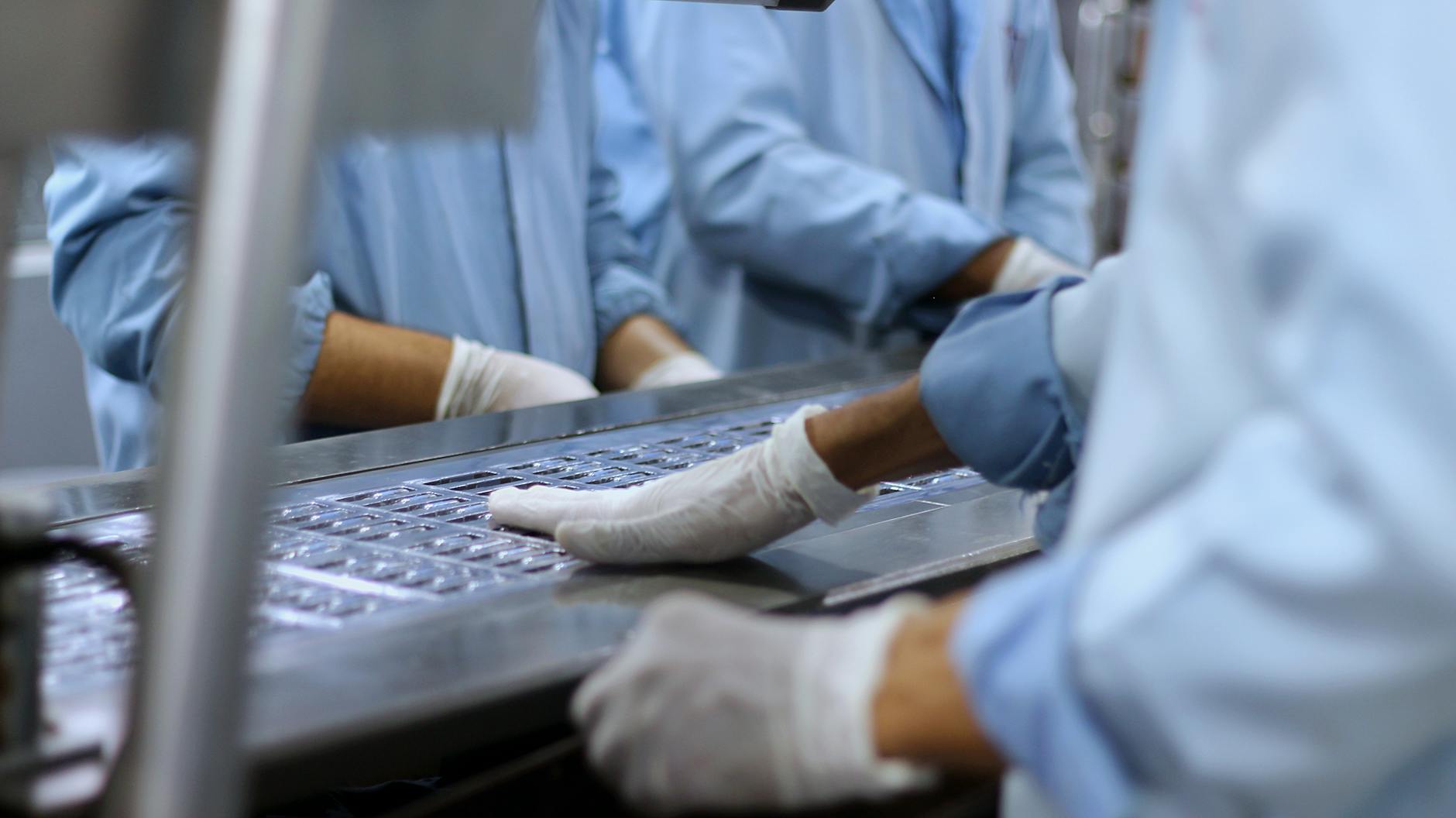
Taiwan Semiconductor Manufacturing Company's financial performance is inextricably linked to its unparalleled dominance in advanced chip manufacturing, particularly in nodes of 7-nanometer (N7) and below. The company reportedly holds a commanding 60% share of the entire foundry market and an even more impressive 90% share of advanced chip manufacturing. This technological leadership is a critical competitive moat, as it positions TSM at the forefront of the AI infrastructure build-out. High-performance computing (HPC), which encompasses complex AI workloads, contributed nearly 58% of TSM's fiscal 2025 revenue, demonstrating the profound impact of AI on its top line.
The demand for cutting-edge chips is not just real; it's soaring. Advanced chips, defined as N7 and below, accounted for a substantial 77% of TSM's fiscal 2025 wafer revenue. This revenue mix underscores the company's successful pivot towards higher-value, more technologically intensive products. Moreover, cloud service providers are increasingly approaching TSM directly to secure capacity, bypassing traditional chip designers, which further validates the intensity of demand for advanced nodes. This direct engagement highlights TSM's strategic importance and its ability to command premium pricing for its services.
Looking ahead, TSM expects its overall revenue to grow close to 30% in 2026, a robust projection driven by sustained demand across various segments. However, the growth in AI chip revenue is anticipated to be even more explosive, compounding at a mid-to-high 50% annually through 2029. This forecast reflects the ongoing expansion of AI applications and the increasing complexity of AI accelerators, which require TSM's most advanced manufacturing processes, such as the upcoming N2 and A16 nodes. The company's continuous investment in research and development, coupled with its deep relationships with virtually all mega-cap tech companies, ensures it remains the common denominator in the AI supply chain, translating technological leadership into formidable financial results.
Is TSM's Valuation Justified Amidst the AI Surge?
TSM's stock has experienced a significant run, soaring over 140% in the past year and currently trading at $395.95, just shy of its $421.97 52-week high. This impressive performance has inevitably led to questions about its valuation, especially given the broader enthusiasm surrounding AI stocks. Despite the rapid appreciation, TSM appears to trade at a compelling valuation relative to its historical averages and the broader tech sector. The stock is currently trading at a 23% discount to its 10-year highs at 26.0x forward 12-month earnings. Furthermore, it trades at a 7% discount to the overall Tech sector, even with its consistent near-term and long-term outperformance.
This valuation discrepancy suggests that the market may not be fully pricing in TSM's unique position and its projected growth trajectory, particularly in the AI segment. While some AI stocks trade at exorbitant forward price-to-sales multiples of 100x or more, TSM's more conservative earnings multiple provides a margin of safety. The company's robust balance sheet and consistent dividend payments further enhance its appeal, offering both growth potential and shareholder returns. The ability to generate strong cash flow supports its substantial capital expenditures, which are necessary to maintain its technological edge and expand capacity to meet surging AI demand.
The key to sustaining TSM's strong price action lies in its continued deepening of its moat with advanced nodes like N2 and A16. As the company continues to innovate and deliver cutting-edge manufacturing capabilities, it reinforces its indispensable role for customers like Apple, Nvidia, Broadcom, Amazon, AMD, and Google. These relationships, which collectively represent trillions in market capitalization, ensure a steady stream of demand for TSM's services. While a pullback is always possible given the stock's recent surge and near overbought RSI levels on a 10-year timeframe, the underlying fundamentals and strategic importance suggest that TSM's valuation remains justified by its growth prospects and market leadership.
What Are the Key Risks and Opportunities for TSM Investors?
Investing in Taiwan Semiconductor Manufacturing Company (TSM) comes with a distinct set of risks and opportunities that investors must carefully weigh. On the risk side, geopolitical tensions, particularly concerning Taiwan's relationship with mainland China, remain a significant overhang. Any escalation could severely disrupt TSM's operations and the global semiconductor supply chain, introducing an unpredictable element of risk. Furthermore, the capital-intensive nature of semiconductor manufacturing requires continuous, massive investments in new fabs and R&D. While TSM has proven adept at managing this, any misstep in capacity planning or technological transitions could impact future profitability and market share.
Another potential risk stems from increased competition, particularly from Intel (INTC), which is receiving substantial funding from the U.S. government to bolster its foundry capabilities. While TSM currently holds a dominant lead in advanced nodes, Intel's renewed focus on foundry services could introduce competitive pressures in the long term. Cyclicality in the broader semiconductor market also presents a risk; while AI demand is strong, a downturn in other segments like smartphones or PCs could temporarily dampen overall revenue growth. Third Point's decision to trim its TSM position, citing "geopolitical risk, capex intensity, and cyclical normalization," underscores these concerns.
However, the opportunities for TSM are equally compelling. The relentless expansion of artificial intelligence, machine learning, and high-performance computing ensures a sustained, multi-year demand cycle for its advanced chips. TSM's technological leadership, with its roadmap for N2 and A16 nodes, solidifies its position as the preferred foundry for cutting-edge designs. The company's ability to consistently deliver superior process technology allows it to capture a disproportionate share of the value created by the AI buildout. Furthermore, TSM's diversified customer base, spanning virtually all major tech innovators, provides a degree of resilience against the fortunes of any single client or end-market. The ongoing trend of hyperscalers developing custom AI silicon also funnels directly into TSM's fabs, securing its future growth.
The Bottom Line
Taiwan Semiconductor Manufacturing Company (TSM) remains an indispensable pillar of the global technology landscape, particularly in the burgeoning AI sector. Despite some institutional investors like Third Point trimming positions due to geopolitical and cyclical concerns, the overwhelming sentiment, particularly from growth-focused funds like Coatue Management, points to TSM's enduring strategic importance. Its unparalleled dominance in advanced chip manufacturing, coupled with robust revenue growth projections for AI-related segments, positions TSM as a compelling long-term investment. While the stock has seen significant appreciation, its valuation still offers an attractive entry point for investors seeking exposure to the foundational infrastructure of the AI revolution.
Want deeper research on any stock? Try Kavout Pro for AI-powered analysis, smart signals, and more. Already a member? Add credits to run more research.
Related Articles
Are Bitcoin ETFs Signaling a 'Smart Money' Exit
Category
You may also like

Prediction: Taiwan Semiconductor Could Be the Smartest AI Bet in the Market

TSM, SK Hynix, Samsung & Importance of Global Big Tech Beyond Mag 7

Dow Jones AI Leader Caterpillar, Nvidia Chipmaker TSMC In Buy Zones
Breaking News
View All →Featured Articles
Top Headlines

Small Caps Lead Stock Market Higher As Dow Rises To Record; Amazon, ASML, Tesla In Or Near Buy Zones

Amazon.com Shareholders Back Board as Jassy Touts AI, AWS Growth at Annual Meeting

Nvidia CFO on trillion-dollar future for Blackwell & Vera Rubin

Meta Platforms: A Call Option On The AI Race