MarketLens

Log in

Why is Uber Betting on Everyone Else's Self-Driving Tech

2 days ago
SHARE THIS ON:

Why is Uber Betting on Everyone Else's Self-Driving Tech

Key Takeaways

  • Uber's strategic pivot to an "asset-light" partnership model for autonomous vehicles (AVs) is a calculated move to dominate the future of mobility without incurring massive R&D costs.
  • This approach leverages Uber's existing global network and customer base, positioning it as the indispensable platform for multiple AV developers, rather than a direct competitor.
  • While the strategy promises higher long-term margins and reduced capital expenditure, investors must weigh execution risks, regulatory hurdles, and intense competition in the evolving AV landscape.

Why is Uber Betting on Everyone Else's Self-Driving Tech?

Uber Technologies (NYSE: UBER) is currently trading at $72.17, reflecting a market capitalization of $148.53 billion. The company has been on a fascinating journey, particularly concerning its autonomous vehicle (AV) ambitions. Once a heavy investor in its own self-driving division, the Advanced Technologies Group (ATG), Uber spent over $1 billion before divesting the unit in 2020. This wasn't a retreat from autonomy, but a strategic pivot – a recognition that building proprietary AV technology is a capital-intensive, high-risk endeavor best left to specialists.

This shift marks Uber's transformation from an aspiring AV developer to an "asset-light" orchestrator. Instead of owning the entire value chain, Uber now aims to be the central platform connecting riders with a diverse ecosystem of robotaxi providers. This strategy is rooted in the belief that its core strength lies in demand aggregation, routing, pricing, and customer access, not in developing the complex hardware and software stack of self-driving cars. It’s a pragmatic response to the immense technical and financial challenges of AV development, allowing Uber to hedge its bets across multiple technologies and partners.

The business rationale is compelling: by outsourcing the heavy lifting of AV development, Uber avoids the multi-billion-dollar R&D outlays and the significant operational risks associated with maintaining a proprietary AV fleet. This capital discipline is crucial for a company that has only recently achieved consistent profitability. The goal is to capture a substantial share of the future autonomous mobility market by leveraging its established brand and user base, positioning itself as the indispensable "operating system for movement" regardless of who builds the robotaxis. This approach could unlock higher margins and robust free cash flow in the long run, fundamentally reshaping its economic model.

How is Uber Building its Autonomous Vehicle Ecosystem?

Uber's strategy is to become the world's "largest facilitator of AV trips" by 2029, aiming to offer autonomous rides in 15 cities by the end of 2026. This ambitious goal is underpinned by a dizzying array of partnerships, numbering over 20 with automakers and self-driving technology startups globally. These collaborations span the entire AV value chain, from software and fleet maintenance to charging infrastructure and even in-vehicle user interfaces.

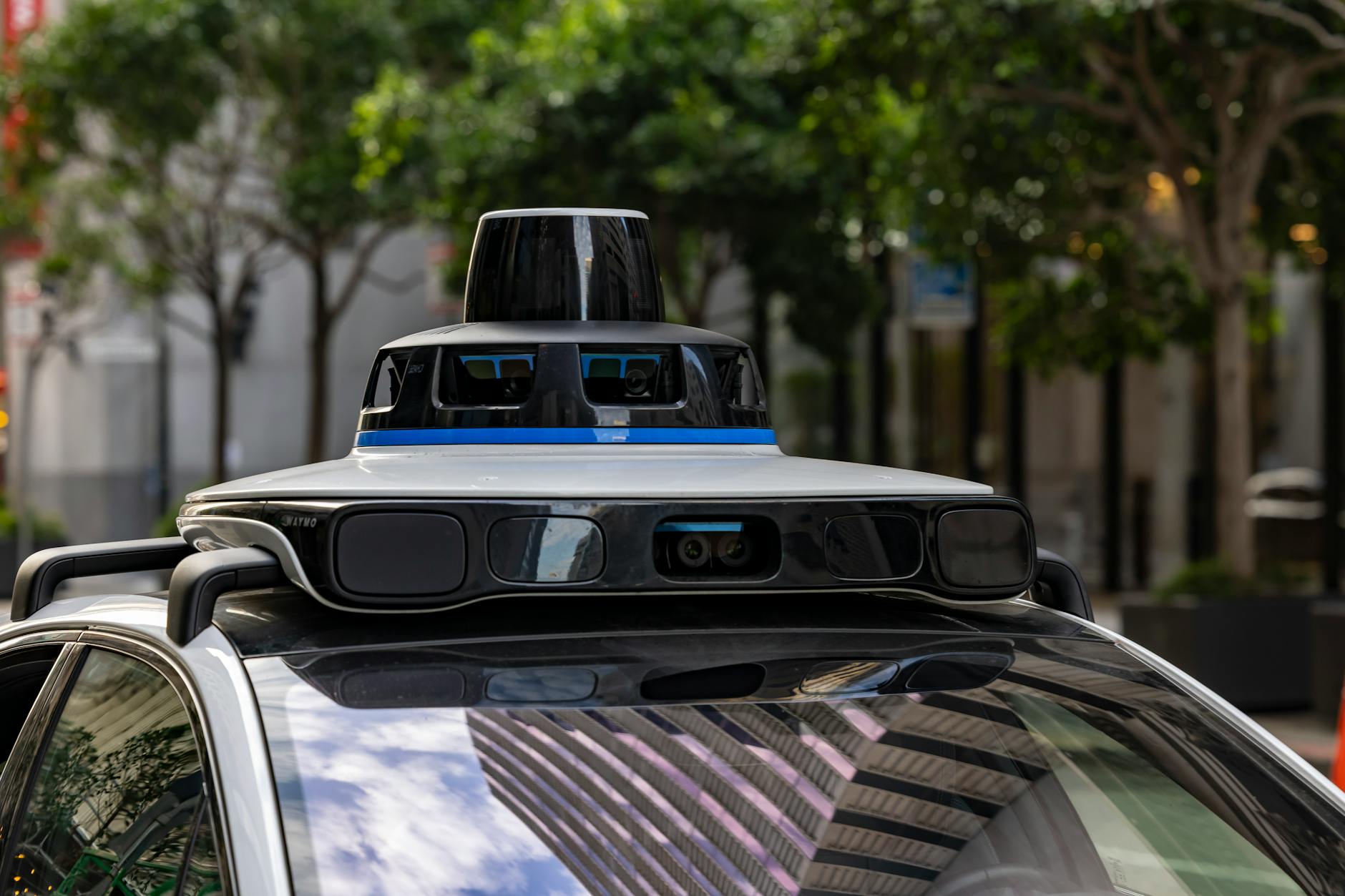
In the U.S., Uber has inked deals with prominent players like Waymo and Nuro, and is expanding its reach with partnerships such as Zoox in Las Vegas and Los Angeles, and May Mobility in Arlington. A significant three-way partnership with Lucid and Nuro involves Uber purchasing 20,000 Lucid Gravity SUVs, equipped with Nuro's autonomous tech, expected to launch in San Francisco this year. Beyond passenger rides, Uber is extending its autonomous ambitions to delivery with Avride’s Uber Eats robots and autonomous cargo hauling with Aurora on the Uber Freight network. This broad diversification ensures Uber isn't reliant on any single technology or partner, spreading risk and increasing its chances of success as the AV landscape evolves.

The company is also investing $100 million to build fast-charging stations for its AV fleet, teaming up with networks like EVgo in the U.S. and Ionity in Europe. This commitment to infrastructure highlights Uber's intent to support its partners and ensure seamless AV operations. Furthermore, its new Autonomous Solutions initiative provides partners with critical tools like AV training data, customer service, fleet operations support, and a remote-assistance platform. This comprehensive ecosystem approach allows Uber to integrate various AV solutions into its platform, offering a unified experience to riders while offloading the immense capital and technical burden of AV development to its partners.

What Does This Mean for Uber's Financials and Profitability?

Uber's shift to an asset-light AV strategy is designed to significantly enhance its long-term financial profile, particularly by reducing capital expenditures and boosting margins. Historically, developing self-driving technology in-house was a massive drain on resources, contributing to years of losses. By partnering, Uber avoids the $10 billion+ upfront costs and ongoing R&D associated with building and maintaining its own AV fleet. This allows the company to leverage its strong cash flow from the core ride-hailing and delivery businesses to fund strategic investments and partnerships, rather than speculative technology development.

The company reported $8.7 billion of adjusted EBITDA and $9.8 billion of free cash flow for 2025, both showing strong year-over-year growth. This financial strength provides the necessary capital to make strategic AV bets, such as the commitment of up to $1.25 billion in Rivian for 50,000 autonomous R2 SUVs by 2028. While these investments will initially pressure margins due to deployment costs, Uber aims for 20%+ EBITDA margins by 2029 from its AV operations, projecting over $20 billion in gross bookings from AVs. This target is significantly higher than its current TTM operating margin of 10.7% and net margin of 19.3%.

The core thesis is that as autonomy scales, Uber will benefit from lower unit costs and higher margins without assuming the capital risk of vehicle ownership or driving. The model resembles an annuity, where Uber captures 20-25% of every ride simply for delivering demand to AV operators. This is a powerful economic position: the automaker builds the vehicle, the AI drives it, and Uber owns the customer relationship and the margin. With a TTM P/FCF of 15.21 and an FCF yield of 6.6%, the market appears to be recognizing the potential for this strategy to generate substantial free cash flow, making Uber an attractive long-term play for investors focused on the convergence of autonomous and electric vehicles.

How Does Uber's Strategy Stack Up Against Competitors?

Uber's partnership-driven AV strategy fundamentally redefines its competitive positioning against rivals like Waymo, Tesla, and even Lyft. While Waymo and Tesla pursue vertically integrated models – building their own self-driving technology and operating their own fleets – Uber is carving out a niche as the indispensable platform. Waymo, a clear leader in commercial robotaxi deployment, still faces the challenge of building a consumer app and user base from scratch to rival Uber's global reach. Tesla, despite its "Robotaxi" narrative, is still largely focused on privately owned cars and has yet to scale a dedicated ride-hailing service.

Uber's advantage lies in its massive existing user base and established global network. Riders already have the Uber app installed and payment methods saved, creating a powerful network effect that new entrants struggle to replicate. Harry Campbell, founder of The Driverless Digest, notes that it's unlikely consumers will install separate apps for every new AV entrant. This "distribution first" strategy means AV companies find the fastest path to market is often by plugging into Uber's network, rather than competing with it. Uber's marketplace tech, with its sophisticated routing engine and dynamic pricing, is a significant moat that would take rivals years to develop.

Lyft, Uber's primary ridesharing competitor, has a more limited AV focus, primarily through a partnership with Waymo in Nashville. While Lyft's TTM net income margin of 45.03% is higher than Uber's 19.3%, Uber's scale (TTM revenue of $25.09 billion vs. Lyft's estimated $1.59 billion in 2025) and extensive AV ecosystem give it a long-term profitability edge. Uber's strategy is not about winning one narrow autonomy race, but about being present in all of them, ensuring that whatever form the future of transport takes, Uber remains the front door. This positions Uber to dominate the hybrid human-plus-AV network, potentially leaving vertically integrated players to compete for space on its platform.

What Are the Key Risks and Challenges for Uber's AV Play?

Despite the strategic advantages, Uber's autonomous vehicle ambitions are not without significant risks and challenges. The path to widespread AV adoption is fraught with regulatory hurdles, execution complexities, and intense competition. Regulatory scrutiny, particularly around AV safety, remains a major concern. Localized strikes and public acceptance issues, as seen in various cities, could slow deployment. Furthermore, the EU Platform Work Directive, with a deadline in late 2026, could force a reclassification of some contractors to employees, potentially increasing costs for Uber's human-driven segments and impacting its overall financial flexibility to invest in AVs.

Execution risk is substantial. While Uber is partnering with multiple players, integrating diverse technologies and ensuring seamless operation across different AV providers is a monumental task. High upfront costs for AV deployment, even with an asset-light model, will pressure short-term margins. The timeline for meaningful AV adoption remains uncertain, and Uber itself has admitted that AVs have not yet scaled meaningfully. There's no guarantee that all of Uber's 20+ partnerships will survive in the long term, as consolidation in the AV technology space is inevitable. If a few technology providers emerge as winners, some of Uber's current bets may not pay off.

The displacement of human drivers also presents a complex social and operational challenge. While AVs promise lower long-term operating costs by reducing driver expenses, the transition must be managed carefully to avoid backlash and ensure a stable supply of human drivers where AVs are not yet prevalent. Finally, competition from vertically integrated players like Waymo and Tesla could still pose a threat if they manage to drive vehicle costs low enough to negate Uber's utilization advantage. If these rivals can offer significantly cheaper rides through their own platforms, Uber's "distribution first" moat could be eroded, forcing a reevaluation of its long-term economic position.

What Does This Mean for Investors Considering Uber Stock?

For investors, Uber's current valuation reflects a company in transition, balancing established profitability with high-growth, high-potential future ventures. Trading at $72.17, Uber's P/E ratio of 14.89 is notably below the estimated fair ratio of 23.9x, the peer average of 26.7x, and the US Transportation industry at 31.9x. This suggests the market may be discounting Uber's long-term growth story, particularly its AV potential, or pricing in the inherent risks.

The company's TTM EPS of $4.85 and FCF per share of $4.71 demonstrate its current financial health. Analysts project healthy momentum, with 19-20% trip growth and 16% revenue growth expected in 2026, alongside strong margin expansion. This growth, coupled with a disciplined capital allocation strategy that includes share buybacks, positions Uber as a potential large-cap compounder.

While the AV strategy is a high-risk, high-reward bet, Uber's strong cash flow generation and global scale provide a solid foundation. The company is not just building buzz; it's building a robust ecosystem. Investors should monitor margin expansion, capital discipline, and the successful integration and scaling of its numerous AV partnerships.


Uber's strategic pivot to an asset-light AV model is a bold move that could redefine the future of mobility. While risks remain, the company's strong financial position and expansive partnership network make it a compelling long-term play. Investors willing to navigate the evolving autonomous landscape may find Uber well-positioned to capture significant value in the coming decade.


Want deeper research on any stock? Try Kavout Pro for AI-powered analysis, smart signals, and more. Already a member? Add credits to run more research.

SHARE THIS ON:

Related Articles

Category

You may also like

Stock News2 days ago

Why Uber Keeps Partnering Instead of Building Its Own Tech -- And What It Means For Investors

Uber has opted against developing proprietary self-driving vehicle hardware, choosing instead to leverage third-party partnerships. This strategy allows the company to capture value from autonomous te...
Stock News2 weeks ago

Is Uber's Mega Deal With Rivian a Game-Changer in the Robotaxi Space?

Uber's $1B-plus deal with Rivian to deploy 10,000 robotaxis may reshape autonomous ride-hailing as the company scales its global rollout plans.
Stock News1 months ago

What's Going On With Uber Stock On Monday?

Uber Technologies launched Uber Autonomous Solutions on Monday to accelerate autonomous vehicle commercialization. This new unit signals a strategic push into the AV sector.
Stock News2 months ago

Is Most-Watched Stock Uber Technologies, Inc. (UBER) Worth Betting on Now?

Uber Technologies (UBER) received significant user attention recently from Zacks.com readers. Investors should analyze key facts impacting the stock's future prospects.

Breaking News

View All →

Top Headlines

View More →
Stock News28 minutes ago

Crude Rises Near $100 as Iran Questions Ceasefire, CRWV Expands META Deal

Stock News39 minutes ago

Tesla Stock Just Triggered A Death Cross — And Cathie Wood Is Betting Millions Against It

Stock News49 minutes ago

Want to Invest in Artificial Intelligence (AI) but Scared of the Volatility? This 1 Stock Is Built for Uncertain Markets.

Stock News1 hour ago

Amazon Pharmacy to Offer Eli Lilly and Company's New GLP-1 Pill Foundayo via Same-Day Delivery

Stock News1 hour ago

AMZN, AAPL and NFLX Forecasts – US Tech Stocks Supported So Far