MarketLens
Why Singapore? OpenAI's Strategic Beachhead in Asia

Key Takeaways
- OpenAI's S$300 million (US$234 million) investment in Singapore for its first overseas Applied AI Lab, announced on May 20, 2026, marks a critical strategic move to accelerate enterprise adoption and global expansion.
- The initiative, dubbed "OpenAI for Singapore," focuses on deploying existing AI models to solve real-world problems, cultivating local talent, and expanding AI access across key sectors like public services, finance, and healthcare.
- Singapore's unique blend of a robust talent pool, proactive regulatory environment, and strategic position as an APAC hub makes it an ideal launchpad for OpenAI to scale its enterprise business and counter rising regional competition.
Why Singapore? OpenAI's Strategic Beachhead in Asia
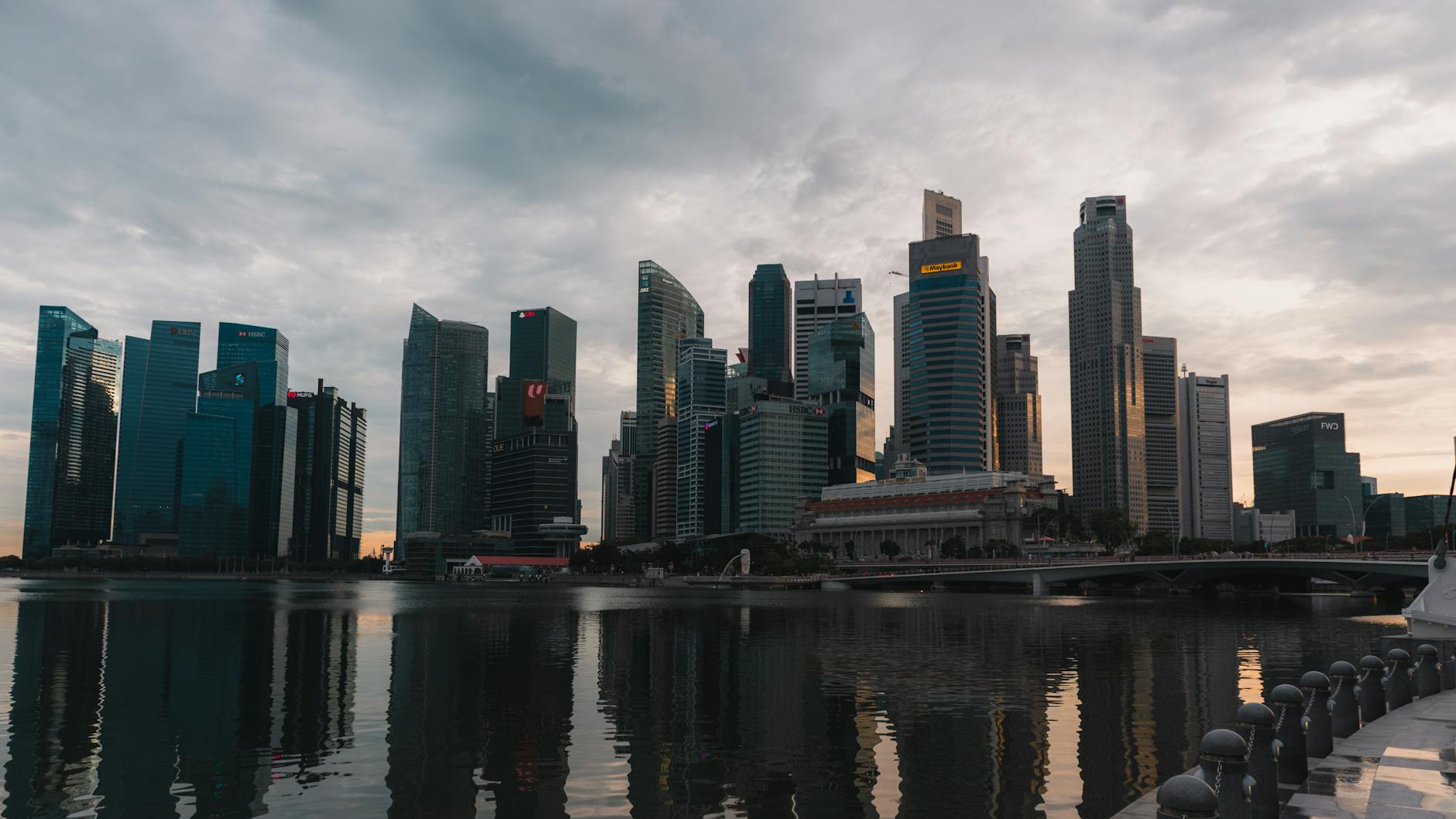
On May 20, 2026, OpenAI, the creator of ChatGPT, made a significant announcement that reverberated across the global technology landscape: the establishment of its first Applied AI Lab outside the United States, right in the heart of Singapore. This move, backed by a substantial commitment of S$300 million (approximately US$234 million), is far more than a mere expansion; it represents a calculated strategic gambit to deepen OpenAI's footprint in the crucial Asia-Pacific (APAC) market and accelerate the real-world deployment of its advanced AI models. The announcement was made during the ATxSummit, a flagship technology conference, and formalized through a Memorandum of Understanding (MOU) between OpenAI and Singapore’s Ministry of Digital Development and Information (MDDI).
OpenAI's Chief Revenue Officer, Denise Dresser, highlighted Singapore's "forward-leaning environment" and its strong appetite for AI products as key factors in the decision. The city-state has consistently ranked among OpenAI’s top markets for per capita adoption of ChatGPT and Codex, the company's agentic AI platform launched in May 2025. This existing high engagement signals a fertile ground for further AI integration. Furthermore, Singapore's reputation as a "trusted global hub for AI innovation" and its robust regulatory framework, including pioneering efforts like the Model AI Governance Framework, offer a stable and predictable environment for deploying powerful AI systems responsibly, a critical consideration given the intense scrutiny AI faces globally.
The choice of Singapore over other major Asian tech hubs like Tokyo, Seoul, Sydney, or Bangalore underscores the city-state's unique value proposition. It serves not just as a domestic market, but as a strategic gateway to the broader Southeast Asian and APAC region. The plan is for Singapore-based engineers to service customers across Indonesia, Vietnam, the Philippines, Malaysia, and Thailand, effectively establishing a hub-and-spoke model. This geographical advantage is particularly pertinent in a geopolitical climate where direct US-AI-company presence can be structurally challenging in certain markets, making Singapore a diplomatically neutral surface for scaled deployment.
What Does an "Applied AI Lab" Mean for OpenAI's Growth?
The "Applied AI Lab" designation is crucial to understanding OpenAI's strategic intent. Unlike a frontier research lab focused on developing entirely new AI models, this Singapore facility is primarily a deployment and partnerships unit. Its core mandate is to take OpenAI's existing model lineup – such as ChatGPT and Codex – and tailor them for practical applications within specific national policy frameworks and enterprise needs. This distinction is vital for investors to grasp: the lab is designed to monetize and scale current innovations, not necessarily to invent the next generation of AI.
At the heart of this applied approach are the "Forward-Deployed Engineers" (FDEs). OpenAI plans to hire more than 200 of these specialized AI professionals in Singapore over the next few years. FDEs are technical experts who bridge the gap between AI research and real-world implementation. They will work directly with local companies and government agencies, embedding themselves with partners to understand their hardest problems and build custom solutions using OpenAI’s advanced models. This hands-on approach is designed to overcome common hurdles in AI adoption, such as messy data, legacy systems, and compliance checks, which often derail promising AI pilots from moving into daily operations.
The lab's work will explicitly align with Singapore’s national AI priorities, focusing on high-impact sectors. These include public services, where AI can reimagine citizen services; finance, for applications like fraud detection and risk assessment; healthcare, to amplify doctor expertise and support patient care; and digital infrastructure, to enhance efficiency and resilience. OpenAI’s Chief Revenue Officer, Denise Dresser, noted that the enterprise segment, currently accounting for 40% of OpenAI’s overall revenue, is expected to reach 50% by the end of 2026, driven partly by rising adoption of Codex and the deployment of FDEs. This Singapore lab is a direct accelerator for that enterprise growth, showcasing how OpenAI is moving beyond consumer-facing products to become an indispensable enterprise solution provider.
How Will This Investment Impact Regional Talent and Ecosystem?
OpenAI's S$300 million commitment extends beyond just establishing a physical lab; it encompasses a comprehensive strategy to cultivate local AI talent and foster a vibrant AI ecosystem in Singapore and, by extension, the broader APAC region. This multi-pronged approach is designed to ensure that the benefits of frontier AI reach "every layer of the economy," not just large enterprises or the technology builders themselves. The initiative, branded "OpenAI for Singapore," is built on three pillars: deploying frontier AI, building AI talent, and expanding access to AI tools.
A key component of the talent development pillar is the launch of a forward-deployed engineer training program. This program aims to train mid-career software engineers in building real-world AI systems, thereby creating a local pipeline of specialized AI deployment talent. This is a smart move, as it addresses the critical shortage of skilled AI professionals and ensures the sustainability of OpenAI's operations in the region. Furthermore, OpenAI will collaborate with Singapore’s education sector on capability-building programs, including a Singapore chapter of the OpenAI Academy and "Codex for Teachers" hackathons. These initiatives are designed to support teacher-led and responsible use of AI, even exploring applications like using AI to help students learn indigenous languages effectively.
Beyond direct training, OpenAI will also work with local organizations on AI accelerator programs for AI-native startups and organize AI workshops for micro-entrepreneurs and small and medium-sized enterprises (SMEs). This broad-based approach to talent and ecosystem development is crucial for generating widespread AI adoption. By empowering local startups and smaller businesses to leverage AI, OpenAI is not only expanding its potential customer base but also embedding its technology deeply within the economic fabric of Singapore. This strategy aligns perfectly with Singapore's updated National AI Strategy, announced by Minister for Digital Development and Information Josephine Teo, which aims to "help 10,000 enterprises use AI meaningfully" and strengthen the country's position as a location of choice for high-impact AI solutions.
What Are the Competitive and Geopolitical Implications?
OpenAI's strategic move into Singapore carries significant competitive and geopolitical implications, particularly within the increasingly crowded and sensitive APAC AI market. The timing of this announcement is noteworthy, coming shortly after the Trump-Xi Beijing summit earlier in May 2026, which confirmed that US-China AI policy is now being negotiated at the head-of-state level. In this context, Singapore's diplomatic neutrality offers a crucial advantage, allowing Western frontier-AI companies like OpenAI to deploy at scale without the political exposure that might accompany a launch in Tokyo or Seoul. This positions Singapore as a critical bridgehead for Western AI firms navigating complex regional dynamics.
The competitive landscape in APAC has intensified considerably over the past 18 months, with strong competition from Chinese model labs such as DeepSeek, Moonshot’s Kimi, and Alibaba’s Qwen. OpenAI’s Singapore lab is a direct structural answer to this competitive density, enabling the company to better service and understand regional customer needs, and to customize its offerings for local markets. This localized approach, driven by forward-deployed engineers, can provide a significant competitive edge over rivals who may adopt a more centralized, one-size-fits-all strategy. By embedding itself within the Singaporean ecosystem, OpenAI gains invaluable insights into regional preferences and regulatory nuances.
Furthermore, Singapore's strategy is not to be architecturally dependent on any single AI provider. The city-state also signed a parallel AI partnership with Google at the same ATxSummit, and has attracted commitments from other global AI players like Amazon's AWS, Microsoft, and Nvidia, which will launch an AI research lab focused on robotics and AI infrastructure in the country. This deliberate approach by Singapore to lock in concurrent partnerships with multiple leading AI firms ensures a diversified and robust AI ecosystem. For OpenAI, this means operating within a highly competitive yet collaborative environment, where the focus is on delivering tangible value and demonstrating leadership in applied AI solutions to secure its market share.
What Does This Mean for OpenAI's Future Valuation and Market Position?
While OpenAI is not a publicly traded company, its strategic moves, such as the Singapore Applied AI Lab, are critical indicators for its long-term valuation and market position, especially as it eyes a potential future IPO. This S$300 million investment signals a clear intent to aggressively expand its enterprise revenue streams and establish global dominance beyond its initial consumer-facing success with ChatGPT. The focus on "applied AI" and "forward-deployed engineers" is a direct pathway to solving complex, high-value problems for governments and large corporations, which typically command higher margins and more stable, recurring revenue compared to consumer subscriptions.
The Singapore lab's alignment with national priorities in public services, finance, healthcare, and digital infrastructure provides OpenAI with a unique opportunity to develop robust case studies and scalable solutions. These successful deployments in a highly regulated and technologically advanced market like Singapore can then serve as blueprints for expansion into other APAC countries and even globally. For instance, a proven AI system for financial oversight developed in Singapore could be highly attractive to other financial hubs. This "beacon and a model" strategy, as Denise Dresser described it, is essential for de-risking future international expansion and demonstrating the tangible economic impact of OpenAI's technology.
Moreover, by cultivating a deep talent pool and fostering a local AI ecosystem, OpenAI is building a sustainable competitive advantage. The ability to draw on Singapore's diverse and multilingual talent pool, coupled with the creation of a local pipeline of specialized AI deployment engineers, reduces reliance on expensive expatriate talent and strengthens local ties. This localized approach, combined with the strategic geopolitical positioning, enhances OpenAI's credibility and trustworthiness in a region where data sovereignty and regulatory compliance are paramount. Ultimately, this investment positions OpenAI not just as a developer of cutting-edge AI models, but as a critical partner in building AI-powered economies, a role that will be highly valued by investors should the company eventually go public.
OpenAI's S$300 million bet on Singapore is a shrewd strategic play, solidifying its enterprise ambitions and establishing a crucial hub for APAC expansion. This move, announced on May 20, 2026, underscores the company's commitment to real-world AI deployment and talent development, positioning it strongly against rising competition and complex geopolitical currents. For investors, it signals a maturing business model focused on deep integration and sustainable growth in key global markets.
Want deeper research on any stock? Try Kavout Pro for AI-powered analysis, smart signals, and more. Already a member? Add credits to run more research.
Related Articles
Is Las Vegas Sands' Recovery in Asia Sustainable
Why Did OpenAI Buy a Tech Talk Show
Category
You may also like


What we learned about Microsoft in the OpenAI trial, and is Seattle squandering its edge?

Firms in Asia Pacific Use ServiceNow to Build AI Operations

OpenAI Pushes Five Principles to Block Superintelligence Monopoly as TAO Networks Gain Ground
Breaking News
View All →Featured Articles
Why Did a Major Investor Trim ESTA
Top Headlines

Jensen Huang Used 1 Word to Describe AI Demand. It Could Be the Most Important of 2026.

Warren Buffett Successor Greg Abel Made 3 Big Purchases Last Quarter, and They're All Exceptional Performers

QQQ's Hidden Risk: Why the Fund's Top 5 Holdings Move Together

1 Overlooked Reason to Buy Amazon Stock Right Now