MarketLens
Why Wall Street Is Betting Big on $5,000 Gold

Something unusual is happening in the world of gold. For decades, the yellow metal has been the punchline of investment jokes—the dusty relic your grandfather kept in a safe deposit box. But walk into any major investment bank today, and you'll find analysts making projections that would have seemed absurd just five years ago: gold at $5,000 per ounce by the end of 2026.
This isn't fringe thinking. Deutsche Bank sees gold approaching $4,950 next year and breaking $5,000 in 2027. Bank of America is projecting a potential $5,000 peak with an average price of $4,538 for 2026. Goldman Sachs surveyed over 900 institutional clients, and nearly 70% expect gold to climb higher—with more than a third specifically betting on $5,000 by year's end.
So what changed? And more importantly, what does this mean for everyday investors trying to protect and grow their wealth?
The World's Central Banks Know Something We Don't
Let's start with the most important shift happening beneath the surface: central banks around the world are buying gold like their financial lives depend on it.
Since 2022, central banks have been purchasing over 1,000 tonnes of gold annually—roughly double what they bought in the previous decade. The third quarter alone saw 220 tonnes of purchases, one of the highest quarters on record. Goldman Sachs expects this pace to continue, with monthly purchases averaging around 80 tonnes through 2026.
But here's what really matters: this isn't speculative buying. Central banks don't care whether gold hits $4,000 or $5,000 next month. They're making strategic, decades-long decisions about how to protect their nations' wealth. And increasingly, they're concluding that keeping all their eggs in the dollar basket is risky.
The wake-up call came in 2022, when Western nations froze hundreds of billions of dollars in Russian foreign currency reserves. Whatever you think about the geopolitics involved, the message was received loud and clear in Beijing, Riyadh, and a dozen other capitals: dollar-denominated assets can be weaponized.
Gold sitting in your own vault? Nobody can freeze that. Nobody can sanction it. It's the ultimate neutral asset in an increasingly fractured world. For the first time in nearly thirty years, central bank gold reserves have surpassed their holdings of U.S. Treasuries. That's not a blip—it's a structural shift in how the world thinks about money.
America's Debt Problem Isn't Going Away
If you've been paying attention to the news, you've probably heard about the national debt. But the numbers are so astronomical that they've lost all meaning. So let me put it in perspective.
The U.S. debt-to-GDP ratio has climbed above 120%. Annual interest payments now exceed $1 trillion—more than what we spend on defense. That's not a typo. We're paying more to service our debt than we spend on the entire military.
History tells us there are really only three ways out of this kind of debt spiral: default (unthinkable for the world's reserve currency), brutal austerity (politically impossible), or inflation—gradually eroding the real value of the debt by letting the currency lose purchasing power.
Sophisticated investors see where this is heading. Bank of America explicitly links its $5,000 gold forecast to what it diplomatically calls "unorthodox policy frameworks in Washington." Translation: they expect the government to keep spending and eventually let inflation run a bit hotter than they'd publicly admit.
Gold has been the classic hedge against currency debasement for thousands of years. When paper money loses value, gold tends to hold its purchasing power. That's not ideology—it's math.
This Rally Is Different From 1980 and 2011
If you're old enough to remember the gold spikes in 1980 or 2011, you might be skeptical. Those rallies ended in painful crashes that burned a lot of investors. So why should we believe this time is different?
The 1980 peak was driven by oil crises and double-digit inflation. Retail panic and speculation pushed prices to unsustainable levels. When Paul Volcker jacked up interest rates to 20%, gold collapsed.
The 2011 peak came after the financial crisis, when central banks were flooding the world with cheap money. ETF investors and retail safe-haven seekers piled in. When the crisis passed and monetary policy began normalizing, gold drifted lower for years.
Today's rally has a fundamentally different character. The buying isn't coming from panicked retail investors or momentum-chasing hedge funds. It's coming from central banks and institutional investors making long-term strategic allocations. That type of demand is what analysts call "inelastic"—it doesn't respond to short-term price swings.
Here's another telling detail: gold has been rising even when the dollar has been strong. That breaks the historical pattern where gold and the dollar move inversely. It suggests that the structural forces—de-dollarization, fiscal concerns, geopolitical hedging—are overwhelming the traditional currency relationships.
In inflation-adjusted terms, the 1980 peak of $850 translates to roughly $3,000-$3,300 in today's dollars. Gold has already traded well above that level. We're not just revisiting old highs—we're in uncharted territory.
The Risks You Need to Understand
I'd be doing you a disservice if I only talked about the bull case. There are real risks that could derail the $5,000 forecast, and you need to understand them before putting money to work.
Risk #1: The Fed Stays Hawkish
The current forecasts assume the Federal Reserve will cut interest rates in 2026. If inflation proves stickier than expected, or the economy runs hotter than anticipated, those cuts might not come. Higher real interest rates make Treasury bonds more attractive relative to non-yielding gold.
Deutsche Bank's price range acknowledges this risk—they see gold potentially trading as low as $3,950 in a hawkish scenario. That's still a strong level, but it would represent a meaningful pullback from current prices.
Risk #2: A Market Crash Could Hurt Gold First
This one surprises people. Isn't gold supposed to be a safe haven? Yes, but in the initial phase of a severe market crash, fund managers often have to sell their most liquid, best-performing assets to meet margin calls. Gold, having performed well and being highly liquid, can get caught up in the liquidation wave before its safe-haven properties kick in.
We saw this briefly in March 2020. Gold dropped sharply in the initial COVID panic before rallying strongly. If you're buying gold as crash insurance, you need the stomach to hold through that initial volatility.
Risk #3: The Bandwagon Effect
Strong price performance attracts momentum investors who buy because the price is going up, not because they understand the structural thesis. These bandwagon buyers can push prices beyond what fundamentals support, setting up sharp corrections when sentiment turns.
2025 has already seen the widest gold price volatility since 1980. That's a double-edged sword—it creates the conditions for rapid moves toward $5,000, but also for stomach-churning pullbacks along the way.
How to Think About Gold in Your Portfolio
So what should you actually do with all this information? Let me share how some of the smartest money managers are thinking about gold allocation.
Ray Dalio, founder of Bridgewater Associates (the world's largest hedge fund), suggests around 15% of a portfolio in gold for strategic asset allocation. Sprott, the precious metals specialist, recommends a permanent 10% position. Jeffrey Gundlach of DoubleLine, known for his bond expertise, has suggested that 25% might not be excessive given current conditions.
The common thread? These aren't traders trying to time the market. They're treating gold as portfolio insurance—protection against the specific political and fiscal risks of our era.
Gold's superpower isn't that it always goes up. It's that it tends to perform well precisely when your stocks and bonds are getting hammered—during periods of high inflation, currency crises, or systemic financial stress. That negative correlation makes it valuable even if you're not particularly bullish on the price.
Choosing Your Vehicle: Physical, ETFs, or Miners
If you decide gold deserves a place in your portfolio, you'll need to choose how to own it. Each option has trade-offs.
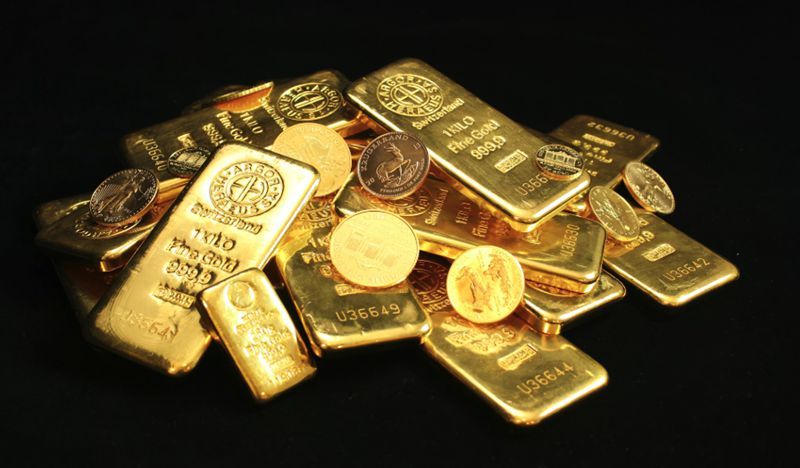
Physical gold (coins, bars) is the purest form of ownership. No counterparty risk, no dependence on financial institutions. If you're truly worried about systemic collapse, physical gold in secure storage is your answer. The downside: storage costs, insurance, and the hassle of buying and selling.
Gold ETFs offer convenience and liquidity. You can buy and sell in seconds through your brokerage account. Physically-backed ETFs hold actual gold in vaults. The trade-off is that you're trusting the fund issuer and custodian—there's a layer of counterparty risk between you and the metal.
Gold mining stocks offer leverage to the gold price. When gold rises, miners' profits can increase disproportionately. But you're also taking on operational risk, management risk, and political risk depending on where the mines are located. Mining stocks are for investors who want exposure to the gold thesis with higher risk and higher potential reward.
Many sophisticated investors use a combination—physical gold for the worst-case scenarios, ETFs for tactical allocation, and select miners for alpha generation.
The Bottom Line
The $5,000 gold forecast isn't a guarantee—nothing in investing ever is. But it's grounded in structural forces that aren't going away: central banks diversifying out of dollars, unsustainable government debt, and a world increasingly hedging against geopolitical risk.
The path to $5,000 won't be straight. Expect volatility, pullbacks, and moments when you question the thesis. That's normal. The question isn't whether gold will move in a perfectly smooth line upward. The question is whether the structural forces driving this rally are real and durable.
The evidence suggests they are. And that's why some of the world's most sophisticated investors—and the central banks that manage trillions in reserves—are betting that gold's role in the global financial system is only going to grow from here.
Disclaimer: This article is for informational purposes only and does not constitute investment advice. Gold investments carry risk, including the potential loss of principal. Consult with a qualified financial advisor before making investment decisions.
Related Articles
Category
You may also like
No related articles available
Breaking News
View All →No topics available at the moment