The AlphaFold Breakthrough
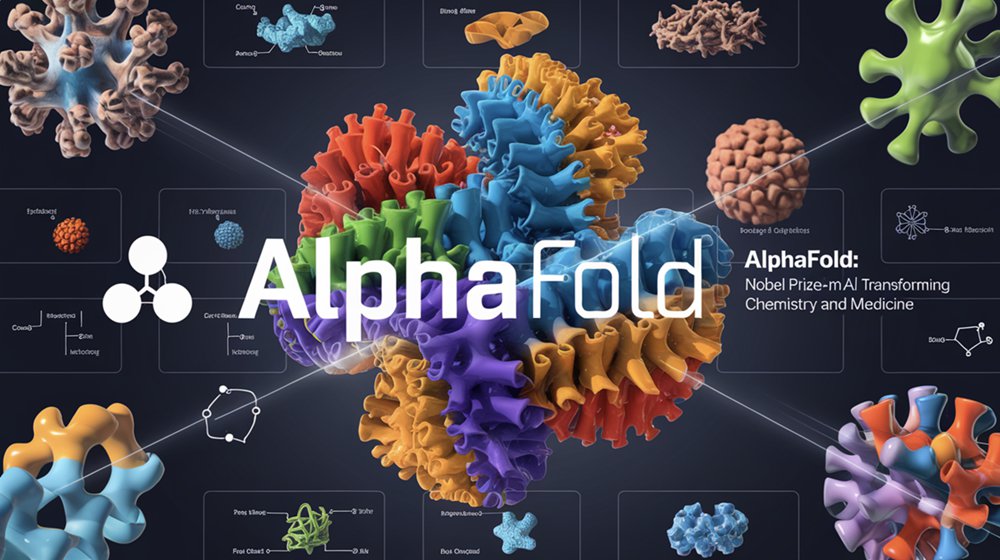
AlphaFold’s journey began with its participation in the Critical Assessment of Structure Prediction (CASP) competitions, where it demonstrated unprecedented accuracy in predicting protein structures. The system’s ability to achieve a median Global Distance Test (GDT) score of 92.4 out of 100, comparable to experimental techniques like X-ray crystallography, marked a significant leap in computational biology. This achievement addressed a 50-year-old problem in biology, overcoming challenges posed by Levinthal’s paradox, which highlights the complexity of protein folding.
The development of AlphaFold underscores the importance of open data, as it was trained on publicly shared structural data curated over decades. Its predictions have facilitated new insights across various biological fields, leading to over one million users and thousands of scientific papers referencing AlphaFold. The AlphaFold Protein Structure Database, launched in July 2021, contains predictions for over 200 million protein structures, covering nearly all cataloged proteins known to science.
Impact on Drug Discovery
AlphaFold’s implications for drug discovery are profound, as it provides researchers with highly accurate predictions of protein structures, which are essential for understanding biomolecular interactions in drug development. The AI tool has reshaped structural biology, enabling scientists to explore new insights into proteins and their interactions, potentially leading to novel drug designs.
One of the key advantages of AlphaFold is its ability to accelerate target identification, allowing researchers to predict structures of previously unknown or difficult-to-study proteins. This capability reduces the time from target identification to hit discovery, significantly speeding up the drug discovery process. By providing reliable structural information earlier in the drug discovery process, AlphaFold enhances the design of molecules that can bind with specific targets, improving drug specificity and affinity.
Moreover, AlphaFold aids in understanding complex protein-protein interactions (PPIs), which are crucial for diseases like cancer. Its predictions help researchers design drugs that can modulate these interactions, paving the way for more effective treatments. The AI tool also enables personalized medicine by providing insights into how genetic mutations affect protein structure, facilitating the design of drugs targeting mutated proteins, which could lead to more effective treatments for genetic disorders and cancers.
Advancements in Medicine
AlphaFold’s contributions to medicine extend beyond drug discovery, as it plays a crucial role in understanding diseases and developing new treatments. The AI system has already contributed to COVID-19 research by predicting the structures of viral proteins, critical for designing vaccines and antiviral drugs. Its ability to predict protein structures with remarkable accuracy allows scientists to explore protein interactions, study how proteins behave in their cellular environments, and investigate the dynamics of protein folding—crucial for understanding diseases like Alzheimer’s and Parkinson’s, which are linked to protein misfolding.
The AlphaFold Protein Structure Database acts as a “Google search” for protein structures, providing researchers with a powerful tool for scientific discovery. This freely accessible database has been utilized by over two million researchers worldwide, accelerating progress in fundamental biology and related fields. The ability to predict protein structures facilitates advancements in various areas, including drug development and vaccine creation, demonstrating AI’s capability to enhance scientific discovery.
Recognition and Future Prospects
The significance of AlphaFold’s Nobel Prize win lies in its groundbreaking contributions to the field of chemistry through AI. The Nobel committee described AlphaFold2 as a “stunning breakthrough” that could drastically accelerate the development of medical treatments. Hassabis and Jumper emphasized the potential of AI as a tool to enhance scientific knowledge and expedite research processes from years to months, highlighting the collaborative nature of the project.
Looking ahead, AlphaFold’s future applications in medical research and treatment development are significant, particularly in enhancing drug discovery processes. AlphaFold 3, developed by Google, is designed to assist researchers in understanding molecular interactions and predicting the effectiveness of drug structures against diseases. This capability is crucial as clinical drug development projects typically have a lengthy timeline, taking several years with a 90% failure rate. By utilizing AI like AlphaFold, researchers can identify promising drug candidates more quickly, thus facilitating faster progression to clinical trials and ultimately helping more patients.
Conclusion
AlphaFold represents a transformative leap in computational biology, revolutionizing the fields of chemistry and medicine with its AI-driven protein prediction capabilities. Its ability to accurately predict protein structures has not only earned its creators the 2024 Nobel Prize in Chemistry but has also opened new avenues for scientific exploration and innovation. By accelerating drug discovery, enhancing disease understanding, and providing researchers with a powerful tool for scientific discovery, AlphaFold is poised to advance science in chemistry and medicine, ultimately improving human health and well-being. As AI continues to evolve, the potential for further breakthroughs in these fields remains vast, promising a future where scientific discovery is faster, more efficient, and more impactful than ever before.