American Express: Why Long-Term Investment Is Weighing on Today's Stock Price

Key Takeaways
- American Express's Q2 2026 earnings beat and reaffirmed strong full-year guidance were met with a significant stock decline, signaling market apprehension about the costs of its growth strategy.
- The company's aggressive reinvestment in marketing, technology, and premium product enhancements is successfully driving robust card member spending and fee growth, particularly among younger demographics.
- Despite a compelling growth narrative and a "Hold" consensus from analysts, AXP's lower profit margins compared to network peers and looming regulatory pressures present a bear case that investors are currently scrutinizing.
The Market's Short-Term Jitters vs. Amex's Long Game
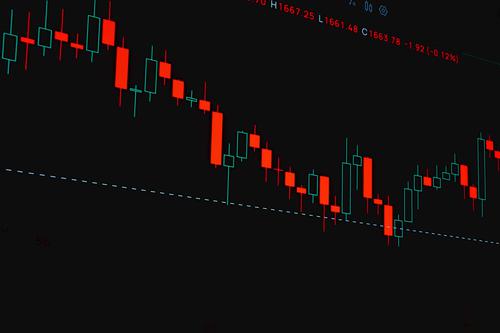
American Express Company (AXP) finds itself at a peculiar crossroads. On July 24, 2026, the financial services giant reported a strong second quarter, surpassing analyst expectations for both revenue and earnings per share. Yet, the market's reaction was swift and negative, with shares declining 5.13% to trade at $323.37, wiping out over $11 billion from its $220.64 billion market capitalization. This immediate sell-off, despite a beat on headline numbers and a reiterated full-year 2026 guidance for 9% to 10% revenue growth and EPS of $17.30 to $17.90, highlights a growing tension between American Express's long-term strategic investments and the market's demand for short-term margin expansion.
The paradox is clear: a company delivering on its financial promises and projecting continued robust growth is being punished. This suggests investors are looking beyond the top-line figures, focusing instead on the underlying costs of maintaining American Express's premium moat and the potential for these investments to compress operating margins. The "policy shock" regarding interest rate caps, first noted in early 2026, and intensifying competition in the premium card space are also casting a shadow, forcing the market to question the sustainability of Amex's growth trajectory without significant expense.
Premiumization Fuels Spending and Fee Income
American Express's second-quarter performance underscored the strength of its spend-centric model. The company reported Q2 2026 EPS of $4.53, comfortably beating estimates, on revenues of $19.6 billion. This follows a strong Q1 2026 where EPS reached $4.28 on $18.9 billion in revenue, also exceeding analyst projections. CEO Stephen J. Squeri highlighted record Card Member spending during the quarter, attributing it to strong demand for premium products and compelling credit performance.
The company's strategy of attracting and retaining affluent cardholders, particularly younger demographics, is paying dividends. Millennials and Gen Z now account for over 70% of new global account acquisitions, and their spending growth significantly outpaces older cohorts. Millennials showed a 13% gain in spending, while Gen Z spending surged by 38%. This generational shift reinforces American Express's focus on premium customers and recurring revenue streams, as more than 70% of new accounts globally are opened on fee-paying cards.
The "Platinum refresh" strategy is a key driver, with Q1 U.S. Consumer Platinum spend jumping 6 percentage points above prior trends. Tenured cardholder retention remained high at 99% even after fee increases, and lodging spend on Fine Hotels and Resorts was up 50% year over year. CFO Christophe Le Caillec noted at a February UBS conference that the card fee line has grown at a 17% CAGR since 2018, calling it "very hard to grow anything by 17% let alone to do it over such a long period of time." Card fee revenue is guided to accelerate toward high teens by Q4 2026 as the full Platinum back-book repricing completes, creating a recurring revenue stream structurally insulated from macro spend cycles.
American Express: Recent Financial Performance
| Metric | Q2 2026 (Actual) | Q1 2026 (Actual) | FY 2026 Guidance |
|---|---|---|---|
| Revenue | $19.6 billion | $18.9 billion | 9-10% growth |
| EPS | $4.53 | $4.28 | $17.30-$17.90 |
| Card Acquisitions | N/A | 3.1 million | N/A |
The Cost of Maintaining a Premium Moat
While American Express's growth engine is firing, the market's concern stems from the cost of fueling that engine. Total expenses increased by 14% year-over-year in Q2 2026 to $12.9 billion, largely due to higher variable customer engagement (VCE) costs. The VCE expense ratio was running at 44.7% in Q1 2026 and is expected to hold near 44% for the full year. This ratio carries an upward structural bias as the portfolio continues to premiumize, limiting operating margin expansion even as revenue accelerates.
Management has explicitly stated its intention to increase investments in marketing and technology to capitalize on long-term growth opportunities. This includes a major expansion of its commercial offerings with eight new or enhanced products, such as the Graphite Business Cash Unlimited card and expense management software. Furthermore, American Express introduced the ACE Developer Kit to integrate cards into AI-powered transactions, alongside the Amex Agent purchase protection offering. Leadership views these innovations as critical to long-term differentiation, leveraging the company's closed-loop network for enhanced security and fraud protection.
However, these investments come at a cost that impacts profitability relative to peers. American Express's profit margin of 16.1% sits well below Visa’s 51.6% and Mastercard’s 46.2%. It also trails Discover’s 24.7% and Capital One’s 18.3%. This reflects American Express’s lending exposure and higher cost-to-serve from premium benefits and rewards. The valuation premium, therefore, rests on the assumption that revenue growth from high-spending customers will eventually drive operating leverage, but the current investment cycle suggests that leverage is still a future promise rather than a present reality.
Regulatory Headwinds and Competitive Pressures
The bear case for American Express extends beyond investment costs to include significant regulatory and competitive challenges. Two major regulatory deadlines loom in 2026. First, starting April 1, 2026, the CFPB Section 1033 "Open Banking" rules will require Amex to allow customers to share their financial data with third-party competitors. While this could also allow Amex to "poach" high-value data from other banks, it introduces potential for increased churn. Second, global regulators, particularly in the EU and Australia, continue to eye merchant fee caps, which could compress the margins of the Global Merchant and Network Services segment. The early 2026 proposal by the U.S. administration for a temporary 10% cap on credit card interest rates, while debated, has already introduced "policy shock" and negative sentiment.
Competition in the premium cards space is also intensifying. Robinhood launched a $695 Platinum card in March 2026, explicitly targeting Amex’s cardholder base. Capital One’s $5.15 billion acquisition of Brex strengthens its commercial spending platform against Amex’s core SME franchise. JPMorgan Chase's Sapphire Reserve, with its $795 fee increase in June 2025, remains a primary challenger, though Amex has responded by further elevating its luxury perks to maintain its "prestige gap." Fintech startups like Ramp also continue to challenge Amex in the corporate card space.
Furthermore, while Amex's affluent base is resilient, a broader economic slowdown could lead to rising write-offs from its younger, less-tenured cardmembers. Airline spend softened visibly in late March and early April due to conflict-related disruptions, and if that softness broadens to hotel and restaurant categories, billed business growth could decelerate, compressing net interest income momentum. With the Platinum card fee now at $895, some analysts question if the company is reaching the upper limit of consumer price elasticity, potentially impacting future acquisition rates.
Wall Street's Cautious Optimism
Wall Street maintains a broadly positive, yet cautious, view on American Express. Of the 57 analysts covering AXP, the consensus rating is a Hold, with 30 analysts recommending Hold, 23 suggesting Buy, and 4 advising Sell. There are no Strong Buy or Strong Sell ratings, indicating a lack of extreme conviction in either direction. This distribution suggests that while analysts acknowledge American Express's competitive positioning and execution, many view the current valuation as fair, pending further clarity on the impact of investments and regulatory changes.
The median analyst price target for AXP stands at $387.50, implying an upside of 19.83% from the current price of $323.37. The highest target is $415.00, while the lowest is $324.00, just above today's trading price. Recent rating changes reflect this nuanced sentiment: HSBC maintained its Hold rating on July 13, 2026, while JP Morgan upgraded AXP from Neutral to Overweight on the same day. This suggests a divergence in opinion regarding the stock's near-term catalysts and risk-reward profile. Analysts are particularly keen on management's commentary regarding regulatory headwinds and the resilience of the premium consumer, especially in light of the Q2 earnings call.
The Verdict: A Premium Price for Future Growth
American Express is navigating a complex environment where its long-term strategic vision is clashing with the market's short-term focus on margins. The company's commitment to aggressive reinvestment in its premium offerings, technology, and marketing is undeniably driving strong underlying business performance, particularly in card member spending and recurring fee income from younger, affluent demographics. However, these investments are compressing operating margins relative to network-only peers, and the market is reacting to this trade-off, as evidenced by today's post-earnings stock decline.
While the bear case highlights legitimate concerns around regulatory pressures, intensifying competition, and the potential for spending deceleration, American Express's "Blue Box" brand and closed-loop model remain formidable assets. The company's ability to consistently beat earnings estimates and reaffirm robust full-year guidance suggests a management team confident in its strategy, even if it means sacrificing some short-term profitability for sustained future growth. For investors with a longer time horizon, the current market reaction might present an opportunity to acquire shares in a premium franchise at a discount.
Entry Zone: Investors could consider accumulating shares in the $315-$325 range, capitalizing on the market's short-term anxieties. 12-Month Target: Based on the median analyst target and the company's growth trajectory, a 12-month price target of $390.00 appears achievable, representing a recovery as investments begin to yield more visible operating leverage. Invalidation Level: A sustained close below $295.00 would invalidate this thesis, signaling that competitive or regulatory pressures are more severe than anticipated, or that investment costs are permanently impairing margin expansion.
Want deeper research on any stock? Try Kavout Pro for AI-powered analysis, smart signals, and more. Already a member? Add credits to run more research.
Related Articles
Category
You may also like


American Express (AXP) Q2 Earnings: Focus on Long-Term Growth Over Short-Term Gains

Forget the "Magnificent Seven." This Financial Stock Could Be the Better Long-Term Bet.

American Express Company (AXP) Presents at Bernstein 42nd Annual Strategic Decisions Conference Transcript
Breaking News
View All →Featured Articles
Top Headlines

S&P 500 Snapshot: Index Wraps Up Best Week Since April With Record Close

Trump Tariff Refunds Just Topped $100 Billion, and These Companies Are Receiving Some of the Largest Checks

More Than Half of Cloudflare's Network Traffic Is No Longer Human. The Stock Broke to a Record on It.

These AI ‘Pick and Shovel' Plays Soared on Friday