MarketLens
Apple and Google AI Partnership 2026: Everything You Need to Know About Gemini-Powered Siri

The technology industry witnessed its most significant strategic realignment since the smartphone era in early 2026 when Apple and Google announced a multi-year collaboration to integrate Google's Gemini 3 AI architecture into Siri. This partnership fundamentally reshapes the competitive landscape of artificial intelligence and mobile computing.
What Is the Apple-Google AI Deal?
Apple has entered into a multi-year agreement with Alphabet (Google's parent company) to license a custom version of the Gemini 3 model for integration into Siri. Under this arrangement, Apple pays an estimated $1 billion annually to Google for the rights to use Gemini 3's advanced AI capabilities across its ecosystem of over 2 billion active devices.
The partnership represents a pragmatic shift from Apple's traditional "go-it-alone" development philosophy. Internal evaluations of Apple's proprietary foundation models revealed that Siri was failing to execute complex queries approximately 33% of the time—a failure rate that threatened to make the assistant obsolete in an era defined by multi-step reasoning and contextual awareness.
Why Did Apple Choose Google Over OpenAI?
Apple's selection of Gemini 3 over competitors like OpenAI's GPT series was driven by superior performance across multimodal reasoning and mathematical benchmarks. By late 2025, Gemini 3 Pro had established clear advantages in several critical areas essential for next-generation digital assistants.
In the ARC-AGI-2 benchmark, which tests abstract visual reasoning, Gemini 3 Pro achieved a score of 31.1%, nearly doubling GPT-5.1's 17.6%. On the MathArena Apex benchmark, which measures an AI model's ability to solve previously unseen mathematical problems, Gemini 3 Pro scored 23.4% while GPT-5.1 managed only 1.0%. The MMMU-Pro benchmark for multimodal reasoning showed Gemini 3 Pro at 81.0% compared to GPT-5.1's 76.0%.
While OpenAI's GPT-5.2 maintains slight advantages in graduate-level science questions and tool-calling accuracy, Google's overall lead in agentic AI capabilities proved decisive for Apple's needs.
How Does Siri Protect User Privacy with Google's AI?
A central challenge of this collaboration was reconciling Google's data-intensive AI processing with Apple's brand promise of user privacy. The solution lies in Apple's Private Cloud Compute (PCC) infrastructure, a "Stateless AI" system designed to process complex reasoning tasks without storing user data on external servers.
Under this arrangement, tasks too complex for on-device processing are routed to PCC nodes utilizing custom Apple silicon in the data center. These nodes run a hardened operating system where data is never persistent and remains inaccessible even to Apple's administrative teams. Gemini 3 models are deployed within this environment and effectively "white-labeled" so no Google branding appears to end users.
This hybrid architecture allows Apple to maintain complete control over the user interface while leveraging Google's 1.2 trillion parameter model for world knowledge answers and high-level planning functions.
What New Features Will Siri Get in 2026?
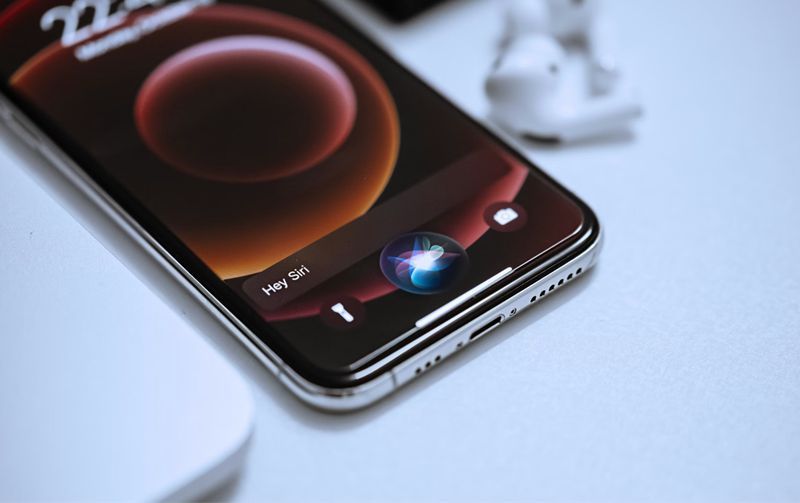
The reimagined Siri moves beyond the chatbot era into what industry analysts call the agentic era, where the assistant acts as an autonomous orchestrator across the entire operating system.
Screen-Awareness and Visual Intelligence
The most anticipated feature is on-screen awareness, which enables Siri to understand what users are currently viewing and act accordingly. Users viewing a photo can ask "who is this person?" or those reading a complex document can simply say "summarize this" without specifying what "this" refers to. The system leverages Gemini 3's multimodal capabilities to parse the screen in real-time.
Conversational Memory
Siri now possesses conversational memory—the ability to remember past interactions and connect disparate pieces of information over time. This enables more contextually relevant suggestions without users needing to repeat themselves.
Multi-Step Task Execution
The new Siri can execute complex multi-step tasks that previously required manual app switching. A user could command Siri to "find the receipt from last night's dinner, crop the photo to show only the total, and email it to my accountant," and the system will orchestrate Photos, Editing, and Mail apps autonomously.
When Will the New AI-Powered Siri Launch?
Apple has established a phased rollout timeline for the Gemini-powered Siri:
-
First Half 2026: Initial testing of Apple Foundation Models and Gemini logic integration
-
March 2026: Launch of iOS 26.4 introducing the upgraded Siri interface to early adopters
-
June 2026: Official preview of advanced agentic features at WWDC
-
Late 2026: Full deployment to the global user base alongside the iPhone 17 launch
What Hardware Do You Need for the New Siri?
The integration of Gemini 3 into the Siri workflow places unprecedented demands on mobile hardware. To support the increased throughput required for agentic AI, Apple has significantly raised hardware requirements for its 2026 product cycle.
The iPhone 17 series standardizes 12GB of RAM across its Pro lineup, up from the 8GB baseline in iPhone 16. The A19 chip architecture features redesigned neural accelerators in every core, offering a reported 40% increase in AI throughput compared to the previous generation. These hardware improvements are critical for features like Writing Tools and Visual Intelligence, which require rapid prompt processing and high-fidelity image generation.
How Much Is Alphabet Worth After the Apple Deal?
The market reaction to the partnership was immediate and historic. Alphabet's market capitalization reached $4 trillion in January 2026, surpassing Apple to become the second most valuable company on Wall Street, trailing only Nvidia.
This growth was fueled by a 65% rise in Alphabet's stock throughout 2025, outperforming its peers in the "Magnificent Seven" tech companies. Analysts at Cantor Fitzgerald have labeled Alphabet the "king of all AI trades," citing its footprint across the entire technology stack from custom chips to consumer applications.
What Does This Mean for Google Cloud?
The partnership has transformed the financial profile of Google Cloud. In October 2025, CEO Sundar Pichai reported that the cloud segment signed more contracts worth over $1 billion during the third quarter than in the combined previous two years. The backlog of non-recognized sales contracts for the division reached $155 billion by late 2025, with revenue growth hitting 34% year-over-year.
This acceleration is partly attributed to Google's decision to rent out its self-developed tensor processing units (TPUs) to external customers, positioning Google Cloud as a primary growth engine for Alphabet's future.
What Is Apple's Long-Term AI Strategy?
While the Google deal provides immediate intelligence capabilities, Apple's long-term goal remains self-sufficiency. The partnership functions as a "bridge strategy"—by licensing state-of-the-art technology, Apple buys time to refine its own next-generation models, codenamed Ferret-3, targeted for 2026-2027 rollout.
The Ferret-3 architecture focuses on a "refer-and-ground" approach, enabling multimodal large language models to understand spatial relationships and fine-grained details within images and on-device contexts. Apple maintains a smaller 3 billion parameter on-device model for latency-sensitive, private tasks, while developing a mid-range foundation model for its Private Cloud Compute environment.
By 2027, Apple hopes to transition many tasks currently handled by Gemini 3 to its own 1 trillion parameter proprietary models, focusing on long-form video understanding and real-time spatial grounding.
How Does This Affect App Developers?
The deep integration of agentic AI directly into the operating system poses challenges for many AI startups and app developers. Systems that previously functioned as "AI wrappers"—providing simple interfaces for large language models—are becoming obsolete as native Siri implementation absorbs those functions.
Developers must now adopt Apple's App Intents framework to ensure their apps remain discoverable and functional via Siri. Those who fail to integrate risk becoming invisible as users transition from manual app navigation to voice-and-screen-aware commands. However, this shift also creates opportunities: Apple's App Store ecosystem, which facilitated nearly $1.3 trillion in billings in 2024, could see a new wave of growth as intelligent actions make app features more accessible to non-technical users.
What Regulatory Challenges Does the Partnership Face?
The consolidation of AI power between two of the world's largest companies has drawn attention from antitrust regulators in both the United States and European Union.
The partnership unfolds against the backdrop of Judge Amit Mehta's August 2024 ruling declaring Google a monopolist in the search market. While a September 2025 ruling rejected forced divestiture of Chrome, it imposed strict behavioral restrictions requiring Google to end exclusive distribution agreements.
In Europe, the European Commission has fined Apple €500 million for anti-steering violations and is investigating whether Google's AI Overviews harm publishers. The Digital Markets Act's interoperability mandates may delay or limit many advanced Siri features in the EU market until Apple ensures full compliance.
What Does This Mean for the Future of AI Assistants?
The Apple-Google alliance represents the pragmatism of the modern technology era. It acknowledges that the capital requirements of frontier AI—including the $1.4 trillion in data center costs projected for the next eight years—are so vast that even the largest companies must cooperate.
For users, the result is an iPhone that is finally intelligent in the way science fiction once promised, with a Siri that remembers, understands, and acts. For the industry, it signals that the infrastructure war has been won by those who control the chips and the cloud, leaving the rest of the world to build on top of their foundations.
The integration of Gemini into the heart of the iOS ecosystem will not just change how people use their phones—it will redefine the very nature of the relationship between humans and the machines they carry in their pockets.
Key Takeaways
- Apple pays Google approximately $1 billion annually to license Gemini 3 for Siri
- Gemini 3 Pro outperforms GPT-5.1 in abstract reasoning (31.1% vs 17.6%) and novel math problem-solving (23.4% vs 1.0%)
- Apple's Private Cloud Compute ensures user data is never stored on external servers
- New Siri features include screen-awareness, conversational memory, and multi-step task execution
- iPhone 17 Pro models will require 12GB RAM to support new AI capabilities
- Alphabet reached $4 trillion market cap following the announcement
- Full rollout expected by late 2026 alongside the iPhone 17 launch
- Apple continues developing its own Ferret-3 models for 2027 deployment
Track AAPL and GOOG with AI-Powered Research
Want to stay ahead of major moves in Apple, Alphabet, and other stocks impacted by the AI revolution? Kavout Pro gives you access to 8 specialized AI Research Agents that work 24/7—analyzing technicals, fundamentals, sentiment, and market trends across stocks, crypto, forex, and ETFs. Get instant buy/sell recommendations with confidence scores, swing trade setups with precise entry/exit levels, and real-time news sentiment analysis before the crowd reacts.
Stop spending hours reading charts and earnings reports. Ask any question through InvestGPT—like "Should I buy GOOG now?"—and get institutional-grade research in seconds. Subscribe to Kavout Pro and let AI do the heavy lifting while you make smarter investment decisions.
Related Articles
Category
You may also like
No related articles available
Breaking News
View All →No topics available at the moment