MarketLens

Log in

Apple's AI Conundrum: Why the Google Partnership

1 day ago
SHARE THIS ON:

Apple's AI Conundrum: Why the Google Partnership

Key Takeaways

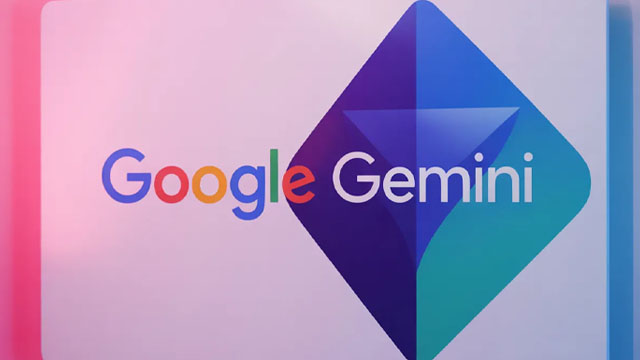
  • Apple's multi-year partnership with Google for Gemini-powered Siri marks a significant strategic pivot, addressing its AI infrastructure deficit and accelerating its AI roadmap.
  • While enhancing user experience and potentially opening new revenue streams, this collaboration raises questions about Apple's long-standing vertical integration philosophy and privacy commitments.
  • Despite the risks, the deal positions Apple to compete effectively in the generative AI era, potentially bolstering its services segment and justifying its premium valuation.

Apple's AI Conundrum: Why the Google Partnership?

Apple's decision to leverage Google's Gemini models and cloud technology for Siri stems from a critical need to rapidly scale its AI capabilities and overcome internal infrastructure limitations. For years, Apple has faced a "cultural reluctance" to bolster its cloud infrastructure, leading to a "decaying" internal AI system and the departure of key cloud experts like Patrick Gates. This internal struggle became increasingly apparent as the generative AI race heated up, leaving Apple seemingly behind its peers.

The company's proprietary Private Cloud Compute (PCC) system, designed to run sensitive AI queries on Apple silicon chips, has proven inadequate for the demands of large language models. Reports indicate that only 10% of Apple's PCC capacity is currently in use, with many servers still in warehouses, uninstalled. This underutilization is largely due to the chips in PCC servers being optimized for consumer devices, not the intensive AI workflows required by models like Gemini, and the system's slow update cycles.

Apple anticipates a massive surge in AI usage when the more powerful, Gemini-based Siri debuts later this year. To meet this demand, and after "careful evaluation," Apple determined that Google's AI technology provides the "most capable foundation" for its next-generation Apple Foundation Models. This partnership, reportedly worth $1 billion annually to Google, represents a significant strategic shift, effectively an admission that Apple cannot build competitive core AI technology entirely on its own, a departure from its famed vertical integration philosophy.

The move also highlights Google's successful efforts to address Apple's stringent privacy concerns. Historically, Apple software chief Craig Federighi had vetoed Google Cloud due to privacy issues. However, Google's security system changes in 2023 satisfied Apple, paving the way for this deep collaboration. This agreement allows Apple to accelerate its AI strategy, bringing advanced AI features to its 2.5 billion active devices without the immediate, massive capital expenditure required to build out its own hyperscale AI infrastructure.

What Does This Partnership Mean for Apple's Ecosystem and Strategy?

This groundbreaking partnership with Google fundamentally reshapes Apple's AI strategy and its broader ecosystem, marking a pragmatic pivot in the face of intense technological competition. By integrating Gemini, Apple aims to deliver a "more personalized Siri" and unlock "innovative new experiences" for its users, directly addressing criticisms that its voice assistant has lagged behind rivals. This move is less about relinquishing control and more about strategically outsourcing a critical, capital-intensive component of its AI stack to accelerate innovation.

The deal allows Apple to focus its internal resources on user-facing features and on-device AI processing, while leveraging Google's advanced models and cloud infrastructure for complex, server-side AI tasks. This "hybrid cloud strategy" combines Apple's Private Cloud Compute with services from Google and Amazon, aiming to reduce data center investment costs while increasing service flexibility and scalability. It's a recognition that even a company of Apple's scale cannot build every component of a cutting-edge AI system from scratch, especially given the rapid pace of development in the field.

For Apple's services segment, which already boasts impressive margins and contributes significantly to revenue, this partnership could be a major tailwind. A dramatically improved Siri, powered by Gemini, could drive deeper engagement with Apple's ecosystem, potentially leading to increased usage of other services like Apple Music, Apple TV+, and the App Store. Enhanced AI capabilities could also enable new, premium service offerings or advertising opportunities, further diversifying Apple's revenue streams beyond hardware sales.

However, the partnership also introduces a layer of dependence on a direct competitor. While Apple maintains that Apple Intelligence features will continue to run on Apple devices and Private Cloud Compute, and Google has committed to Apple's privacy standards, the optics of a rival powering core AI functions are undeniable. This strategic shift underscores the immense challenges and costs associated with developing and deploying advanced generative AI, even for the world's largest companies.

How Does This Impact Apple's Financials and Valuation?

The Google partnership, while strategically crucial, presents a nuanced financial picture for Apple, impacting both its cost structure and potential revenue growth. On one hand, the reported $1 billion annual payment to Google for Gemini licensing and cloud services represents a new, significant operating expense. However, this cost must be weighed against the immense capital expenditure Apple would have incurred to build out a comparable AI infrastructure internally, including developing its own large language models and optimizing data centers with specialized AI chips.

By opting for a hybrid cloud model, Apple effectively reduces its data center investment costs, freeing up capital that can be deployed elsewhere, such as R&D for future hardware or strategic acquisitions. This approach could improve capital efficiency and maintain Apple's robust free cash flow, which stood at $8.36 per share (TTM). The company's current ratio of 0.97 suggests tight liquidity, making capital preservation a priority, and outsourcing AI infrastructure helps manage this.

From a revenue perspective, the enhanced Siri and Apple Intelligence features are expected to drive stronger demand for Apple's premium hardware, particularly the iPhone 17 series and upcoming M5-powered Macs. Apple recently reported a 16% year-over-year revenue increase in Q1 2026, reaching $123 billion, with iPhone revenue up 23% to $85.3 billion. A superior AI experience could sustain this momentum, encouraging upgrades and attracting new users, thereby bolstering Apple's top line.

Furthermore, the partnership could significantly boost Apple's high-margin services segment. A more intelligent Siri could lead to increased engagement across Apple's ecosystem, potentially driving higher subscription rates for services and greater App Store revenue. Analysts forecast Apple's revenue to reach $483.1 billion by FY2029 and $581.7 billion by FY2030, with EPS growing to $11.69 and $13.33 respectively. The AI partnership is a key enabler for these growth projections, justifying Apple's current P/E ratio of 33.36 and market capitalization of $3.92 trillion, which reflects significant future growth expectations.

What Are the Key Risks and Challenges for Apple?

While the Google partnership offers significant advantages, it also introduces several critical risks and challenges for Apple, primarily centered around privacy, brand perception, and long-term strategic dependence. Apple has built its brand identity around "Privacy. That's iPhone," and relying on Google, a company with a different data privacy philosophy, for core AI functions could erode consumer trust. Despite Google's commitment to Apple's stringent privacy standards, public perception, as evidenced by initial user comments, remains skeptical.

There's a risk that users might perceive Siri as merely a rebranded Gemini, questioning the unique value proposition of Apple's AI. This could lead to a "why not just buy a Pixel" sentiment, potentially undermining the premium appeal of Apple's ecosystem. The challenge for Apple will be to clearly articulate how its integration of Gemini maintains its privacy principles and delivers a distinctly "Apple" AI experience, rather than a generic one.

Another significant challenge lies in the potential for strategic dependence on a rival. While the partnership is framed as a multi-year collaboration, it deepens Apple's reliance on Google for critical AI infrastructure and models. This could limit Apple's flexibility in future AI development and potentially give Google leverage in other areas of their competitive landscape. Apple's historical "cultural reluctance" to bolster its own cloud infrastructure, leading to the departure of key experts, suggests a deeper organizational issue that this partnership merely bypasses rather than solves.

Finally, there's the execution risk of integrating Gemini seamlessly into Apple's tightly controlled hardware and software ecosystem. Any glitches, performance issues, or perceived privacy compromises could severely damage Apple's reputation and user experience. The company must ensure that the "hybrid cloud strategy" truly delivers the promised scalability and efficiency without sacrificing the responsiveness and reliability users expect from Apple products.

What's the Bull Case for Apple Post-Gemini?

The bull case for Apple, following its strategic AI partnership with Google, hinges on the company's ability to leverage this collaboration to rapidly innovate and solidify its market leadership in the generative AI era. By integrating Gemini, Apple is poised to deliver a significantly enhanced Siri and a suite of "Apple Intelligence" features that can finally compete with, or even surpass, offerings from rivals. This move is not an admission of defeat but a pragmatic acceleration, ensuring Apple remains at the forefront of technological advancement.

A more intelligent and personalized Siri will undoubtedly boost user engagement across Apple's vast ecosystem of 2.5 billion active devices. This improved experience is expected to drive a new wave of hardware upgrades, particularly for the latest iPhone models and M5-powered Macs, which are designed to harness these advanced AI capabilities. Such upgrades would fuel Apple's core product revenue, which saw a 23% year-over-year increase in iPhone revenue in Q1 2026.

Beyond hardware, the partnership is a powerful catalyst for Apple's high-margin services segment. A more capable AI assistant can unlock new service opportunities, deepen user loyalty, and potentially increase subscription rates for Apple's growing portfolio of digital offerings. This strategic move positions Apple to capture a larger share of the burgeoning AI-driven commerce market, with analysts like Wells Fargo projecting significant growth for Google Cloud Platform (GCP) revenues, which Apple will contribute to.

Furthermore, by outsourcing the foundational AI model and some cloud infrastructure, Apple can reallocate its substantial R&D budget towards developing unique, on-device AI experiences and privacy-preserving technologies. This hybrid approach allows Apple to maintain its focus on vertical integration where it matters most – the user experience and hardware-software synergy – while strategically partnering for areas requiring immense, specialized compute power. With a consensus analyst price target of $304.23 and a high of $350.00, Wall Street clearly sees significant upside potential for AAPL, currently trading at $266.42, driven by this AI pivot.

Is Apple (AAPL) a Buy After This Strategic Shift?

Apple's strategic pivot to integrate Google's Gemini for its next-generation Siri and Apple Intelligence features fundamentally strengthens its competitive position in the rapidly evolving AI landscape. This partnership addresses Apple's immediate AI infrastructure deficit, allowing it to deliver cutting-edge generative AI capabilities to its massive user base without the prohibitive upfront costs and delays of building everything in-house. The market's initial reaction, with AAPL trading up +0.85% to $266.42 today, suggests a cautious optimism.

From a valuation perspective, Apple's TTM P/E of 33.36 is premium, but justified by its consistent growth, strong brand loyalty, and the potential for significant services expansion driven by enhanced AI. The consensus analyst rating of "Buy" from 109 analysts, with a median price target of $315.00, indicates confidence in Apple's long-term trajectory. This AI move is a critical component of that outlook, ensuring Apple remains relevant and innovative in a tech world increasingly defined by AI.

However, investors must weigh the benefits against the inherent risks, particularly concerning privacy perception and strategic dependence. While Apple has outlined its commitment to privacy, the optics of relying on Google for core AI functions will require careful management. Ultimately, for long-term investors seeking exposure to a dominant tech giant that is actively adapting to the AI revolution, Apple remains a compelling investment, but with a watchful eye on execution and user reception of its new AI capabilities.

Apple's strategic partnership with Google for AI is a bold, necessary move that positions the company for continued growth in the generative AI era. While challenges remain, the potential for enhanced user experience and services revenue makes AAPL a compelling long-term hold. Investors should monitor the rollout of the new Siri and Apple Intelligence features closely for signs of successful integration and positive user adoption.


Want deeper research on any stock? Try Kavout Pro for AI-powered analysis, smart signals, and more. Already a member? Add credits to run more research.

SHARE THIS ON:

Related Articles

Category

You may also like

Stock News1 week ago

How Apple's Lazy AI Strategy Could Crush the Competition

Apple has lagged competitors in the artificial intelligence race since its initial stages, suggesting a potential competitive disadvantage.
Stock News1 week ago

Google Is Exploring Ways to Use Its Financial Might to Take On Nvidia

Google is exploring using its financial strength to compete with Nvidia in the AI chip market. The company seeks to expand market potential through deals with external partners.
Stock News1 months ago

Can Apple Shake Off AI Struggles?

Apple's upcoming earnings call will heavily feature the collaboration with Alphabet due to current negative sentiment regarding Apple's internal AI ventures.
Stock News1 months ago

Why Apple Chose Google to Power the Future of AI

Apple and Alphabet formalized a strategic partnership in mid-January 2026, integrating Google's Gemini models into the Apple ecosystem after months of market speculation.

Breaking News

View All →

Top Headlines

View More →
Stock News1 hour ago

Nvidia, Amazon temporarily close Dubai offices, Google employees stranded amid U.S.-Iran war

Stock News1 hour ago

Facebook Outage Reports Surge As Website Experiences Issues

Stock News1 hour ago

How Nvidia turned a steal of a deal into its secret weapon

Stock News1 hour ago

If We're At War, Buy Nvidia

Stock News1 hour ago

Amazon Deploys 15-Minute Delivery in Brazil Expansion