MarketLens

Log in

Apple's $5 Trillion Bet: Can Smart Home Innovation Justify Its Premium Valuation?

2 days ago
SHARE THIS ON:

Apple's $5 Trillion Bet: Can Smart Home Innovation Justify Its Premium Valuation?

Key Takeaways

  • Apple's market capitalization recently touched the cusp of $5 trillion, reflecting investor confidence in its ecosystem despite a P/E ratio of 40.98 that demands significant future growth.
  • The company is strategically pivoting towards the smart home market with new devices like a display-equipped HomePod and a "command center" hub, aiming to offset slowing iPhone cycles.
  • While the smart home market offers substantial growth, Apple faces delays and intense competition, making its ability to execute this pivot crucial for sustaining its lofty valuation.

Apple Inc. (NASDAQ: AAPL) currently trades at $339.92, just shy of its 52-week high of $342.89, pushing its market capitalization to a staggering $4.99 trillion. This valuation milestone, a mere $10 billion short of the $5 trillion mark, places Apple in an elite club previously entered only by Nvidia in 2025, with Microsoft also joining the $4 trillion tier around the same time. The market's willingness to assign such unprecedented valuations to tech giants at the forefront of AI and integrated ecosystems underscores a pivotal moment for Apple. However, with iPhone growth showing signs of deceleration, the critical question for investors is whether Apple's ambitious, yet delayed, push into the smart home market can truly justify its premium and drive the next phase of growth.

The $5 Trillion Question: Apple's Valuation in a Post-iPhone Era

Apple's journey to the brink of a $5 trillion valuation has been nothing short of remarkable, transforming from a $1 trillion company in 2018 to its current near-record status in just eight years. This trajectory reflects not only the enduring strength of its consumer electronics backbone, particularly the iPhone, but also a significant shift in the market narrative towards its services segment and, increasingly, AI integration. The company's shares hit an all-time high above $321 on July 13, 2026, signaling robust investor confidence even as its core hardware business faces mounting challenges.

The macro backdrop for this valuation surge is clear: the market is rewarding companies positioned at the center of the AI infrastructure and application layers. While Apple's AI strategy has been more understated compared to some peers, its focus on on-device AI with privacy-focused architecture is a key differentiator. Yet, the path forward is complex. With the iPhone cycle maturing and global smartphone demand facing headwinds like chip shortages and rising component costs, Apple must demonstrate new avenues for growth that can move the needle on its massive revenue base. The smart home market, with its promise of seamless integration and AI-powered experiences, is emerging as Apple's next strategic battleground.

A Premium Price Tag: Apple's Financial Snapshot

Apple's financial performance continues to be robust, yet its valuation multiples reflect a market anticipating significant future expansion. The company reported a trailing twelve-month (TTM) net margin of 27.2%, indicating exceptional profitability. For fiscal year 2025, Apple saw its revenue grow by 6.4% year-over-year, with net income increasing by 19.5% and EPS by 22.7%. These figures, while solid, are set against a backdrop of a demanding valuation.

The company's TTM P/E ratio stands at 40.98, a substantial premium that suggests investors are pricing in a future where Apple continues to innovate and expand its addressable markets. Its price-to-sales (P/S) ratio is 11.05, and price-to-free cash flow (P/FCF) is 38.63. These multiples are considerably higher than the broader market and many of its tech peers, underscoring the market's belief in Apple's ability to generate sustained, high-quality earnings. The challenge for Apple is to deliver growth that not only meets but exceeds these elevated expectations, particularly as its most dominant product category, the iPhone, matures.


MetricValue
Market Cap$4.99T
Current Price$339.92
52-Week Range$201.50 – $342.89
P/E (TTM)40.98x
P/S (TTM)11.05x
Net Margin (TTM)27.2%
EPS (TTM)$8.33
Revenue Growth (FY25 YoY)6.4%
Net Income Growth (FY25 YoY)19.5%
FCF Yield (TTM)2.6%

Beyond the iPhone: The Smart Home Pivot

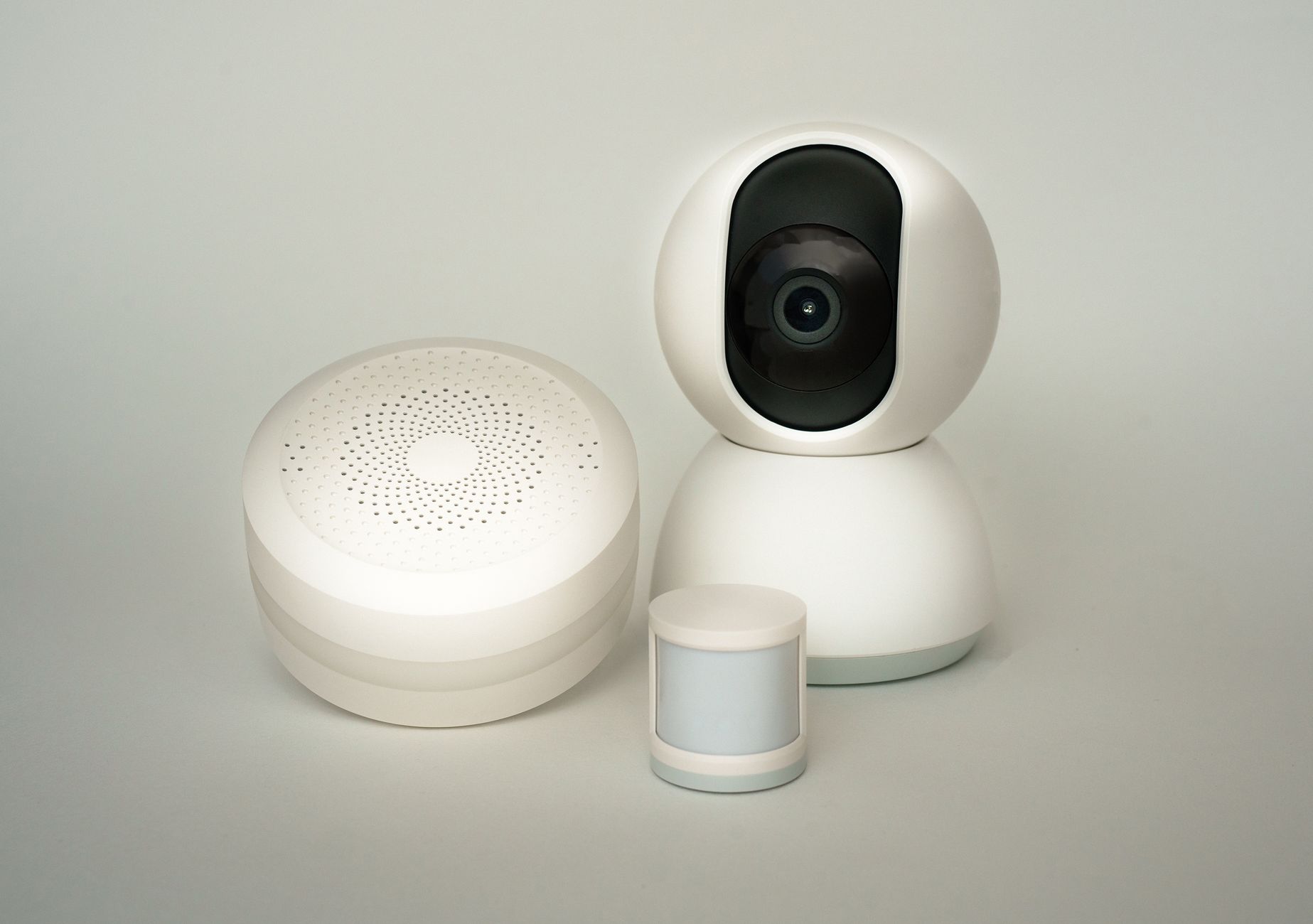
Recognizing the need for new growth vectors, Apple is making a strategic push into the smart home market, repositioning its HomePod product line to emphasize smart home functionalities. This initiative is centered around a new display-equipped HomePod and a broader "command center" hub, designed to serve as an all-in-one home management product. The device is expected to feature an A18 processor, a 6–7 inch display, and robust support for Apple Intelligence, the company's AI platform.

However, the rollout has faced delays. Supply chain analyst Ming-Chi Kuo noted in a December 2024 report that "The mass production schedule for the display-equipped HomePod has been delayed multiple times," initially from 2024 to Q1 2025, and then further to after WWDC 2025 or Q3 2025. Kuo attributed these delays primarily to software development issues. Despite these setbacks, the long-term vision remains clear: Apple aims to tightly integrate these new products with its existing ecosystem and HomeKit to deliver a seamless smart home experience, much like it successfully transitioned the Apple Watch from an iPhone accessory to a health management device. The company's patents related to authentication also highlight its strong interest in promoting smart home applications through secure identity solutions.

The Untapped Potential of the Connected Home

The smart home market represents a significant growth opportunity, projected to reach a global valuation of $154.18 billion in 2026 and expand to $812.55 billion by 2033, exhibiting a compound annual growth rate (CAGR) of 26.8%. This rapid expansion is fueled by the proliferation of IoT devices, advanced AI integration, and increasing consumer demand for energy efficiency and remote monitoring. Apple, with its HomeKit platform, is a key player in this evolving landscape, providing a secure system for users to control smart home devices via iPhone and Siri.

Apple holds a premium position, appealing to users who prioritize seamless integration, elegant design, and strong data privacy. Its leadership is further strengthened by support for the Matter interoperability standard, which reduces friction in multi-brand smart home deployments and enables compatibility with devices from competitors like Google and Amazon. The residential segment is projected to dominate the smart home technologies market with a 65.8% share in 2026, driven by increasing consumer demand for comfort, automation, and energy efficiency. This trend, coupled with the rising adoption of smartphones and intuitive apps, creates a fertile ground for Apple's integrated ecosystem approach, especially among tech-native younger homeowners.

The Hurdles on the Road to Home Dominance

Despite the promising market opportunity, Apple's smart home ambitions face several significant challenges. The most immediate concern is the repeated delays in product launches. While Ming-Chi Kuo reported in March 2025 that the display-equipped HomePod was set to enter mass production in Q3 2025, Bloomberg's Mark Gurman stated in August 2025 that the iPad-like smart home hub wouldn't launch until mid-2026, primarily due to issues with the Apple Intelligence version of Siri. More recently, in March 2026, leaker Kosutami suggested the "HomePad" could launch even later, in the fall of 2026. These delays risk ceding market share to competitors who are already aggressively expanding their AI-integrated smart home ecosystems.

Competition in the smart home market is fierce, with major players like Amazon and Google already boasting large installed bases of voice-enabled devices and comprehensive ecosystems. Samsung, Huawei, and Bosch also offer robust smart home platforms. While Apple's premium positioning and privacy focus are strengths, the high initial device cost and ongoing data privacy concerns remain key factors hampering broader market growth. Furthermore, the company's recent track record with new product categories, such as the Apple Vision Pro VR headset which has been described as a "flop," raises questions about its ability to launch a new "hit" product. The reliance on iPhone sales, which saw an underwhelming performance in 2025 due to chip shortages and lower global smartphone demand, further underscores the urgency for Apple to successfully diversify its revenue streams.

Wall Street Weighs In: Consensus and Divergence

Wall Street analysts generally maintain a positive outlook on Apple, with a consensus rating of "Buy" from 111 analysts. This breaks down to 70 "Buy" ratings, 32 "Hold" ratings, 8 "Sell" ratings, and 1 "Strong Buy" rating. This sentiment reflects confidence in Apple's long-term prospects, despite near-term challenges. The average analyst price target for AAPL is $337.26, with a median target of $330.00. The highest target stands at $400.00, while the lowest is $250.00.

Relative to Apple's current price of $339.92, the consensus price target of $337.26 implies a slight downside of approximately 0.78%. The median target of $330.00 suggests a more pronounced downside of about 2.92%. This indicates that while analysts are largely bullish, the stock's recent run has pushed it above the average expectations, suggesting limited immediate upside from current levels based on consensus. Recent rating changes include HSBC upgrading Apple from "Hold" to "Buy" on July 17, 2026, while Morgan Stanley maintained its "Overweight" rating on July 23, 2026. Analysts are closely watching Apple's next earnings report on July 30, 2026, for further insights into its smart home progress and iPhone demand.

Apple's near-touch of a $5 trillion market capitalization is a testament to its unparalleled brand loyalty and robust ecosystem, yet its premium valuation demands more than just incremental iPhone upgrades. The company's strategic pivot into the smart home market, spearheaded by devices like the display-equipped HomePod and a "command center" hub, is a critical move to unlock new growth avenues as its core hardware business matures. While the smart home market offers substantial long-term potential, Apple must overcome product delays and intense competition to establish a dominant position.

For investors, Apple represents a long-term play on ecosystem expansion and AI integration, but the current valuation leaves little room for error. The market has already priced in significant future success, making execution paramount. Given the slight implied downside from current analyst consensus targets, a more prudent entry point would offer a better risk-reward profile.

  • Entry Zone: Investors could consider accumulating shares in the $315 - $325 range, which aligns closer to the median analyst target and offers a buffer against potential market volatility or further product delays.
  • 12-Month Target: A 12-month price target of $380.00 is achievable if Apple successfully launches its smart home hub in late 2026, demonstrates strong initial adoption, and shows tangible progress in integrating Apple Intelligence across its ecosystem.
  • Invalidation Level: A close below $290.00 would invalidate this thesis, signaling a fundamental breakdown in either the smart home strategy's execution or a more severe deceleration in core product demand than currently anticipated.

Apple's future hinges on its ability to innovate beyond the iPhone, and the smart home is its next great test.


Want deeper research on any stock? Try Kavout Pro for AI-powered analysis, smart signals, and more. Already a member? Add credits to run more research.

SHARE THIS ON:

Related Articles

Category

You may also like

Stock News2 days ago

Apple Joins $5 Trillion Club and Launches Smart Home Push

Apple's market cap reached $5 trillion, becoming the second company ever to do so, as it reportedly prepares a major push into the smart home market per Bloomberg.
Stock News2 weeks ago

Prediction: Apple Will Soon Surpass Nvidia's $5 Trillion Market Cap to Become the World's Most Valuable Company. The Reason Is Hiding in Plain Sight.

Apple's market cap could surpass Nvidia's $5 trillion valuation, driven by resurgent iPhone sales and market share gains in China.
Stock News4 weeks ago

Apple's AI Expansion Aims to Boost Services Momentum: What's Ahead?

Apple is integrating AI deeper into Creator Studio, services, and hardware to boost services momentum, but faces competition from Alphabet and Microsoft alongside a premium valuation.
Stock News2 months ago

Did Apple Just Drop a Big Hint About Its Future Growth Strategy?

Apple CFO signaled a potential shift in capital allocation strategy, indicating the company may become more active in pursuing acquisitions. This marks a departure from its historical preference for o...

Breaking News

View All →

Top Headlines

View More →
Stock News31 minutes ago

Apple stockpiles inventory as it braces for ‘significant supply constraints'

Stock News43 minutes ago

Amazon Q2: One Of The Best Quarters So Far

Stock News44 minutes ago

Apple Q3: Wall Street Has Lost Its Mind

Stock News45 minutes ago

Everyone Wants to Build the Best AI Model. Amazon Wants Something More Valuable.

Stock News53 minutes ago

Amazon is proving you don't need the best model to win the AI race