Kavout

MarketLens

Log in

Apple vs Meta vs OpenAI: The $100B Battle for Your Next Device

Sep 22, 2025
SHARE THIS ON:

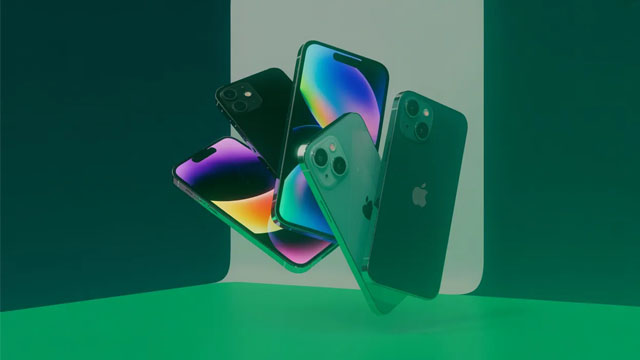
2025092201.jpg The smartphone era is ending, and three tech titans are spending unprecedented sums to build what comes next. Here's what investors need to know about the biggest hardware gamble in Silicon Valley history.

The technology industry hasn't seen a hardware revolution this significant since Steve Jobs unveiled the first iPhone in 2007. Today, Apple, Meta, and a surprisingly aggressive OpenAI are collectively pouring over $100 billion annually into a high-stakes race to build the successor to the smartphone. Their divergent strategies -- Apple's fortress approach, Meta's AR moonshot, and OpenAI's disruptive ambitions -- aren't just shaping product roadmaps. They're creating seismic shifts across the entire technology value chain, from semiconductor suppliers to software developers.

For investors, this represents both an extraordinary opportunity and a minefield of risks. The winners of this AI hardware revolution could dominate the next two decades of personal computing, while the losers might find their trillion-dollar valuations evaporating faster than you can say "Nokia."

The End of Cloud-First AI: Why Your Next Device Needs Its Own Brain

The dirty secret of today's AI boom is that it's unsustainably expensive. Every ChatGPT query, every AI-generated image, and every smart assistant response currently requires massive data centers burning through electricity at alarming rates. The latency is noticeable, the privacy implications are troubling, and the costs are astronomical.

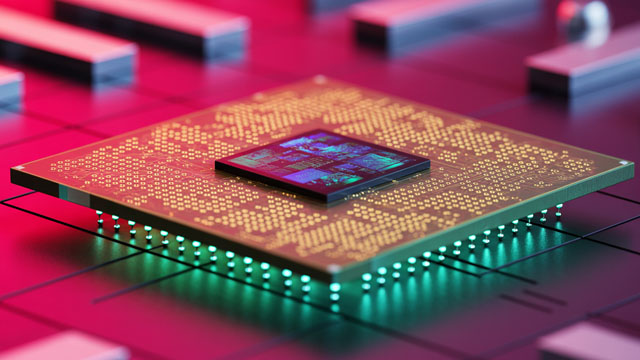
Enter the Neural Processing Unit (NPU) -- specialized silicon designed specifically for AI tasks that's now being crammed into every device from laptops to smart glasses. This isn't just a technical upgrade; it's a fundamental reimagining of how artificial intelligence works. By 2025, analysts predict nearly half of all PCs sold will feature NPU capabilities, fundamentally altering the hardware landscape and potentially triggering the biggest device refresh cycle since the dawn of the smartphone.

The implications are staggering. Developers can now build AI features without worrying about per-query API costs that can bankrupt a startup. Users get instant responses without sending their personal data to remote servers. And perhaps most importantly for investors, this shift is creating an entirely new category of "must-have" hardware upgrades.

Apple's $500 Billion Defensive Masterpiece

Apple's strategy is deceptively simple: make the iPhone so intelligent that switching to anything else becomes unthinkable. The company has announced a massive $500 billion U.S. investment plan over four years, with a significant portion dedicated to AI infrastructure and silicon engineering. At the heart of this strategy sits the upcoming A19 chip, built on cutting-edge 3-nanometer technology and designed to run sophisticated AI models entirely on-device.

The Cupertino giant is betting that privacy-conscious consumers will pay premium prices for "Apple Intelligence" -- AI features that process sensitive data locally rather than in the cloud. The upcoming iPhone 17, expected to launch this fall, will showcase advanced visual intelligence, real-time translation, and generative tools that Apple hopes will trigger what analysts are calling a "supercycle" of upgrades among its billion-plus user base.

But there's trouble in paradise. Apple has reportedly lost 20% of its AI team in the first half of 2025, including key personnel who've defected to OpenAI. The comprehensive Siri overhaul has been pushed back to at least 2026, and initial reception to Apple Intelligence features has been lukewarm at best. Bernstein analysts maintain an "Outperform" rating with a $290 price target, but that optimism is entirely contingent on Apple successfully executing its AI roadmap.

The financials remain robust -- Apple generated $94.04 billion in revenue in Q3 2025 -- but with a forward P/E ratio of approximately 26.60, investors are paying a premium for growth that increasingly depends on unproven AI capabilities. The risk? Apple's conservative, iterative approach might not be enough in a market suddenly embracing revolutionary change.

Meta's $72 Billion AR Gamble: Zuckerberg's Biggest Bet Yet

While Apple fortifies its castle, Mark Zuckerberg is building a trebuchet. Meta's strategy is breathtakingly audacious: replace the smartphone entirely with AI-powered augmented reality glasses. The company is burning through cash at an unprecedented rate, with 2025 capital expenditures projected between $66 billion and $72 billion, primarily for AI infrastructure.

The $799 Meta Ray-Ban Display represents the company's most serious attempt yet to mainstream AR. Featuring a full-color display integrated into the right lens and controlled by a revolutionary "Neural Band" that reads muscle signals from your wrist, it's either the future of computing or a very expensive toy. Meta has already sold over 2 million units of its simpler Ray-Ban smart glasses, suggesting there's appetite for the form factor, but the leap to mass adoption remains enormous.

Meta's Q2 2025 results were nothing short of spectacular -- $47.52 billion in revenue and $7.14 EPS, crushing analyst expectations. This performance is largely thanks to AI-driven improvements in ad targeting that have made Meta's platforms more valuable than ever to advertisers. The irony is delicious: Meta is using the profits from optimizing the current internet to fund the creation of its replacement.

The Reality Labs division, however, continues to hemorrhage money, posting a $4.53 billion operating loss in Q2 alone. The technical challenges are immense -- the recent Connect 2025 conference featured embarrassing demo failures that highlighted just how far the technology needs to advance. Battery life, weight, and computational power remain locked in what engineers call the "impossible triangle" -- improve one, and the others suffer.

William Blair maintains an "Outperform" rating on Meta stock, but with significant caveats about the long-term uncertainty of the AR bet. For investors, Meta represents a fascinating dichotomy: a cash-printing advertising business funding a moonshot that could either revolutionize computing or waste tens of billions of dollars.

OpenAI: The $6.5 Billion Wildcard

The most surprising player in this hardware war is OpenAI, a company that until recently was purely focused on software. But Sam Altman's ambitions extend far beyond chatbots. The company's $6.5 billion acquisition of io Products -- founded by legendary Apple designer Jony Ive and hardware executive Tang Tan -- signals a dramatic strategic shift.

OpenAI is executing what insiders call the "Apple Playbook" with ruthless efficiency. The company is aggressively poaching Apple's most senior hardware veterans with offers of "less bureaucracy and more collaboration" plus multi-million dollar compensation packages. They're even signing deals with Apple's key assembly partners, including Luxshare and Goertek, essentially hijacking the supply chain that took Apple decades to build.

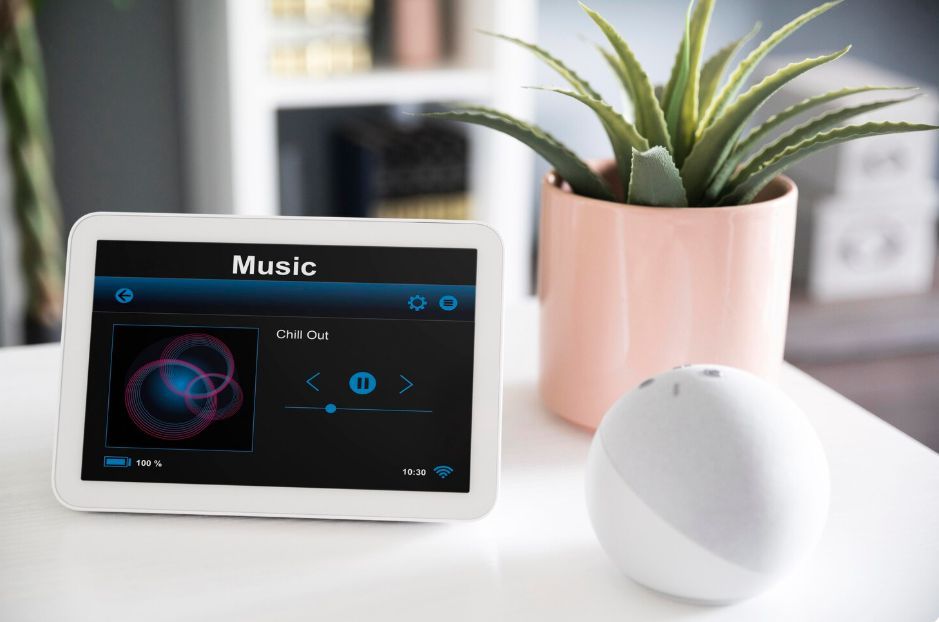
The vision is radical: a "third essential device" that's screenless, ambient, and AI-first. Prototypes reportedly include everything from smart speakers without displays to wearable pins similar to the failed Humane AI Pin. Altman has floated the audacious goal of shipping 100 million units by 2027 -- a monumental challenge for a company with zero hardware experience.

While OpenAI isn't publicly traded, its moves are sending shockwaves through the market. Every senior Apple engineer who jumps ship impacts Apple's stock price. Every supply chain partnership affects the competitive dynamics. For investors, OpenAI represents the ultimate chaos agent -- a company with unlimited ambition, deep pockets, and nothing to lose.

The Picks and Shovels Play: Why Nvidia and TSMC Always Win

Here's the investment insight that matters most: regardless of whether Apple, Meta, or OpenAI wins this war, the companies supplying the ammunition will prosper. Nvidia commands 92-94% of the AI accelerator market, with its H100 GPUs and new Blackwell architecture becoming the de facto standard for AI computing. The company's recent $5 billion investment in Intel, creating a formidable CPU-GPU alliance, only strengthens its position.

Even more critical is TSMC, which manufactures virtually all of the world's most advanced AI chips. Taiwan's firms are responsible for an estimated 90% of AI server manufacturing, creating a highly efficient but geographically concentrated risk. Any disruption to Taiwan's operations could bring the entire global AI industry to a halt -- a risk that keeps supply chain executives awake at night but also underscores TSMC's irreplaceable value.

For risk-averse investors, these "picks and shovels" plays offer the most attractive risk-reward profile. They benefit from the entire industry's growth rather than betting on a single product or platform succeeding.

Three Ways to Play the AI Hardware Revolution

As we stand at this inflection point, investors have three distinct strategies to consider:

1. The Safe Harbor Approach: Core holdings in Apple offer exposure to a proven ecosystem with a clear monetization path. With its $3.53 trillion market cap and robust financials, Apple remains the "sleep well at night" option, even if its upside might be limited compared to more speculative plays.

2. The Venture Capital Mindset: A smaller position in Meta captures the exponential upside potential of AR succeeding. At a $1.96 trillion valuation with a powerful advertising engine funding its dreams, Meta offers an asymmetric risk-reward profile that could pay off spectacularly.

3. The Infrastructure Play: The smartest money might be on the enablers. Nvidia and TSMC will profit regardless of which device wins. Add positions in companies making high-bandwidth memory, advanced optics, and specialized components, and you've built a diversified portfolio that benefits from the entire AI hardware revolution.

The next 24 months will be pivotal. Watch iPhone 17 sales numbers this fall. Monitor Meta's Reality Labs losses for signs of improvement. Track OpenAI's hardware announcements and hiring patterns. Most importantly, pay attention to Nvidia's data center revenue and TSMC's capacity utilization -- these metrics will tell you whether the AI hardware revolution is accelerating or stalling.

The smartphone took 15 years to reshape society. Its successor might do it in five. For investors willing to navigate the complexity and volatility, the opportunities are as transformative as the technology itself. The only certainty? The age of cloud-first AI is ending, and what comes next will create winners and losers on a scale we haven't seen since the dawn of the internet.

Ready to dive deeper into complex investment analysis like this? Discover how Kaout Pro's financial research agents can automate sophisticated market comparisons, company valuations, and strategic assessments. Our AI-powered platform transforms hours of manual research into comprehensive, data-driven insights in minutes. Subscribe to Kavout Pro today and elevate your investment research with the power of automated financial intelligence.

SHARE THIS ON:

Related Articles

Category

You may also like

No related articles available

Breaking News

View All →

No topics available at the moment