MarketLens

Log in

Are Prediction Markets the Next Frontier for Investors, or a Regulatory Minefield

1 hour ago
SHARE THIS ON:

Are Prediction Markets the Next Frontier for Investors, or a Regulatory Minefield

Key Takeaways

  • Prediction markets are rapidly growing, offering unique hedging and information aggregation capabilities, but face significant regulatory and ethical hurdles.
  • The CFTC is asserting aggressive federal oversight, clashing with states over jurisdiction and signaling increased enforcement against insider trading and market manipulation.
  • Investors must navigate a complex landscape of evolving regulations, ethical debates around "betting on bad news," and the inherent risks of a nascent, high-stakes market.

Are Prediction Markets the Next Frontier for Investors, or a Regulatory Minefield?

Prediction markets, once a niche curiosity, are rapidly emerging as a significant, albeit controversial, force in financial speculation and information aggregation. These platforms allow participants to buy and sell contracts based on the outcome of future events, ranging from political elections and economic indicators to technological breakthroughs and even geopolitical developments. Their appeal lies in their ability to distill collective wisdom into real-time probabilities, often proving more accurate than traditional polls or expert forecasts. This unique characteristic has attracted increasing interest from sophisticated funds and proprietary trading firms looking for novel ways to hedge risks and gain an informational edge.

However, this burgeoning market is far from a free-for-all. Recent actions by the Commodity Futures Trading Commission (CFTC) signal a dramatic shift towards heightened regulatory scrutiny, fundamentally reshaping the operational landscape for platforms and participants alike. The agency views these "event contracts" as commodity derivatives falling under its exclusive jurisdiction, a stance that directly challenges the perception among many newer market participants that these markets operate with minimal oversight. This regulatory pivot, coupled with ongoing legal battles and ethical debates, suggests that while prediction markets offer tantalizing potential, they also present a complex web of risks that investors cannot afford to ignore.

The growth trajectory is undeniable. A Kalshi market on the Federal Reserve Chair nomination reportedly saw approximately $500 million in trading volume, while a contract on Iran’s Supreme Leader being out of office by September 1, 2026, exceeded $28 million. Even the 2028 Democratic Presidential candidate market has reached around $55 million in volume. These figures underscore the increasing capital flowing into these markets, reflecting a growing appetite for instruments that can price discrete event risks. Yet, this rapid expansion also amplifies the need for robust regulatory frameworks and clear ethical guidelines to ensure market integrity and investor protection.

What Does the CFTC's Recent Advisory Mean for Prediction Market Participants?

The Commodity Futures Trading Commission's Division of Enforcement issued a pivotal Prediction Markets Advisory on February 25, 2026, signaling a clear intent to intensify its oversight of this burgeoning sector. This advisory, following two enforcement cases involving the misuse of nonpublic information and fraud on KalshiEX, explicitly states the CFTC's view that it retains primary enforcement jurisdiction over most prediction markets and contracts under the Commodity Exchange Act (CEA). This move directly contradicts the mistaken belief held by many new market participants that these platforms operate with minimal regulation, putting all participants on notice about the serious legal implications of non-compliance.

While Designated Contract Markets (DCMs) like Kalshi and Polymarket maintain internal compliance and investigation programs, the CFTC's advisory emphasizes that the agency stands ready to bring actions where it identifies violations warranting federal intervention. For smaller or more retail trading misconduct, the CFTC is likely to rely on DCMs to investigate and report, potentially bringing follow-on enforcement actions based on those referrals. This collaborative yet assertive approach means that even if a platform has its own rules, the federal regulator holds the ultimate authority and will not hesitate to step in for serious breaches.

The advisory specifically highlighted key enforcement risk areas, including insider trading and the misappropriation of confidential or nonpublic information in breach of a duty of trust or confidence, citing CEA §6(c)(1) and CFTC Reg. 180.1. This is a direct warning to firms and individuals that the same standards applied to traditional financial markets will increasingly apply here. Consequently, firms engaged in or analyzing prediction markets are urged to review internal policies on non-public information, strengthen communication controls, and enhance employee trading guidelines. Creating contemporaneous records for trading positions and conducting regular personnel training on regulatory status and enforcement exposure are now critical steps for mitigating risk in this evolving environment.

Is the Jurisdictional Battle Between Federal and State Regulators Settling?

The regulatory landscape for prediction markets is further complicated by an ongoing, high-stakes jurisdictional battle between federal and state authorities, creating a patchwork of legal uncertainty. While the CFTC asserts exclusive federal jurisdiction over event contracts as commodity derivatives, more than a dozen states are challenging this authority, claiming prediction markets are essentially gambling operations subject to primary state regulation. This fundamental disagreement has led to active litigation across the country, with divergent outcomes in federal and state courts, and many experts anticipate the issue will ultimately reach the Supreme Court.

A significant development in this conflict occurred in February 2026, when the CFTC publicly reaffirmed its exclusive jurisdiction, filing an amicus brief in the U.S. Circuit Court of Appeals for the Ninth Circuit. This forceful intervention came amidst a flurry of legal activity, including state enforcement actions against platforms like Kalshi in Nevada, Massachusetts, and Tennessee. Most notably, a federal court in Tennessee sided with Kalshi, granting a preliminary injunction and finding that its sports event contracts are likely swaps subject to exclusive federal jurisdiction. This ruling deepened the divide, providing additional judicial authority for the federal preemption theory, yet the overall lack of uniformity continues to fragment the market and threaten liquidity.

The core question dividing courts, regulators, and commentators is whether sports-related event contracts are federally regulated derivatives or state-regulated gambling products. The CFTC's position, supported by its chairman Michael Selig, is that states and other federal entities lack the authority to further regulate markets within its exclusive jurisdiction, warning that such attempts would have destabilizing economic effects. However, the outcome hinges on whether Congress intended to centralize oversight with the federal government or leave regulation to states. Until the Supreme Court draws a definitive line, prediction markets will operate in a dual regulatory reality, federally legitimized under the CFTC but resisted at the state level, demanding careful consideration of compliance strategies from all market participants.

How Are Prediction Markets Grappling with Insider Trading and Ethical Concerns?

The rapid growth of prediction markets has brought to the forefront significant ethical dilemmas, particularly regarding insider trading and the controversial concept of "betting on bad news." Unlike traditional securities markets with established surveillance mechanisms, prediction markets can make it alarmingly easy to monetize nonpublic information, challenging existing ethics programs. The perceived anonymity and simplicity of these platforms can lead employees to mistakenly believe they are not subject to the same insider trading rules, creating a "flash point" for compliance leaders.

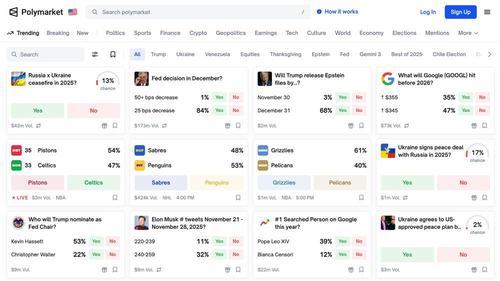
Consider the infamous Polymarket incident in January 2026, where an anonymous account placed a $30,000 wager on Nicolás Maduro being removed from office by a specific date, just hours before a U.S. raid led to his capture. This position subsequently paid out approximately $436,000, highlighting how prediction markets can turn inside information into substantial cash. Similarly, the CFTC's recent enforcement actions included cases where traders allegedly knew the outcome before they traded, either through control over the event or prior knowledge of its nonpublic release. One such case involved an "Editor" on Kalshi whose "near-perfect trading success on markets with low odds" was deemed "statistically anomalous," leading to a two-year suspension and a $20,397.58 fine after failing to cooperate with Kalshi's investigation.

While some proponents argue that trading on inside information is a "feature, not a bug," as it helps surface hidden details and eliminate biases, this perspective clashes fundamentally with the principle of fairness that underpins traditional financial markets. Critics, including U.S. Rep. Ritchie Torres, have introduced bills to ban government officials from insider trading on these platforms, underscoring the societal concern. Prediction markets, while offering valuable information discovery, must establish clear ethical lines and robust internal controls to prevent abuse. This includes implementing stringent policies on non-public information, enhancing communication controls, and ensuring that employees understand the severe consequences of exploiting privileged information, thereby building trust and legitimacy for the broader market.

What is the Investment Potential and Future Outlook for Prediction Markets?

Despite the regulatory and ethical headwinds, the investment potential of prediction markets remains compelling, driven by their unique capabilities in information aggregation and risk hedging. These platforms excel at synthesizing dispersed knowledge from participants with real capital at stake, often outperforming expert forecasts and polls in predicting outcomes. For investors, this offers a powerful tool to gauge the collective probability of discrete events, from corporate earnings surprises to geopolitical shifts, providing a dynamic, continuously updated signal that can inform trading strategies and portfolio adjustments.

Beyond simple event prediction, the next frontier for these markets lies in "Impact Markets" and "Decision Markets." Impact Markets aim to surface the market's collective view on conditional asset valuations – for example, what Bitcoin might trade at if the Federal Reserve cuts interest rates by 75 basis points, or Nvidia's valuation if a specific political candidate wins an election. This capability addresses a fundamental information gap in traditional markets, allowing investors to directly price the impact of specific events on asset prices. Decision Markets take this a step further, using these conditional valuations to automate organizational governance, enabling markets to directly determine actions based on expected economic outcomes, a concept already being explored by futarchy DAOs that have traded millions in volume.

The utility of prediction markets as hedging instruments cannot be overstated. They provide a direct mechanism to hedge against discrete event risks that are often impossible or difficult to isolate in traditional financial markets, such as the timing of a major product release or the likelihood of a military action. For sophisticated investors and proprietary trading firms, this offers an invaluable tool for managing exposure to specific, high-impact events. As the ecosystem of products and users around prediction markets blossoms, and as regulatory clarity eventually emerges, their role in providing unique informational value and hedging capabilities is poised to expand significantly, making them an increasingly relevant, albeit complex, component of the broader financial landscape.

For investors eyeing the prediction market space, the current environment demands a cautious yet informed approach. The CFTC's assertive stance, coupled with the ongoing state-federal jurisdictional disputes, means that regulatory uncertainty is the primary risk factor. While the CFTC is pushing for federal preemption, the legal battles are far from over, potentially leading to years of litigation and even a Supreme Court showdown. This creates a volatile backdrop where the legal status and operational parameters of platforms could shift, impacting market access, liquidity, and contract enforceability.

Investors must also remain acutely aware of the heightened enforcement scrutiny on insider trading and market manipulation. The CFTC has made it clear that it will prosecute violations, and platforms themselves are stepping up internal compliance. This means that any participation must adhere strictly to ethical guidelines and regulatory requirements, with a clear understanding that exploiting nonpublic information, even in these nascent markets, carries severe penalties. Due diligence on a platform's regulatory status, internal controls, and track record of compliance is paramount before committing capital.

Ultimately, while prediction markets offer intriguing opportunities for information discovery and hedging, they are not for the faint of heart. The market is still maturing, regulations are evolving, and ethical boundaries are being tested. Investors should prioritize platforms that demonstrate robust compliance frameworks, transparency, and a clear commitment to market integrity. As the regulatory fog slowly clears, those who navigate these complexities wisely may find themselves positioned to capitalize on a truly innovative financial frontier.


Want deeper research on any stock? Try Kavout Pro for AI-powered analysis, smart signals, and more. Already a member? Add credits to run more research.

SHARE THIS ON:

Related Articles

Category

You may also like

Stock News4 days ago

Can Netflix Stock Beat the Market?

The competition between Paramount Skydance and Netflix for Warner Bros. will reshape the movie industry and the streaming landscape. The outcome remains uncertain.
Stock News5 days ago

Will Regulating AI Cripple AI Stocks?

The US AI sector faces two main challenges that could impede its growth, despite the transformative nature of the technology.
News1 week ago

Prediction Market ETFs Could Be on the Way. Here's What You Need To Know About Them.

Investment shops are seeking to launch Prediction Market ETFs, driven by high interest in prediction market contracts beyond just attracting sports bettors.
Stock News2 months ago

Bitcoin in 2026: Speculative Mania or Strategic Allocation?

Bitcoin's role in 2026 portfolios faces a split between speculative volatility and perceived legitimacy, driven by ETF adoption, regulatory progress, and significant outstanding risks.

Breaking News

View All →

Top Headlines

View More →
Stock News50 minutes ago

The Big 3: NVDA, GOOGL, FAST

Stock News1 hour ago

Amazon's OpenAI tie-up ‘positive proof' for AI growth, Goldman says

Stock News1 hour ago

Some Amazon services in Middle East go offline due to data centers drone strikes, company says

Stock News1 hour ago

Apple's rumored MacBook Neo, a lower-cost, colorful laptop, could launch this week

Stock News1 hour ago

If you'd Invested $10,000 in Nvidia Stock Last Year, This Is How Much You'd Have Today.