MarketLens
Berkshire Hathaway's $397 Billion Cash Pile: A Market Warning, Not a Misstep

Key Takeaways
- Berkshire Hathaway's Class B shares have significantly underperformed the S&P 500 in 2026, lagging the broader market by over 16 percentage points year-to-date.
- The conglomerate's record $397.4 billion cash reserve, accumulated under both Warren Buffett and new CEO Greg Abel, reflects a deliberate strategy to await compelling investment opportunities in an overvalued market.
- Despite external underperformance, Berkshire's core operating businesses delivered robust 17.7% operating earnings growth in Q1 2026, showcasing internal strength and Abel's focus on operational efficiency.
The Oracle's Omen: A Market Out of Sync
Berkshire Hathaway (NYSE: BRK-B) finds itself at a curious juncture. As of July 10, 2026, its Class B shares trade around $493.78, with a market capitalization hovering near $1.023 trillion. This valuation places it among the world's largest companies, yet its recent performance has been anything but stellar. Year-to-date in 2026, Berkshire Hathaway has lagged the S&P 500 by a substantial margin, with its shares down approximately 3.2% while the S&P 500 has gained about 9.6% as of late May 2026. This performance gap widened dramatically in April and May, culminating in a 16.3 percentage point deficit against the benchmark by May 30, 2026.
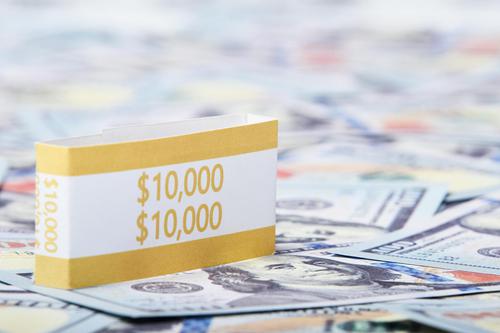
This underperformance isn't merely a blip; it's a critical data point when viewed alongside Berkshire's unprecedented cash hoard. The conglomerate ended the first quarter of 2026 with a staggering $397.4 billion in cash and cash equivalents, a sum that has more than tripled its pre-COVID peak. This enormous liquidity presents a central paradox: is Berkshire Hathaway failing to find compelling deals in a "red-hot" market, or is its defensive posture a deliberate signal from the world's most renowned value investor that the broader market is dangerously overvalued? The answer, increasingly, appears to be the latter, echoing Warren Buffett's own May 2026 sentiment that "Prices for a whole lot of things look very silly."
A Fortress of Cash: The Numbers Behind the Underperformance
Berkshire Hathaway's financial results for the first quarter of 2026 reveal a company with robust underlying operations, even as its stock price struggles to keep pace with the broader market's tech-fueled rally. The record cash pile, which grew 6.5% from December 31, 2025, to March 31, 2026, is the most striking feature on its balance sheet. This liquidity provides an annual earning power of approximately $14.4 billion from U.S. Treasury bills alone, or roughly $39 million per day, while the company awaits more attractive investment opportunities.
Despite the market's skepticism, Berkshire's operating businesses delivered strong results. The company reported Q1 2026 operating earnings of $11.3 billion, an increase of 17.7% year over year. Total revenues for the quarter also rose 4.4% year over year to $93.6 billion. This growth was broad-based, with significant contributions from its diverse segments. Insurance underwriting operating earnings surged 30.8% year over year to $1.7 billion, partly benefiting from easier comparisons to 2025 wildfires but also from foreign exchange gains. The Railroad business, BNSF, saw operating revenues climb 5% to $5.9 billion, with pre-tax earnings increasing 13.5% to $1.8 billion. Manufacturing, Service, and Retailing businesses collectively generated $54.8 billion in revenues, up 6.5%, and pre-tax earnings of $4.2 billion, a 5.7% increase.
However, this internal strength has not translated into market outperformance. Over the past 12 months, BRK.B has delivered a return of just 4% compared to the S&P 500's 21% growth. The company's valuation metrics reflect a conservative stance, with a trailing twelve-month (TTM) Price-to-Earnings (P/E) ratio of 14.13 and a Price-to-Book (P/B) ratio of 1.42 as of May 2026. While these multiples are not excessively high, they are accompanied by a relatively low Return on Invested Capital (ROIC) of 3.5% and Return on Equity (ROE) of 9.8%, as cited by Kavout, suggesting that the vast capital might not be utilized as efficiently as some growth-oriented peers. In Q1 2026, Berkshire repurchased $234 million of its shares, a modest figure compared to its cash position, but a clear signal of its commitment to returning capital when the value proposition is compelling.
| Metric (as of March 31, 2026) | Value |
|---|---|
| Market Capitalization | $1.023 trillion |
| Current Price (2026-07-10) | $493.78 |
| Cash & Equivalents | $397.4 billion |
| Q1 2026 Operating Earnings | $11.3 billion |
| Q1 2026 Total Revenues | $93.6 billion |
| TTM P/E Ratio | 14.13x |
| P/B Ratio (May 2026) | 1.42x |
| Return on Invested Capital (ROIC) | 3.5% |
| Return on Equity (ROE) | 9.8% |
| YTD 2026 Performance (vs S&P 500) | -16.3 percentage points |
| 12-Month Performance (vs S&P 500) | -17 percentage points |
Abel's Steady Hand: Operational Excellence Amidst Market Caution
The transition of leadership from Warren Buffett to Greg Abel at the end of 2025 introduced a new dynamic, yet Abel has largely maintained the core tenets of Berkshire's philosophy while injecting a renewed focus on operational efficiency. While the market grapples with the absence of the "Oracle of Omaha" at the helm, Abel's approach is proving to be both disciplined and strategic.
Abel's commitment to operational excellence is already yielding tangible results. Berkshire's Q1 2026 operating earnings growth of 17.7% underscores his hands-on management style. Bill Stone, a contributor to Forbes, highlighted in May 2026 that Abel "demonstrated a deep understanding of Berkshire’s many business units and a commitment to continuous improvement at the annual meeting." This sentiment was echoed by Greenskeeper Asset Management in its Q1 2026 investor letter, stating, "Greg is hands-on, detail-oriented, and— crucially—willing to engage in the operational friction necessary to drive efficiency... driving margin expansion across Berkshire's diverse operations."
Beyond internal operations, Abel is also strategically deploying capital, albeit cautiously. He has explicitly brought share repurchases back into play, stating, "We will effectively and efficiently return capital to our owners through share repurchases when the value proposition is compelling." He further elaborated, "We will buy back Berkshire shares when they trade below our estimate of intrinsic value, conservatively determined, ensuring that repurchases enhance per-share value for continuing owners." This commitment to disciplined capital return, alongside strategic acquisitions like the $6.8 billion purchase of Taylor Morrison Home, demonstrates Abel's multi-faceted approach to value creation. Notably, in a decidedly un-Buffett-like move, Abel also tripled the company's Alphabet stake during the first quarter of 2026, bringing it to almost $22 billion and making it the fifth-largest equity holding in the portfolio. This blend of tech-forward investments, strategic acquisitions in stable industries, and a relentless focus on operational improvements paints a picture of a Berkshire Hathaway that is both evolving and disciplined, even as it navigates a market that Buffett himself views with skepticism.
The Buffett Indicator and Historical Precedent: A Signal of Dislocation?
Berkshire Hathaway's massive cash pile is more than just a balance sheet item; it's a potent macroeconomic signal, especially when viewed through the lens of the "Buffett Indicator." This metric, which compares the total market capitalization of all publicly traded U.S. stocks to the latest quarterly estimate of U.S. GDP, was once called "the best single measure of where valuations stand" by Buffett himself. He warned that readings approaching 200% would be "playing with fire." As of July 2026, the Buffett Indicator has surged above 210%, significantly higher than its historical median of 17.9% and well into the "playing with fire" territory. This elevated reading, combined with the S&P 500's P/E ratio sitting above 30 (approximately 67% above its historical median of 17.9), strongly suggests that U.S. equity valuations are stretched by historical standards.
History offers a compelling narrative for Berkshire's current cash position. The conglomerate's cash pile has peaked three times in the past 15 years, and each instance was followed by a major market dislocation within 12 months. In 2008, Berkshire held over $70 billion before the financial crisis struck, deploying capital into distressed assets like Goldman Sachs and General Electric. Similarly, in 2020, the cash hoard reached $128 billion just before the COVID-19 induced market crash, prompting billions in share repurchases and investments. The current $397.4 billion pile, more than triple the pre-COVID peak, aligns with this historical pattern of defensive positioning during periods of elevated valuations.
This isn't to say Buffett or Abel are predicting an imminent crash, but rather that they are strategically positioned for one. As Buffett articulated, "The most likely time to buy is when nobody will answer their phones because the markets are collapsing." The $14.4 billion in annual earnings from the T-bill book represents the "cost of waiting," a deliberate choice to earn investment-grade returns while scanning for market dislocations that justify swapping low-risk T-bills for equity risk. The underperformance of BRK.B against the S&P 500, with Berkshire shareholders effectively paying Abel to wait, is a bet that this patience will ultimately pay off when market prices finally break. As 22V Research noted in a May 2026 client note, "Berkshire Hathaway was a good bellwether for the S&P, but that relationship appears to be changing," suggesting that Berkshire's current stance is a deliberate divergence from the broader market's enthusiasm.
The Bear Case: Liquidity Trap and Post-Buffett Scrutiny
Even with Greg Abel charting a new course, Berkshire Hathaway faces inherent risks that could challenge its long-term value creation, particularly in the post-Buffett era. The sheer scale of its operations and the ongoing leadership transition present unique vulnerabilities that warrant careful consideration.
One of the most significant concerns revolves around the company's massive cash pile, which stood at nearly $400 billion in Q1 2026. While a strong balance sheet is generally a positive, such an enormous sum could, as some bears suggest, lead to "less disciplined acquisitions or equity investments, eroding shareholder value." The challenge of deploying this capital effectively without overpaying for assets is substantial, especially given Buffett's own recent comments about "silly" market prices. Any missteps in large-scale capital allocation could weigh heavily on future returns. Furthermore, critics point to Berkshire's relatively low Return on Invested Capital (ROIC) of 3.5% and Return on Equity (ROE) of 9.8%, as cited by Kavout. These figures suggest that the company's capital might not be utilized as efficiently as it once was, or as effectively as some growth-oriented peers.
The lack of a dividend, a long-standing Buffett philosophy of reinvesting capital, could also deter income-focused investors, particularly if the cash pile continues to grow without significant deployment. While Abel has emphasized share repurchases as a tool to return capital, the $234 million repurchased in Q1 2026 is a fraction of the available cash. Beyond capital allocation, Berkshire's reliance on traditional energy sources and its BNSF railway could face increasing regulatory challenges as the world shifts towards renewable energy and stricter environmental standards. While the company's controlled businesses are domestic and less exposed to supply chain disruptions than many tech stocks, they are not immune to evolving policy landscapes. The market's current scrutiny of Berkshire's valuation, despite its enduring legacy, suggests that investors are demanding more than just a safe haven; they are looking for clear pathways to efficient capital deployment and enhanced shareholder value in the new leadership era.
Analyst Consensus: A Cautious "Hold" with Modest Upside
Wall Street analysts maintain a cautious stance on Berkshire Hathaway's Class B shares, reflecting the ongoing market dynamics and the leadership transition. Based on the assessments of three analysts over the past 12 months, the consensus rating for BRK.B is a "Hold." This consensus comprises two "Hold" ratings and one "Buy" rating, with no "Sell" recommendations.
The average 12-month price target for Berkshire Hathaway is $524.50, which implies a modest upside of 6.22% from the current price of $493.78. Individual price targets range from a low of $479.00, set by TD Cowen in November 2025, to a high of $570.00, provided by UBS Group in May 2026 (though this was a reduction from a previous target of $581.00). Zacks Research also upgraded its rating to "Hold" in May 2026. This relatively tight range and conservative upside projection suggest that analysts are factoring in both the company's inherent stability and the challenges associated with deploying its vast cash reserves in a high-valuation environment. While the market's enthusiasm for growth stocks has left Berkshire trailing, analysts appear to be acknowledging the company's fundamental strength while awaiting clearer signals on capital deployment and market direction under Greg Abel's leadership.
The Verdict: Patience in a Frothy Market
Berkshire Hathaway's current market underperformance and its record $397.4 billion cash reserve are not signs of a company adrift, but rather a deliberate, strategic positioning by a management team that believes the broader market is overvalued. Under Greg Abel's leadership, the conglomerate is demonstrating robust operational excellence, as evidenced by its 17.7% operating earnings growth in Q1 2026, while patiently awaiting compelling investment opportunities. This defensive posture, reminiscent of past periods before market dislocations, suggests a readiness to deploy capital when others are in retreat.
For investors seeking long-term value and a hedge against potential market volatility, Berkshire Hathaway offers a unique proposition. Its diversified portfolio of high-quality businesses and a fortress-like balance sheet provide stability, while the massive cash pile represents significant optionality. The market may be punishing its caution now, but history suggests that patience often rewards Berkshire shareholders.
Entry Zone: Investors should consider accumulating BRK.B shares in the $485 - $500 range, capitalizing on the current market's skepticism and the stock's underperformance relative to its intrinsic value. 12-Month Target: Our 12-month price target for BRK.B is $535.00, reflecting a modest premium over the analyst consensus, driven by continued operational improvements and the potential for strategic capital deployment. Invalidation Level: A sustained close below $470.00 would invalidate this thesis, suggesting that the market's concerns about capital deployment and post-Buffett leadership are outweighing the company's underlying strengths and strategic caution.
Berkshire Hathaway remains a disciplined allocator of capital, poised to capitalize on future market dislocations rather than chasing today's "silly" prices.
Want deeper research on any stock? Try Kavout Pro for AI-powered analysis, smart signals, and more. Already a member? Add credits to run more research.
Related Articles
Category
You may also like


Warren Buffett Says the 2026 Pullback Wasn't Big Enough to Move Berkshire's Cash

Berkshire's New Era Begins: Why I'm Still A Buyer

We May Soon Find Out Why Warren Buffett and Berkshire Hathaway Have Almost $400 Billion in Cash
Breaking News
View All →Featured Articles
Top Headlines

What smart people are saying about Apple's lawsuit accusing OpenAI of stealing trade secrets

Could SpaceX Stock Make You a Millionaire?

Prediction: Apple Will Be Worth $5 Trillion (or More) by the End of 2026

Here's Why July 22 Could Be a Big Day for Warren Buffett's Successor, Greg Abel