MarketLens

Log in

What Does Berkshire Hathaway's Latest 13F Reveal About the Post-Buffett Era

10 hours ago
SHARE THIS ON:

What Does Berkshire Hathaway's Latest 13F Reveal About the Post-Buffett Era

Key Takeaways

  • Berkshire Hathaway's Q4 2025 13F filing, the last under Warren Buffett as CEO, signals continuity in investment philosophy with subtle shifts under Greg Abel, focusing on quality and long-term value.
  • The new $375 million stake in The New York Times Company (NYT) reflects confidence in high-quality digital journalism, recurring subscription revenue, and a durable brand in a fragmented media landscape.
  • A significant reduction in Bank of America (BAC) holdings, alongside a record cash pile exceeding $300 billion, suggests a strategic rebalancing of financial exposure and a cautious stance on market valuations.

What Does Berkshire Hathaway's Latest 13F Reveal About the Post-Buffett Era?

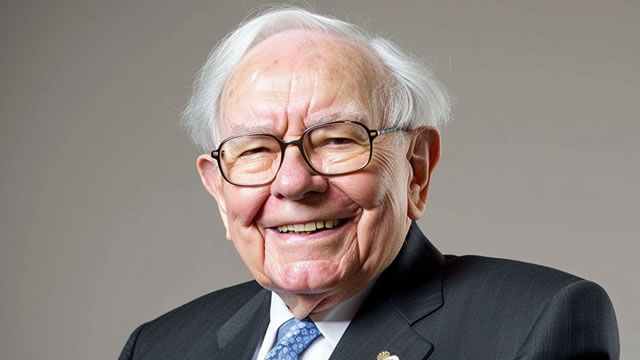
Berkshire Hathaway's Q4 2025 13F filing, released after the close of trading on February 17, 2026, offers a fascinating glimpse into the conglomerate's investment strategy at a pivotal moment. This report marks the final filing under Warren Buffett's tenure as Chief Executive Officer, a role he officially retired from on December 31, 2025, at the age of ninety-five. With Greg Abel now at the helm for day-to-day operations, the market is scrutinizing these adjustments for clues about Berkshire's future direction.

The overall message from this filing is one of careful evolution rather than radical transformation. While leadership has transitioned, the core tenets of Berkshire's investing culture – a focus on quality, durability, and long-term value – appear firmly intact. Investors should view these changes as strategic refinements within a well-established framework, rather than a wholesale reinvention of the portfolio.

Notable moves include a brand new position in The New York Times Company (NYT), a significant increase in Chevron (CVX), and continued trimming of high-profile holdings like Apple (AAPL) and Amazon.com Inc (AMZN). These adjustments highlight a dynamic approach to capital allocation, even as the company maintains its foundational investments in long-standing favorites such as Coca-Cola (KO) and American Express (AXP). The filing underscores that while the steward may change, the underlying investment playbook remains largely consistent.

This quarter's report is particularly significant as it provides the first major observational window into Berkshire's investment direction in the "Post-Buffett Era." The market is keenly watching how Abel and his team will navigate an environment characterized by elevated valuations and a massive cash pile, seeking to decipher the future trajectory of value investing within this colossal investment empire.

Why Did Berkshire Hathaway Bet on The New York Times Company (NYT)?

Berkshire Hathaway's new position in The New York Times Company (NYT) is arguably the most eye-catching move in the Q4 2025 13F filing. The conglomerate disclosed ownership of 5,065,744 shares, an investment valued at approximately $375 million based on NYT's current price of $74.03. This marks Berkshire's first known investment in the storied news organization, a striking choice that aligns surprisingly well with Buffett's long-standing appreciation for durable brands, pricing power, and trusted institutions.

The New York Times has successfully navigated the challenging media landscape by transforming into a global digital subscription business. This model generates recurring revenue and fosters strong reader loyalty, a characteristic highly valued by Berkshire. The company's TTM Price-to-Sales ratio of 4.27 and a robust Net Margin of 12.2% underscore the profitability of this digital pivot. Furthermore, a Return on Equity (ROE) of 17.8% and a Return on Invested Capital (ROIC) of 14.6% indicate efficient capital deployment.

Management's recent Q4 2025 earnings call highlighted a record year for digital revenue, fueled by strong subscriber and advertising growth, leading to expanded profitability and substantial free cash flow. NYT generated approximately $551 million in free cash flow in 2025, reflecting a capital-efficient model. The company's commitment to returning at least 50% of free cash flow to shareholders, alongside a 33.0% dividend per share growth in FY2025, further enhances its appeal as a quality, cash-generating business.

This stake suggests Berkshire sees enduring value in high-quality journalism, particularly as misinformation proliferates and credible sources become increasingly scarce. The investment is a vote of confidence in NYT's ability to continue growing its subscriber base, expand into new content formats like video, and maintain its brand as a preferred source for news and lifestyle content in a polarized, low-trust environment.

What Does the Bank of America (BAC) Reduction Signify?

On the other side of the ledger, Berkshire Hathaway significantly reduced its stake in Bank of America (BAC), a long-time core holding. The position fell from 568,070,012 shares to 517,295,934 shares, representing a reduction of approximately 50.8 million shares. This move continues a trend of trimming financial exposure, with Berkshire having reduced its BAC stake by roughly 48.6 million shares in Q1 2025 and a further 37 million shares in Q3 2025.

This persistent selling, while notable, doesn't necessarily signal a fundamental loss of confidence in Bank of America itself. BAC remains one of Berkshire's largest holdings, accounting for just over 10% of its public equity portfolio. The reduction may instead reflect a desire to rebalance financial exposure after years of strong gains, especially given that the position had grown to become Berkshire's second-largest holding by mid-2024. Profit-taking and managing concentration risk are likely key drivers behind these sales.

Buffett's investment in Bank of America, initiated with preferred stock and warrants during the 2011 financial crisis, has been highly successful, generating tens of billions in profits. With BAC shares trading at $52.74 and a market cap of $385.13 billion, the bank continues to demonstrate solid earnings and maintain a strong competitive moat, including its number two position in U.S. total deposits. Its TTM P/E of 12.68 and a dividend yield of 2.0% still present a reasonable valuation for a diversified bank.

The reduction also aligns with a broader cautious stance on the banking sector, as evidenced by Berkshire's complete exit from Citigroup and other bank stocks in previous quarters. With interest rate uncertainty and regulatory pressures, the risk-adjusted return profile for some financial institutions may have become less attractive, prompting Berkshire to scale back its exposure and reallocate capital.

Is Berkshire Hathaway's Record Cash Pile a Bullish or Bearish Signal?

Berkshire Hathaway's cash pile has reached staggering levels, now estimated to exceed $300 billion as of early 2026. This massive cash hoard is a direct consequence of significant sales in holdings like Apple and Bank of America, combined with a perceived scarcity of attractive reinvestment opportunities in the current market environment. The question for investors is whether this cash accumulation is a bullish sign of impending major investments or a bearish indicator of overvalued markets.

Historically, Buffett has accumulated substantial cash before major market dislocations, such as the dot-com bubble and the 2008 financial crisis. In those instances, his patience was handsomely rewarded, allowing Berkshire to deploy capital into exceptional assets at distressed prices while others struggled. This precedent suggests the current cash position could be a strategic move, positioning Berkshire to capitalize on future opportunities when valuations become more compelling.

However, the sheer scale of the cash pile also presents a capital deployment challenge. With stocks generally expensive, finding "meaningful" investment opportunities at scale has become increasingly difficult. This accumulation, while earning modest returns from T-bills, represents a deliberate choice to wait rather than force capital into overpriced assets. It could also signal a more cautious outlook on broad market valuations, especially given Berkshire's complete exit from S&P 500 ETFs (SPY and VOO) in Q4 2024.

Ultimately, the record cash pile reflects Buffett's enduring philosophy of maintaining optionality and a fortress-like balance sheet. It provides the liquidity needed for Berkshire's insurance operations and the capacity to acquire entire companies during market downturns. While some might view it as underperforming during speculative periods, long-term Berkshire shareholders understand this willingness to wait is a defining aspect of its investment edge.

How Do Other Portfolio Adjustments Reflect Berkshire's Strategy?

Beyond NYT and BAC, Berkshire Hathaway's Q4 2025 13F filing revealed several other key portfolio adjustments that further illuminate the conglomerate's evolving strategy. The firm meaningfully increased its commitment to Chevron Corp (CVX), raising its stake from 122,064,792 shares to 130,156,362 shares. This reinforces Berkshire's bullish stance on integrated energy producers, reflecting confidence in Chevron's balance sheet discipline, shareholder returns, and ability to generate cash across commodity cycles, particularly amid inflationary pressures and geopolitical uncertainty.

On the tech front, Berkshire continued to trim its massive holding in Apple Inc (AAPL) from 238,212,764 shares to 227,917,808 shares. While this marks another reduction, Apple remains Berkshire’s largest equity investment by far, underscoring continued conviction in the company’s ecosystem, brand loyalty, and robust cash generation. Similarly, its position in Amazon.com Inc (AMZN) was sharply lowered from 10,000,000 shares to 2,276,000 shares, suggesting profit-taking or a reassessment of risk relative to valuation for the e-commerce and cloud computing giant.

A new position in Liberty Media's SiriusXM (LLYVK) was also disclosed, with Berkshire opening a $907.9 million stake by adding 10,917,661 shares. This move, alongside a clarified holding of 3,018,555 shares in Liberty Formula One (FWONK), indicates a sustained interest in the media and entertainment sector, particularly businesses with strong recurring revenue streams and unique market positions. These adjustments, taken together, paint a picture of a portfolio that is being carefully refined to balance established, cash-generating businesses with selective bets on durable brands and essential services, all while maintaining a significant cash reserve for future opportunities.

Despite these changes, several cornerstone positions remained untouched. Berkshire maintained its 17,846,142 share stake in Alphabet Inc. (GOOGL), reaffirming belief in the long-term dominance of Google’s search, AI, and advertising businesses. It also held steady with 151,610,700 shares of American Express Company (AXP) and, perhaps most symbolically, kept its 400,000,000 share stake in The Coca-Cola Company (KO) unchanged. These steadfast holdings underscore Berkshire's commitment to simple businesses with powerful brands and global reach, a testament to the enduring principles of value investing.

What Does This Mean for Investors?

For investors, Berkshire Hathaway's Q4 2025 13F filing offers several key takeaways. First, the transition from Warren Buffett to Greg Abel as CEO appears to be one of continuity, not disruption. The investment philosophy remains anchored in identifying quality businesses with durable competitive advantages, even as the portfolio undergoes strategic adjustments. This should reassure long-term shareholders that the "Berkshire Way" will persist.

Second, the new stake in The New York Times Company highlights a belief in the enduring value of high-quality, subscription-based digital media. Investors might consider NYT as a compelling example of a traditional business successfully reinventing itself, offering recurring revenue and strong brand loyalty. Its solid financial metrics, including a 12.2% net margin and 17.8% ROE, support this thesis.

Third, the reduction in Bank of America holdings, coupled with a record cash pile, signals a cautious approach to market valuations and a strategic rebalancing of financial sector exposure. This suggests that even a long-term holder like Berkshire is willing to trim positions that have appreciated significantly, prioritizing capital preservation and flexibility for future opportunities. Investors might interpret this as a cue to review their own portfolios for overconcentration and potential profit-taking in richly valued assets.

Finally, the overall pattern of selective buying (NYT, Chevron, Liberty Media) and trimming (Apple, Amazon, BAC) indicates a disciplined approach to capital allocation in a market where attractive opportunities are scarce. Berkshire's massive cash reserves, while potentially a drag on short-term performance, provide a powerful optionality for future acquisitions or market dislocations. Investors should emulate this patience, focusing on quality and value rather than chasing speculative trends.


Berkshire Hathaway's Q4 2025 13F is a masterclass in strategic portfolio management during a leadership transition. It reinforces the enduring power of value investing while adapting to current market realities. As Greg Abel steps into the CEO role, the message is clear: the core principles remain, but the execution will be dynamic and opportunistic, always with an eye on long-term value creation.


Want deeper research on any stock? Try Kavout Pro for AI-powered analysis, smart signals, and more. Already a member? Add credits to run more research.

SHARE THIS ON:

Related Articles

Category

You may also like

No related articles available

Breaking News

View All →

No topics available at the moment