MarketLens
Berkshire Hathaway's $9.7B OxyChem Bet: What Warren Buffett's Latest Move Means for Investors

Greg Abel takes center stage as Berkshire deploys cash into classic industrial play while Occidental sheds debt burden
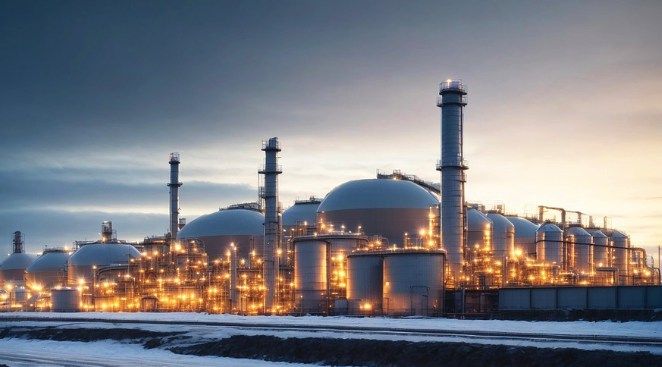
In a deal that checks all the classic Warren Buffett boxes, Berkshire Hathaway has agreed to acquire Occidental Petroleum's chemical division, OxyChem, for $9.7 billion in cash. Announced October 2, 2025, the transaction represents far more than a simple asset sale—it's a strategic reset for both companies and a clear signal about Berkshire's future under designated successor Greg Abel.
For Occidental, the deal is financial salvation. The company plans to use $6.5 billion of the proceeds to slash debt, finally addressing the balance sheet concerns that have plagued the stock since its debt-fueled acquisition spree. For Berkshire, it's a textbook deployment of capital: buying a market-leading business with a durable competitive advantage at what appears to be a reasonable price.
The deal also marks a symbolic milestone. Greg Abel, Berkshire's Vice Chairman and Buffett's heir apparent, took the public lead in announcing the transaction—a deliberate signal to investors that the company's legendary capital allocation discipline will survive its equally legendary founder.
The Deal: Simple Structure, Complex Implications
The core transaction is straightforward. Berkshire will pay $9.7 billion in cash for OxyChem, pending customary regulatory approvals, with closing expected in Q4 2025. But the devil—and the strategic genius—lies in the details.
Critically, Occidental will retain all of OxyChem's legacy environmental liabilities through a subsidiary, with Glenn Springs Holdings continuing to manage existing remediation projects. This carve-out is huge for Berkshire. Environmental liabilities in the chemical industry are notoriously difficult to quantify and can drag on for decades. By leaving these risks with Occidental, Berkshire acquires a clean portfolio of operating assets without the uncertainty that often kills chemical deals.
For context, the $9.7 billion price tag represents less than 3% of Berkshire's massive cash pile, which exceeds $344 billion. This financial firepower allows Berkshire to move quickly and decisively when opportunities arise—a competitive advantage that's become increasingly valuable in today's market.
A Partnership Years in the Making
To understand this deal, you need to rewind to 2019. When Occidental CEO Vicki Hollub wanted to acquire Anadarko Petroleum, she needed financing to beat out Chevron's competing bid. Enter Warren Buffett with a classic deal structure: $10 billion in preferred stock paying an 8% annual dividend ($800 million per year) plus warrants to buy up to 83.9 million common shares at around $59.62 to $62.50 per share.
That initial investment established Berkshire as Occidental's white knight. But the relationship deepened dramatically. Over the following years, Berkshire aggressively accumulated Occidental common stock, often buying during price weakness. By mid-2025, Berkshire's stake had grown to approximately 255.3 million shares—nearly 29% of the company—making it by far the largest shareholder.
This pre-existing relationship was crucial to how the OxyChem deal came together. Rather than running a lengthy auction process that might have attracted higher bids but would have taken months, Occidental negotiated directly with its largest shareholder. For a company under pressure from credit markets to deleverage quickly following its December 2023 CrownRock acquisition, speed and certainty were paramount. For Berkshire, it meant acquiring a prized asset without a bidding war—preserving the "margin of safety" that's central to its investment philosophy.
Occidental's Debt Problem: Finally Solved?
Let's talk numbers. As of mid-2025, Occidental was carrying $23 billion in total debt, resulting in a debt-to-equity ratio of 63.6%—uncomfortably high for a cyclical energy company. This debt load was the direct result of the Anadarko acquisition and the more recent $12 billion CrownRock deal.
To be fair, management had been working the problem. In the 13 months through August 2025, Occidental had already paid down approximately $7.5 billion in debt through strong free cash flow and smaller asset sales, reducing annual interest expenses by an estimated $410 million. But it wasn't enough. The debt overhang weighed on the stock, constrained capital spending, and limited Occidental's strategic flexibility.
The OxyChem sale changes everything. Using $6.5 billion for debt repayment will push Occidental's principal debt below the critical $15 billion threshold—a target management set after the CrownRock acquisition. The impact is transformative:
Estimated Pro-Forma Impact:
- Total Debt: From $23.0 billion to $16.5 billion
- Debt-to-Equity Ratio: From 63.6% to approximately 45.6%
- Annual Interest Savings: $350-400 million
This isn't incremental improvement. It's a fundamental de-risking of the balance sheet that should lead to credit rating upgrades and a material re-rating of the stock by investors who had previously applied a "leverage discount" to Occidental's valuation.
The New Occidental: Focused but More Cyclical
Post-transaction, Occidental transforms from a diversified energy-and-chemicals company into a pure-play energy producer with two core pillars:
Upstream Oil & Gas: The crown jewel is Occidental's dominant position in the Permian Basin, one of the world's most prolific and lowest-cost hydrocarbon provinces. This is where the company will focus its capital and expertise, with CEO Vicki Hollub describing "20+ years of low-cost resource runway."
Oxy Low Carbon Ventures (OLCV): This is Occidental's bet on the energy transition, focused on Carbon Capture, Utilization, and Storage (CCUS) technology. Its 1PointFive subsidiary is constructing STRATOS in Texas, which will be the world's largest Direct Air Capture facility.
The strategic logic is clear: trade the earnings stability of chemicals for the capital flexibility to maximize returns from core oil and gas operations while funding a long-term growth engine in low-carbon technologies.
But there's a trade-off investors need to understand. OxyChem contributed approximately 18.4% of total revenue in Q2 2025 and provided a natural hedge against oil price volatility—chemicals often perform better when energy prices are weak. Without this buffer, Occidental's earnings will be more directly tied to commodity cycles. The company is betting that investors will reward its strategic clarity and stronger balance sheet with a higher valuation multiple, even as its business becomes more cyclically exposed.
What Berkshire is Really Buying
OxyChem isn't just any chemical company. It's a market leader with serious competitive advantages:
- World's largest merchant marketer of chlorine
- Second-largest merchant marketer of caustic soda (sodium hydroxide)
- World's largest producer of calcium chloride
- Top three U.S. manufacturer of PVC through OxyVinyls
These products are essential industrial commodities used in everything from water purification and pharmaceuticals to construction and de-icing. The demand is non-discretionary and remarkably stable, even through economic cycles.
Financially, OxyChem has been consistently profitable. Pre-tax earnings were $1.5 billion in 2023, $1.1 billion in 2024, and are tracking toward $1.1 billion again in 2025. The business achieved its highest earnings in over 30 years in 2021, demonstrating its quality and resilience.
The Valuation Question: Fair Price or Bargain?
Here's where it gets interesting for investors trying to assess whether Berkshire got a good deal.
Using industry-standard metrics, OxyChem's normalized annual EBITDA (Earnings Before Interest, Taxes, Depreciation, and Amortization) is estimated at $1.2 billion to $1.5 billion. At a $9.7 billion purchase price, that implies a transaction multiple of approximately 6.5x to 8.1x EBITDA.
Compare that to recent industry benchmarks:
- Median commodity chemical transactions: ~9.0x EBITDA
- Specialty chemical transactions: up to 14.4x EBITDA
- Large diversified chemical companies: often higher
Berkshire appears to have acquired a market-leading asset at a multiple below the industry median. This is classic Buffett—not buying a distressed "cigar butt" company, but acquiring what he'd call a "wonderful company at a fair price."
Why the discount? Simple: Occidental was a motivated seller facing urgent balance sheet pressures. Berkshire was a patient buyer with unlimited financial capacity and no need to compete in an auction. This asymmetry allowed Berkshire to capture value that wouldn't have been available under different circumstances.
Greg Abel's Coming-Out Party
Perhaps the most significant aspect of this deal has nothing to do with chemicals. Greg Abel, not Warren Buffett, was the primary voice in Berkshire's announcement. Abel praised OxyChem as a "robust portfolio of operating assets, supported by an accomplished team" and commended Occidental's management—language straight from the Buffett playbook.
This is deliberate signaling. At 94, Buffett is still actively involved, but the succession plan is clear. Abel will be CEO, and this deal demonstrates he's fully steeped in Berkshire's capital allocation culture. As Edward Jones analyst Jim Shanahan noted, allowing Abel to "take the lead" on a nearly $10 billion acquisition is a logical step in Berkshire's historic leadership transition.
For Berkshire investors, the message is reassuring: the principles that built the company—disciplined capital allocation, focus on quality businesses with durable advantages, long-term thinking—will endure into the Abel era.
What Investors Should Watch
For Occidental Shareholders:
The bull case is straightforward: a dramatically stronger balance sheet, strategic clarity, and the ability to fully exploit world-class Permian assets. The company becomes a compelling play on U.S. energy independence and the eventual recovery in oil prices, with the added kicker of optionality in low-carbon technologies.
Key metrics to monitor:
- Progress toward and maintenance of sub-$15 billion debt levels
- Free cash flow generation and capital discipline
- Credit rating actions from Moody's and S&P
- Development milestones at OLCV's STRATOS facility
The bear case? Higher cyclical exposure without the chemical hedge and the risk that OLCV's capital-intensive projects drain cash without generating proportionate returns.
For Berkshire Shareholders:
This acquisition should be evaluated on OxyChem's ability to generate consistent, growing cash flows over decades—the Berkshire standard. Investors should track the "Manufacturing, Service and Retailing" segment in quarterly reports to assess OxyChem's contribution.
The deal will be deemed successful if it generates stable, low-double-digit returns on invested capital over the long term, adding to Berkshire's enormous cash generation capacity for future redeployment.
The Bigger Picture: A Relationship Transformed
This transaction fundamentally alters the Berkshire-Occidental relationship. Berkshire isn't just a large shareholder anymore; it's now an operational partner that has acquired a core division. The ties between these two companies have reached an unprecedented depth.
Berkshire still holds its preferred stock (generating that juicy $800 million annual dividend) and warrants that, if fully exercised, would push its ownership stake above 40%. While Buffett has publicly stated Berkshire won't seek control of Occidental, its position as a nearly 30% shareholder and major transactional partner gives it enormous influence.
This creates a powerful defensive moat for Occidental. With a long-term-oriented, friendly shareholder controlling such a large stake, the company is essentially immune to hostile takeover attempts. This gives CEO Vicki Hollub a stable platform to execute her long-term strategy without worrying about short-term activist pressures or unsolicited bids from larger energy rivals.
There's also the intriguing question of what happens to the preferred stock. The $800 million annual dividend is a significant cash outflow for Occidental. The strengthened relationship from this deal could facilitate a future agreement to unwind this position—perhaps allowing redemption at par rather than the 5% premium specified in the original terms, or converting to common stock. Such a move would provide another powerful lever for Occidental to reduce cash outflows and further strengthen its financial position.
Bottom Line: Win-Win or Too Good to Be True?
In an era of complex financial engineering and questionable deal-making, the Berkshire-Occidental transaction stands out for its clarity and logic. It's a straightforward trade: Occidental sacrifices the earnings stability and diversification of its chemical division to fix its balance sheet and focus on its core strengths. Berkshire deploys capital into a high-quality, cash-generative industrial asset at a reasonable valuation.
Both companies get what they need most. Occidental gets financial breathing room and strategic focus. Berkshire gets another durable business for its collection of industrial crown jewels. And investors in both companies get visibility into a strengthened partnership and, in Berkshire's case, confirmation that the post-Buffett era will maintain the discipline that's made the company an investing legend.
The deal isn't without risks—Occidental becomes more cyclical, and Berkshire is paying billions for exposure to commodity chemicals in an uncertain economic environment. But the strategic logic is sound, the valuation appears reasonable, and the mutual benefits are clear.
For investors, the key is understanding what each company is becoming. Occidental is betting it can generate higher returns and command a better valuation as a focused energy producer than as a leveraged conglomerate. Berkshire is betting that OxyChem's market-leading positions and essential product portfolio will generate steady cash for decades.
If both bets pay off, this deal will be studied in business schools as a masterclass in symbiotic corporate strategy. And given the track records of the executives involved—Warren Buffett, Greg Abel, and Vicki Hollub—investors should bet on success.
As the deal closes in Q4 2025, all eyes will be on execution. For Occidental, that means delivering on debt reduction and capital discipline. For Berkshire, it means integrating OxyChem seamlessly and generating the steady returns that have defined the conglomerate's industrial acquisitions. The stage is set for both companies to prove that sometimes, the best deals are the simplest ones.
Ready to dive deeper into complex investment analysis like this? Discover how Kaout Pro's financial research agents can automate sophisticated market comparisons, company valuations, and strategic assessments. Our AI-powered platform transforms hours of manual research into comprehensive, data-driven insights in minutes. Subscribe to Kavout Pro today and elevate your investment research with the power of automated financial intelligence.
Related Articles
Category
You may also like
No related articles available
Breaking News
View All →No topics available at the moment