MarketLens
Google's $1.6 Billion Nuclear Bet Signals a New Era for Energy Investors

When Google writes a 25-year check to restart a mothballed nuclear plant, you know something fundamental has shifted in the energy market. The tech giant's October agreement with NextEra Energy (NEE) to revive Iowa's Duane Arnold Energy Center isn't just another corporate sustainability headline---it's a multi-billion-dollar signal that the AI revolution has created an energy crisis that only nuclear power can solve.
Here's why investors should care: The utility sector has gained 40% over the past two years, adding nearly $500 billion in market value, and nuclear stocks like Constellation Energy (CEG) and Oklo (OKLO) have surged 40% and 1,000% respectively in 2025 alone. But this isn't a momentum chase---it's the early innings of a structural shift in how America powers its digital economy.
The Google-NextEra deal represents something Wall Street hasn't seen in decades: a credible path to bringing gigawatts of clean, reliable baseload power online in under five years. For investors trying to position portfolios for the AI boom, understanding this nuclear renaissance matters more than tracking the latest semiconductor stock.
The Deal That's Rewriting Energy Economics
Let's start with the specifics, because the structure of this agreement is as important as the headline.
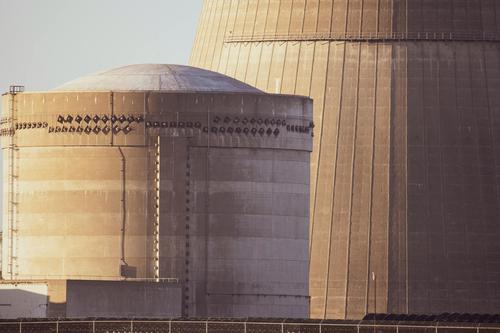
NextEra Energy will invest over $1.6 billion to restart the 615-megawatt Duane Arnold plant, which shut down in August 2020 after a derecho storm damaged its cooling towers. Google has committed to a 25-year power purchase agreement to buy the majority of the plant's output, with Central Iowa Power Cooperative taking the remaining 50 MW on identical terms.
The plant is expected to come online by early 2029---critically, that's years ahead of when new nuclear reactors or even most large-scale solar projects could deliver equivalent capacity. For NextEra, the economics look compelling: management expects the project to contribute $0.16 in average annual adjusted earnings per share over the first decade of operations, and it qualifies for nuclear production tax credits with a 10% energy community bonus.
But here's what makes this deal transformative: Google isn't just buying power, it's underwriting the entire infrastructure investment. The 25-year PPA provides the revenue certainty that makes NextEra's $1.6 billion capital outlay financeable. This is corporate balance sheets directly funding energy infrastructure---a model that could unlock restarts of other shuttered nuclear facilities across the country.
The precedent matters. Microsoft is already doing something similar at Three Mile Island in Pennsylvania, backing Constellation Energy's $1.6 billion restart of an 835-MW reactor scheduled for 2028. Amazon has committed $1 billion to nuclear investments, including a power purchase agreement at the Susquehanna plant in Pennsylvania. Meta has contracted for power from the Clinton Clean Energy Center in Illinois.
When the four largest cloud computing companies all reach the same conclusion---that nuclear power is essential infrastructure---investors should pay attention.
Why Nuclear, Why Now: The AI Power Crisis
The driver behind this nuclear pivot is straightforward: AI is consuming electricity at a scale that's breaking traditional grid planning models.
U.S. data centers consumed over 4% of the nation's total electricity in 2024---roughly equivalent to Pakistan's entire annual demand. By 2030, that figure is projected to hit 8%, with some estimates suggesting data center power consumption could reach 400 terawatt-hours, up from fewer than 100 terawatt-hours in 2020. Goldman Sachs forecasts global data center power demand could surge 165% by 2030.
Here's the constraint that's driving tech companies to nuclear: AI data centers need 24/7, always-on power. Wind and solar are intermittent---they generate electricity when nature cooperates, not necessarily when Google's servers need it. Natural gas provides reliable baseload power, but it conflicts with the carbon-free commitments these companies have made to investors and regulators.
Nuclear solves both problems. U.S. nuclear plants operate at 91-92% capacity factors, meaning they run at or near maximum output almost continuously. That's the "baseload" power profile that data centers require. And it's carbon-free, checking the ESG box that matters increasingly to institutional investors.
The economic logic is also becoming clearer. While nuclear power has historically been expensive, when companies internally price carbon emissions---as many now do---the math shifts. Large-scale nuclear generators cost an estimated $77 per megawatt-hour when factoring in carbon pricing, compared to $91/MWh for natural gas combined cycle plants. Add in the cost certainty of a long-term fixed-price contract, and nuclear starts looking like a strategic hedge against both carbon costs and energy price volatility.
There's also a blunt reality at work: there simply aren't enough alternatives arriving fast enough. Natural gas turbines are largely sold out through the end of the decade. New nuclear construction takes 10-15 years. Small modular reactors won't reach commercial scale until the 2030s at the earliest. For companies racing to build AI infrastructure now, restarting existing nuclear plants is the fastest path to securing gigawatt-scale clean power.
The Investment Thesis: Who Wins from the Nuclear Renaissance
For investors, this trend creates opportunities across multiple segments, though not all nuclear plays are created equal.
The Established Operators: Lower Risk, Real Cash Flows
The clearest beneficiaries are utilities with existing nuclear assets and the operational expertise to restart or expand capacity. NextEra Energy, already the world's largest utility by market cap at over $170 billion, now has nearly 3 gigawatts of energy projects contracted with Google. The Duane Arnold restart alone is expected to generate $9 billion in economic activity over the project's lifetime.
Constellation Energy is the pure-play leader here. The company operates the largest U.S. nuclear fleet, and its Microsoft deal to restart Three Mile Island has become the template for tech-nuclear partnerships. The stock is up substantially, but Zacks analysts still rate it a Strong Buy with an expected earnings growth rate of 11.1% for the current year.
Vistra (VST) represents another compelling play, with existing nuclear assets and a strong presence in high-growth electricity markets. The company is well-positioned to capture long-term upside from the administration's aggressive nuclear push, which targets quadrupling U.S. nuclear capacity to 400 gigawatts by 2050.
What makes these established players attractive is that they're generating cash now while positioning for growth. They're not burning capital on speculative technology development---they're operating proven assets and restarting facilities with known engineering.
The SMR Developers: Higher Risk, Explosive Upside Potential
The small modular reactor developers offer more speculative exposure with significantly higher risk-reward profiles.
NuScale Power (SMR) leads the pack with actual regulatory approvals, having secured its second NRC design approval in 2025. The company's 77-megawatt modules can be configured in arrays for flexible deployment. But execution risk is real---NuScale's Idaho project was cancelled after costs ballooned from $3.6 billion to $9.3 billion.
Oklo has captured investor attention with its "micro-reactor" approach and high-profile backing from Sam Altman. The company received its first commercial reactor license from the NRC in July 2025. But Oklo's Aurora reactors produce just 15 megawatts each---equivalent to powering about 8,000 homes. Scaling to data center-relevant capacity would require dozens of units, introducing complex operational challenges.
The appeal of SMR developers is their potential to solve nuclear's traditional problems: high construction costs, lengthy deployment timelines, and safety concerns. If they deliver on their promises, the market opportunity is massive. But they're still developing unproven technology in a heavily regulated industry with a poor track record of on-time, on-budget delivery.
The Supporting Players: Picks and Shovels
BWX Technologies (BWXT) provides nuclear components and engineering services, offering exposure to both reactor restarts and new construction without betting on a single technology. Cameco (CCJ) and Centrus Energy supply uranium fuel, benefiting from any expansion in nuclear capacity. These companies provide more diversified exposure to the nuclear renaissance theme.
The Risks Investors Can't Ignore
Despite the compelling thesis, several significant risks could derail the nuclear revival story.
Demand Reality Check
Willie Phillips, former chairman of the Federal Energy Regulatory Commission, has raised concerns about whether AI power demand projections are real. Tech companies are reportedly shopping the same large projects to multiple utilities, creating the appearance of more demand than actually exists. Constellation Energy's CEO warned in May that "the load is being overstated" and urged caution.
If AI growth disappoints or proves less power-intensive than projected, utilities could face billions in stranded costs from nuclear investments that aren't needed. The sector spent $178 billion on grid upgrades last year and is forecasting $1.1 trillion through 2029---substantial capital at risk if demand forecasts prove too optimistic.
Execution and Timeline Risk
Restarting a nuclear plant that's been offline for five years is technically complex. The Duane Arnold facility is nearly 50 years old, using a General Electric Mark I boiling water reactor design---the same type that failed at Fukushima. Critics point out that critical components may have degraded during decommissioning, introducing new safety risks.
The regulatory path is also uncharted. The NRC has never before re-licensed a plant that entered the decommissioning phase. While NextEra cleared an early FERC hurdle in August 2025, the full NRC approval process could face delays from legal challenges by environmental groups who argue regulators are "cobbling together a daisy chain of existing regulations" in a legally dubious manner.
For NextEra, critical components like generator step-up transformers won't be delivered until 2028, leaving little schedule margin. For Google, the 25-year PPA represents a massive long-term commitment to a single asset in a rapidly evolving energy market.
Economic and Political Headwinds
The economics of nuclear power remain challenging. Microsoft is reportedly paying at least 100% over market rates for Three Mile Island power. While that might prove shrewd if electricity prices surge, it could also represent a massive overpayment if supply comes online faster than expected or if AI demand disappoints.
Community opposition is also intensifying. Google withdrew plans for a data center in Indiana after local pushback over environmental impacts. Data centers face growing criticism about water consumption and grid strain, with communities increasingly resistant to hosting facilities that consume city-scale amounts of electricity while providing relatively few jobs.
There's also the unresolved nuclear waste issue. The U.S. still lacks a permanent repository for high-level radioactive waste, with the Yucca Mountain project stalled for over a decade. All spent fuel from restarted plants will be stored on-site indefinitely, creating long-term environmental liabilities that could fuel future political opposition.
What Investors Should Watch
For investors considering exposure to this theme, several signposts will indicate whether the nuclear renaissance is real or a false start.
First, watch the NRC approval process for Duane Arnold and Three Mile Island. If either faces significant regulatory delays beyond 2029, it could cool enthusiasm for other restart projects and pressure valuations across the sector.
Second, monitor data center construction rates and AI capital spending. If Microsoft, Amazon, Google, or Meta pull back on their aggressive AI infrastructure buildouts, the fundamental demand driver for this entire thesis evaporates.
Third, track project economics as the first restarts come online. If NextEra or Constellation can deliver Duane Arnold and Three Mile Island on budget and on schedule, it validates the restart model and could unlock a wave of similar projects. Cost overruns or delays would have the opposite effect.
Finally, pay attention to electricity price trends in data center markets like Iowa, Virginia, and Texas. Rising prices would validate the capacity shortage thesis and justify premium pricing for nuclear power. Flat or falling prices would suggest the market is adequately supplied, undermining the investment case.
The Bottom Line for Investors
The Google-NextEra nuclear deal marks a genuine inflection point in U.S. energy markets. The AI boom has created real, immediate demand for gigawatts of clean, reliable baseload power---demand that only nuclear can practically meet on the required timeline.
For investors, the opportunity is clearest in established operators like Constellation Energy and NextEra Energy, which have real assets, proven operational capability, and signed contracts with creditworthy counterparties. These companies are experiencing their strongest growth cycle in decades, with multi-year visibility into capital deployment and earnings growth.
The SMR developers offer higher potential upside but with correspondingly higher risk. Companies like Oklo and NuScale are essentially options on technology that won't deliver commercial power until well into the next decade. They're appropriate for aggressive investors with conviction that next-generation nuclear will overcome the cost and regulatory challenges that have plagued the industry for decades.
The broader theme---that energy infrastructure has become a critical bottleneck for the digital economy---seems durable. Whether through nuclear restarts, new SMRs, natural gas plants, or some combination, hundreds of billions in capital will flow into power generation over the next decade. The Google-NextEra deal provides a roadmap for how that capital deployment will work.
The question isn't whether this theme matters. It's whether specific companies can execute on their promises in a sector with a long history of cost overruns, regulatory delays, and disappointed expectations. For investors willing to do the homework and accept the risks, the nuclear renaissance offers compelling opportunities. But it's a marathon, not a sprint---and not every player will make it to the finish line.
Ready to dive deeper into complex investment analysis like this? Discover how Kaout Pro's financial research agents can automate sophisticated market comparisons, company valuations, and strategic assessments. Our AI-powered platform transforms hours of manual research into comprehensive, data-driven insights in minutes. Subscribe to Kavout Pro today and elevate your investment research with the power of automated financial intelligence.
Market Lens (beta)
Loading...