MarketLens
Is Global Conflict Driving a New Era for Defense Stocks

Key Takeaways
- Global defense spending, now at an estimated $3 trillion, is surging due to escalating geopolitical tensions, creating a robust tailwind for defense contractors and drone technology firms.
- Lockheed Martin (LMT) offers investors a stable, blue-chip play on this trend, benefiting from strong demand for its established platforms and a substantial backlog, despite its premium valuation.
- Red Cat Holdings (RCAT) represents a high-growth, high-risk opportunity in the rapidly expanding military drone market, validated by recent Pentagon contracts and international orders.
Is Global Conflict Driving a New Era for Defense Stocks?
The global security landscape is undeniably shifting, and with it, the fortunes of defense contractors and innovators. Recent escalations, particularly the joint U.S. and Israeli strikes against Iran over the weekend, have sent ripples through financial markets, prompting a flight to safety and a renewed focus on the defense sector. This isn't just a fleeting reaction; it's a reflection of a deeper, more structural shift in global defense spending, which Oppenheimer estimates has already reached an astonishing $3 trillion annually, a 50% increase over the past five years.
This surge isn't confined to a single region. From the protracted Russia-Ukraine war to heightened tensions in the Middle East and even the capture of the Venezuelan president by U.S. forces, geopolitical instability is becoming the new normal. Governments worldwide are not merely maintaining but actively expanding their military budgets, prioritizing advanced combat technologies that can be deployed rapidly and effectively. This environment creates a powerful, albeit somber, tailwind for companies at the forefront of defense innovation.
Investors are taking note. On Monday, March 2, 2026, defense stocks rallied significantly, with Lockheed Martin (LMT) trading up 3.37% to $676.70 and Red Cat Holdings (RCAT) soaring an impressive 17.34% to $13.67. This immediate market reaction underscores the perception that defense companies can act as safe havens during times of war, benefiting from increased procurement cycles and long-term sustainment contracts. The question for investors now is how to best position themselves within this evolving sector.
The broader narrative suggests that this isn't merely a short-term geopolitical trade. While immediate conflicts certainly boost demand, the underlying trend points to a sustained, multi-year procurement cycle. Analysts are increasingly factoring in these elevated spending levels into their long-term forecasts, suggesting that the current momentum in defense stocks could be indicative of a more fundamental re-rating of the sector as global defense budgets are projected to double within the next decade.
How is Lockheed Martin Positioned in This Volatile Environment?
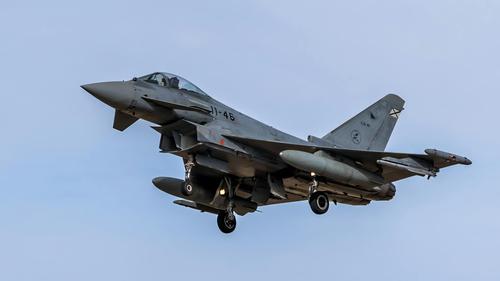
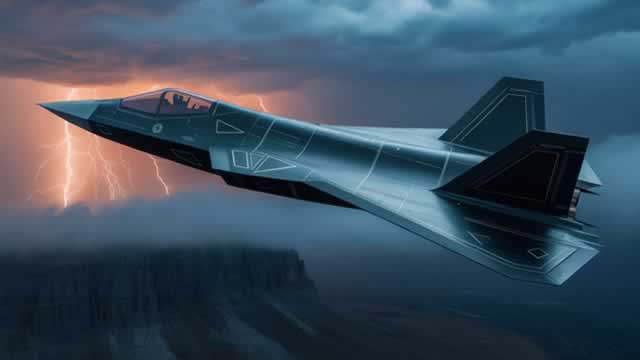
Lockheed Martin, the undisputed titan of the aerospace and defense industry, stands as a primary beneficiary of this escalating global instability. The company, with its $156.59 billion market capitalization, is synonymous with advanced military hardware, from its iconic F-35 fighter jets to sophisticated interceptors and air-defense systems. These platforms are in high demand as nations seek to modernize their arsenals and bolster their defensive capabilities against a backdrop of rising threats.
The company's robust financial outlook for 2026 further solidifies its position. Lockheed Martin has already forecast upbeat profit and revenue figures, anticipating continued strong demand for its core products. This confidence is rooted in its massive, multi-year secured backlogs, which provide significant revenue visibility and stability, even amidst broader economic uncertainties. For investors, LMT offers a degree of predictability and resilience rarely found in other sectors during times of geopolitical flux.
On Monday, shares of Lockheed Martin surged, hitting an intraday high of $692.00 and closing at $676.70, a 3.37% increase on a volume spike of over 3.2 million shares. This rally was directly attributed to the U.S. and Israeli strikes on Iran, fueling expectations for increased demand for its flagship products. While the company did miss its latest EPS target ($5.80 vs. $6.33) despite a revenue beat ($20.32 billion, up 9.1% year-over-year), the market appears to be prioritizing the macro tailwinds.
Despite its "Hold" consensus rating from analysts and an average price target of around $612.50 (as of early 2026), the stock's recent performance suggests that the market is pricing in a more optimistic scenario. UBS Group, for instance, recently raised its target price on LMT from $580.00 to $663.00. Lockheed Martin's status as a dividend payer, with a quarterly dividend of $3.45, also adds to its appeal as a defensive play, offering both capital appreciation potential and income in a turbulent market.
What Makes Red Cat Holdings a Key Player in Drone Warfare?
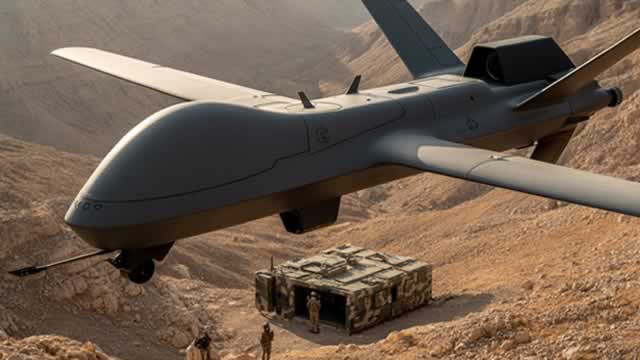
While Lockheed Martin represents the established defense giant, Red Cat Holdings (RCAT) is emerging as a compelling, high-growth player in the specialized and rapidly expanding drone technology sector. The company, with a market capitalization of $1.23 billion, is carving out a niche in commercial and government unmanned aerial vehicle (UAV) technology for reconnaissance, public safety, and inspection applications, with a strategic pivot towards "all-domain" defense solutions.
Red Cat's subsidiary, Teal Drones, has secured significant validation through recent contract wins, most notably its selection for the Pentagon's "Drone Dominance Program." This program, with a total potential value of $1 billion across four phases, represents a substantial opportunity for RCAT. The initial tranche alone involves 25 vendors competing for a $150 million award to supply 30,000 drones, positioning Teal Drones at the forefront of this critical defense initiative.
Beyond the Pentagon, Red Cat is also expanding its international footprint. In early February 2026, the company announced a follow-on order for its Black Widow™ drone system from an allied nation in the Asia-Pacific region. This order, which stemmed from a December 2025 competitive tender, marks the second military customer from that region to deploy the Black Widow system, highlighting the effectiveness and reliability of Red Cat's technology in real-world operational scenarios.
The market has reacted enthusiastically to Red Cat's prospects, especially in light of the escalating Iran conflict. On Monday, RCAT shares soared 17.34% to $13.67, with an extraordinary volume of over 38 million shares traded. This surge reflects investor anticipation for increased demand for drones and combat technologies. Red Cat's strategic investment in World View Enterprises, a specialist in high-altitude balloon systems, further aims to enhance its competitive edge in surveillance and drone solutions.
What Are the Broader Market Opportunities in Drone Technology?
The military drone market is experiencing explosive growth, driven by a confluence of factors including escalating geopolitical tensions, the proven effectiveness of UAVs in modern warfare, and rapid technological advancements. Oppenheimer forecasts the total addressable market for drones to expand from $45 billion today to an astounding $400 billion globally, encompassing hardware, services, AI, and related software. This indicates a profound shift in military procurement priorities.
Specific market projections underscore this potential. The military drones market is set to climb from $17.26 billion in 2025 to $19.25 billion in 2026, representing a robust CAGR of 11.5%. Looking further out, the market is expected to reach $29.57 billion by 2030 and potentially $66.5 billion by 2035, growing at a CAGR of 13.8% from 2026-2035. This growth is bolstered by rising demands for autonomous drones, advanced sensors, and AI-driven analytics.
This expansion is not just about increasing numbers of drones; it's about their evolving capabilities and applications. Drones are increasingly vital for border surveillance, reconnaissance, precision strikes, and enhanced communication systems. The adoption of Artificial Intelligence (AI) is modernizing military drone technologies, enabling autonomous target picking with precision and facilitating advanced battlefield communication relay. This technological frontier benefits companies like Red Cat, which are actively innovating in this space.
Moreover, the shift towards "all-domain" defense, integrating aerial drones with new Unmanned Surface Vessels (USVs), opens up new avenues for growth. Red Cat's expansion into maritime systems, for instance, positions it uniquely to capture a share of this expanding pie. The Pentagon's "Replicator initiatives" and NATO's increased investments in HALE (High-Altitude Long Endurance) and MALE (Medium-Altitude Long Endurance) drones further solidify the long-term demand for these advanced unmanned systems.
What Are the Key Risks and Challenges for Investors?
While the tailwinds for defense and drone stocks appear strong, investors must also contend with significant risks and challenges. For a behemoth like Lockheed Martin, the primary macro risk is a broader regional escalation that could disrupt global supply chains, particularly oil tanker traffic through the Strait of Hormuz. We've already seen Brent crude hit $79.33 per barrel, with West Texas Intermediate gaining almost 8% following the Iran attacks. Higher oil prices fuel inflation, pressure consumer spending, and could force central banks to maintain restrictive policies, posing a macro headwind.
Lockheed Martin's valuation also warrants scrutiny. With a P/E ratio of 30.63, the market has priced in strong long-term procurement cycle expectations and a relatively short conflict timeline. Any prolonged conflict or unexpected shifts in government spending rhetoric could threaten these future growth assumptions and directly impact the multiple. While the initial trade is about crisis-driven procurement, the longer-term story hinges on recurring revenue from sustainment contracts, which account for roughly 70% of a major weapon system's total life-cycle cost.
For Red Cat Holdings, the risks are different but equally substantial, primarily revolving around its premium valuation and execution challenges. The company's current market capitalization of $1.23 billion on trailing twelve-month revenue of just $7.44 million (as of its Innovation Day in late February 2026) implies a very high sales multiple, demanding flawless execution and transparent communication of financial milestones. While Q3 revenue was $10.1 million, a sixfold increase year-over-year, and the company targets $110 million by 2026, this is still a significant leap.
Scaling production for both drones and USVs, especially with a commitment to U.S.-based manufacturing, will require substantial capital and operational expertise. Red Cat has an active S-3 shelf registration filed on September 15, 2025, which provides financial flexibility but also raises concerns about potential shareholder dilution if additional funding is needed. The market's cautious optimism was evident on its Innovation Day, where the stock initially surged 8% but closed down 10.32% at $11.65, underscoring the demand for concrete financial details and execution timelines.
How Can Investors Strategically Position Themselves?
In this environment of heightened geopolitical tension and surging defense spending, investors have distinct opportunities depending on their risk appetite and investment horizon. Lockheed Martin offers a relatively stable, blue-chip investment, benefiting from its entrenched position, massive contract backlogs, and critical role in global defense. Its consistent dividend and status as a "safe haven" during times of conflict make it an attractive option for those seeking a more defensive play with long-term growth potential. However, its premium valuation and susceptibility to broader macro headwinds, like sustained high oil prices, should be carefully considered.
Red Cat Holdings, on the other hand, presents a high-growth, high-risk proposition in the burgeoning military drone market. Its recent Pentagon contracts and international orders validate its innovative technology and strategic pivot towards "all-domain" defense. For investors willing to tolerate higher volatility, RCAT offers exposure to a rapidly expanding sector that is fundamentally reshaping modern warfare. The key here is to monitor execution closely, particularly the company's ability to scale production, convert its backlog into sustainable earnings, and manage potential shareholder dilution from future financing needs.
The broader defense and drone sector is undergoing a structural shift, moving beyond traditional platforms to embrace agile, AI-powered, and autonomous systems. This trend benefits both established players like Lockheed Martin, which are integrating these technologies into their vast ecosystems, and nimble innovators like Red Cat, which are developing specialized solutions. Investors should consider a diversified approach, perhaps combining exposure to both the stable giants and the disruptive smaller players to capture the full spectrum of opportunities in this evolving landscape.
Ultimately, the investment thesis for both LMT and RCAT is tied to the unfortunate reality of a more volatile world. As global defense expenditures continue their upward trajectory, driven by persistent geopolitical challenges, companies providing essential security and combat technologies are likely to remain in focus. Careful due diligence, a clear understanding of each company's unique risk profile, and a long-term perspective will be crucial for navigating this complex but potentially rewarding sector.
The escalating global tensions are undeniably reshaping the investment landscape, making defense and drone technology sectors increasingly relevant. For those looking to capitalize on this trend, a balanced approach, considering both the stability of industry leaders and the growth potential of innovative disruptors, could prove strategic. As the world becomes more unpredictable, the demand for advanced defense capabilities will only intensify.
Want deeper research on any stock? Try Kavout Pro for AI-powered analysis, smart signals, and more. Already a member? Add credits to run more research.
Related Articles
Category
You may also like


Is This The Safest Stock During A War?
Can These 5 Semiconductor Stocks Hit Earnings Target This Season?

Is 2026 the Year to Go Big on Defense ETFs?
Breaking News
View All →Featured Articles
Top Headlines

Nvidia Swears Off an Earnings Crutch, Putting Pressure on Other Tech Companies

Apple stock flashes ‘worst bearish cross', expert warns crash to $200 imminent

How Build-A-Bear Went on an Nvidia-Like Run

IP Group portfolio company Oxa raises $103 million in Series D backed by National Wealth Fund and Nvidia