MarketLens

Log in

Is the Defense Sector Entering a New Era of Growth

7 hours ago
SHARE THIS ON:

Is the Defense Sector Entering a New Era of Growth

Key Takeaways

  • The global defense sector is experiencing a "Security Supercycle," driven by escalating geopolitical tensions and a fundamental shift from "just-in-time" procurement to strategic stockpiling.
  • President Trump's proposed $1.5 trillion defense budget for FY 2027, alongside initiatives like the "Golden Dome" missile defense system, signals a multi-year boom for prime contractors.
  • Lockheed Martin (LMT), RTX Corporation (RTX), Northrop Grumman (NOC), and General Dynamics (GD) are exceptionally well-positioned, boasting robust backlogs and critical roles in modernizing global militaries.

Is the Defense Sector Entering a New Era of Growth?

Yes, the global defense sector is undeniably entering a transformative period of sustained, elevated demand, often dubbed the "Security Supercycle." This isn't merely a fleeting response to immediate conflicts; it represents a fundamental re-rating of the industry from a stable, defensive play to a primary growth engine. Geopolitical flashpoints, from the ongoing Russia-Ukraine war and persistent U.S.-China tensions to the dramatic military escalation between the U.S. and Iran, are compelling governments worldwide to prioritize military preparedness as a structural necessity.

This shift is starkly evident in the numbers. Global military expenditure reached an estimated $2.63 trillion in 2025, a significant increase from $2.48 trillion in the preceding year. Europe, including Russia, boosted military spending by 17% in 2024, while Middle Eastern nations collectively increased their defense outlays by 15% year-over-year. Israel's defense spending alone surged by an astonishing 65%. These figures underscore a global commitment to re-arming and modernizing forces, moving beyond reactive measures to a proactive "deterrence economy" built on massive stockpiling and advanced capabilities.

The "Security Supercycle" signifies a period where defense spending becomes a permanent, non-negotiable fixture of the global economy. This paradigm shift is further solidified by multi-year government contracts that provide predictable revenue streams, a stark contrast to the volatility seen in other sectors. NATO members, for instance, have pledged to increase their defense and security-related outlays from 2% of GDP to a mandatory 5% by 2035, ensuring a continuous flow of orders for defense contractors. This environment particularly benefits prime contractors with large backlogs, combat-proven systems, and strong government ties, positioning them for sustained expansion.

How Will Trump's $1.5 Trillion Budget Reshape the Industry?

President Donald Trump's recent proposal for a $1.5 trillion defense budget for the 2027 fiscal cycle is poised to be a monumental catalyst, signaling a staggering 50% increase over the $901 billion approved for fiscal 2026. This ambitious budget, unveiled in January, serves as the financial backbone of the current rally in defense stocks and represents a radical pivot in U.S. fiscal policy. It underscores an administration pushing for a total modernization of the U.S. arsenal, viewing defense spending not just as a hedge against volatility but as a primary growth engine.

A significant portion of this proposed spending is earmarked for the "Golden Dome for America" initiative, a next-generation missile defense shield designed to cost-effectively defeat large missile barrages and advanced aerial attacks. While specifics are still being ironed out, outside analysts have assessed that the Golden Dome could cost anywhere between $252 billion and $3.6 trillion over the next two decades, depending on its ultimate ambitions. The "One Big Beautiful Bill Act" already included $24.4 billion for integrated air and missile defense, with a substantial portion likely allocated to kickstart this program. This massive investment ensures long-term revenue visibility for the "Big Five" contractors specializing in missile defense and related technologies.

Beyond missile defense, the Trump administration has also released its Acquisition Transformation Strategy, aiming to "put the entire acquisition system and the industrial base on a wartime footing." This strategic shift emphasizes faster product cycles, particularly in AI-enabled systems and counter-drone technology, and a renewed focus on nuclear modernization. The increasing obsolescence of systems from the 1980s Reagan buildup has driven a bipartisan consensus for replacing these systems, including new ballistic missile submarines (Columbia class), ICBMs (Sentinel), and bombers (B-21). This comprehensive modernization effort, backed by an unprecedented budget, creates a high-floor, high-ceiling environment for the aerospace and defense sector.

Which Defense Giants Are Best Positioned to Capitalize?

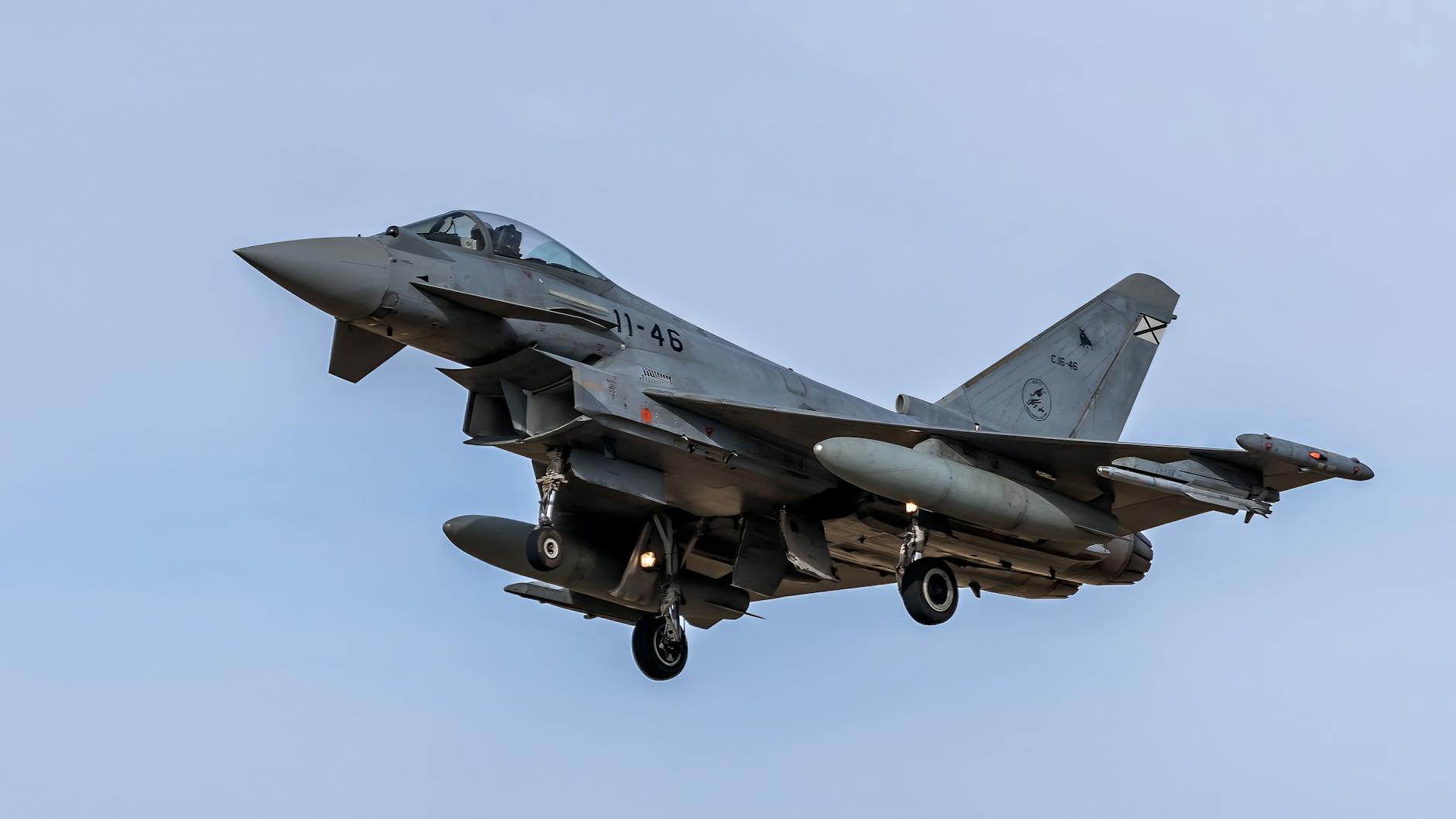
In this re-rated defense landscape, several key players stand out, particularly Lockheed Martin (LMT) and Northrop Grumman (NOC), given their critical roles in supplying advanced weaponry and strategic defense systems. Lockheed Martin, the world's largest defense contractor, is a prime beneficiary of increased demand for fighter jets like the F-35, missiles, and space systems. The company's robust backlog of $194 billion provides multi-year revenue visibility, underpinning future growth. LMT shares are currently trading at $658.53, with a market cap of $152.38 billion and a P/E of 30.32, reflecting its strong market position and analyst consensus of "Buy" with a median price target of $654.00.

Lockheed Martin's Aeronautics segment saw sales jump 11.9% in Q3 2025, driven by sustained demand. The company secured a $12.5 billion contract for 296 F-35 jets and an approximately $11 billion navy contract for up to 99 CH-53K King Stallion helicopters, alongside a nearly $10 billion contract for Patriot missiles. Management expects continued momentum in 2026, guiding for sales between $77.5 billion and $80 billion, diluted EPS of $29.35 to $30.25, and free cash flow of $6.5 billion to $6.8 billion. Its TTM EPS stands at $21.73, with a dividend yield of 2.0%.

Northrop Grumman (NOC) is another critical asset, especially with its focus on strategic systems like the B-21 bomber and missile defense. The company's backlog reached $83.9 billion at the end of 2025, with management guiding for 2026 sales between $43.5 billion and $44 billion. Despite trimming its full-year 2025 sales outlook due to contract timing, Northrop Grumman said it would be more profitable than expected. Trading at $750.46, NOC has a market cap of $106.51 billion and a P/E of 25.65, reflecting its solid financial performance and strategic importance. Analysts maintain a "Buy" consensus with a median price target of $752.00. Its TTM EPS is $29.27, and it offers a dividend yield of 1.2%.

What About Other Major Players Like RTX and General Dynamics?

Beyond the leading duo, RTX Corporation (RTX) and General Dynamics (GD) are also exceptionally well-positioned to capitalize on the "Security Supercycle." RTX, formerly Raytheon, is a major player with diverse revenue streams from both commercial aerospace and defense. The company saw strong demand in 2025, with total sales increasing 10% year-over-year to $88.6 billion and adjusted earnings per share rising 10% to $6.29. RTX generated $7.9 billion in free cash flow and ended the year with a massive $268 billion backlog, including $107 billion from defense contracts.

RTX shares are currently trading at $208.99, boasting a market cap of $280.53 billion and a P/E of 41.76. Analysts have a "Buy" consensus rating with a median price target of $225.00, indicating significant upside potential. The company's portfolio aligns perfectly with long-term military priorities, from advanced aviation systems to precision strike capabilities and cybersecurity solutions. Its TTM EPS is $5.01, and it provides a dividend yield of 1.3%. The robust backlog and diversified offerings make RTX a compelling investment in the current environment.

General Dynamics (GD), with a market cap of $98.58 billion, holds a market-leading position in naval and land systems, including submarines, surface ships, and armored vehicles. The company reported full-year 2025 revenue of $52.6 billion, a 10% increase from 2024, and net earnings growth of 11.3%. GD boasts a large backlog of $118 billion and a robust book-to-bill ratio of 1.6x, indicating strong future order intake. It also generated $3.9 billion in free cash flow, highlighting its operational efficiency. Trading at $364.59, GD has a P/E of 23.39, and analysts rate it a "Buy" with a median price target of $400.00. Its TTM EPS is $15.60, and it offers a dividend yield of 1.6%. GD's specialized exposure to critical naval assets and armored vehicles ensures its relevance in a world prioritizing comprehensive defense capabilities.

What Are the Risks and Valuation Considerations for Investors?

While the defense sector is riding a wave of geopolitical urgency and structural growth, investors must carefully consider inherent risks and current valuation levels. The primary risk remains the concentrated client base, as government procurement policies are subject to political shifts and budget issues. While the current environment suggests increased spending, contract delays or changes in program priorities could temper immediate performance. Northrop Grumman's Q4 2025 earnings call, for instance, highlighted uncertainties in contract timing, with some opportunities not firming up as quickly as anticipated.

Valuation multiples for defense stocks have expanded, reflecting the "Security Supercycle" narrative. Lockheed Martin trades at a P/E of 30.32, Northrop Grumman at 25.65, RTX at 41.76, and General Dynamics at 23.39. These figures are generally higher than historical averages for the sector, suggesting that much of the future growth is already priced in. For instance, the Industrials sector, which includes defense, has an average P/E of 50.3, but this is skewed by other industries. Investors must scrutinize whether these premiums are justified by the companies' long-term earnings trajectories and the sustainability of elevated defense spending.

Another critical factor is "production velocity." In the short term, the primary challenge for the defense sector is not finding orders, but fulfilling them. The market will closely watch for production metrics in upcoming quarterly earnings reports. If major contractors like Lockheed Martin or Northrop Grumman fail to meet delivery timelines for key programs, the current valuation premiums could face a sharp correction. Scaling up production, especially for complex systems and munitions, requires massive capital expenditures and takes time, as noted by industry experts. This bottleneck could create headwinds despite strong demand.

Investor Outlook: Navigating the New Defense Paradigm

The global defense sector has undeniably entered a new paradigm, moving beyond the post-Cold War "peace dividend" to a sustained era of re-armament. The convergence of escalating geopolitical tensions and ambitious budget proposals, particularly President Trump's $1.5 trillion defense budget, has created a compelling investment thesis. However, navigating this landscape requires a nuanced approach, balancing the allure of structural growth with a careful assessment of valuation and execution risks.

Investors should prioritize companies with robust backlogs, diversified product portfolios, and proven capabilities in next-generation technologies like AI, counter-drone systems, and advanced missile defense. Lockheed Martin, RTX, Northrop Grumman, and General Dynamics represent strong core holdings, given their entrenched positions and critical contributions to national security. Their ability to deliver on massive contracts and adapt to evolving military needs will be key determinants of their long-term success.

While the immediate catalysts are strong, the sustainability of elevated defense spending is always subject to political shifts and the eventual de-escalation of conflicts. However, the "Security Supercycle" theory suggests we are only in the early innings of a multi-decade re-arming phase. Investors should prepare for a scenario where defense spending becomes a permanent, non-negotiable fixture of the global economy, similar to how technology spending became essential in the early 2000s.

The "Arsenal of Democracy" is no longer just a political slogan; it is emerging as one of the most potent growth stories in the financial markets today. For those willing to conduct diligent research and monitor key operational metrics, the defense sector offers a unique opportunity for long-term capital appreciation in an increasingly unstable world.


Want deeper research on any stock? Try Kavout Pro for AI-powered analysis, smart signals, and more. Already a member? Add credits to run more research.

SHARE THIS ON:

Related Articles

Category

You may also like

Stock News1 day ago

The Middle East War: Let's Talk About U.S. Defense Stocks

Defense sector stocks surged following the Middle East escalation, highlighting General Dynamics and RTX. RTX shows accelerating double-digit growth and attractive PEG valuation, while GD is positione...
Stock News2 weeks ago

Can Rising Defense Demand Boost Celestica's Future Growth Prospects?

Celestica's role in global defense, providing mission-critical electronics and support, may benefit from climbing military spending. This demand shift could positively influence future growth prospect...
News1 months ago

2027: Defense Boom As The AI Trade Unwinds

Defense spending is entering a structural supercycle driven by geopolitical risk, while equity markets face a likely correction amid pessimistic consumer sentiment reminiscent of 1999.
Stock News2 months ago

Ondas Holdings' Counter-UAS Push: A Powerful Growth Catalyst?

Ondas Holdings (ONDS) is accelerating growth in the counter-drone market due to record revenues and strategic acquisitions. The company is leveraging a layered detect-to-defeat system to capitalize on...

Breaking News

View All →

Top Headlines

View More →
Stock News36 minutes ago

TSLY: Tesla's Uncertainty Is Fueling This Income Machine

Stock News49 minutes ago

Apple's Brand-New Products Represent an Aggressive AI Push

Stock News2 hours ago

McMahon: "This is the Year" for MSFT, Likes SMERY in AI Trade

Stock News2 hours ago

Bitcoin Surges to $74,000 After President Trump Throws Support Behind Key Crypto Bill

Stock News3 hours ago

Apple Slashes Entry Price With MacBook Neo