MarketLens
Is Rolls-Royce's Spectre EV a Game-Changer for RYCEY

Key Takeaways
- Rolls-Royce's (RYCEY) all-electric Spectre, particularly the Black Badge variant, is a critical strategic move, positioning the company for growth in the rapidly expanding ultra-luxury EV segment.
- The luxury EV market is projected to reach $214.7 billion in 2026 and $562.4 billion by 2035, offering a substantial runway for Rolls-Royce despite intense competition.
- While the Spectre's bespoke craftsmanship and brand legacy provide a strong competitive moat, challenges like charging infrastructure, high upfront costs, and potential recalls warrant investor vigilance.
Is Rolls-Royce's Spectre EV a Game-Changer for RYCEY?
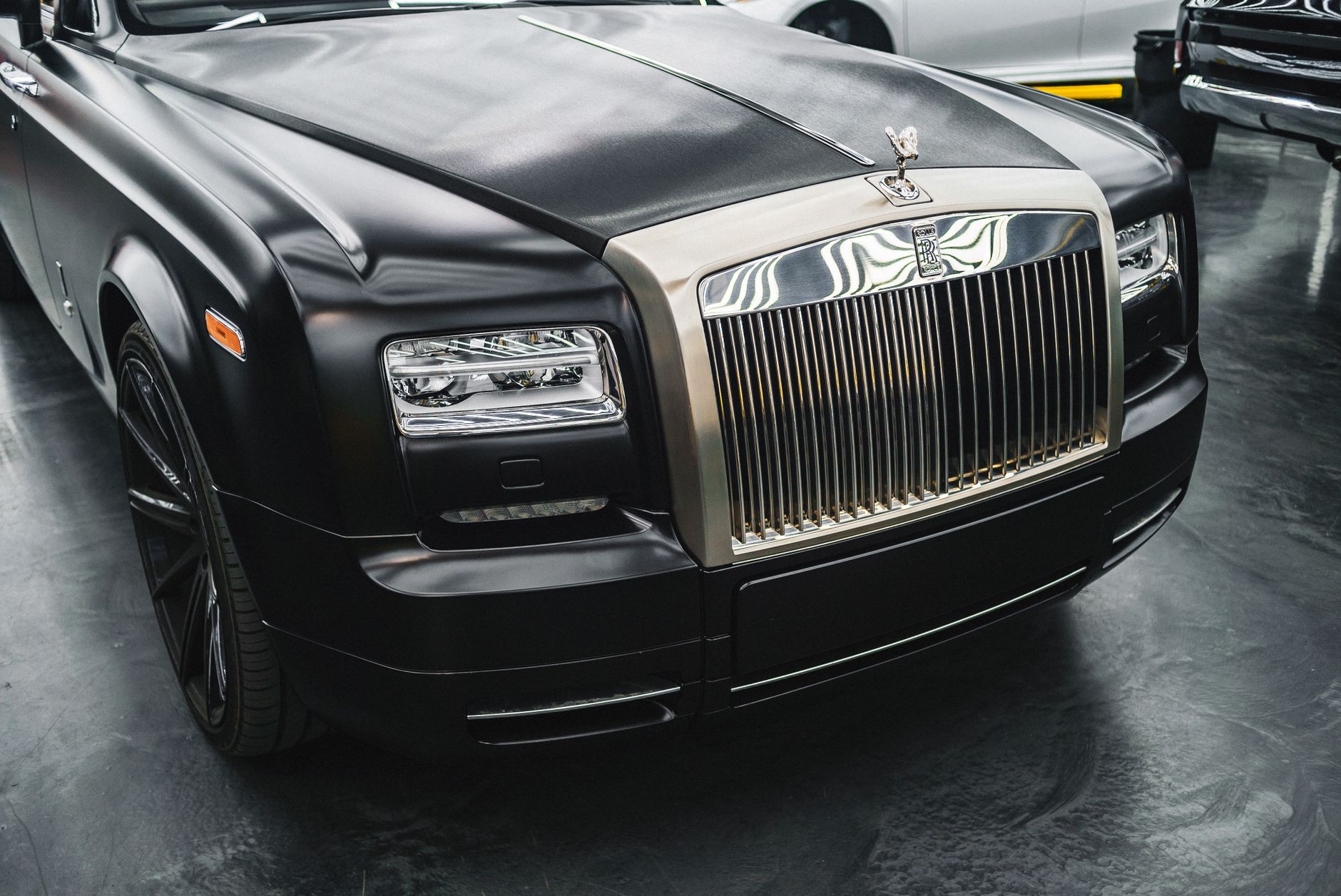
Rolls-Royce's introduction of the all-electric Spectre, first launched in 2023, marks a pivotal moment for the venerable British marque and its parent company, Rolls-Royce Holdings plc (RYCEY). This super-coupe is not merely an addition to the lineup; it represents the brand's firm commitment to an all-electric future by 2030, a bold pledge in an industry still heavily reliant on internal combustion engines, particularly V-12s, which powered over 60% of Rolls-Royce vehicles in Q1 2024. The Spectre's arrival, followed by the Black Badge variant in 2025, signals a strategic shift to attract a younger, more performance-oriented clientele while retaining the brand's core values of opulence and refinement.
The Black Badge Spectre, hailed as the most powerful Rolls-Royce ever built, boasts a dual-motor, all-wheel-drive powertrain delivering 659 horsepower and 792 lb-ft of torque. This enables a claimed 0-60 mph sprint in 4.1 seconds, a conservative estimate given that the standard Spectre achieved 3.7 seconds in some tests. Priced between $397,750 and $467,750 for the standard and Black Badge models respectively, the Spectre firmly anchors Rolls-Royce in the ultra-luxury EV segment, a tier projected for significant growth. This strategic electrification is crucial for RYCEY, trading at $17.25 with a market capitalization of $144.30 billion, as it navigates evolving consumer preferences and stringent global emission regulations.
Beyond raw power, the Spectre's design and engineering are tailored to the electric era. Its 102 kWh lithium-ion battery pack provides an EPA-estimated range of 266 miles with 23-inch wheels, extending to 291 miles with 22-inch wheels. While not class-leading in range, the focus is on "effortless progress" and "supreme comfort," hallmarks of the brand. The vehicle's active roll stabilization system and rear-wheel steering contribute to impressive body control and maneuverability, making the 6,559-pound coupe feel smaller than its 19-foot length suggests. This blend of traditional luxury with modern electric performance positions the Spectre as a statement piece in the luxury EV landscape, crucial for RYCEY's long-term brand relevance and market share.
How Does the Luxury EV Market Landscape Impact Rolls-Royce?
The broader luxury electric vehicle market presents a compelling growth narrative that directly impacts Rolls-Royce's strategic direction. According to Global Market Insights, the global luxury EV market was valued at $191.2 billion in 2025 and is expected to grow to $214.7 billion in 2026, with a robust CAGR of 11.3% through 2035 to reach $562.4 billion. Mordor Intelligence offers an even more aggressive forecast, projecting a market size of $254.08 billion in 2026 and $530.16 billion by 2031, at a 15.86% CAGR. This expansion is driven by increasing demand for sustainable mobility, advancements in battery technology, and the expansion of fast-charging infrastructure.
Rolls-Royce's Spectre is particularly well-placed within the ultra-luxury segment, defined as vehicles priced above $500,000. This tier is forecast to exhibit the fastest growth, with a 16.31% CAGR through 2031, according to Mordor Intelligence. These ultra-high-net-worth clients view environmentally conscious motoring as a status symbol, often paying premiums for bespoke features and artisanal interiors. The dominance of Battery Electric Vehicles (BEVs) within this market, commanding a 75.82% share of revenues in 2025 and posting a 16.63% CAGR, further validates Rolls-Royce's pure-electric strategy.
However, the market is not without its challenges. High upfront vehicle costs, battery raw material supply constraints, and disparities in charging infrastructure remain hurdles. While Rolls-Royce owners are less likely to rely on public charging, the broader ecosystem's development is still critical for market perception and long-term adoption. The competitive landscape is also evolving, with established luxury players like Bentley (targeting an electric lineup by 2030, with its first EV debuting in 2026) and newer entrants like Lucid Motors vying for market share. Rolls-Royce's ability to leverage its century-long legacy of exclusivity and bespoke craftsmanship will be key to maintaining its competitive edge in this dynamic environment.
What Differentiates the Spectre in a Crowded Luxury EV Field?
In a luxury EV market increasingly populated by high-performance contenders, the Rolls-Royce Spectre distinguishes itself not merely through specifications but through an unparalleled emphasis on bespoke craftsmanship and a "commissioning" experience. While rivals like the Lucid Air Sapphire boast a staggering 1,234 horsepower and a 0-60 MPH time of less than two seconds, the Spectre deliberately eschews the pursuit of raw speed for the sake of "effortless progress" and "serenity." This philosophy is encapsulated by its dual-motor powertrain, which produces 577 horsepower and 664 lb-ft of torque in the standard model, delivering authoritative acceleration without drama.
The true differentiator lies in personalization. Unlike the Lucid Air Sapphire, which arrives "fully formed" with a predefined Sapphire Blue exterior and Black interior, the Spectre offers an almost limitless canvas for its owners. Rolls-Royce states that clients can choose from over 44,000 shades or even create a new one, with every detail from seat embroidery to overall motif being customizable. This "commissioning a masterpiece" approach, which can take over a year from design to delivery, transforms the purchase into a deeply personal legacy. Exclusive features like the Starlight Headliner, with its 4,796 individually placed fiber-optic lights, and the Illuminated Fascia, featuring 5,500 softly glowing stars, create an immersive, celestial cabin ambiance that is unique to the marque.
Furthermore, the Spectre's design philosophy consciously balances timelessness with modern innovation. While the Lucid Air Sapphire embraces a "fully digital" cabin theme, the Spectre integrates heritage details such as the Illuminated Pantheon Grille and an analogue clock with cutting-edge technology like the Bespoke Audio System and "Eleanor," an in-vehicle virtual assistant. This blend ensures that while the Spectre is forward-looking, it remains unmistakably a Rolls-Royce, reflecting a brand legacy established in 1906 compared to Lucid's 2007 founding. This curated exclusivity and commitment to a unique, personalized luxury experience are paramount to the Spectre's appeal and Rolls-Royce's brand positioning.
What Are the Financial Implications and Risks for Rolls-Royce?
Rolls-Royce Holdings plc (RYCEY) currently trades at $17.25, near the higher end of its 52-week range of $11.88 to $18.98, reflecting investor optimism around its transformation efforts, including the pivot to electric vehicles. The company's market capitalization stands at a substantial $144.30 billion, underscoring its significant presence in the industrials sector, specifically aerospace and defense. The successful launch and positive reception of the Spectre EV, particularly the Black Badge variant, could bolster brand perception and attract new, affluent customers, potentially driving higher average selling prices and robust margins in the ultra-luxury segment.
However, the transition to an all-electric lineup by 2030 carries inherent financial risks. Developing new EV platforms, battery technologies, and charging solutions requires substantial capital expenditure. While the luxury EV market is growing, competition is intensifying, and Rolls-Royce must continue to innovate to justify its premium pricing. A notable risk surfaced in the past with a recall of the Spectre EV due to an "insufficient electrical ground" that could increase the chance of a fire. Such quality control issues, though seemingly minor, can significantly impact brand reputation and incur costly remediation, particularly for a brand built on uncompromising excellence.
Moreover, the high upfront cost of luxury EVs and potential battery raw material supply constraints could impact production volumes and profitability. While Rolls-Royce's bespoke model allows for higher margins, any disruption in the supply chain for critical components could lead to delivery delays and customer dissatisfaction. The company's Beta of 1.20 suggests slightly higher volatility compared to the broader market, meaning RYCEY shares could experience larger swings in response to market sentiment or company-specific news. Investors will be closely watching future earnings reports for insights into Spectre's sales performance, production ramp-up, and the overall financial health of the Civil Aerospace and New Markets segments.
What is Rolls-Royce's Broader Electrification Strategy Beyond the Spectre?
The Spectre is just the first step in Rolls-Royce's ambitious plan to go entirely electric by 2030. Following the Spectre coupe, the company is actively developing two more electric vehicles: an SUV and a sedan. The electric SUV is anticipated to arrive in early 2027, positioned as a full-size model that will be smaller than the current V-12-powered Cullinan. This move into the electric SUV segment is crucial, as SUVs and crossovers commanded a 57.28% revenue share in the luxury EV market in 2025, indicating strong consumer preference for this body style.
Following the SUV, an electric sedan is planned for late 2028, which is expected to replace the iconic Phantom flagship. This strategic rollout demonstrates a methodical approach to electrifying the core product portfolio, ensuring that each new EV maintains the brand's distinct identity while embracing modern technology. Rolls-Royce's commitment to this timeline remains steadfast, even as some competitors, like Bentley, have adjusted their EV launch schedules due to "changing market landscapes." This unwavering focus could provide Rolls-Royce with a first-mover advantage in certain ultra-luxury EV segments.
The company's strategy also involves leveraging technological advancements in battery development, with an eye towards solid-state cells post-2028. These next-generation batteries promise higher gravimetric density, potentially exceeding 450 Wh/kg, which would reduce pack mass and free up cabin space, further enhancing the luxury experience. Rolls-Royce also aims to integrate autonomous and connected mobility ecosystems, alongside exploring subscription and digital sales models, which are projected to grow at a 16.15% CAGR through 2031 in the luxury EV market. These initiatives collectively underscore a comprehensive electrification strategy designed to secure Rolls-Royce's leadership in the future of ultra-luxury mobility.
What Does This Mean for Investors in RYCEY?
For investors considering Rolls-Royce Holdings plc (RYCEY), the company's aggressive push into the luxury EV market, spearheaded by the Spectre, presents a compelling long-term growth story. The stock's current price of $17.25 and its position within its 52-week range of $11.88 to $18.98 suggest that some of this optimism is already priced in. However, the substantial growth projections for the luxury EV market, particularly the ultra-luxury segment where the Spectre resides, indicate significant upside potential if Rolls-Royce can execute its electrification strategy effectively.
The brand's unique selling proposition of bespoke craftsmanship and unparalleled personalization creates a strong moat against mass-market EV manufacturers and even some luxury competitors. This allows Rolls-Royce to command premium prices and potentially maintain robust gross margins, which Mordor Intelligence notes can exceed 30% in the $500,000+ price tier. The planned introduction of an electric SUV in 2027 and a sedan in 2028 will further diversify its EV offerings and tap into different high-growth segments of the luxury market.
Investors should monitor Rolls-Royce's progress in scaling EV production, managing supply chain complexities for critical battery materials, and mitigating potential quality control issues like the past Spectre recall. The company's ability to maintain its brand integrity and deliver on its promise of "effortless electric luxury" will be paramount. While the journey to full electrification by 2030 is ambitious, Rolls-Royce's legacy and strategic vision position RYCEY as a noteworthy player in the evolving automotive landscape.
Rolls-Royce's bold electrification strategy, anchored by the Spectre EV, positions RYCEY for significant long-term growth within the burgeoning ultra-luxury electric vehicle market. While the path to an all-electric future by 2030 presents execution risks, the company's unparalleled brand legacy and commitment to bespoke excellence offer a strong competitive advantage. Investors should consider RYCEY for its potential to capture a substantial share of this high-margin segment, provided it successfully navigates production challenges and maintains its reputation for uncompromising quality.
Want deeper research on any stock? Try Kavout Pro for AI-powered analysis, smart signals, and more. Already a member? Add credits to run more research.
Related Articles
Category
You may also like


Is IonQ Stock a Buy as Revenue Skyrockets?

The NYSE Is Going 24/7 – This Stock Could Surge by Triple Digits

Tesla's Cybercab Is Finally Real—But Is It Enough?
Breaking News
View All →Featured Articles
Top Headlines

Australia's competition regulator issues takedown requests to Amazon, others, for certain toys

CNBC's The China Connection newsletter: China learns to build without Nvidia

Alphabet Stock Offers Exposure To SpaceX, Anthropic Before IPOs: What That Means For Investors

Nvidia's Jensen Huang Just Announced Something Big