

MarketLens

Log in

Is Mercedes-Benz's 2026 CLA Electric a Game-Changer for the Luxury EV Market

5 hours ago
SHARE THIS ON:

Is Mercedes-Benz's 2026 CLA Electric a Game-Changer for the Luxury EV Market

Key Takeaways

  • The 2026 Mercedes-Benz CLA Electric, built on the new 800-volt MMA platform, represents a significant leap forward in efficiency and charging speed, positioning Mercedes-Benz as a formidable competitor in the premium EV sedan segment.
  • With an EPA-estimated range of up to 374 miles and a 10-80% charge time of just 22 minutes, the CLA Electric directly challenges established rivals like the Tesla Model 3 and BMW i4 on crucial performance metrics.
  • While the initial lack of a 400-volt DC converter in early demo units caused concern, Mercedes-Benz has confirmed its availability starting Spring 2026, addressing a critical compatibility issue for a broader charging infrastructure.

Is Mercedes-Benz's 2026 CLA Electric a Game-Changer for the Luxury EV Market?

Mercedes-Benz (ticker not provided, but a major global automaker) is making a bold statement with its 2026 CLA Electric, an all-new compact sedan built on the dedicated Mercedes Modular Architecture (MMA) and featuring an advanced 800-volt electric architecture. This vehicle, set to arrive in the U.S. later this year, is not just another addition to the growing EV lineup; it's a strategic pivot designed to redefine efficiency, charging speed, and technological integration in the entry-luxury segment. The CLA Electric's impressive specifications, including an EPA range of up to 374 miles and a rapid 10-80% charge time of 22 minutes, signal Mercedes-Benz's intent to capture a larger share of the premium EV market, directly challenging segment leaders. This move is critical for the German automaker as it navigates a competitive landscape increasingly dominated by electric powertrains and software-defined vehicles.

The CLA Electric's foundation on the MMA platform, derived from the VISION EQXX concept vehicle, underscores a commitment to maximizing efficiency and performance. This platform is designed primarily for electric cars, allowing for optimal battery integration and aerodynamic profiles. The vehicle's 800-volt architecture, a technology previously seen in high-performance EVs like the Porsche Taycan and Hyundai Ioniq 5, enables significantly faster charging rates compared to the 400-volt systems prevalent in many existing EVs, including other Mercedes-Benz EQ models. This technological advancement is not merely incremental; it represents a fundamental shift in how Mercedes-Benz approaches electric vehicle design and customer experience, aiming to alleviate range and charging anxiety for potential buyers. The strategic importance of this platform extends beyond the CLA, as it will underpin a new family of three entry-level luxury models for the U.S. market, including two SUVs, indicating a broader electrification strategy.

The market reception for the CLA Electric will be closely watched, particularly its ability to translate impressive specs into real-world sales. The vehicle has already garnered attention, being voted "Car of the Year 2026" by the European Car of the Year jury, which speaks to its potential impact. However, success will hinge on more than just accolades; it will require seamless integration into the existing charging infrastructure and a compelling value proposition against well-established rivals. Mercedes-Benz's decision to equip the CLA with both NACS (SAE J3400) for DC charging and SAE J1772 for AC charging, alongside a CCS1-to-NACS adapter, demonstrates an effort to maximize charging compatibility in North America. This dual-port strategy, while somewhat unusual, aims to provide flexibility, especially given Mercedes-Benz became a Tesla NACS partner in February 2025.

How Does the 800-Volt Architecture Redefine Charging and Range?

The 800-volt electric architecture of the 2026 Mercedes-Benz CLA Electric is a cornerstone of its competitive advantage, fundamentally redefining the charging experience for luxury EV owners. This high-voltage system, directly inherited from the hyper-efficient VISION EQXX concept, allows for significantly faster charging speeds and improved overall efficiency compared to the more common 400-volt systems. Specifically, the CLA Electric can recharge from 10% to 80% state of charge in just 22 minutes at a high-voltage DC charger, with peak power reaching an impressive 320 kW officially, and unofficial reports suggesting up to 350 kW. This capability means drivers can add over 260 miles of EPA range in just 22 minutes, a replenishment rate of approximately 11.9 miles per minute, which notably matches the E-GMP-based Genesis GV60.

This rapid charging performance is a substantial improvement over Mercedes-Benz's existing EQ lineup. For context, other Mercedes-Benz EVs like the EQB, EQE, and EQS typically require 31-32 minutes to achieve a 10-80% charge, with peak power plateauing around 200 kW. The CLA Electric's ability to replenish range at nearly double the rate of its siblings (ranging from 4.5 to 8.8 miles/minute for other models) addresses one of the primary concerns for prospective EV buyers: the time spent charging. For instance, Mercedes-Benz claims the CLA can add 201 miles of WLTP range in just 10 minutes on a compatible 800-volt DC charger. This dramatically reduces the inconvenience of long-distance EV travel, making it a more viable option for consumers accustomed to quick gasoline fill-ups.

Beyond speed, the 800-volt system contributes to the CLA Electric's impressive range. The CLA 250+ RWD variant, equipped with an 85.5 kWh battery, boasts a WLTP range of 792 km, translating to an estimated EPA range of up to 374 miles. Even the AWD CLA 350 4MATIC offers a robust WLTP range of 672-771 km. In real-world mixed driving conditions, the CLA 250+ is expected to deliver around 600 km of range, effectively making "range anxiety" a thing of the past for many drivers. This is comparable to, or even exceeds, the range of many petrol cars on a full tank. The efficiency is further enhanced by an intelligent recuperation system, capable of recovering up to 200 kW of energy, allowing the vehicle to perform most braking operations regeneratively and even come to a complete stop using only regenerative braking. This holistic approach to energy management, from battery chemistry developed at Mercedes-Benz's eCampus to the multi-source heat pump utilizing waste heat, underscores a comprehensive strategy to maximize every electron.

What Does the CLA Electric's Performance Mean for Competition?

The 2026 Mercedes-Benz CLA Electric's performance metrics place it squarely in contention with leading premium EVs, particularly the Tesla Model 3 and BMW i4. With a 0-100 km/h acceleration of 6.7 seconds for the CLA 250+ (or 6.6 seconds 0-60 mph) and a more potent 4.8 seconds for the CLA 350 4MATIC AWD variant, the CLA offers competitive, if not class-leading, straight-line performance. The CLA 250+ delivers 268 BHP (200 kW) and 335 Nm of torque, while the AWD version ups the ante to 349 hp (260 kW) and 515 Nm of torque. These figures ensure that the CLA Electric maintains the sporty, engaging driving experience expected from a Mercedes-Benz, complementing its excellent high-speed stability and good steering feedback.

When comparing against key rivals, the CLA Electric presents a compelling package. The base Mercedes-Benz CLA EV 200, with an estimated price of Rs. 55.00 Lakh in India (approximately €52,900 for the CLA 250+ in Europe), is positioned as a more affordable option than the Tesla Model Y (Rs. 59.89 Lakh) and the BMW i4 (Rs. 72.50 Lakh). While direct price comparisons across markets can be tricky, the European pricing of €52,900 for the CLA 250+ undercuts the Audi A6 e-tron Sportback (€66,420) and the BMW i4 eDrive40 (€57,850), and is competitive with the Tesla Model 3 Long Range (€44,990). This aggressive pricing strategy, combined with superior range and charging speed, could significantly disrupt the segment.

The CLA 250+'s WLTP range of 792 km (around 600 km real-world) surpasses the BMW i4 eDrive40's 590 km (approx. 540-560 km real-world) and is competitive with the Tesla Model 3 Long Range's approximately 700 km (WLTP). More critically, its 320 kW DC charging capability, allowing a 10-80% charge in 22 minutes, outpaces the BMW i4's 205 kW (approx. 31 minutes) and the Tesla Model 3's 250 kW (approx. 27 minutes). This combination of range, charging speed, and competitive pricing positions the CLA Electric as a strong contender for the "best compromise" in the premium electric car segment for 2026, as noted by some industry observers. The CLA's design, described as "stunning" and "unmistakably CLA, yet very modern & sharp," also plays a crucial role in its appeal, offering a distinct aesthetic in a market increasingly saturated with similar EV designs.

What About Charging Compatibility and Infrastructure Challenges?

While the 800-volt architecture offers undeniable advantages in charging speed, it also introduces potential compatibility challenges, particularly in regions with less developed or older charging infrastructure. Initially, the 2025 CLA Electric model faced criticism for lacking an in-built voltage step-down converter, meaning it could only charge at 800-volt DC stations. This was deemed a significant oversight, especially in markets like India, where despite many newer CCS2 DC chargers supporting 800V or even 1000V, some older units are limited to 550V or 400V. In the U.S., some chargers, including older Tesla Superchargers, are also stuck at 500V.

Mercedes-Benz has proactively addressed this concern for the 2026 model year. The company has confirmed that the CLA Electric will feature a DC/DC converter, necessary to access lower-voltage chargers (400-500 volts). This converter will be factory-equipped on CLAs launching in Spring 2026. This is a crucial development, as it broadens the vehicle's charging versatility and mitigates the risk of being "dead on arrival" in areas with mixed charging capabilities. However, it's important to note that charging performance at these lower-voltage chargers will be compromised compared to the optimal 800-volt experience. The initial batch of demo cars did not have this converter, which led to some confusion and concern among reviewers and potential buyers.

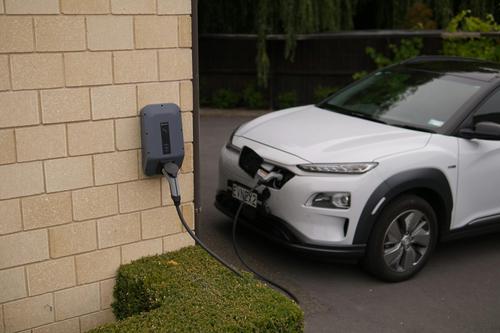
Mercedes-Benz is also actively building out its own charging ecosystem. The company plans to provide a fast-charging network through its MB.CHARGE Public initiative, aiming for over 9,000 charging points. This includes Mercedes-Benz High-Power Charging hubs, which are designed to support the 800-volt architecture. Furthermore, the CLA Electric will be equipped with a NACS (SAE J3400) charging port for DC fast charging, making it the first Mercedes-Benz model to do so. This, combined with an AC adapter for NACS AC charging points and a CCS1-to-NACS DC fast-charging adapter, ensures broad access to the rapidly expanding North American charging network, including Tesla Superchargers. For home charging, a standard Mercedes-Benz wall box charger offering up to 22 kW charging power will be available for approximately Rs. 50,000 (including installation in India), with complimentary installation for pre-booking customers. This multi-pronged approach to charging infrastructure and compatibility is vital for the CLA Electric's widespread adoption and long-term success.

What Are the Broader Implications for Mercedes-Benz's EV Strategy?

The 2026 CLA Electric is more than just a new model; it's a strategic linchpin in Mercedes-Benz's ambitious electrification roadmap. As the first vehicle built on the MMA platform, it serves as a technological showcase for the company's future "entry luxury" EV offerings. This platform is designed to be highly flexible, supporting both pure electric and efficient hybrid powertrains, although the CLA itself is launching as a full EV. The MMA architecture's focus on efficiency, derived from the VISION EQXX, signals a shift towards maximizing range and minimizing energy consumption across its compact segment. This aligns with Mercedes-Benz's broader goal to transition to an all-electric lineup by 2030 in markets where conditions allow, as stated by CEO Ola Källenius.

The CLA Electric's success will provide critical validation for the MMA platform and the 800-volt architecture, potentially accelerating their deployment across other upcoming models. Markus Schäfer, Member of the Board of Management of Mercedes-Benz Group AG and Chief Technology Officer, emphasized that the MMA vehicles bring visionary technology to customers, moving closer to the "one-liter vehicle of the electric age." This indicates a deep commitment to engineering excellence in both high-voltage components and mechanical systems, including the new Electric Drive Unit (EDU 2.0) with its 2-speed transmission. The company's investment in its eCampus in Stuttgart-Untertürkheim for battery technology development further underscores its intent to control core EV components and optimize performance with "Mercedes-Benz DNA."

Beyond the technology, the CLA Electric's market positioning is crucial. By offering a compelling package of range, charging speed, and competitive pricing in the entry-luxury segment, Mercedes-Benz aims to attract a new generation of EV buyers who might otherwise gravitate towards Tesla, BMW, or even emerging Chinese brands like BYD and Zeekr. The vehicle's advanced features, including the 4th-gen MBUX infotainment system with Microsoft and Google AI capabilities, ADAS Level 2 safety, and a 5-star Euro NCAP rating, are designed to deliver a premium, connected, and safe experience. However, some design choices, such as the stiff suspension, 18-inch wheels, and low seating, have drawn criticism for potentially impacting ride comfort and ingress/egress. These trade-offs between sporty aesthetics and practicality will be closely scrutinized by consumers, but the overall package suggests a strong push to lead the luxury EV transition.

What Does This Mean for Investors?

For investors tracking Mercedes-Benz, the 2026 CLA Electric represents a pivotal product launch that could significantly impact the company's long-term growth trajectory in the burgeoning EV market. The vehicle's advanced 800-volt architecture and impressive range and charging capabilities demonstrate Mercedes-Benz's ability to innovate and compete effectively against established EV players and new entrants. Its competitive pricing strategy, particularly in key markets, suggests a proactive approach to gaining market share in the entry-luxury segment, which is a high-volume opportunity.

However, investors should also consider the execution risks. The initial confusion around 400-volt charging compatibility highlights the complexities of transitioning to new EV technologies and the importance of clear communication and robust infrastructure support. While Mercedes-Benz has addressed this with the converter, widespread availability and seamless user experience will be critical. The company's ability to scale production of MMA-based vehicles and manage supply chain dynamics for advanced components like 800-volt systems and high-performance batteries will also be key determinants of financial success.

Ultimately, the CLA Electric's reception will serve as a bellwether for Mercedes-Benz's broader EV strategy. Strong sales and positive customer feedback could bolster investor confidence in the company's pivot towards an all-electric future, potentially driving valuation multiples higher. Conversely, any significant missteps in production, charging infrastructure, or market acceptance could weigh on the stock. Investors should monitor sales figures, charging network expansion, and customer satisfaction reports closely over the coming quarters.


The 2026 Mercedes-Benz CLA Electric is a compelling statement of intent, showcasing advanced technology and competitive specifications designed to capture a significant share of the premium EV market. Its success will hinge on seamless charging infrastructure integration and the ability to translate impressive specs into a superior real-world ownership experience, making it a critical watch for investors in the automotive sector.


Want deeper research on any stock? Try Kavout Pro for AI-powered analysis, smart signals, and more. Already a member? Add credits to run more research.

SHARE THIS ON:

Related Articles

Category

You may also like

Stock News9 hours ago

Tesla's Semi Truck could Jolt the Trucking Industry

Tesla's Semi truck is gaining traction among California operators due to its superior range and lower cost compared to incumbent electric models. This competitive advantage could accelerate EV adoptio...
Stock News18 hours ago

Stellantis Announces Groundbreaking, Small and Affordable E-Car Project

Stellantis announced a new small, affordable electric vehicle project with production scheduled to begin in 2028 at its Pomigliano d'Arco plant in Italy. The initiative aims to bolster the company's E...
Stock News2 weeks ago

Mercedes-Benz Upbeat on Full Year Despite Booking Lower Revenue, Profit

Mercedes-Benz reported a 4.9% decline in annual revenue and a 17% drop in group net profit. Despite these year-over-year decreases, the company maintains an upbeat outlook for its full-year performanc...
Stock News3 weeks ago

Leading with LUXEED V9 Debut at Beijing Auto Show , the Full Lineup Unveils a New Vision of Intelligent Premium

The LUXEED V9 debuted at the Beijing Auto Show on April 24, 2026, as part of a broader unveiling of the brand's intelligent premium vehicle lineup. This launch signals a strategic expansion of the com...

Breaking News

View All →

Top Headlines

View More →
Stock News34 minutes ago

Panic in California as LinkedIn announces hundreds of layoffs

Stock News1 hour ago

Everything Announced at Google I/O 2026 in 13 Minutes

Stock News1 hour ago

AMD: Priced Like A Leader, Operating In Nvidia's Shadow

Stock News1 hour ago

Google's chief AI architect on the company's AI strategy

Stock News2 hours ago

Everything Announced At Google I/O