MarketLens

Log in

Is the U.S. Electric Grid Ready for the AI and EV Revolution

3 days ago
SHARE THIS ON:

Is the U.S. Electric Grid Ready for the AI and EV Revolution

Key Takeaways

  • The U.S. electrical grid faces an unprecedented surge in demand, primarily from AI-driven data centers and widespread EV adoption, pushing infrastructure to its breaking point.
  • Massive interconnection backlogs and aging infrastructure are causing significant project delays and economic losses, necessitating urgent, multi-trillion-dollar investments in grid modernization.
  • Investment opportunities abound in grid-enhancing technologies, energy storage, diversified generation (renewables, natural gas, nuclear), and supply chain localization for critical components like transformers.

Is the U.S. Electric Grid Ready for the AI and EV Revolution?

The United States is on the cusp of an energy transformation, but not in the way many anticipated. The quiet, decades-long period of flat electricity demand has abruptly ended, replaced by an unprecedented surge driven by the insatiable appetite of AI-powered data centers and the accelerating shift to electric vehicles. This "power boom" is exposing critical vulnerabilities in our aging electrical infrastructure, creating both immense challenges and compelling investment opportunities across the energy sector.

Data centers, particularly those supporting new AI applications, are at the forefront of this demand explosion. The Electric Power Research Institute (EPRI) estimates that data centers could consume up to 9% of U.S. electricity generation annually by 2030, a significant jump from 4% in 2023. Other projections are even more aggressive; the Lawrence Berkeley National Laboratory predicts data center demand could reach 6.7-12.0% of total U.S. consumption by 2028, up from 4.4% in 2023. This isn't just about scale; it's about intensity, with new hyperscale facilities demanding hundreds of megawatts, some even exceeding 1 gigawatt – enough to power a small city.

This rapid growth is far outpacing grid modernization efforts, leading to a critical mismatch between supply and demand. The last time the U.S. experienced such intense electricity demand growth was before the early 2000s, fueled by a growing economy and widespread adoption of electric appliances like air conditioners. Today, the scale and speed of AI-driven demand are so immense that traditional efficiency gains are unlikely to offset near-term consumption. The Department of Energy (DOE) now expects at least a doubling in current electricity demand to meet net-zero emissions goals by 2050, with total energy demand potentially growing 15-20% in the next decade alone.

The implications are already being felt. In regions like Virginia, a major data center hub, technology could consume 41% to 59% of electricity by 2030, up from 25% today. Seven other states, including Arizona, Indiana, and Texas, could see data centers consume over 20% of their power by the decade's end. This concentrated demand is straining local grids, forcing companies to delay projects, contract power directly, or even install inefficient natural gas generators to ensure continuous operation.

What are the Bottlenecks Stifling Grid Expansion and Reliability?

The primary bottleneck stifling grid expansion and threatening reliability is the staggering interconnection queue backlog. As of 2026, the U.S. interconnection queue has swelled to a massive 2,600 GW backlog, with the median wait time for a project to reach commercial operation approaching five years. For high-growth sectors like data centers, delays can stretch up to an astonishing 12 years, as reported by companies like Google. This isn't merely an administrative issue; it's a physical capacity deficit that the existing grid simply cannot handle.

The scale of this problem has intensified dramatically. Between 2021 and 2024, the queue ballooned from 1,400 GW to over 2,000 GW, overwhelming legacy "first-come, first-served" study processes. Today, the crisis is defined by unsustainable project attrition rates, with nearly 80% of projects entering the queue in the current environment eventually withdrawing. This contrasts sharply with a historical completion rate of 20% for projects between 2000 and 2018. The cost of these delays is substantial, with consumers losing between $150 million and $370 million in net benefits per year for every $1 billion in delayed transmission investments.

Beyond the queue, the physical infrastructure itself is a major constraint. Much of the U.S. electric grid was built in the 1960s and 1970s, making it nearly 60 years old. These aging assets require significant maintenance and replacement, as they are increasingly prone to failure and vulnerable to extreme weather events, cyberattacks, and geopolitical threats. The demand for critical components like high-voltage transformers has skyrocketed, leading to supply chain shortages that further exacerbate delays.

Regulatory hurdles and inconsistent policies also play a significant role. The complexity of system planning grows as renewable and distributed generation expands, making stakeholder alignment essential for timely project delivery. While some jurisdictions are implementing fast-track permitting processes, a national commitment to building a larger grid, not just managing its queue, is the only long-term solution. The current environment, marked by policy uncertainty and rising input costs due to tariffs on imported components, further slows investment and commitment to crucial infrastructure projects.

Where Are the Key Investment Opportunities in Grid Modernization?

The immense challenges facing the U.S. electric grid translate directly into significant investment opportunities across several key areas, particularly in grid modernization, energy storage, and diversified generation. Globally, an estimated $5.8 trillion is forecast for grid upgrades between 2026–2035, with roughly $700 billion specifically for digital grid technology. The U.S. alone is expected to see investments of about $1 trillion over the coming decade.

One critical area is grid-enhancing technologies (GETs) and advanced software solutions. As the grid integrates more diverse power sources, software is essential to efficiently optimize supply, anticipate changes, and provide precision management for daily operations and long-term planning. This includes advanced forecasting technologies, AI-powered study platforms to streamline interconnection processes, and cybersecurity software to protect critical infrastructure. Utilities, historically slow to adopt new software, are now compelled to invest in these solutions to improve reliability and manage complex energy flows.

Energy storage systems (ESS), particularly battery energy storage systems (BESS), are another high-growth segment. They are crucial for managing the intermittency of renewable energy sources like solar and wind, which pose challenges for grid stability. ESS can reduce frequency deviations by 45-60% and provide fast-ramping capacity, supporting voltage and frequency control. As large loads like data centers seek to manage costs and reliability, behind-the-meter assets and islandable microgrids that bolster resilience during emergencies will become increasingly valuable. Investment in manufacturing and deployment of these systems, despite public opposition concerns and reliance on imported critical minerals, is set to accelerate.

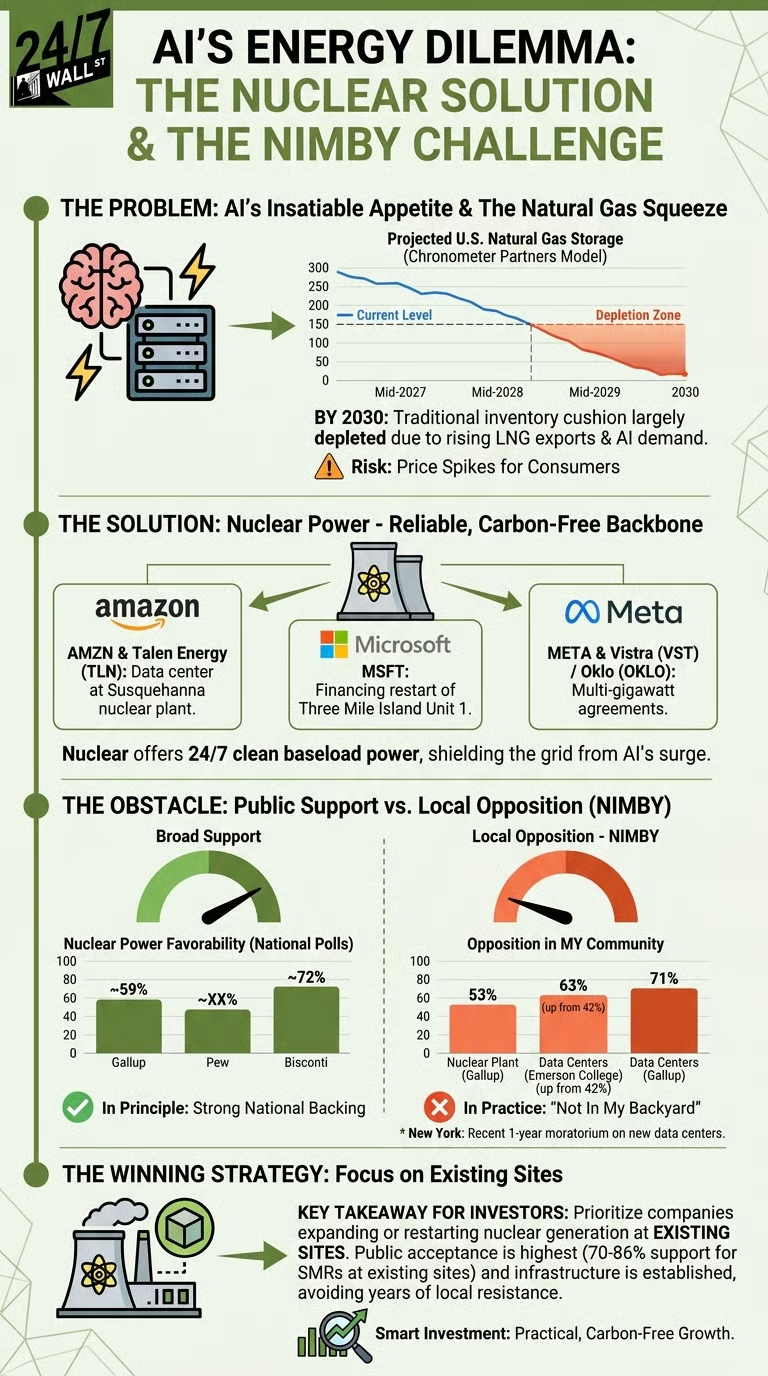
Finally, diversified generation portfolios are essential. While the long-term goal is clean energy, the immediate demand surge necessitates an "all of the above" strategy. This means continued expansion of renewables paired with BESS, but also a near-term plan to increase gas-fired generation and repowering of combined cycle units to provide firm capacity. New nuclear generation, including Small Modular Reactors (SMRs), is also gaining traction as a carbon-free, firm power source. Companies involved in the development, construction, and operation of these diverse power generation assets, as well as the associated transmission and distribution infrastructure, stand to benefit significantly.

How Can Companies and Policy Makers Accelerate Grid Solutions?

Accelerating grid solutions requires a multi-faceted approach involving coordinated policy, strategic investment, and supply chain localization. Policy decisions at local, state, and federal levels are paramount, as they can either fast-track or impede progress. Regulatory reform is essential to streamline approval processes for new infrastructure, reduce procedural delays, and modernize cost-recovery mechanisms for utilities. For example, the U.S. Department of Interior has reduced approval times for geothermal projects on federal lands to a maximum of 28 days through emergency permitting procedures, a model that needs to be replicated across all grid infrastructure categories.

Investment frameworks must become more proactive, moving beyond reactive responses to demand surges. This means incentivizing private capital to flow into critical infrastructure projects, potentially through tax credits, grants, or innovative financing mechanisms. The sheer scale of investment required—$1 trillion in the U.S. alone over the next decade—demands a collaborative effort between public and private sectors. Utilities must be empowered to make these necessary investments without disproportionately burdening ratepayers, which requires flexible regulatory environments that balance affordability with infrastructure needs.

Addressing the supply chain for critical grid components is also non-negotiable. The U.S. grid relies on an underlying supply chain that stretches across continents, multiplying risks and creating vulnerabilities. Reshoring manufacturing for essential items like high-voltage transformers, switchgear, and battery components is crucial for national security and resilience. This involves strategic industrial policy that strengthens domestic capabilities without sacrificing affordability or innovation. Tariffs on imported components, while sometimes intended to protect domestic industries, can inadvertently slow deployment and raise costs, highlighting the need for a more strategic and coordinated approach to trade policy.

Finally, workforce development is a critical, often overlooked, component. The pace of infrastructure buildout is generational, and the workforce needed to plan, design, build, and operate this infrastructure is both undersized and underprepared. This widening workforce gap creates material risk to schedules, costs, and reliability outcomes. Investing in training programs, apprenticeships, and educational initiatives to cultivate a skilled labor force for the energy sector is as important as investing in physical assets.

What Does This Mean for Investors in the Utilities and Industrials Sectors?

For investors, the current environment presents a compelling, albeit complex, opportunity within the Utilities and Industrials sectors, as well as adjacent technology and materials industries. The "power boom" is fundamentally reshaping the investment landscape for companies involved in electricity generation, transmission, distribution, and associated technologies. The Utilities sector, often seen as a defensive play, is now positioned for significant growth driven by the need for massive capital expenditures.

Consider the broader market context: the Utilities sector currently trades at an average P/E of 25.0, which is relatively modest compared to the Consumer Cyclical sector at 77.9 or Real Estate at 62.0. While Utilities have seen a modest gain of +0.11% recently, the underlying demand drivers suggest a long-term growth trajectory that could re-rate these companies. Investors should look for utilities with strong capital expenditure plans, clear regulatory support for grid modernization projects, and diversified generation portfolios that include both firm capacity and renewables.

Beyond traditional utilities, the Industrials sector, with an average P/E of 45.1 and a recent gain of +0.59%, offers exposure to companies manufacturing critical grid components like transformers, switchgear, and advanced cabling. Companies specializing in engineering, procurement, and construction (EPC) for large-scale energy projects, including power plants and transmission lines, will also see increased demand. Furthermore, the burgeoning market for energy storage solutions creates opportunities in battery manufacturers, system integrators, and developers of grid-scale storage projects.

The Technology sector, despite its higher average P/E of 43.1, is also deeply intertwined with grid modernization. Companies developing AI-powered grid management software, advanced forecasting tools, cybersecurity solutions for critical infrastructure, and smart grid technologies will be essential enablers of the energy transition. Investors should identify firms that provide these "soft infrastructure" solutions, as they will play a crucial role in optimizing the complex, evolving grid. This is not just about physical assets; it's about the digital backbone that makes them efficient and resilient.

The U.S. electric grid is at a watershed moment, demanding unprecedented investment and innovation. The confluence of AI-driven data center growth and EV adoption creates a multi-trillion-dollar opportunity for companies capable of building, modernizing, and securing our energy future. Investors who identify the key players in grid infrastructure, energy storage, and advanced digital solutions stand to benefit from this generational transformation.


Want deeper research on any stock? Try Kavout Pro for AI-powered analysis, smart signals, and more. Already a member? Add credits to run more research.

SHARE THIS ON:

Related Articles

Category

You may also like

Stock News2 weeks ago

Erayak Power Solution Strategic Update: Accelerating High-Capacity UPS-Integrated Platforms to Support AI-Driven Energy Demand

Erayak Power Solution Group is pivoting toward high-capacity, mission-critical UPS solutions to address North American AI infrastructure energy demand. The Company expects a prototype preview at the 2...
Stock News4 weeks ago

Who is really footing the AI energy bill? Inside the debate about data center electricity costs

U.S. technology hyperscalers face pushback regarding data center energy consumption blamed for rising electricity prices. Companies pledged to absorb increased energy costs or seek alternative power s...
Stock News2 months ago

GEV vs. PEG: Which Grid-Focused Energy Stock Is the Better Buy?

GE Vernova and Public Service Enterprise provide contrasting investment avenues for grid modernization, driven by rising demand for electrification, renewables, and reliability.
Stock News2 months ago

Did Amazon Just Crack the Code on One of AI's Biggest Bottlenecks?

The artificial intelligence revolution is advancing rapidly, but companies currently struggle to match the necessary pace of development.

Breaking News

View All →

Top Headlines

View More →
Stock News6 minutes ago

Who Benefits From Amazon Pharmacy Stocking Eli Lilly's New Weight Loss Pill

Stock News12 minutes ago

Tesla's ‘Death Cross' Flashed Again. Should Investors Just Tune It Out?

Stock News53 minutes ago

Intel, Sandisk and Other Big Winners in the S&P 500's Hot Streak

Stock News1 hour ago

Wall Street's fear gauge just flashed an unusual signal that could carry the S&P 500 to 7,400 within months

Stock News1 hour ago

New to Investing? Here's Why Amazon Stock Is a Great First Buy.